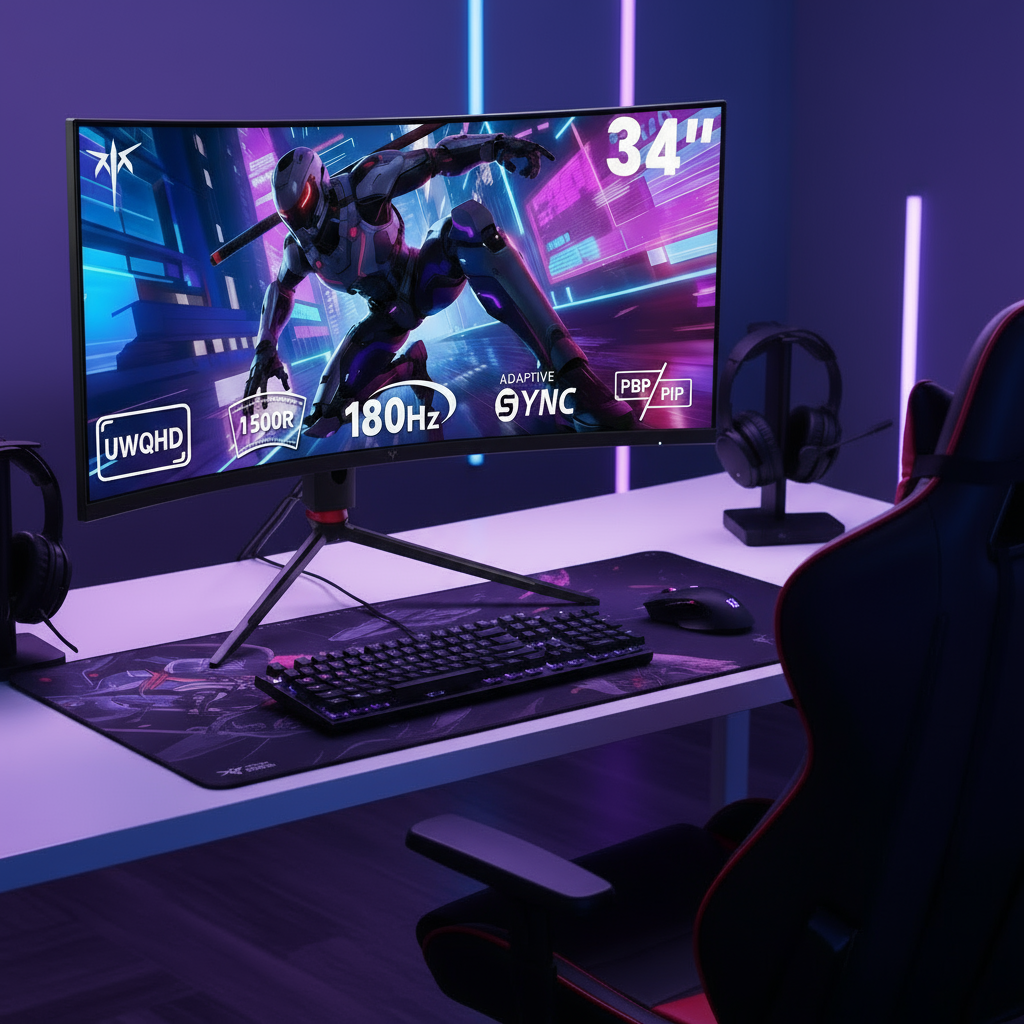


Supporting a heavy 32-inch or larger display in 2026 requires more than a high-capacity monitor arm. A complete desk infrastructure approach is essential, including a properly rated heavy-duty mount, desk material verification, reinforcement where needed, and routing paths that accommodate stiff Thunderbolt 5 cables. Without this full setup, even premium arms can sag, damage desks, or create unsafe conditions over time.

Beyond the Box: Why Standard Monitor Arms Fail 32-Inch Displays
Most standard monitor arms sold for everyday 24- to 27-inch panels are rated for roughly 15–18 lbs and use simpler spring mechanisms that lose tension quickly under heavier loads. A typical 32-inch 4K panel without its stand often weighs 18–25 lbs, while many 49-inch ultrawides exceed 25 lbs. This pushes the arm into constant over-extension, causing immediate tilt sag and eventual gas-spring failure.
The VESA FDMI MIS-D standard supports monitors up to 30.8 lbs (14 kg) with 100x100 mm or 75x75 mm patterns, which covers most 32-inch panels. However, the arm’s real-world capacity curve must still match the monitor’s weight at full extension without the original stand. Budget arms frequently advertise high numbers that degrade rapidly in use, so checking independent load ratings at maximum reach is more important than the sticker number.
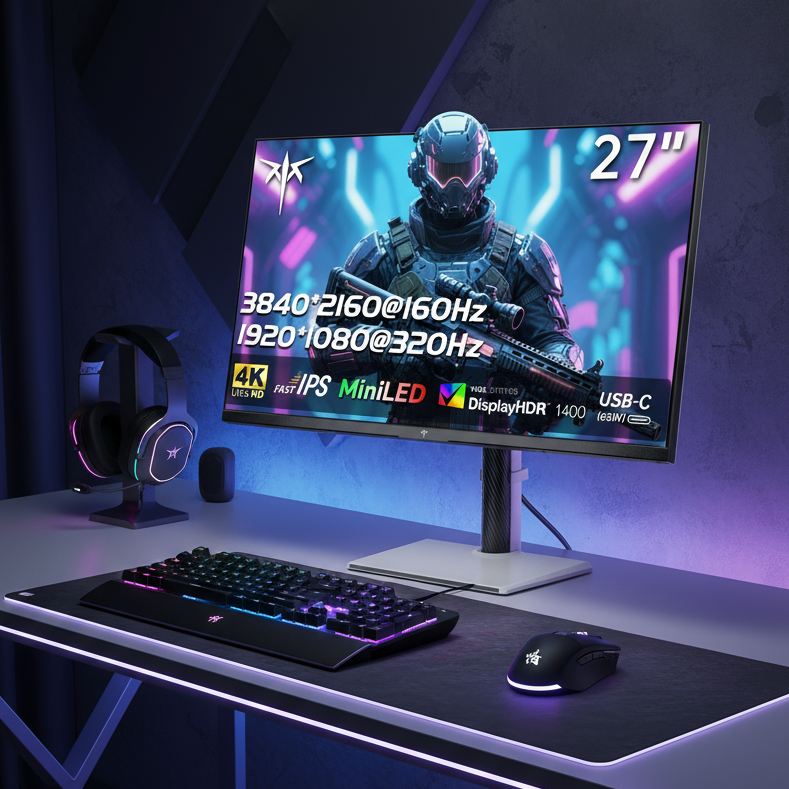
For users with KTC’s own large panels, such as the 32" 4K 165Hz Gaming Monitor, selecting a heavy-duty mechanical or high-tension gas arm from the start prevents the common regret of replacing the arm six months later.
Desk Compatibility: When BIFMA Standards Aren't Enough
A heavy-duty monitor arm creates a dangerous pivot point that concentrates torque on a small desk-edge area. Even desks that pass general ANSI/BIFMA X5.5 stability tests for distributed loads can still bow or crush under the concentrated clamp force of a 20–30 lb monitor on a long arm extension.

Engineered wood (MDF or particleboard) thinner than 0.75 inches will almost always deform over time. Steel reinforcement plates become mandatory in these cases to spread clamp pressure across a wider surface. Solid wood desks usually handle the load without reinforcement above moderate thickness, while glass or paper-honeycomb core desks should be avoided for heavy C-clamp use or require full top-and-bottom plates plus alternative mounting methods.
The chart below visualizes these practical thresholds by material and thickness.
This decision matrix clarifies why BIFMA compliance alone is often insufficient. For further reading on glass surfaces specifically, see our guide Can You Mount a Monitor Arm to a Glass Desk Without Breaking It? Safety Checks, Risks, and Better Setup Options.
Thunderbolt 5 Routing: The Hidden 'Stiffness Tax'
Thunderbolt 5 active cables up to 2 m long contain internal circuitry and heavy shielding that makes them noticeably stiffer than standard USB-C or passive cables. This rigidity demands larger bend radii, which reduces the cable’s effective usable length to roughly 1.6 m once routed through an articulating arm.
Budget arms with narrow snap-on cable covers frequently pop open or risk damaging the cable jacket. Prosumer setups therefore need arms that offer open-track or high-volume channels plus a dedicated drop-down loop near the VESA plate to relieve port tension. Leaving deliberate slack at the monitor end is also important to avoid constant levering force on the connector.
These physical constraints explain why many users who upgraded to Thunderbolt 5 report that their previous cable-management solution no longer works. Pairing a suitable arm with quality routing hardware keeps the desk clean while protecting expensive cables. Related articles that explore single-cable workflows include How a USB-C Monitor Can Streamline Your Workspace and DisplayPort Alternate Mode Over USB-C: How Video, Data, and Power Share the Same Lanes.
Ergonomic Stability: Holding the 40-Inch Viewing Distance
A 32-inch 4K display is best viewed from roughly 20 to 40 inches to keep the entire screen comfortably inside your natural field of vision without excessive head movement. On a standard 24-inch-deep desk this often requires significant depth adjustment from the arm so the screen can sit at the correct distance rather than too close to your eyes.
Heavy monitors amplify the challenge: cheap joints lose tilt and height tension within months, forcing constant readjustment that defeats the purpose of an ergonomic setup. High-quality arms with robust mechanical springs or dual-gas mechanisms maintain position reliably, reducing neck and eye strain during long work or gaming sessions.
Our broader guides on workspace health cover complementary choices: The Complete Guide to Finding the Best Monitor for Productivity & a Healthier Workspace and Home Office Setup Guide: How to Choose the Right Ergonomic Monitor.
Next Steps: Building Your 2026 Desk Infrastructure
Start by weighing your monitor without its stand and confirming its VESA pattern. Measure your desk thickness and material at the clamp location, then decide whether a reinforcement plate is required before ordering any arm. Choose a heavy-duty model with open cable channels sized for Thunderbolt 5 stiffness, and verify that its reach and tension ratings comfortably exceed your panel’s weight at full extension.
If your current desk cannot be reinforced safely, consider a solid-wood replacement or a dedicated monitor stand with a wider footprint. Once the physical infrastructure is in place, route cables with generous bend radius and test stability at every joint. This systematic approach prevents the most common sources of regret when moving to large 2026 displays.
FAQs
What weight rating should a monitor arm have for a 32-inch 4K panel?
Most 32-inch 4K monitors without stands weigh between 18 and 26 lbs. Select an arm rated for at least 30 lbs at full extension to provide a safety margin. Mechanical-spring or high-tension gas arms maintain better long-term stability than basic models.
Can I use a monitor arm on an IKEA desk without reinforcement?
Many IKEA desks use thin particleboard or honeycomb cores that crush under clamp torque. Unless the desk is solid wood at least 1 inch thick at the edge, install a steel reinforcement plate on both sides of the clamp area to prevent permanent damage or wobble.
Do Thunderbolt 5 cables really need special routing in monitor arms?
Yes. Their internal active circuitry makes them stiffer than ordinary cables, requiring wider bend radii and open cable channels. Tight snap-on covers often pop off or risk damaging the cable jacket or monitor port.
Is BIFMA certification enough to guarantee my desk can handle a heavy monitor arm?
BIFMA X5.5 tests general stability and distributed loads but does not always replicate the concentrated torque of a C-clamp on a long arm. Engineered-wood desks still usually need reinforcement even if they carry a BIFMA label.
How far away should I sit from a 32-inch monitor for comfortable ergonomics?
Ergonomic guidelines recommend 20–40 inches so the entire screen falls within your natural field of vision. A monitor arm with generous depth adjustment helps achieve this distance on standard-depth desks.
Should I choose a clamp mount or grommet mount for heavy monitors?
A grommet mount through a pre-drilled hole often provides more stability for heavy loads because it clamps from both top and bottom. If using a C-clamp, always pair it with a reinforcement plate on non-solid wood desks.