A 5K2K monitor can be worth the premium, but only when the panel, ergonomics, and support package match your workflow. The 2026 question is not whether every model is equal. It is whether you are paying for real creator gains or just a label that sounds professional.
Why the 5K2K Premium Keeps Growing
5K2K sits in a premium workspace tier because it combines a dense canvas with a wide desktop. In practical terms, 5K usually means a resolution around 5120 × 2880, so text and timelines can feel notably sharper than on a typical QHD display. That 5K definition matters because price comparisons only make sense when the underlying resolution class is the same.
A higher price is not automatically a scam. Some of it can reflect industrial design, support, calibration, a better stand, or a more flexible port layout. The mistake is assuming those extras prove the panel itself is better. For buyers comparing a 5K2K monitor against a premium-branded option, the first question is still, “What am I actually paying for?”

For most creators, the useful filter is simple: if the panel class, connection modes, and calibration are close, then the rest of the premium needs to justify itself through workflow or service. If those basics are not comparable, the brand premium may be buying a different product rather than a better one.
Where the “Pro” Label Adds Cost
The “Pro” label often bundles together several costs that are easy to miss when you focus only on the panel spec sheet. Distribution, warranty handling, packaging, software, and service coverage can all push pricing upward. That can be rational if you rely on faster support or a stronger return policy. It is less convincing if you only need sharp text and a stable creator desk.
A useful decision sentence is this: if your daily work depends more on image quality than on white-glove service, the premium should be judged against the panel, not the logo.
Why Panel Identity Matters More Than Branding
The value argument gets stronger when the visible specs line up and the panel origin can be verified. That does not prove two monitors are identical in every respect, but it does tell you whether you are comparing like with like.
For readers who want to follow the broader logic of spec-led buying, The 2026 'Spec-Sheet' Challenge frames the same question from the opposite direction.
What the Audit Can and Cannot Prove
This audit can tell you how to judge value, which specs matter, and where premium pricing often hides. It cannot prove that every OEM-sourced panel matches every branded 5K2K unit in the market.
How Brand Tax Shows Up in the Price
Brand tax is easiest to see when two products look similar on paper but land at very different prices. The gap can come from retail margins, channel strategy, support infrastructure, certification costs, bundled accessories, or a premium for industrial design.

This is where ROI thinking helps. The 2026 'Brand-Tax' Calculator helps you think through the premium in practical terms.
A second decision sentence is worth keeping in mind: if the brand premium does not buy a better stand, stronger support, or noticeably better workflow comfort, then the extra money is mostly buying status.
The Cost Is Not Just Panel Cost
Panel cost is only one part of the equation. A monitor with better enclosure work, more shipping support, or a longer return window may cost more even if the panel performance is close.
Why ROI Is Workflow-Specific
ROI is not a universal percentage. It depends on whether the monitor shortens grading sessions, reduces window switching, or makes text easier to read at your normal viewing distance.
That is why “pay more for better” can be true in one studio and wasteful in another.
When the Premium Is Easy to Defend
The premium makes the most sense when the seller proves a real service advantage, the stand solves a setup problem, or the calibration support saves time.
What to Verify Before Paying More
Before you compare prices, verify the panel model or the closest available panel identifier. That is the cleanest way to test whether a 5K2K monitor is offering a true hardware match or just a similar headline spec.
A good example of a transparent spec sheet is the KTC 27" 5K@60Hz 2K@120Hz Home&Office Monitor | H27P3. It lists the panel as ME270L7B-N23 IPS, supports 5120×2880 at 60Hz and 2560×1440 at 120Hz, and shows factory calibration at ΔE<2.
Panel Model and Spec Sheet Match
If the panel model is published, use it. If it is not, look for enough secondary detail to test whether the product is truly comparable.
The H27P3 is also a good reminder that some value comes from the whole package. Its 65W USB-C charging, 500 nits brightness, 2000:1 contrast, and 75×75 VESA support all affect real use.
Color Coverage Versus Gamut Volume
Color specs are easy to misread. Coverage tells you how much of a reference color space the display can reach. Gamut volume tells you how much total color space it spans, and values above 100% are normal. RTINGS explains the difference clearly. The CIE defines colour gamut as a range of colours achievable on a given colour reproduction medium (ScienceDirect).
For creators, that distinction changes the buying call. Coverage is usually the safer number to focus on when you want predictable color target reach.
Ports, Refresh Modes, and Desk Ergonomics
Ports and refresh behavior can change value even when two monitors seem similar on paper. A dual-mode panel that switches between native 5K and a higher-refresh lower-resolution mode may be a better fit for mixed editing and light gaming than a fixed 60Hz-only display.
Ergonomics matter too. If the stand only tilts, that can be fine on a static desk. If you need height, swivel, or portrait changes, the lack of adjustment becomes a real cost.
Warranty, Returns, and Support Are Part of Value
Warranty and return policy are not proof of panel equivalence, but they do affect ownership cost. The 2026 OEM Support Audit shows how to check regional coverage before buying.
How 5K2K Fits Creator Workflows
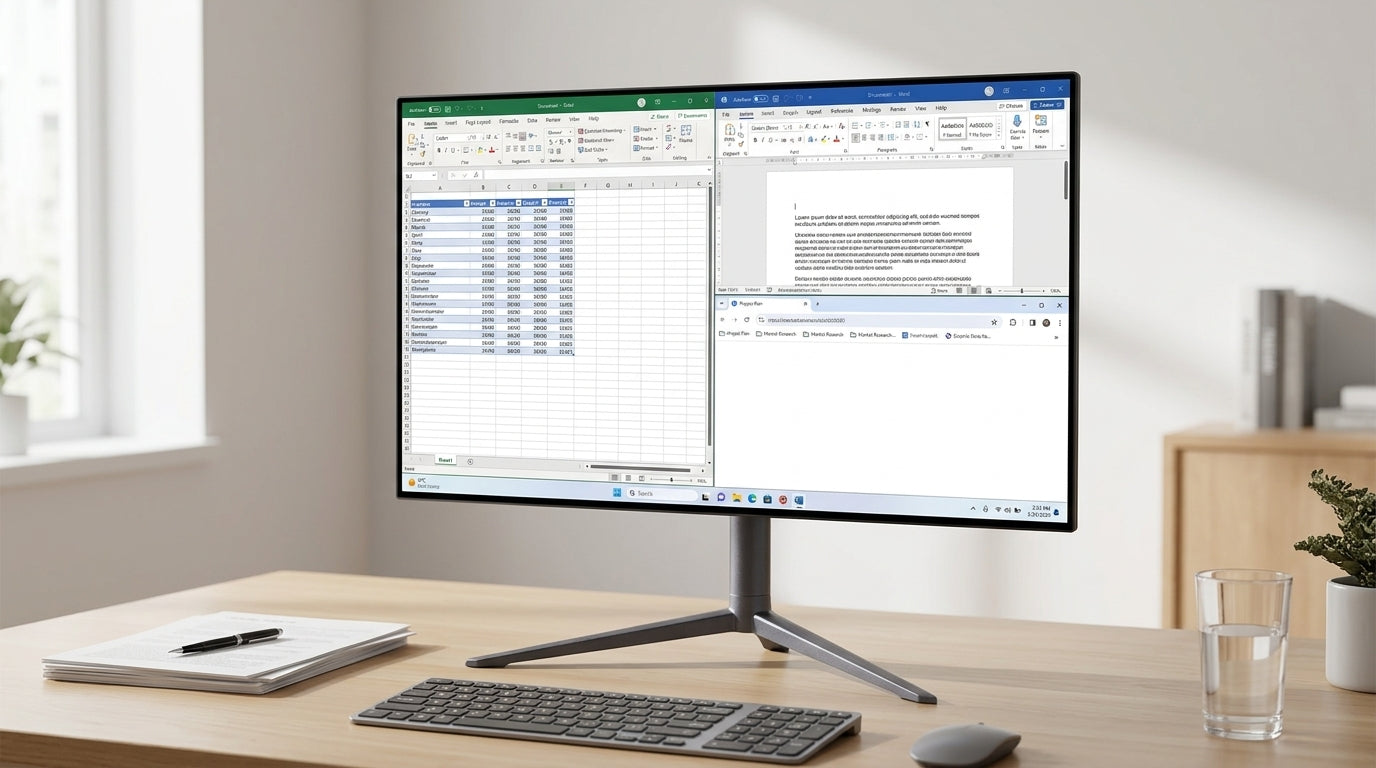
A 5K2K monitor helps most when the work mixes dense text, timeline management, and side-by-side panels. In real use, that usually means editors, motion designers, and color-focused creators who want both horizontal room and sharp detail.
For a broader ultrawide alternative, the KTC 49" DQHD 180Hz 1000R Curved Gaming monitor丨H49S66 shows what happens when the priority shifts toward pure horizontal workspace.
Timeline Width and Dual-Window Editing
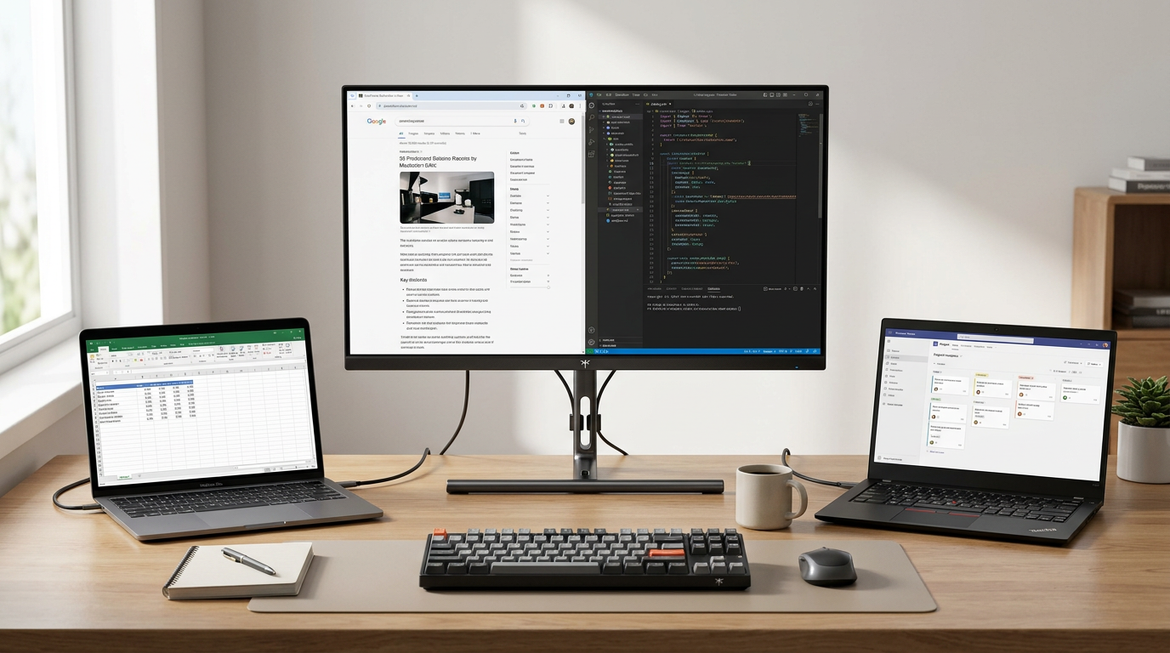
For editors who keep dual timelines open, a 5K2K-style canvas can make window management feel calmer. You do less tab switching and spend less time zooming panels in and out.
The flip side is that a super ultrawide can be better when the problem is horizontal space rather than text density.
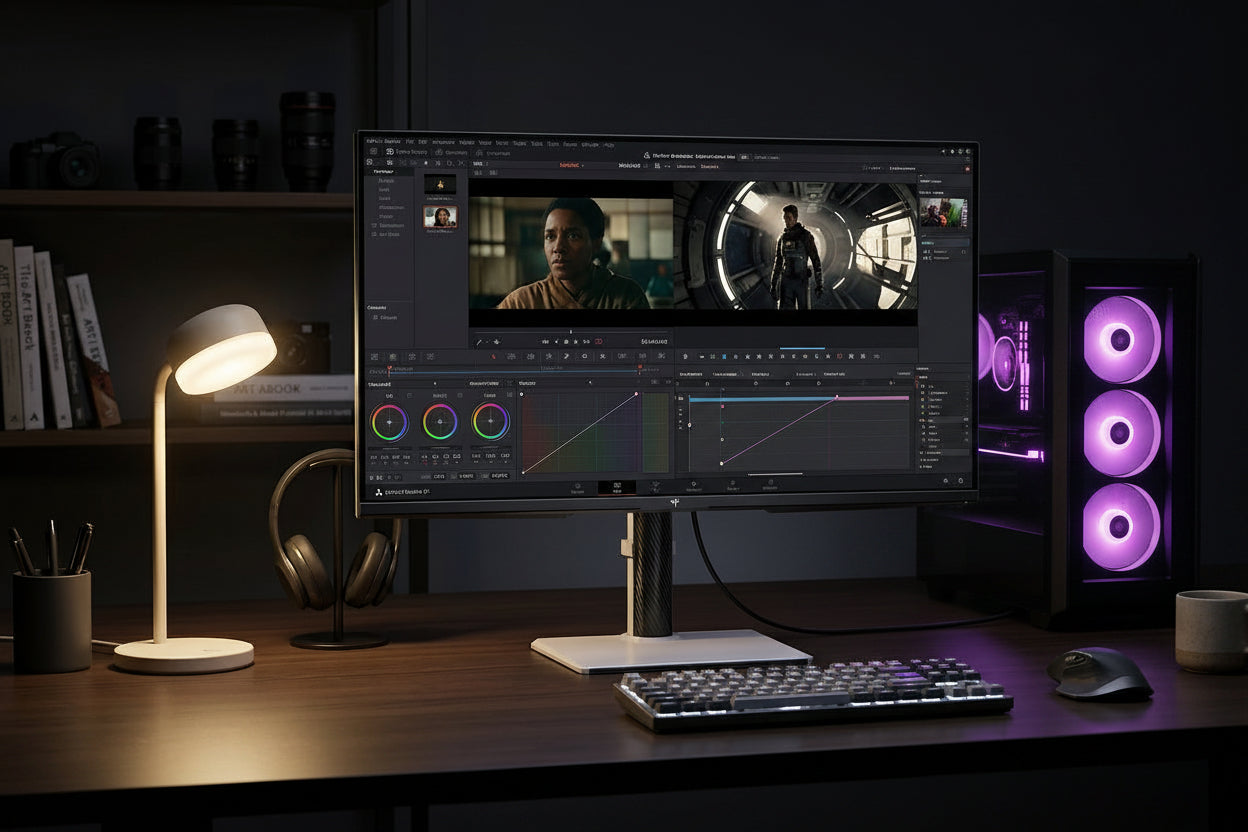
Color-Critical Work on a 5K Canvas
For color work, the main benefit is not just size. It is the combination of resolution, panel quality, and calibration.
That said, color-critical buyers should not overrate resolution alone. A 5K panel still needs the right color behavior, the right viewing comfort, and a setup that matches the software pipeline.
When 5K2K Is the Wrong Fit
A 5K2K monitor is not the best answer if you mostly need a cheaper productivity screen, if your desk is too shallow, or if your hardware struggles with high-resolution output.
The Buy, Wait, or Skip Decision
- Buy now if you have a real creator workflow, can verify the panel identity, and the stand, ports, and support terms fit your desk.
- Buy now if 5K text clarity or a dual-mode creator setup will save time every day, not just impress you on day one.
- Wait if the listed specs look promising but the panel identity is unclear or the support package is underspecified.
- Wait if your current monitor already handles your timeline or grading work well and the upgrade is mostly curiosity.
- Skip if you only need general office use, light editing, or a basic office monitor where 5K does not change the outcome.
- Skip if the premium is mostly branding and none of the extra cost improves comfort, support, or output quality.
- Compare against cheaper paths if you are deciding between a 5K2K monitor and a strong QHD or 4K alternative from the broader Above $200 Monitors or the wider 4K & 5K High-Refresh Monitors range.
If you want the simplest rule, use this checklist before checkout:
- Confirm the panel model or the closest verifiable panel identifier.
- Check whether the resolution, refresh mode, and port set match your workflow.
- Decide whether the included stand solves your desk ergonomics.
- Compare warranty, returns, and support against the extra price.
- Ask whether the premium changes your daily work, not just the spec sheet.
For a broader browsing path, Above $400 Monitors is the right place to compare premium-tier displays, while Discount Eligible Products is better if your priority is value hunting rather than label chasing. Winning the Filter: Why KTC Dominates Spec-Based Monitor Searches in 2026 offers additional filter guidance.
FAQs
Q1. How Can OEM Panels Deliver Better Value in 2026?
OEM panels can deliver stronger value when they give you the same resolution class, color behavior, and workflow fit at a lower price than a prestige-branded model. The key is not that every OEM unit is identical, but that some buyers can get the panel performance they need without paying for extras they will never use.
Q2. What Matters Most in a 5K2K Monitor for Video Editing?
For most editors, the biggest factors are workspace layout, text clarity, color behavior, and whether the stand and ports support the way they actually work. A 5K2K monitor helps most when it reduces panel clutter and makes timelines easier to manage without sacrificing image detail.
Q3. Why Should Buyers Verify the Panel Model Before Paying More?
Because the panel model is the fastest way to test whether two monitors are truly comparable. Without it, a price gap may reflect different hardware, different support, or different ergonomics. Verification keeps the comparison honest and reduces the chance of paying a premium for a vague promise.
Q4. Can a Higher-Priced Monitor Still Be Worth It?
Yes, if the higher price buys better support, a more useful stand, clearer calibration confidence, or a smoother ownership experience. It is less compelling when the extra cost does not change your daily work. The premium should improve the way you use the monitor, not just how it looks in a product page.
Q5. What ROI Should Creators Expect From a 5K2K Upgrade?
Expect ROI only when the monitor saves time, reduces friction, or improves comfort often enough to matter every week. For editors and designers, that can mean fewer window changes, better text readability, and more efficient timeline review. For lighter use, the ROI may be mostly aesthetic.
The Practical Takeaway for 2026 Buyers
A 5K2K monitor is worth paying for when the panel identity is clear and the workflow gain is real. It is not worth paying extra just because the label sounds premium. If the spec sheet, ergonomics, and support package match your job, buy with confidence. If they do not, a cheaper 4K or QHD setup is often the smarter move.
Scenario check: If your desk depth is under 24 inches or your GPU tops out at 4K output, test a 27-inch 4K first. If daily timeline work exceeds six hours and text legibility matters more than refresh rate, the verified 5K panel usually justifies the step up.