Budget-conscious creators can get a good color accurate monitor without jumping straight to OLED. The safer choice usually depends on workflow, room light, and how long static tools stay on screen. If you edit photos, design for the web, or keep a fixed desk setup, the better buy is typically the one that matches your color target and space, not the one with the flashiest marketing. For buyers who want to avoid OLED risk, an IPS or Mini-LED option is often the more practical lane.

Why Budget Creators Still Need Color Accuracy
A budget monitor can be good enough for creative work if it gives you predictable color, stable viewing, and the right gamut for your workflow. That matters more than chasing a premium panel class just because it sounds more professional.
For web design, the main question is usually whether the display behaves well in sRGB-first work. For photo editing or print-leaning projects, broader gamut support can matter more, but wide gamut alone does not guarantee accurate output. The ICC's color gamut and color space basics are a useful reminder that coverage and volume are different ideas.
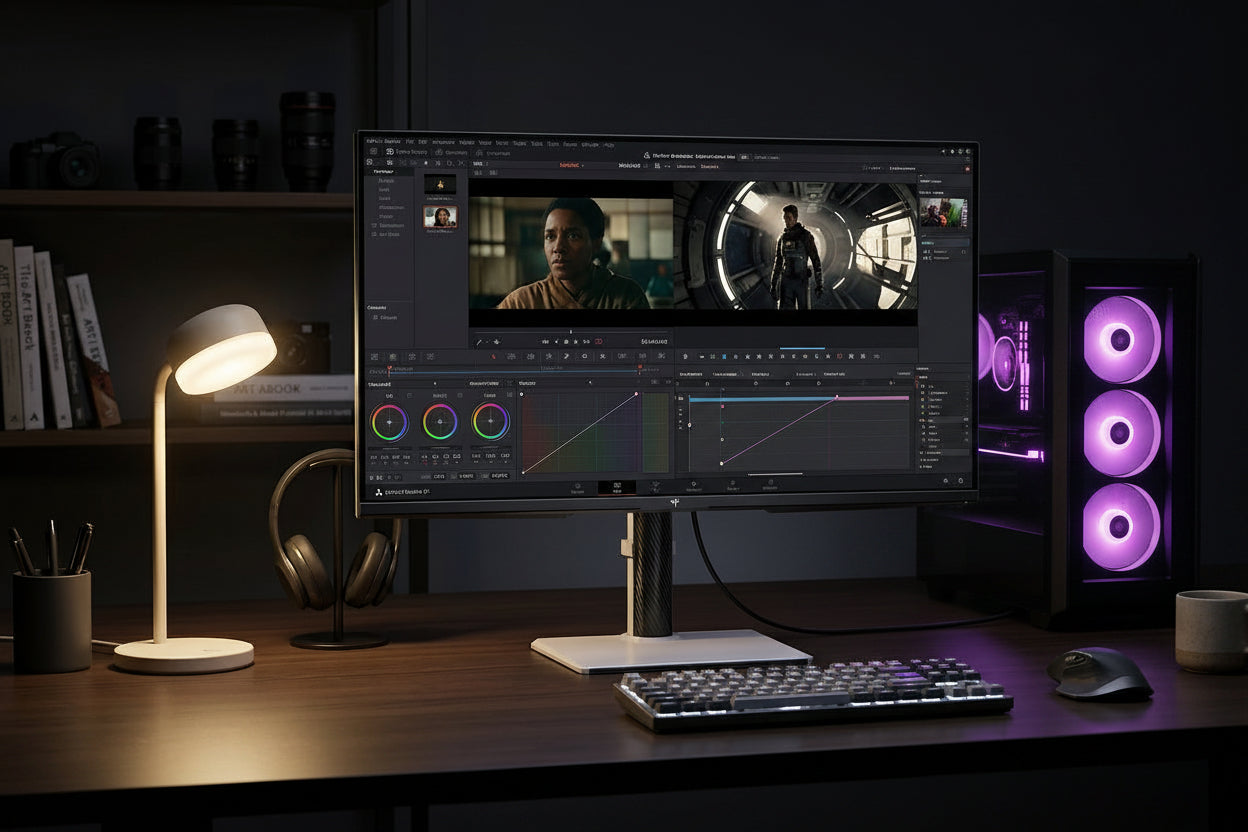
OLED is not the only serious option. RTINGS' long-term OLED burn-in testing shows why static UI elements deserve caution for creators who keep toolbars, timelines, or palettes visible for hours. That does not make OLED unusable, but it does make IPS and Mini-LED easier to justify for buyers who want lower worry on a working desk.
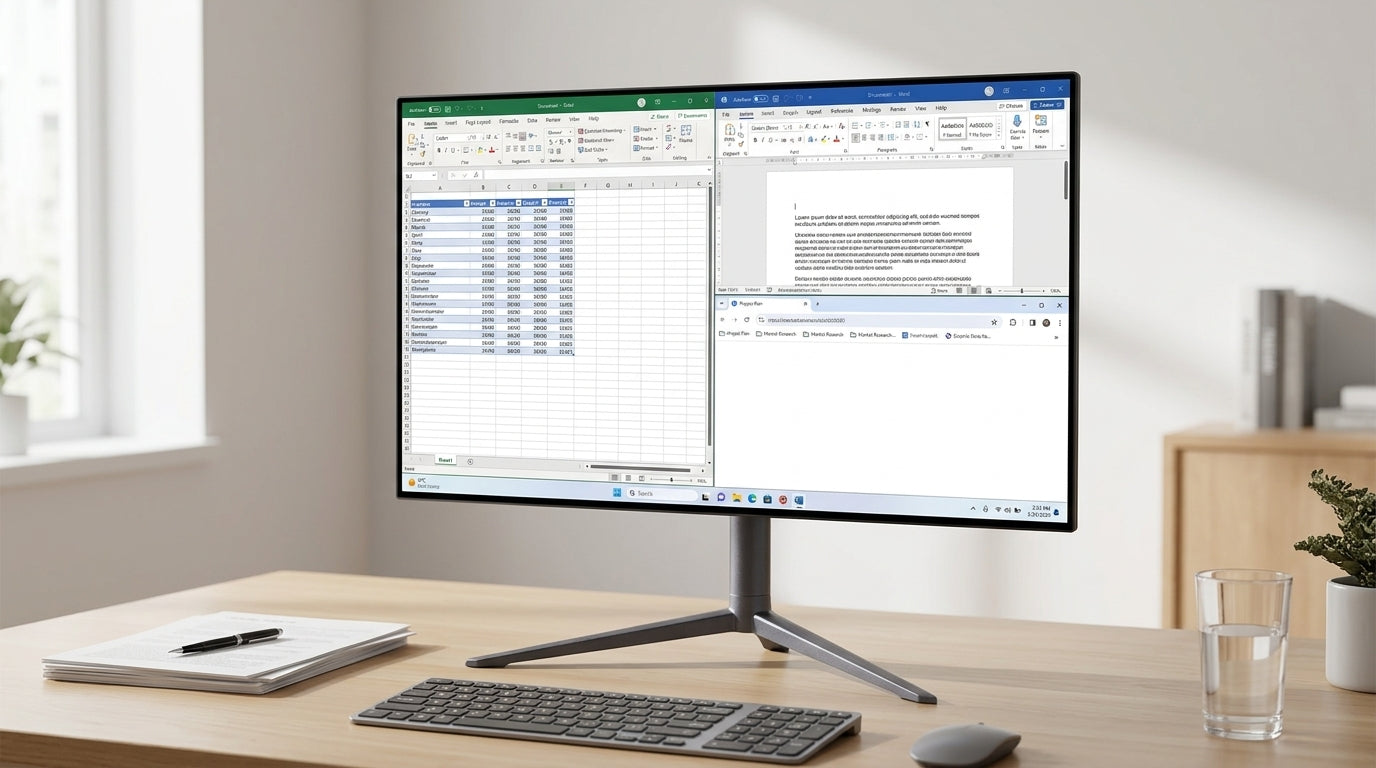
If your setup is mostly browser tabs, Photoshop panels, Lightroom, or Figma, start with fit and consistency first. If you want a simple browse path, IPS monitors are a sensible place to narrow the field.
Specs That Actually Matter for Creators
The first filter is workflow, not spec sheet drama. A best budget color accurate monitor for photo editing should be judged differently from a best monitor for web design on a budget because those jobs do not ask for the same color range.

Coverage Versus Volume
Coverage tells you how much of a reference color space a monitor can reach. Volume tells you how large its total color range is relative to that space. That means a high gamut volume number can sound exciting without proving the display is more accurate for everyday creative work.
For web work, sRGB coverage is usually the safer starting point. For wider-gamut photo work, Adobe RGB and DCI-P3 become more relevant, but only if your software and files are set up to handle them. The practical rule is simple: match the gamut target to the work, then verify the rest of the chain.
Factory Calibration and Delta E
Factory calibration is helpful because it can get a monitor close to usable color out of the box. It is not a promise that every unit will be perfect after shipping, setup, and room changes.
Delta E, often written as ΔE, is a way to describe color error. Lower is better, and a low value is a good sign, but it still does not replace real-world checking after you plug the monitor in. A spec-per-dollar buying frame is useful here: pay for the specs that affect your workflow, not for branding that sounds premium.
Panel Type and Uniformity
For creator buyers, IPS and Mini-LED are usually the practical starting points because they tend to fit color work better than gaming-first panels with stronger trade-offs. IPS is often easier to live with when you care about viewing consistency across the screen.
Uniformity matters because edge tint, patchiness, or brightness falloff can make the same image look different from one part of the panel to another. That is especially annoying when you compare skin tones, gray backgrounds, or neutral layouts. A monitor can still be useful with mild variation, but the more you edit for client-facing work, the more you should care.
Brightness, Contrast, and Viewing Stability
Brightness should be judged by your room, not by peak numbers alone. If your desk gets daylight or you compare images side by side, a monitor that stays readable at normal brightness is more useful than one that only looks impressive in a spec list.
Contrast affects shadow detail, but HDR marketing can distract from accurate SDR editing. If your work is mostly web graphics, thumbnails, or general design, consistent SDR behavior matters more than a dramatic HDR badge. Wide viewing angles also help when you lean back, share the screen, or work long sessions without constantly repositioning your chair.
What to Ignore on Gaming-First Listings
Do not let gaming language push creator needs out of the decision. A higher refresh rate can feel smoother, but it does not by itself make a monitor better for color work.
- Ignore refresh rate bragging if the panel is weak on sRGB or calibration.
- Treat flashy HDR claims as secondary unless your work truly depends on HDR.
- Do not overpay for RGB accents that do nothing for color accuracy.
- Be careful with wide-gamut marketing if your apps and files are mostly sRGB.
- Remember that OLED avoidance is about workflow fit, not a blanket verdict on every display.
- Do not assume "gaming monitor" means "bad for creators," because some models are simply mixed-use compromises.
If you want help spotting the more common traps in gradient-heavy work, color banding basics are worth a quick read before you buy.
Value Monitors Worth Comparing First
A neutral shortlist works better than a one-size-fits-all recommendation. The table below shows how different monitor classes fit different buyer conditions.
| Model | Best Fit | Color Profile Strength | Risk / Tradeoff | Why It Belongs on the Shortlist |
|---|---|---|---|---|
| M27T6S | Creators who want stronger gamut coverage and Mini-LED contrast without OLED | Strong creator coverage, plus Mini-LED contrast | More of a hybrid creator-gaming pick than a pure office monitor | Good if you want a broader creative toolset and still want burn-in-free hardware |
| H27P6 | Mixed-use buyers who want 4K sharpness and creator-friendly color in one screen | 4K creator balance | Dual-mode speed is useful, but the real reason to buy it is the creator balance | A strong fit when you want one monitor for design, editing, and occasional gaming |
| H27P27 | Budget 4K office and creator-adjacent use | Strong sRGB-oriented everyday work support | Fixed stand and 60Hz class behavior make it less flexible for mixed use | A sensible low-cost entry if you care more about pixel density than speed |
| H27T27 | Entry-level QHD users who want value first | Everyday productivity color support | Better for general productivity than demanding photo work | Good for buyers who want a cheaper step up from basic office panels |
| M27P6 | Buyers who want premium Mini-LED HDR and broader creative coverage | Stronger HDR-oriented creative headroom | More expensive, so it makes sense only when the stronger HDR and coverage matter | Worth comparing if you want the highest-end non-OLED path in this group |
What this means in practice: the affordable monitor for Adobe RGB and sRGB work is not always the same screen that looks best for gaming. If your day is mostly web design, a cheaper sRGB-stable option can be enough. If you edit photos or want stronger HDR headroom, a Mini-LED model is easier to defend.
How to Verify a Monitor Before You Buy
Use this quick checklist before checkout so you do not pay for the wrong kind of creator monitor.
- Check the color target first. If your work is web-first, prioritize sRGB. If you regularly edit photos for richer output, compare Adobe RGB or DCI-P3 coverage too.
- Look for factory calibration, but treat it as a starting point, not a final guarantee.
- Confirm the panel class. IPS is usually the safer default for stable viewing, while Mini-LED can be more appealing when you want stronger HDR headroom.
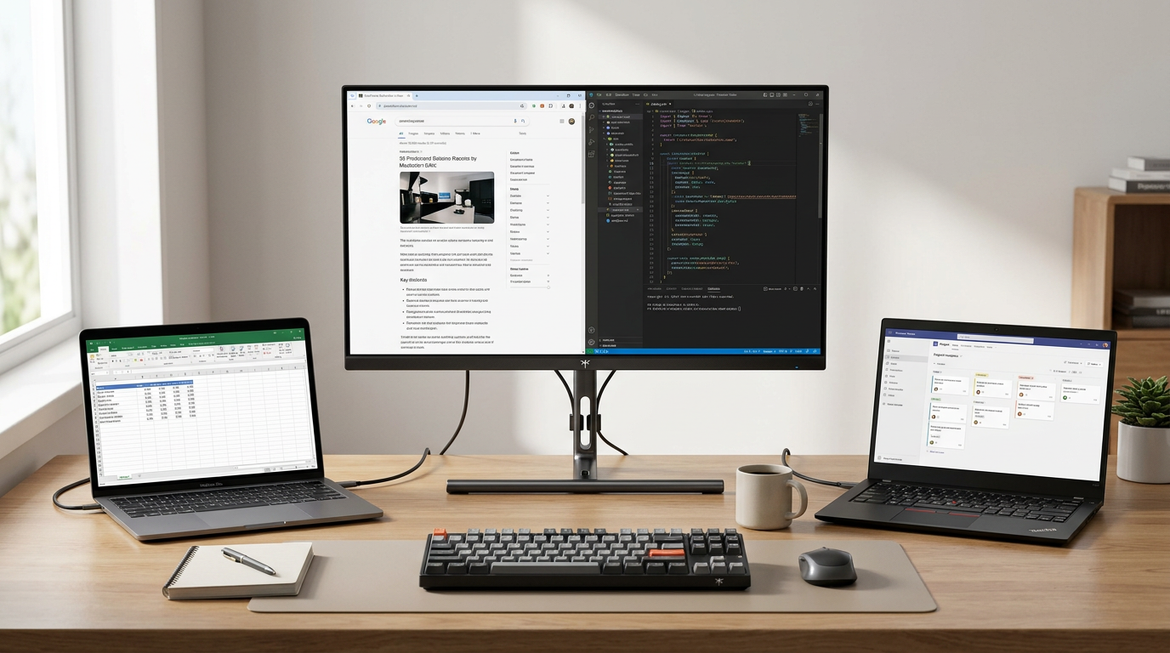
- Check the stand and desk fit. A monitor that is technically good but awkward on your desk can become annoying fast.
- Review return policy and warranty before you buy. Creator color is model-specific, and a return window matters if the unit looks off in your room.
- Think about app support. Color-managed software helps wide-gamut displays behave better than general desktop use alone.
- If you are comparing products in the $200 to $400 monitor range, focus on fit and support rather than headline brightness claims.
If a monitor seems promising on paper but you worry about long-term drift, panel accuracy over time is a good reminder to plan for recalibration or at least periodic checks.
Pick the Right Monitor for Your Workflow
For most buyers, the right color accurate monitor comes down to the way you actually work, not the biggest spec number on the page.
For Web Design and sRGB-First Work
Choose a monitor with strong sRGB coverage, stable viewing angles, and a stand that fits your desk. In many cases, a 27-inch QHD or 4K IPS display is the cleanest budget choice because it gives you predictable output without dragging in extra cost you will not use.
For Photo Editing and Wider-Gamut Work
If you edit photos, print occasionally, or work with richer source files, broader gamut support matters more. Mini-LED can be attractive here because it gives you stronger HDR headroom while staying away from OLED risk concerns. Just remember that wide gamut still needs color-managed apps and a sensible setup.
For Mixed Creator and Gaming Desks
If you really do switch between work and play, balance matters more than a single creator spec. A dual-mode or high-refresh display can make sense, but only if creator color does not get sacrificed in the process. Mini-LED creator-gaming options can work well when you want one screen to cover both jobs.
For Buyers Who Want to Avoid OLED Risk
If your desk keeps toolbars, timelines, or palettes on screen for hours, it is reasonable to prefer IPS or Mini-LED. That is a workflow choice, not fear. The main thing is to compare color target, price, sharpness, and ergonomics before you decide that OLED avoidance alone solves the whole purchase.
Final Buyer Checklist
Before you check out, confirm the color target, factory calibration claim, panel class, stand adjustment, and return policy. Make sure the monitor fits your software workflow and room lighting, not just the product page. If you want the cheapest solid step up, stay in the budget IPS lane. If you want more creative headroom, move up to a Mini-LED or higher-tier creator display only when the extra coverage and HDR actually matter.
FAQs
How Do I Know If a Budget Monitor Is Good Enough for Color Work?
Look for the right gamut target first, then check for a credible factory calibration claim, stable viewing angles, and a stand that fits your desk. A cheap monitor can still be usable for creative work if it matches the workflow and does not fight your room setup.
What Matters More: sRGB Coverage or Adobe RGB Coverage?
For web design and most digital-first work, sRGB is usually the first thing to prioritize. Adobe RGB matters more when you are working in print-oriented or broader-gamut photo workflows. If you never leave sRGB-based apps, paying extra for wide-gamut coverage may not help much.
Can a Factory-Calibrated Monitor Still Need Adjustment?
Yes. Factory calibration is a useful starting point, but room light, software color management, and normal panel drift can still change how the screen looks over time. Treat it as a head start, then check it against your own desk conditions.
Why Do Some Creators Avoid OLED Even at Lower Prices?
Some buyers prefer IPS or Mini-LED because their workflow keeps static UI elements on screen for long periods and they want to avoid burn-in concerns. That is especially common for editing, design, and mixed-use desks where the monitor stays in one place for hours.
Can a Cheap Monitor Still Be Accurate Enough for Photos and Design?
It can be, but only if you choose the right class of display and accept the tradeoffs. Low price alone does not guarantee accuracy or uniformity, so check the gamut target, calibration claim, and return policy before you buy.
Wrap-Up
For most creators shopping on a budget, the best move is to match panel type and color target to the work you actually do. IPS is the simplest default for stable, affordable color work, while Mini-LED is worth considering when you want more HDR headroom and a stronger non-OLED path.