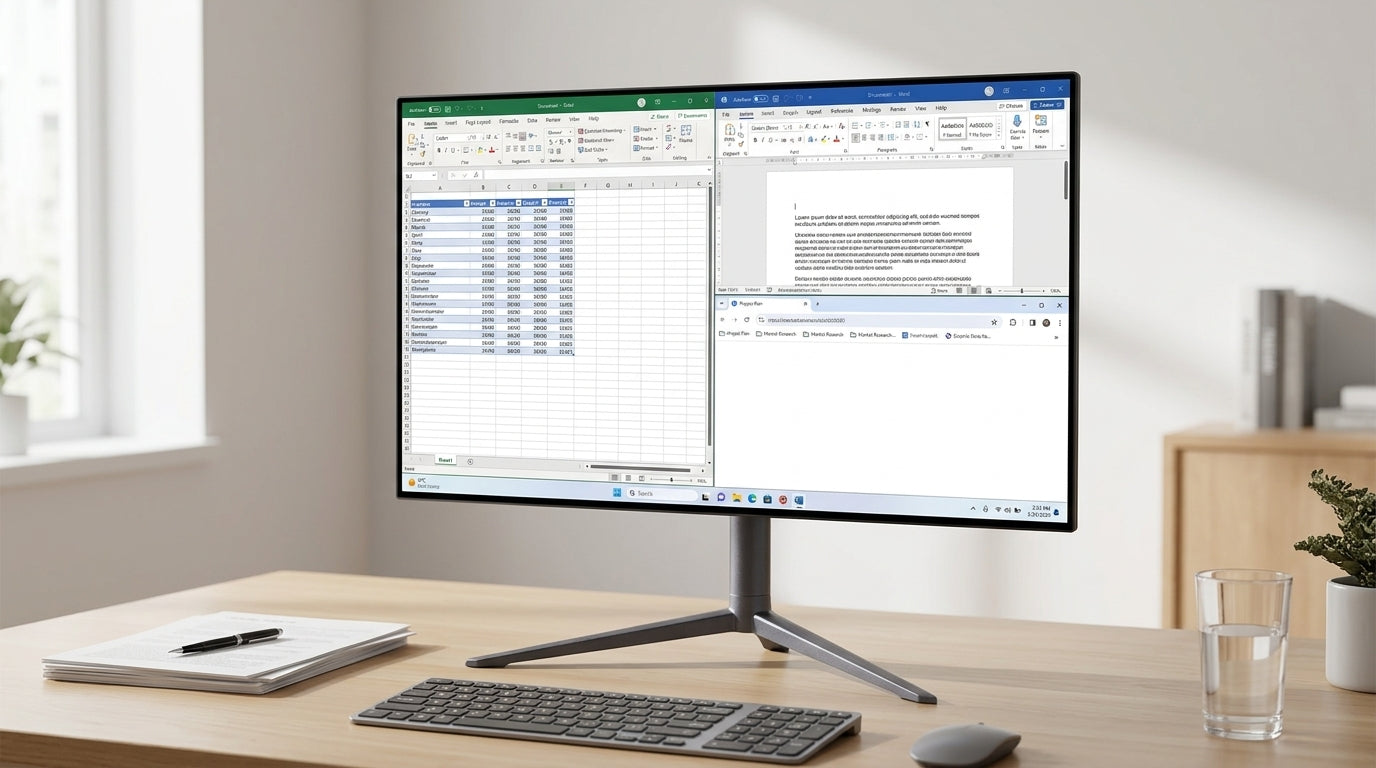
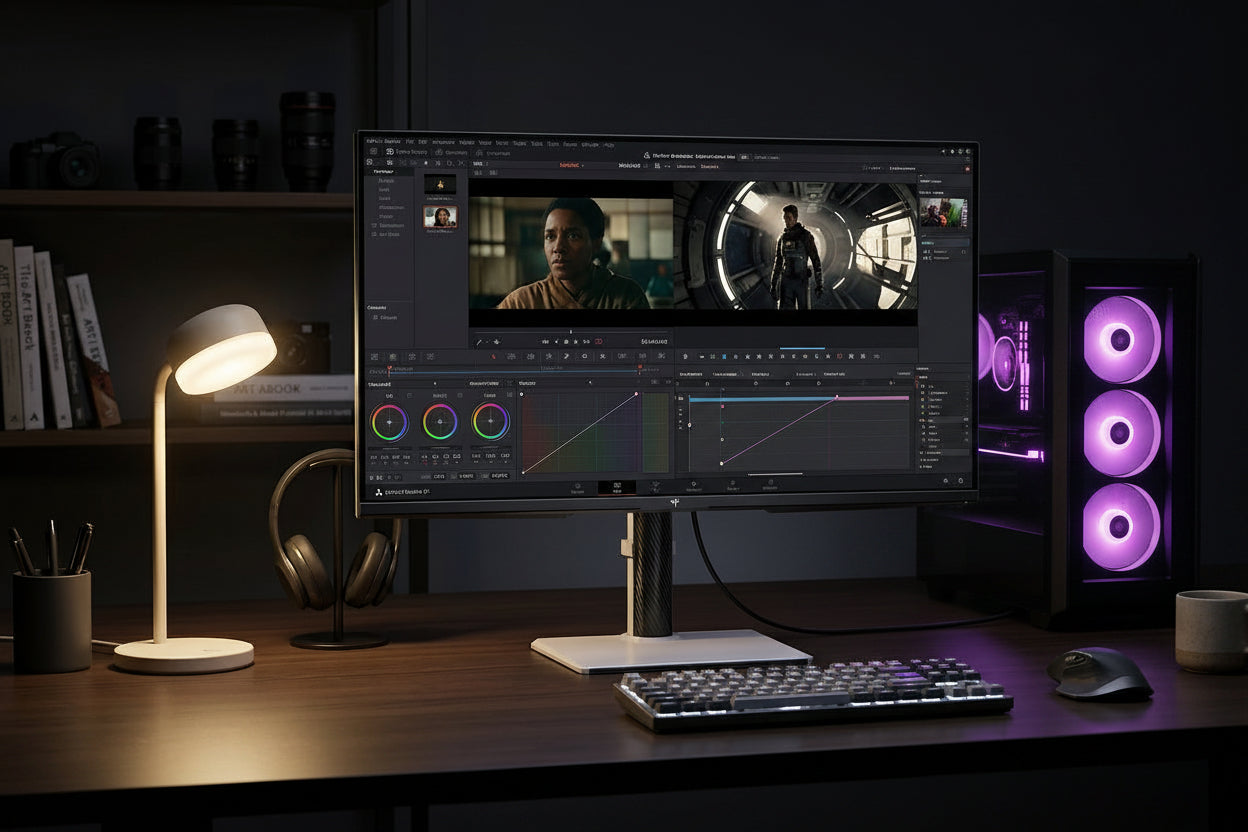
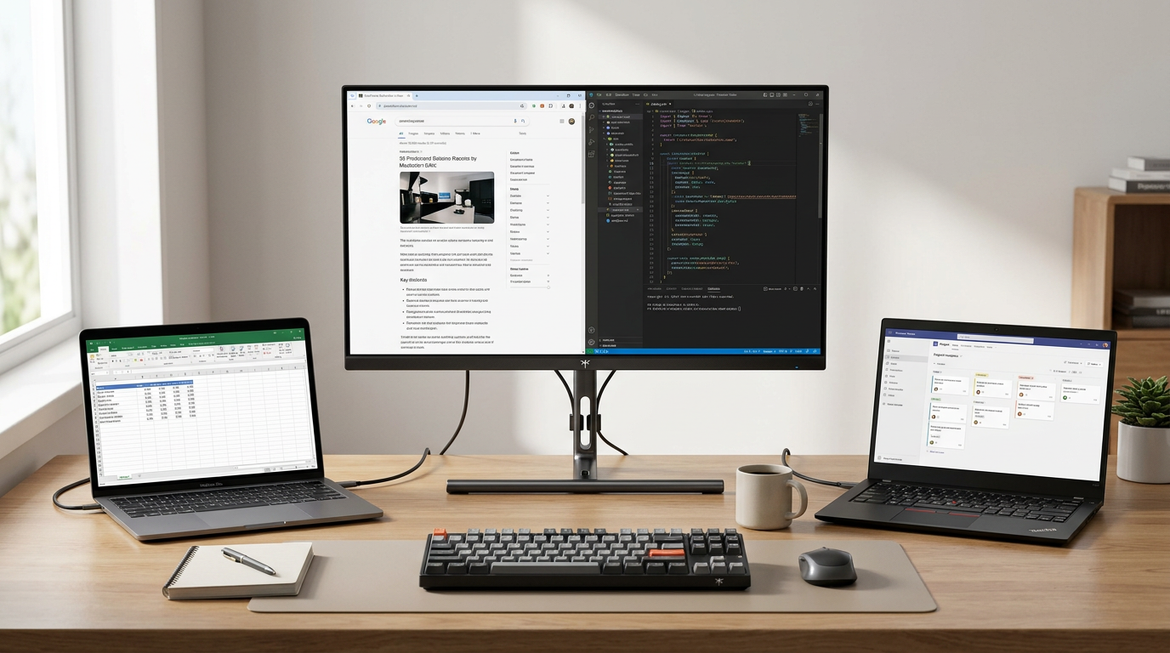
Mini-LED monitors can be a smart middle ground for mixed gaming and work because they aim to improve contrast and HDR performance without giving up the productivity-friendly layout many people want for spreadsheets, editing, and everyday multitasking. If you want one display that can handle office tasks during the day and games after hours, a Mini-LED monitor is worth a close look.

The short answer is that Mini-LED makes the most sense when you care about both image quality and flexibility. It is not automatically the best choice for every buyer, though. Price, brightness behavior, local dimming quality, and text clarity can matter just as much as panel size or refresh rate. For broad context, the Monitor Buying Guide, the Gaming Monitor Guide, and the USB-C Monitor Guide are useful starting points.
Why Mini-LED Fits Mixed Use
Mini-LED is attractive for mixed-use buyers because it sits between basic LCDs and OLED in a way that often feels practical. As RTINGS explains, Mini-LED can deliver higher peak brightness than OLED while avoiding burn-in anxiety, which matters if your desk sees both static work windows and fast-moving games.
That is the main appeal, but it is also the first place expectations need to stay realistic. Mini-LED does not mean perfect blacks, and it does not erase blooming around bright objects on dark backgrounds. In mixed use, the best fit is usually the monitor that balances brightness, dimming control, color coverage, and ergonomic adjustment instead of chasing one headline spec.
A practical decision sentence: if you split your time between dark-mode work and HDR gaming, Mini-LED is often a better fit than a basic LCD, but it is not a fit if you expect OLED-like black levels without any haloing.
For mixed-use shoppers, two experiences matter at once. During the day, you want text that stays readable and a screen that does not feel tiring. At night, you want games to show brighter highlights and deeper scene contrast. That is why the first half of the buying process should focus on fit, not model names.
What Matters in a Mixed-Use Mini-LED
For most buyers, the right starting point is not the zone count alone. It is how the monitor behaves across HDR, SDR, and everyday desktop use.
Higher peak brightness helps HDR scenes stand out, but the number of dimming zones and the local-dimming behavior affect how controlled the image feels. Local dimming overviews note that Mini-LED improves contrast and HDR, yet remains zone-limited rather than per-pixel.
For office work, buyers should pay attention to SDR brightness, color coverage, and whether the screen stays comfortable for long reading and spreadsheet sessions. For mixed desks, that can matter as much as raw HDR brightness.
Connection mix matters because HDMI and DisplayPort determine which refresh-rate or resolution modes are realistic on a given PC or console. Stand flexibility matters because height, swivel, pivot, and tilt reduce fatigue during all-day use.
What this means in practice is simple: if one monitor has to serve both work and gaming, a slightly weaker HDR spec with better ergonomics can be more useful than a brighter model that is awkward on the desk.

If you want a browsing path before comparing models, the All-Mini-LED Monitors collection is the most direct starting point. The broader Gaming Monitor collection helps when you are comparing Mini-LED against other gaming-first screens, and the 4K Monitor collection is useful if desktop sharpness is the priority.
Comparing the Main Value Tiers
The three main Mini-LED options here split cleanly by resolution, speed, and desk role. The table below summarizes safe starting points based on the available product facts.
| Model | Price Tier | Resolution | Refresh Rate | HDR Peak Brightness | Dimming Zones | Stand Adjustability | Best Fit |
|---|---|---|---|---|---|---|---|
| M27P6 | Higher | 3840×2160 | 160Hz | 1400 nits | 1152 | Full ergonomic adjustment | 4K desktop clarity, premium HDR, and console or high-end PC use |
| M27T6 | Mid | 2560×1440 | 180Hz | 1400 nits | 1152 | Full ergonomic adjustment | Best value balance for mixed gaming and productivity |
| M27T6S | Lower-mid | 2560×1440 | 200Hz | 1000 nits | 1152 | Full ergonomic adjustment | Faster 1440p play and laptop-friendly desks |
The 4K option suits buyers who want sharper desktop text and a more premium HDR position in the group. The 1440p 180Hz option is the clearest value play for buyers who want strong HDR without stepping into the highest price tier. The 1440p 200Hz option is best for buyers who want a slightly faster mixed-use monitor and may appreciate USB-C power delivery on a laptop desk.
Decision sentence: if your workday is heavy on text and window management, the 4K model is the cleanest desktop fit; if your priority is gaming value without giving up HDR entirely, the 1440p 180Hz model is the safer pick.
For a closer look at the featured options, the KTC Mini LED 27" 4K 160Hz HDR1400 Gaming Monitor | M27P6, KTC Mini LED 27" 180Hz 2K HDR1400 Gaming Monitor | M27T6, and KTC Mini LED 27" 200Hz 2K HDR1000 Gaming Monitor | M27T6S are the most relevant pages to compare.
Mini-LED Monitor Fit Comparison
| Model | Resolution fit | Gaming speed | HDR brightness | Desk convenience |
|---|---|---|---|---|
| M27P6 | Best for 4K desktop clarity | Strong | Strongest | Strong |
| M27T6 | Best balanced 1440p choice | Strong | Strong | Strong |
| M27T6S | Best if 200Hz matters more than peak HDR | Strongest | Moderate | Strong |
Blooming, SDR, and Bright-Room Reality
This is the section where many Mini-LED buyers either feel reassured or decide the category is not for them. Mini-LED can look excellent in HDR, but bright UI elements on dark backgrounds may still produce visible halos depending on the scene and dimming behavior. Background tests on local dimming show that blooming can be visible around bright elements on dark screens because the backlight works in zones, not per pixel.
Desktop tasks can feel different from games because static elements such as cursors, toolbars, and windows influence how dimming zones behave. In other words, the same monitor can feel more controlled in motion than it does on a dark spreadsheet or browser window.
Decision sentence: if you spend a lot of time in dark-mode apps and hate halos around white text or UI bars, Mini-LED may still work, but it is a conditional buy rather than a safe default.
Content pace matters too. Blooming visibility can change with what is moving on screen, so high-refresh gaming may hide artifacts that are easier to notice in slower desktop use. That is why the most honest buying test is not a spec sheet; it is how the monitor behaves on your actual desk.
Buyers in bright rooms should value higher brightness and anti-glare behavior, but they should not assume a bright room automatically fixes dimming artifacts. The room can help visibility, but it does not remove the trade-off.
A useful rule of thumb is this: if your room is bright and your work is mostly light-background content, Mini-LED is easier to justify; if you live in dark-mode apps and stare at static UI all day, the bloom trade-off becomes more important.
Which Model Fits Which Buyer
Use the model that matches your room, workload, and budget, not the one with the biggest headline spec.
- Choose M27P6 if you want the sharpest 4K desktop experience and the strongest premium HDR position in the group.
- Choose M27T6 if you want the clearest value balance for gaming and productivity and do not need 4K.
- Choose M27T6S if you want the fastest 1440p option here and appreciate USB-C power delivery for a laptop-oriented desk.
- Choose a Mini-LED monitor when HDR brightness and burn-in avoidance matter more than OLED-level pixel response or perfect black-level behavior.
- Choose the model with the stand and input mix that matches how often you switch between PC, console, and laptop use.
Decision sentence: if you switch between a laptop for work and a gaming PC at night, the 200Hz model is the most convenience-oriented choice, but if your main concern is HDR impact and 4K text clarity, the 4K model is the better fit.
If you want a broader browsing path before buying, the Gaming Monitor collection is still the easiest category page to use, while the All-Mini-LED Monitors collection keeps the search focused on this backlight type.
Final Checks Before You Buy
Before checkout, confirm your main use case first, because 4K desktop work and high-refresh gaming do not always point to the same model. Then check the input ports on your PC, console, or laptop so the refresh rate and resolution you expect are actually available.
Verify stand flexibility if you spend long hours at the desk, because height and pivot changes affect comfort more than many spec sheets suggest. Treat blooming tolerance as a personal preference, especially if you work in dark mode or play games with lots of bright HUD elements.
Check shipping, returns, and warranty terms before checkout if you are comparing value across similarly priced monitors. The M27P6 and M27T6S pages are good final comparison points because they sit at different ends of the mixed-use balance.
One last decision sentence: if you are still undecided after checking ports and desk ergonomics, choose the model that makes your workday easier first, because gaming performance is usually easier to adapt around than a monitor you dislike for eight hours a day.
Related Resources
- All-Mini-LED Monitors
- Gaming Monitor
- 4K Monitor
- KTC Mini LED 27" 4K 160Hz HDR1400 Gaming Monitor | M27P6
- KTC Mini LED 27" 180Hz 2K HDR1400 Gaming Monitor | M27T6
- KTC Mini LED 27" 200Hz 2K HDR1000 Gaming Monitor | M27T6S
- True 4K MiniLED Monitors Under $500
- OLED vs. 5K Mini-LED Comparison
- Black Crush in Dark Scenes
FAQs
Q1. What Is the Main Advantage of a Mini-LED Monitor for Mixed Use?
Mini-LED gives you a brighter HDR-capable backlight and often stronger contrast than a standard LCD, while avoiding OLED-style burn-in anxiety. That makes it a practical fit for desks that handle spreadsheets, browser tabs, and games in the same week.
Q2. How Much Blooming Should I Expect on a Mini-LED Monitor?
You should expect some bloom risk around bright elements on dark backgrounds, but the amount varies by scene, dimming behavior, and how the monitor is tuned. Static desktop UI usually exposes the trade-off more clearly than fast-moving game content.
Q3. Can a Mini-LED Monitor Work Well for Office Tasks?
Yes, if SDR brightness, color coverage, and ergonomics are strong enough for your desk. The main caution is that local dimming can behave differently on static desktop windows than it does in games, so dark-mode office work may reveal more halos.
Q4. Why Choose 1440P Over 4K for a Mixed Gaming Desk?
1440p is often the better balance when you want smoother gaming and a lower system load without stepping down to 1080p. 4K is better when desktop sharpness and text clarity matter more than the easiest gaming performance.
Q5. Can USB-C Make a Mini-LED Monitor Better for Laptop Use?
Yes, especially if the monitor supports video and power delivery through USB-C. It can simplify a laptop desk by reducing cable clutter, but you still need to confirm that the port supports the refresh rate and input mode you want.
The Best Fit Depends on the Desk
Mini-LED is a strong compromise for many mixed gaming and work setups because it improves contrast and HDR capability without pushing you into a single-purpose display. The best choice is still the one that fits your desk, your devices, and your tolerance for blooming. If you want one monitor that can move from spreadsheets to games without feeling out of place, Mini-LED is a practical place to start. Check ports and stand height first, then test blooming on your actual desk setup before committing.