A monitor’s energy savings offset its manufacturing emissions when the electricity emissions avoided during use equal the emissions created to make and deliver the new display. For most buyers, the timeline depends on real wattage savings, daily use, the local electricity mix, and the manufacturer’s life-cycle data.
A week of plug-in meter readings can show whether a more efficient screen would actually cut energy use in your workflow, rather than simply carrying an “eco” claim. This guide gives you a practical way to estimate carbon payback before you buy.
The Core Idea: Carbon Payback, Not Just Energy Savings
A monitor reaches carbon payback when its avoided use-phase emissions catch up with the emissions tied to manufacturing it. In business carbon accounting, the electricity used to run a monitor usually sits in Scope 2, while manufacturing and supply-chain impacts usually sit in Scope 3. That distinction matters because carbon accounting separates purchased energy from wider value-chain emissions.
For a display buyer, the calculation is straightforward in concept. First, estimate how many kilowatt-hours the new monitor saves each year compared with your current monitor. Then multiply those saved kilowatt-hours by your local electricity emissions factor. Finally, compare that annual avoided carbon with the new monitor’s manufacturing footprint, ideally from a product carbon footprint, life-cycle assessment, or environmental product declaration.
The challenge is that many monitor makers publish power draw but not full manufacturing emissions. That does not make the decision impossible, but it does mean you should treat any payback timeline as an estimate unless the manufacturer discloses life-cycle data.
Key Terms in Plain English
Manufacturing Emissions
Manufacturing emissions are the greenhouse gases released before the monitor reaches your desk. They can include panel fabrication, circuit boards, backlight components, plastics, metal, glass, assembly energy, packaging, and shipping.
Public carbon targets are more credible when they specify a base year, target year, emissions scope, geography, and reduction level. That same discipline helps buyers judge display sustainability claims through GHG reduction targets. A monitor maker that publishes measured product footprints gives you a stronger basis for comparison than one that only promotes an efficiency mode.
Energy Savings
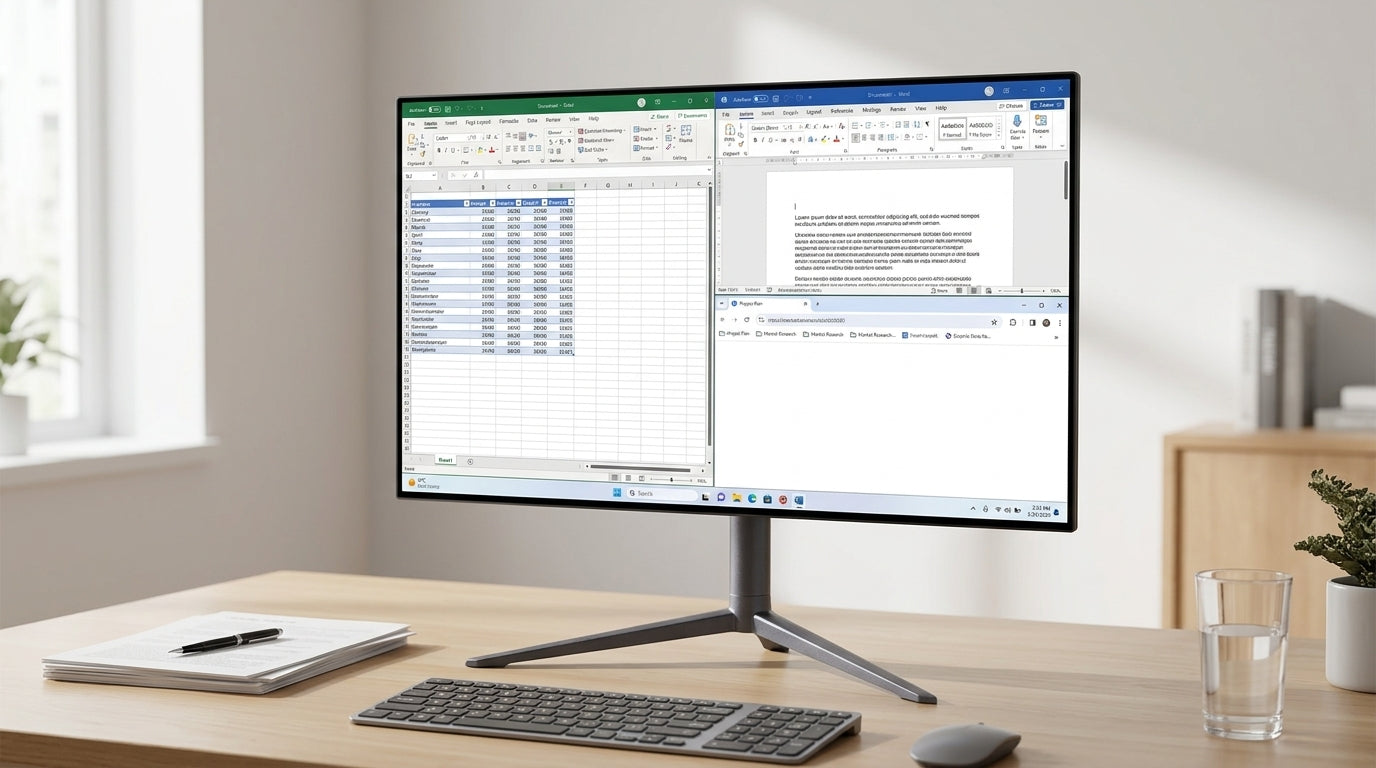
Energy savings are the difference between your old monitor’s actual power use and the replacement monitor’s actual power use under comparable conditions. Brightness, refresh rate, HDR mode, panel size, USB-C charging, sleep settings, and standby draw can all shift the result.
Energy monitoring is useful because it turns assumptions into operating data, and modern systems use connected measurement and analytics to identify waste through energy monitoring. For a desk setup, the lean version is a plug-in watt meter and a normal workweek of readings.
Carbon Payback Period
Carbon payback period is the time required for annual avoided operating emissions to offset manufacturing emissions. The logic is similar to manufacturing Specific Energy Consumption, where energy use is tied to output so efficiency can be compared fairly. For monitors, the useful output is screen time for focused work, gaming, design review, trading, collaboration, or portable productivity.
A Practical Monitor Payback Calculation
Suppose your old office display averages 55 watts during real use, while a newer efficient monitor averages 28 watts at the same usable brightness. The savings are 27 watts. If the screen runs 2,500 hours per year, the annual energy reduction is 67.5 kWh.

From there, apply your local electricity emissions factor. If your power grid is fossil-heavy, each saved kilowatt-hour avoids more emissions, so carbon payback arrives sooner. If your electricity is mostly renewable, the monitor still saves energy and heat, but its carbon payback takes longer.
Input |
Example Value |
Why It Matters |
Old monitor average draw |
55 W |
Your baseline energy use |
New monitor average draw |
28 W |
The replacement’s real operating use |
Annual use |
2,500 hours |
More hours make efficiency matter faster |
Annual energy saved |
67.5 kWh |
The yearly operational reduction |
Manufacturing footprint |
Maker-disclosed value needed |
The carbon “debt” to offset |
The missing piece is the monitor’s manufacturing footprint. If a product footprint says the new display created 100 lb of CO2-equivalent before use, you would divide that by the annual avoided emissions from the 67.5 kWh savings. If the manufacturer gives no footprint, compare scenarios rather than treating the timeline as exact.
What Makes Payback Faster or Slower?
Usage Hours Drive the Result
A monitor used 10 hours a day in an office, studio, control room, or esports training space has more opportunity to repay its manufacturing footprint than a portable screen used occasionally. This is why energy-efficient fleet purchasing can be more impactful than replacing a lightly used home display.

Federal greenhouse gas work emphasizes sustained, measurement-based monitoring to evaluate whether emissions strategies are working, and that same principle applies at desk scale through measurement-based monitoring. Measure the screen while people actually use it, not while it sits in a perfect test condition.
Brightness, Refresh Rate, and HDR Matter
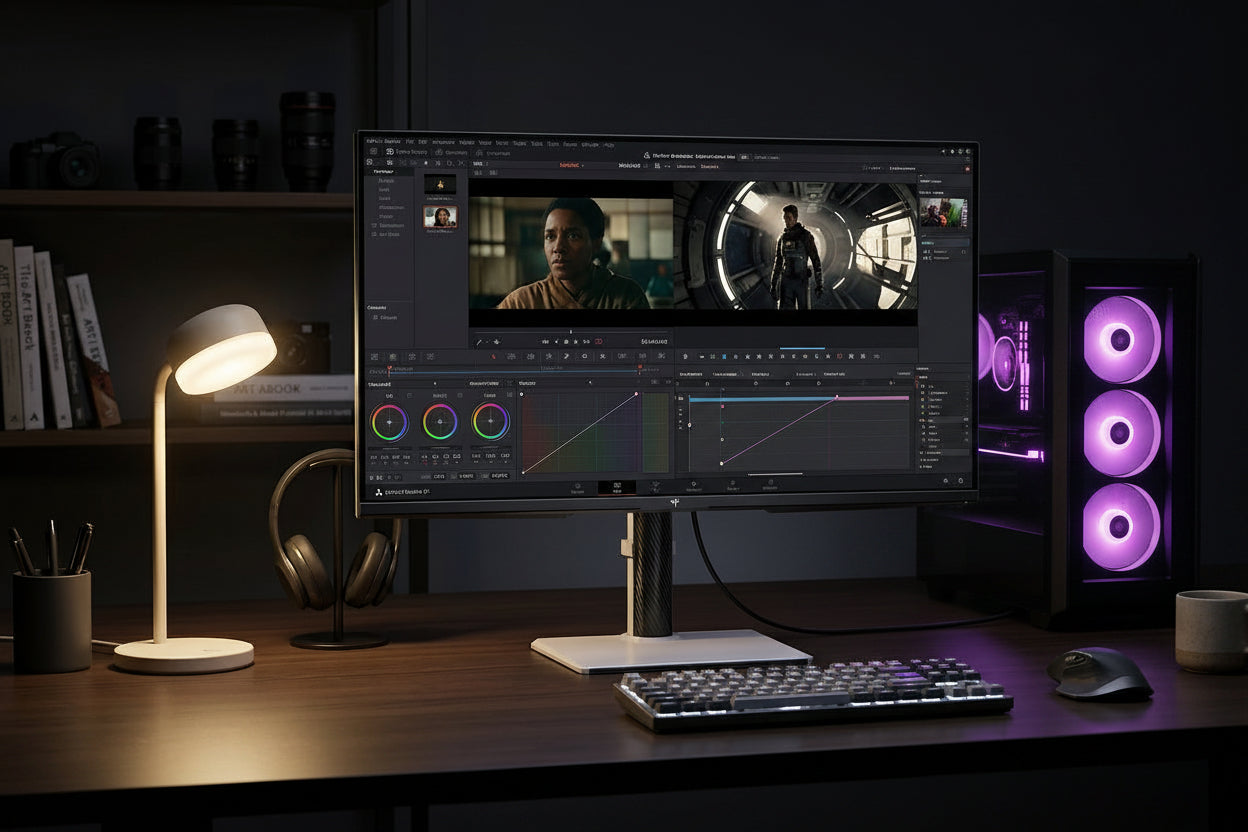
A high-refresh gaming monitor can be a performance tool, but it may draw more power when locked at maximum refresh rate all day. Competitive play may justify 240 Hz or higher during matches, while spreadsheet work, writing, and project management usually do not. The smart move is to create profiles: high performance for games, calibrated productivity for work, and aggressive sleep behavior when idle.
Brightness has the same effect. A screen set for a retail showroom can waste energy and strain your eyes in a dim office. A calibrated, comfortable brightness setting often improves the viewing experience while cutting power.
Size and Setup Can Change the Whole Equation
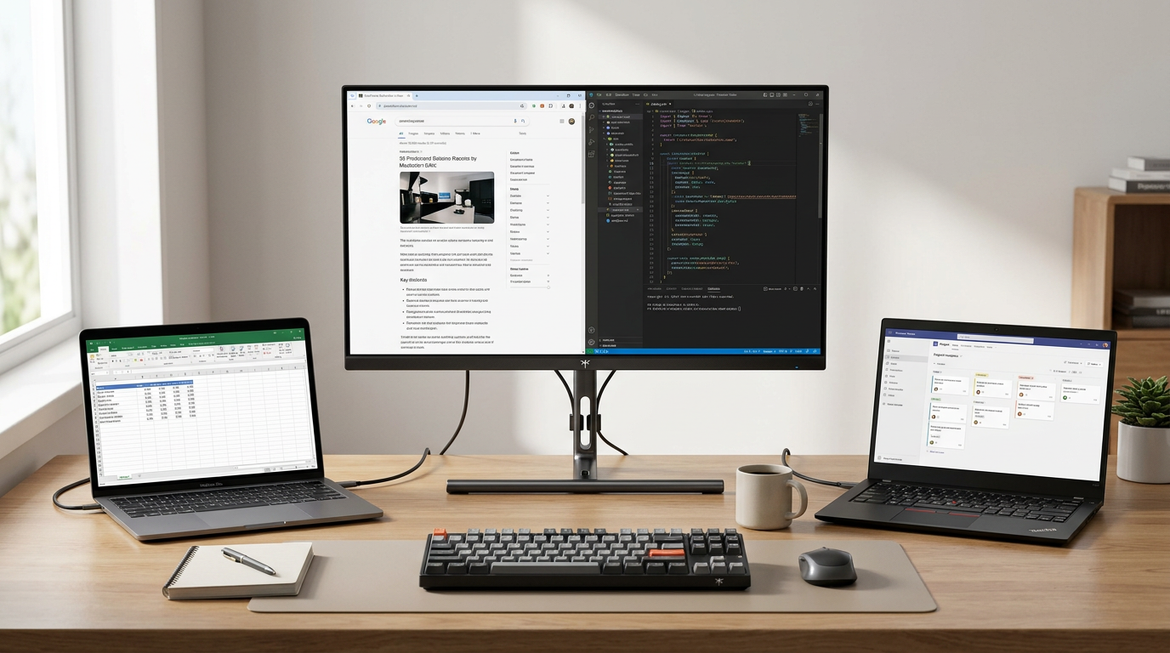
A larger monitor can increase both manufacturing and operating impacts, but context matters. A 34-inch or 49-inch ultrawide may be defensible if it replaces two inefficient displays and reduces total power, cables, hubs, and desk clutter. It is weaker as an environmental choice if it simply adds more lit surface area without replacing anything.
Machine-level monitoring helps manufacturers identify high-consuming equipment and underperforming assets, and the same decision logic applies to display setups through machine-level energy monitoring. Measure the whole workstation when needed, especially if the monitor also powers a laptop over USB-C.
Should You Replace a Working Monitor Early?

Early replacement is not automatically the greener choice. If your existing monitor is functional, modest in power draw, and used only a few hours per week, keeping it longer may avoid more emissions than replacing it. If it is an older, power-hungry display running all day, replacement becomes easier to justify.
Decision |
Best Fit |
Main Tradeoff |
Keep and tune current monitor |
Light use or already efficient display |
Smaller operating savings |
Replace with efficient model |
Heavy daily use and clear wattage drop |
New manufacturing emissions |
Replace two screens with one ultrawide |
Workflow needs more space with fewer devices |
Large panels can still draw meaningful power |
Add power management |
Office fleets and shared spaces |
Requires consistent settings and user habits |
The strongest upgrade case combines lower power use with better productivity, ergonomics, reliability, and longer service life. A display that helps you work faster and stays useful for seven years usually beats a marginally efficient screen that gets replaced quickly.
How to Choose a Monitor With Better Carbon Payback
Start with the right size for the job. For office productivity, a sharp 24-inch or 27-inch monitor may deliver excellent text clarity without unnecessary power demand. For immersive gaming, simulation, creative timelines, or financial dashboards, a larger screen can make sense when it replaces extra monitors or genuinely improves performance.
Compare typical power draw at useful brightness, not only maximum or standby figures. If you use HDR, high refresh, or USB-C laptop charging, test those modes separately. A monitor that looks efficient in standard mode may behave differently in the exact mode you bought it for.
Keep the screen longer. Good ergonomics, VESA support, stable firmware, enough ports, and dependable build quality all improve the carbon story because manufacturing emissions are spread across more years of useful work. Value is not just a lower purchase price; it is performance per year, watts per useful hour, and fewer premature replacements.
Pros and Cons of Energy-Efficient Monitors
Energy-efficient monitors reduce electricity use, operating cost, heat output, and pressure on cooling systems. In offices, classrooms, studios, and gaming spaces with many displays, small wattage differences can scale into meaningful savings.
The downside is that energy efficiency alone does not erase manufacturing emissions. Some low-power modes may also reduce brightness, color stability, or responsiveness. For serious work and play, the better approach is not to run the weakest setting; it is to tune the monitor so visual performance and energy use match the task.
FAQ
Is a certified efficient monitor always the lowest-carbon choice?
Not always. An efficient new monitor can lower operating emissions, but keeping a working monitor longer may be better if the energy savings are small and usage hours are low.
Does renewable electricity change the payback period?
Yes. Cleaner electricity lowers the emissions avoided by saving each kilowatt-hour, so carbon payback takes longer. The monitor may still be worth buying for lower bills, lower heat, better ergonomics, or better performance.
What is the easiest first step?
Measure your current monitor with a plug-in power meter for a normal week. Then compare that number with measured or credible typical-use power for the replacement you are considering.
The Practical Verdict
A monitor’s energy savings offset manufacturing emissions fastest when it replaces a power-hungry display, runs many hours per year, uses an efficient operating profile, and stays in service for a long time. The performance-driven choice is not simply “buy new” or “keep old”; it is to measure the setup, buy only the screen that improves the work, and make every watt deliver visible value.