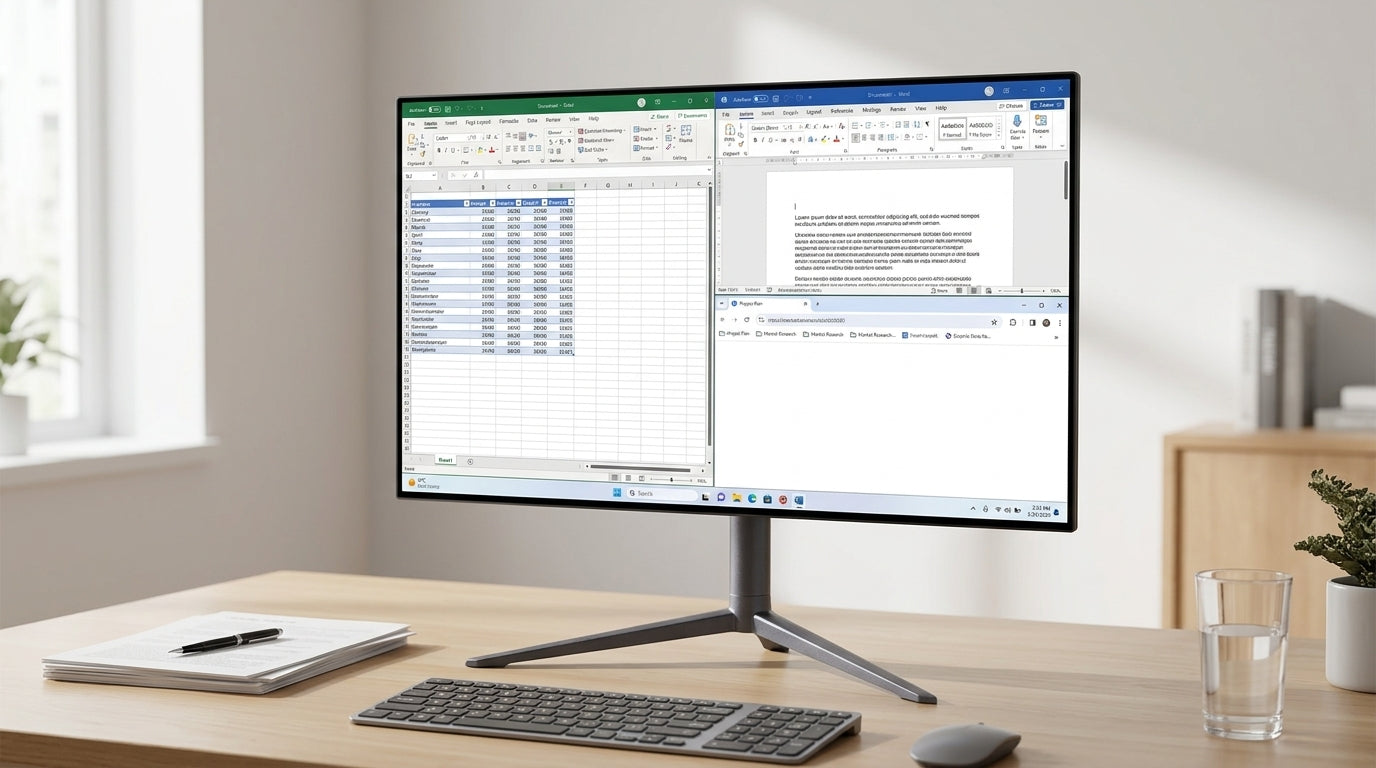
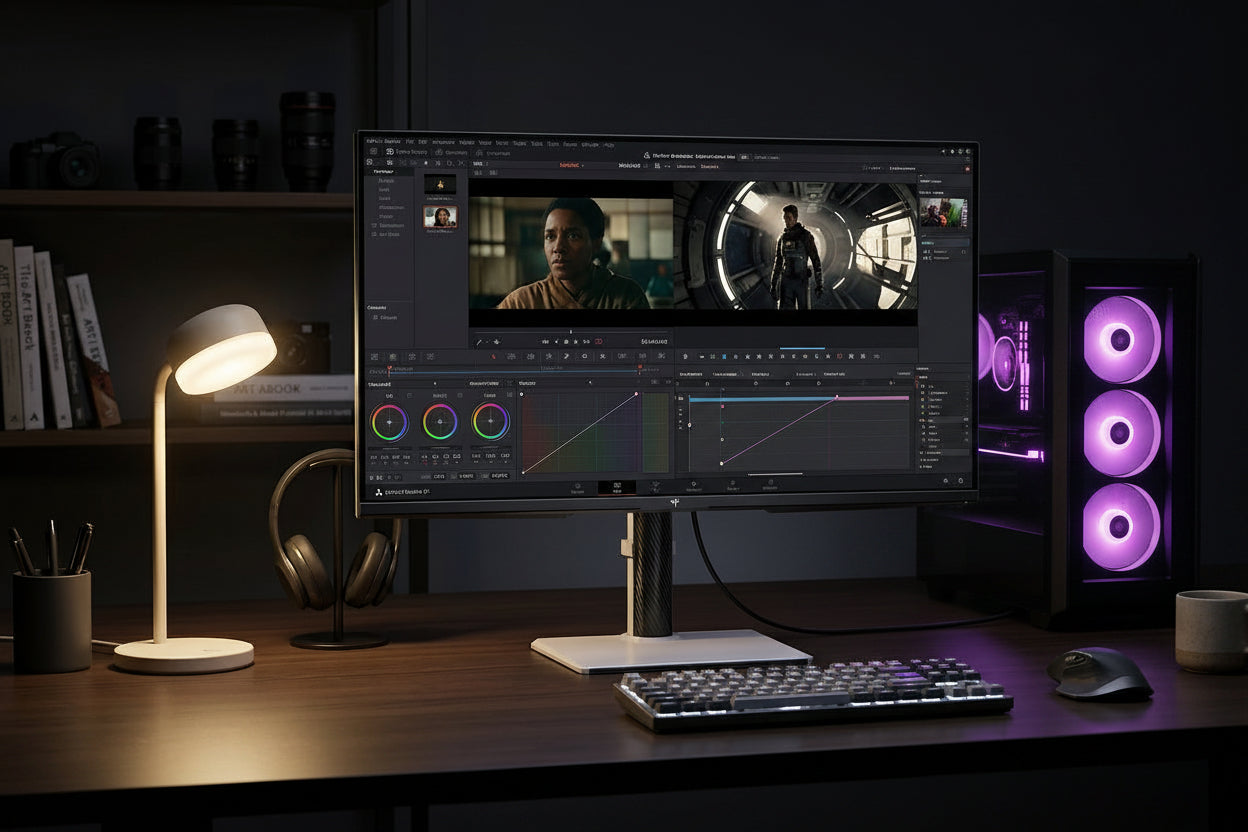
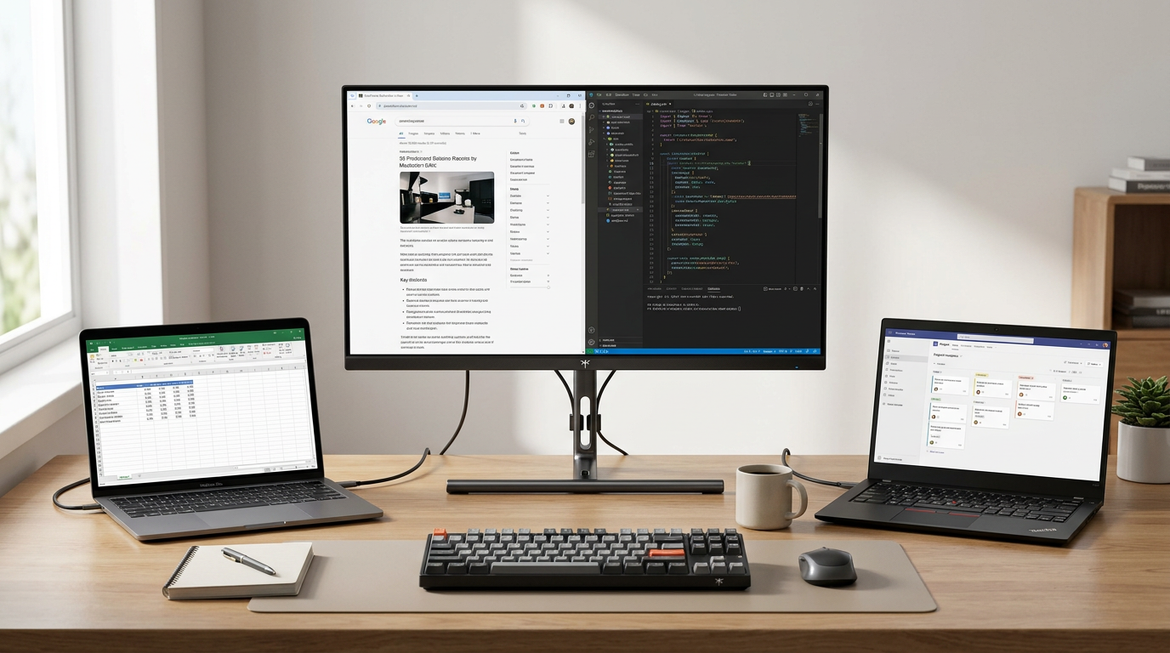
OEM monitor panel lottery explained is the risk that two units of the same monitor model can look different enough in brightness, tint, uniformity, or pixel behavior to change how happy you feel after the box arrives. If you are buying direct, the goal is not to eliminate that risk completely, but to narrow it before checkout and test quickly after delivery.

What Panel Lottery Means for Monitor Buyers
For most shoppers, panel lottery is just shorthand for "same model, different unit, different result." The phrase usually covers visible differences like slight color tint, uneven backlight behavior, or a dead pixel that one buyer gets while another does not. Background reading on the topic shows the point is variation between otherwise identical models, not automatic failure.
That is why the concern shows up most often with OEM and factory-direct purchases. You are usually deciding before you ever see the panel in person, so the return window becomes the real safety net. One useful way to think about it: if a difference would bother you on a daily desktop, it is worth screening for before the return deadline instead of hoping you will not notice it later.
The core keyword matters here because many buyers search for OEM monitor panel lottery explained after they have already seen a few scary unboxing stories. The right response is not panic. It is learning what counts as normal variation, what counts as a defect, and what proof you need if you want an exchange.
How Binning and Batch Variation Create Differences
Binning groups panels or components into production ranges. In practice, that can help a factory sort parts by performance or consistency, but it does not make every finished monitor identical. A unit can still land slightly warmer, cooler, brighter, or less uniform than another unit from the same model line.
That is the part buyers usually feel first: white balance, edge glow, and black-field uniformity. Those differences can be subtle on a spec sheet and obvious on a desktop background. Factory calibration can improve the odds of a better-looking unit, but it should be treated as a quality step, not a promise that all panels will match perfectly.
If you want a deeper background read on how OEM grading and verification get discussed in practice, the Informed Skeptic's OEM panel grades guide is a useful follow-up. It is not a substitute for testing your own unit, but it can help you separate marketing language from the parts that actually affect the buying decision.
A good rule of thumb is simple: mild variation can be annoying, but it is not automatically a reason to return a monitor. A clear defect, repeated pixel issue, or obviously distracting uniformity problem is different. The line between the two is partly subjective, which is why your own test method matters so much.
What Counts as a Real Problem?
For everyday use, the question is not whether a monitor is mathematically perfect. It is whether the flaw will bother you in the scenes you actually use. A little edge glow in a bright room may be easy to ignore. A strong tint shift across a white browser page may not be.
If you play dark games, edit photos, or spend hours on light backgrounds, the same issue can feel more serious. That is why the safer approach is to judge the panel in the conditions you use most often instead of relying on a generic "good enough" label.
Checks to Make Before You Order
Before you click buy, focus on the parts of the purchase that change your options later. The most important check is the return window, because it determines how much time you have to inspect the monitor after delivery. KTC lists a 30-day returns policy and a 3-year warranty on direct purchases for supported models, which gives you a practical inspection window and longer-term support.
Next, look for support language that is specific enough to help if the panel looks off. "We can help" is less useful than a stated replacement path, contact method, or inspection process.
Then check whether the monitor actually fits your use case. If you are buying for mixed work and play, a value 4K or 1440p model with a clear return policy usually feels safer than a bargain panel with a vague support path. If you are mainly chasing motion clarity, a monitor with the right refresh rate and input path matters more than premium-sounding panel language.
For direct buyers who want a neutral place to start browsing, the Gaming Monitor collection is a better first stop than jumping straight to a spec-heavy product page. If your desk leans more toward productivity and long reading sessions, the Office Monitor collection is often the cleaner fit because it narrows the field to calmer, work-first models.
A Short Pre-Buy Filter
Use this as a quick stop-go filter:
- If the return window is short, treat the purchase as higher risk.
- If the seller has no clear support path for defects, slow down.
- If you would be unhappy with a little tint or uniformity variation, do not buy on specs alone.
- If you mainly want better text clarity or smoother scrolling, match the monitor class to that use case first.
One neutral example is the KTC Mini LED 27" 200Hz 2K HDR1000 Gaming Monitor. It is a strong fit when you want fast 1440p gaming, Mini-LED contrast, and a supportable return window, but it is still not a guarantee against lottery variation. That distinction matters: better specs can reduce regret, yet they do not erase unit-to-unit differences.
Match the Monitor to the Buyer Profile
The safest category depends on what you care about most. Budget esports buyers usually feel best with a straightforward 1080p or 1440p gaming monitor because they are less likely to obsess over subtle uniformity differences and more likely to care about motion and responsiveness. Creators and mixed work-and-play buyers usually want cleaner color expectations and a clearer support path than the absolute cheapest panel.
Console and 4K buyers tend to benefit from a simple signal path and a resolution that matches the source well. That does not remove panel lottery risk, but it makes troubleshooting easier, so you are less likely to confuse a cable or input issue with a panel issue. Ultrawide buyers should also think about desk depth and viewing distance, because a flaw that feels minor at 27 inches can be more noticeable across a wider canvas.
Mini-LED is a good example of a hidden trade-off. It can improve HDR impact and black-level control, but it does not turn every unit into a perfect match. If you expect premium backlighting to solve every consistency issue, you may end up more disappointed than if you treated it as an improvement with limits.
| Buyer Type | What To Prioritize | Lower-Risk Fit Pattern | Main Trade-Off |
|---|---|---|---|
| Budget esports buyer | Motion, refresh rate, simple setup | 1080p or 1440p gaming monitor with easy returns | Less focus on panel perfection |
| 1440p all-rounder | Balanced speed, text clarity, support | 27-inch fast IPS or Mini-LED with clear return terms | More to inspect at delivery |
| 4K console or creator buyer | Resolution match, signal path, support | 27-inch or 32-inch 4K model with direct inputs | More visible uniformity issues if bad |
| Ultrawide multitasker | Viewing distance, desk depth, use case | Wider desk and a seller with clear exchanges | Bigger screen makes flaws easier to notice |
| Mini-LED shopper | HDR goals, calibration, support | Model with stated calibration and a solid return window | Better contrast, but not zero lottery risk |
If you want a conservative middle ground, the KTC 32" 4K 165Hz Gaming Monitor with Vesa Mount | H32P22P fits buyers who want a large 4K desk screen for gaming and work without moving into the most expensive class. Its 4K Fast IPS panel and 165Hz spec make sense for mixed use, but you still want to inspect for tint, uniformity, and pixel issues as soon as it lands.
The question to ask yourself is not "Which panel type never has problems?" It is "Which monitor class makes any possible problem easiest for me to tolerate or return?" That is the real decision layer.
Home Tests That Catch Problems Fast
Start testing the same day the monitor arrives. The return window is your best leverage, and the first hour often matters more than the brand promise. If something looks off, you want time to compare, photograph, and contact support while the box and labels are still fresh.
A good home test does not need special tools. Use a few solid-color backgrounds, a gray field, a white screen, and your normal desktop wallpaper. Those simple views make tint, clouding, and edge inconsistency easier to see than a game scene with lots of motion.
For dead or stuck pixels, use a clean full-screen color pattern and zoom in if needed so you can capture the problem clearly. If a defect is hard to photograph, it is harder to explain in a return request. That is why the best test is the one you can repeat under the same settings.

A Simple Test Sequence
- Set brightness to a comfortable middle level.
- Open a white, gray, black, and red test screen.
- Look for tint shifts, bright corners, banding, or obvious pixel issues.
- Check again from your normal seating distance.
- Repeat once after the monitor warms up.
If the issue changes after warm-up, that is still useful information. It helps you describe the behavior accurately instead of sending support a vague complaint.
What to Document Before Contacting Support
Write down the input source, cable type, brightness setting, and exact screen pattern you used. Then save photos that show the issue clearly. If you can, take one picture that shows the whole panel and one that zooms in on the affected area.
That kind of record helps separate a true panel issue from a setup problem. It also reduces back-and-forth if the seller asks when, how, and under what settings you tested.
Buyer Checklist Before You Click Buy
Use this last check before you place the order:
- Confirm the return window and make sure it is long enough for unpacking and testing.
- Verify warranty length, support contact, and replacement process.
- Match the panel type, resolution, and refresh rate to your real use case.
- Check the input path you plan to use so cable issues do not masquerade as panel issues.
- Save the product page and order confirmation in case you need to compare claims later.
If your buyer profile is mixed or uncertain, choose the model class that gives you the cleanest exit if the panel disappoints. That is the practical way to reduce lottery risk without pretending it disappears.
Related Resources
FAQs
Q1. How Soon Should I Test a New Monitor After Delivery?
As soon as possible, ideally the same day it arrives. That gives you time to spot tint, uniformity, or pixel issues while the return window is still open, instead of discovering them after your options have narrowed.
Q2. What Test Patterns Reveal Uniformity Problems Best?
Gray fields, solid white, solid black, and your normal desktop wallpaper are the most useful quick checks. Use the same brightness and input settings for each test so you can compare what you are seeing without changing the conditions.
Q3. Can Panel Binning Be Seen Before Buying?
Usually not in a way that helps a normal shopper. You can look for support terms, inspection language, and return policy details, but the real proof still comes after delivery when you test the unit in your own setup.
Q4. Why Do Two Units of the Same Model Look Different?
Small production differences, calibration variation, and component tolerances can all change how a panel looks or behaves. That is why two units with the same model number can still feel different in brightness, tint, or uniformity.
Q5. What Should I Photograph If I Need a Return?
Photograph the screen issue itself, the test pattern you used, the settings menu, and the full panel if possible. Those images make it easier for support to verify whether the problem is a defect, a setting issue, or something else in the signal chain.
What a Smart OEM Buy Looks Like
A smart OEM purchase is not a gamble-free purchase. It is one where you know the support terms, choose a monitor that fits your actual use, and test quickly enough to act while the return window still helps you. If you do that, panel lottery becomes a manageable risk instead of a surprise.