OEM monitor value explained starts with a simple rule: the lower price only counts if the screen still fits your resolution, motion, desk setup, and support needs. In practice, OEM savings usually come from supply-chain control, a slimmer feature stack, and fewer premium extras, not from one magic shortcut.
Where OEM Monitor Savings Usually Come From
Vertical integration can lower monitor costs because a manufacturer owns more of the supply chain and depends less on outside suppliers. SVI's guide to vertical integration explains the basic logic well: fewer middle layers can mean fewer markups and more control over production choices.
That does not mean every low-price monitor is a bargain. Two screens can use the same panel family and still land at different prices because of binning, firmware choices, tolerance targets, and how much the brand spends on support and extras. A panel may be similar on paper, but the finished monitor can still feel different in color consistency, brightness behavior, or long-term convenience.
For skeptical buyers, that is the real takeaway. OEM monitor value is not about whether OEM is "good" and premium is "better." It is about whether the savings came from trimming things you do not need, or from cutting something you will miss later.
A practical way to read the price gap is this: if the monitor is cheaper because it skips a fancy stand, a high-end HDR backlight, or premium packaging, the discount may be rational. If it is cheaper because it misses the spec you actually need, the value disappears fast.
Use a non-negotiable spec checklist when a listing feels vague. It is the fastest way to separate a real value play from a deal that only looks good in the cart.
The Cost Stack That Shapes Value
The cleanest way to compare OEM monitor value is to break the purchase into buckets: display performance, ergonomics, connectivity, and support. That keeps you from overpaying for one flashy spec while ignoring the rest of the package.
Display performance is the bucket most shoppers notice first. Resolution affects sharpness, but it should be matched to screen size, viewing distance, and what you do all day. A 27-inch 4K panel can feel great for text and mixed work, while a 27-inch 1440p panel often makes more sense if you want faster frame rates without pushing your GPU as hard. Higher refresh rate can also improve smoothness, but only if your device and cable can actually drive it.
Ergonomics often decides whether a monitor feels like a smart buy after week two. A full stand with height, tilt, swivel, and pivot can save you from buying an arm later. A tilt-only stand may still be fine if your desk is fixed and the screen sits at the right height already. That is why a cheaper monitor can become the more expensive one once you add a mount.
Connectivity matters more than many listings admit. HDMI and DisplayPort version support, port count, and feature compatibility can decide whether a monitor works cleanly with a PC, console, dock, or laptop. If the port layout is too narrow for your setup, the bargain price can turn into adapter hunting.
Support belongs in the cost stack too. Warranty length, return window, firmware guidance, and support contact paths affect total value just as much as brightness or refresh rate. A buyer who wants fewer headaches should treat support as part of the product, not as fine print.
HDR is a good example of why this matters. The official DisplayHDR 1400 requirements are hardware-driven, not just label-driven, so an HDR badge alone does not tell you much. For a skeptical buyer, the question is not "Does it say HDR?" It is "What hardware is behind the label, and does my use case actually need it?"
If you want a faster compare-and-filter pass, a firmware and support checklist is worth opening before checkout. It helps you notice update paths, support contacts, and recovery guidance while you are still in decision mode.
For a broader shopping baseline, the Consumer Reports monitor buying guide also frames why resolution, ergonomics, and use case should be matched before price becomes the deciding factor.

How to Judge Whether the Lower Price Is Real Value
Use this pass/fail sequence instead of trying to "feel out" the deal.
- Define the job first. Gaming, office work, creator-adjacent use, and mixed use do not value the same things.
- Set the minimum specs that the job actually needs. If the monitor misses one of them, stop there.
- Check desk fit and stand needs. If you will need an arm on day one, count that cost.
- Verify warranty, return policy, and support path. Those terms are part of the real purchase, not extras.
- Compare the final total, not just the sticker price.
This framework keeps OEM monitor value explained in practical terms. If a cheaper monitor matches the job and still leaves room for support and ergonomics, it is probably real value. If it only looks cheaper until you add accessories or accept missing features, the savings are mostly cosmetic.
A good shortcut is to compare like with like: same resolution class, similar refresh rate, same panel type, and similar stand design. If one model wins only because the comparison is uneven, the result is not useful.
One useful boundary: if you are shopping for a fixed office desk and you do not care about height or swivel, a tilt-only model can still be a sensible buy. If you move between work, gaming, and portrait use, that same stand choice becomes a downside.
For a deeper buying pass, use the 2026 monitor checklist to confirm the specs that matter before you let price steer the decision.
Where a Value-Focused Monitor Fits Best
For some buyers, the question is not whether OEM is cheaper. It is whether the specific model lines up with the way they actually use a monitor.
Budget Gaming Buyer Fit
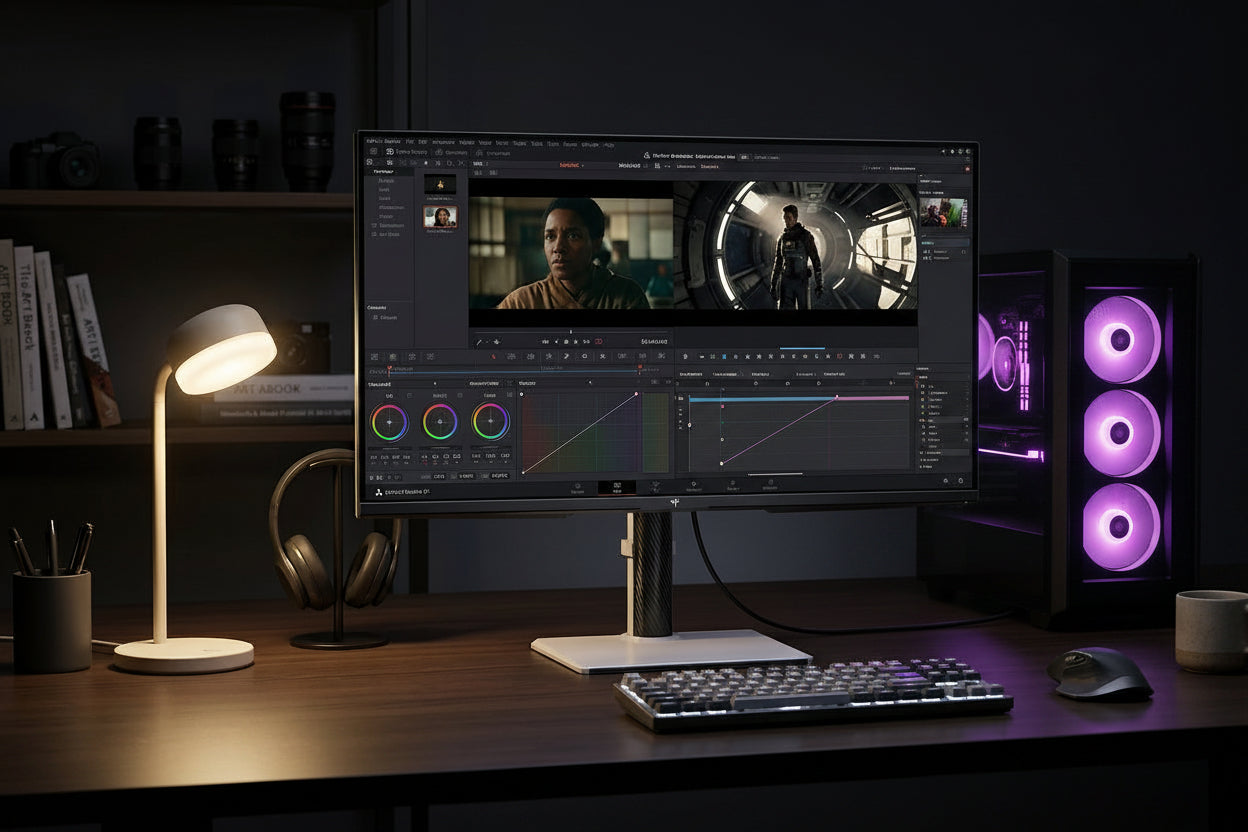
If your main goal is motion smoothness on a limited budget, a simpler 1440p or 1080p gaming monitor can be smarter than paying for premium-brand extras you will not notice every day. That is especially true if you play fast-paced games and sit at a desk where a fixed screen position is fine.
This is where the Gaming Monitor collection can be useful as a browsing path. It is a category view, not proof that any one model is right, but it helps you filter for the refresh-rate and panel style you actually want.
Mixed Work-And-Play Fit
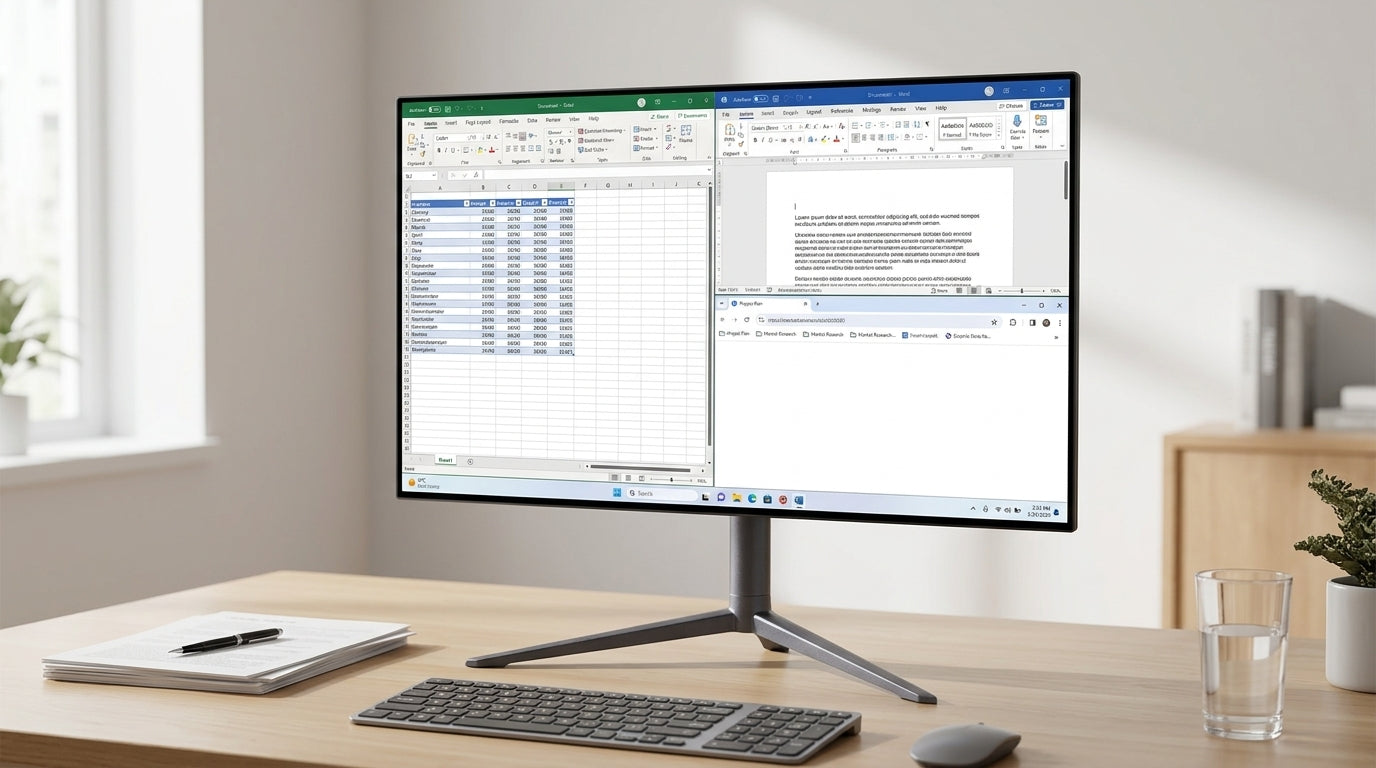
If you split time between spreadsheets, web work, and casual gaming, a 27-inch or 32-inch QHD monitor often makes more sense than chasing extreme speed. You are usually buying for text clarity, reasonable motion, and a setup that does not need immediate accessory upgrades.
The Office Monitor collection is the better place to sanity-check that use case. It is a browsing route for people who care about workspace comfort, not a blanket recommendation.
Higher-Spec 4K Fit
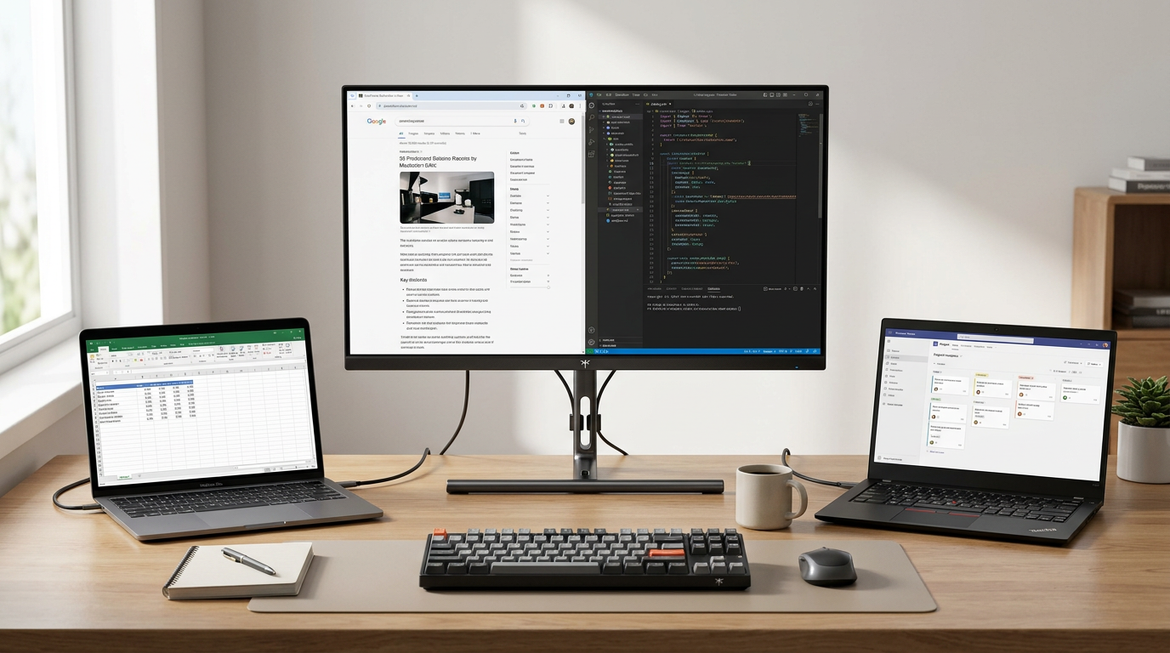
A clearer example of conditional OEM monitor value is the KTC 27" 4K 160Hz monitor. It is a sensible fit for buyers who want 4K sharpness, high refresh, and a fully adjustable stand in one package, plus a 3-year warranty and 30-day returns.
That does not make it the right choice for everyone. It makes sense when you will actually use the sharper 4K canvas, the faster motion headroom, and the ergonomic stand. If you only need a basic office display, it is more monitor than you need. If you want a mixed-use screen that can cover work and play, the extra cost is easier to justify.
For buyers comparing 4K options, the decision often flips on support and ergonomics as much as image quality. A 4K screen with full stand adjustment can be more valuable than a cheaper 4K screen that forces you to buy an arm or live with bad height.

Selection Checklist Before You Check Out
Before you buy, run this quick check:
- Does the resolution match your desk distance and workload?
- Does the refresh rate match your PC or console output?
- Does the stand include the adjustment you need, or will you need an arm?
- Do the ports match your device without adapters?
- Are the warranty, return window, and support contact terms clear?
- Will any added cable, arm, or hub cost erase the savings?
That final pass is what turns OEM monitor value explained into a useful shopping filter. If the monitor still fits after you include accessories and support terms, the lower price is probably real value. If not, keep browsing rather than forcing the deal.
If you are still deciding, compare the category pages first, then narrow to the monitor class that matches your use case instead of the cheapest headline price.
FAQs
What Does OEM Monitor Value Mean?
It means the monitor gives you the features, support, and fit you actually need at a lower total cost than a premium-branded alternative. The important part is not the label on the box, but whether the screen matches your setup without hidden add-ons.
Why Do OEM Monitors Often Cost Less Than Brand-Name Models?
Lower prices often come from supply-chain control, fewer middle layers, simpler stands, and fewer premium extras. That can be a smart trade if those omitted features do not matter to your use case.
How Should I Compare OEM Monitor Quality to Premium Brands?
Compare documented specs, stand adjustment, port layout, warranty terms, and return policy before you compare brand reputation. A fair comparison is about whether each model solves the same job, not whether one logo feels safer.
Can a Cheaper OEM Monitor Be a Smart Buy for Gaming or Work?
Yes, if it meets the minimum resolution, refresh rate, ergonomics, and support terms for that task. A lower price is only a win when it avoids the thing you were about to pay extra for in the first place.
What Warranty and Support Details Should Skeptical Buyers Check First?
Check the warranty length, return window, support contact path, and whether you may need to cover accessories or shipping later. Those details affect total value just as much as panel specs do.
Final Takeaway
OEM monitor value is real when the lower price comes from a cleaner cost stack, not from removing something you need. Start with your use case, check the specs that matter, and treat stand quality, ports, warranty, and returns as part of the price. If the monitor still fits after that, you have a defensible buy. If not, keep looking and compare the next option on equal terms.