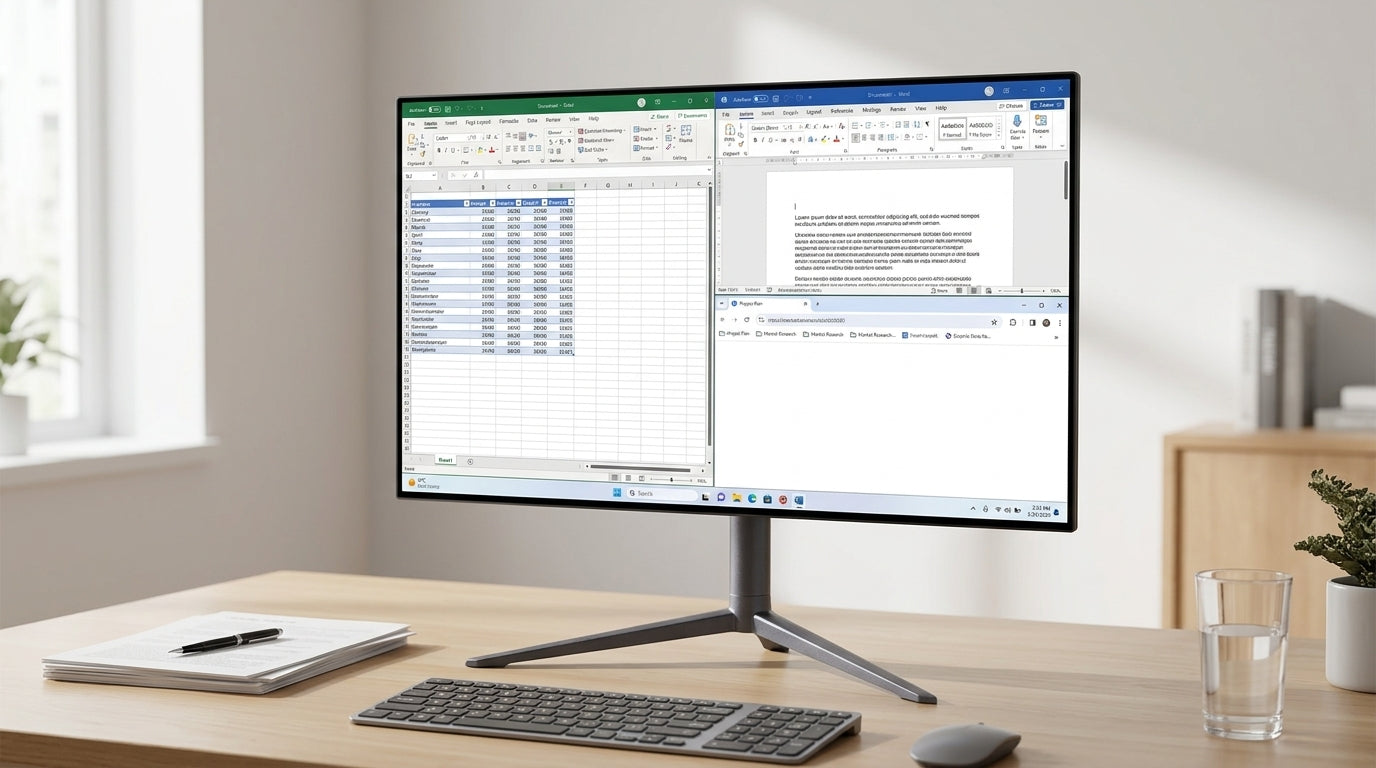
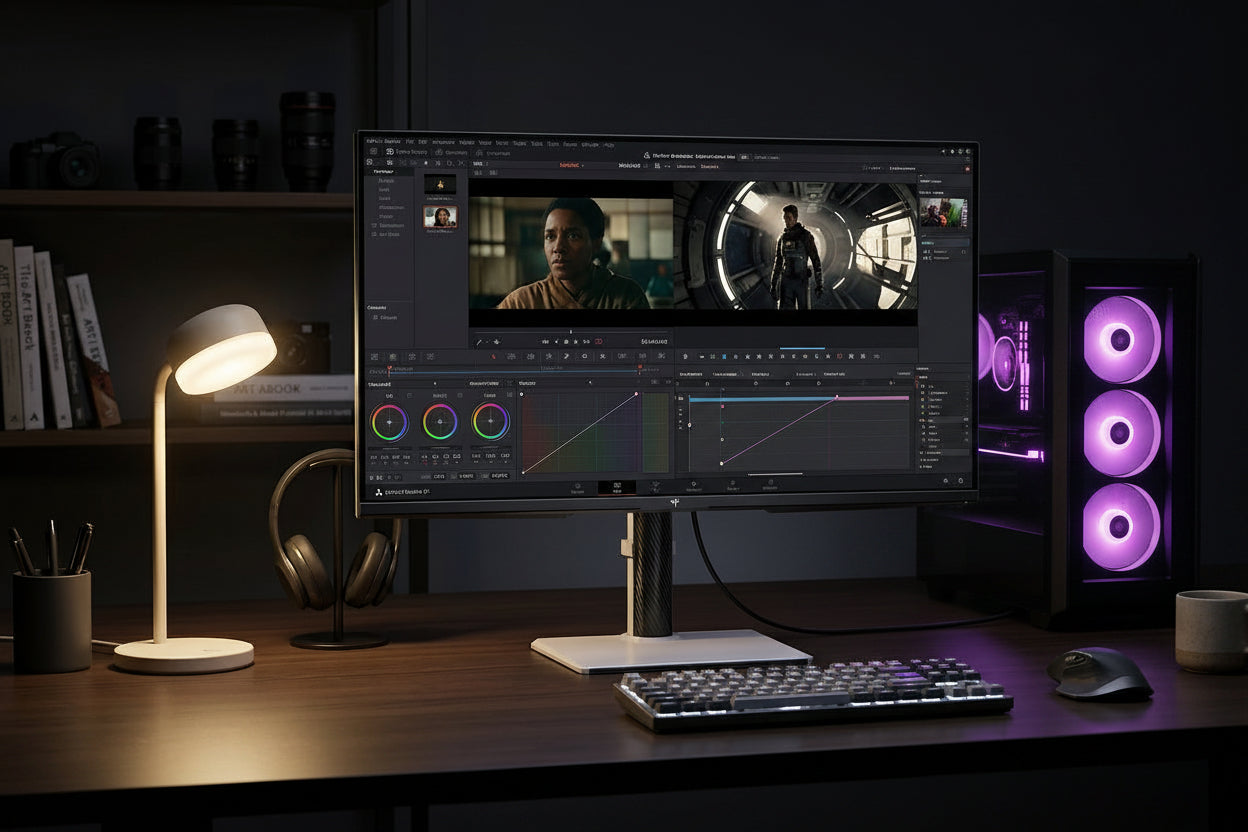
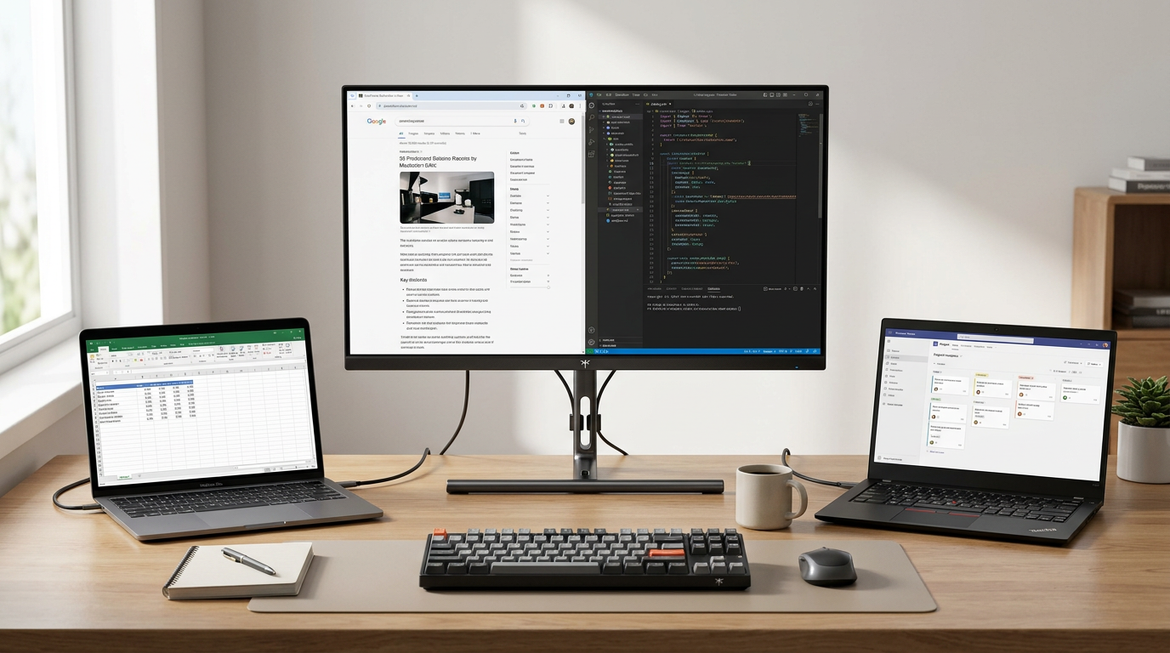
Large touch monitors can dramatically improve digital independence for elderly and visually impaired users by offering bigger on-screen targets, higher contrast options, and more forgiving touch interfaces than small tablets or traditional mice. Research shows older adults often complete tasks up to 35% faster using touchscreens instead of a mouse, making these devices valuable tools for video calls, reading, streaming, and staying connected.

Why Touch Screens are a Game-Changer for Senior Independence
For many seniors, traditional computer mice present real challenges. Arthritis, tremors, or reduced fine motor skills make precise cursor control difficult and frustrating. A direct touch interface removes that middle step, letting users point at what they want on screen.
According to a University of Washington study, older adults can perform digital tasks up to 35% faster on touchscreens compared to using a traditional computer mouse. The tactile feedback of touching the screen also helps with spatial memory and reduces cognitive load during navigation.
This speed and simplicity translate into greater confidence. Seniors can more easily join video calls with grandchildren, browse photos, or check news without constant assistance.
The Size Factor: Why Bigger is Better for Visual Clarity
Screen size matters far more than many realize for users with low vision or motor limitations. A standard 10-inch tablet often forces tiny buttons and excessive scrolling, while a 27- to 32-inch monitor creates much larger, more accessible targets.
On a 10-inch tablet, a typical interface button might measure only 7–10 mm across. The same button on a 32-inch screen can become roughly 30 mm, making it significantly easier to tap accurately. Larger screens also let users see the entire “map” of an app without constant zooming or scrolling, which lowers frustration and cognitive effort.
This difference is especially important for those with low vision. Guidance on using computers with low vision recommends 27- to 32-inch monitors paired with appropriate scaling (125–200%) as an effective range for many users.

For a clearer view of these differences, the following chart compares typical button target sizes and relative usability across screen sizes.
Larger Screens Improve Touch Accessibility for Elderly and Low-Vision Users
Decision value: 27–32 inch screens better support touch accessibility than 10 inch tablets because target size can be larger, perceived effort is lower, and interaction feels more stable.
View chart data
| Category | Button target size (mm) | Usability score (tier) |
|---|---|---|
| 10-inch tablet | 10.0 | 2.0 |
| 27-inch display | 18.0 | 3.0 |
| 32-inch display | 30.0 | 4.0 |
Visual Accessibility Essentials: Contrast, Brightness, and Resolution
High contrast, proper brightness, and sufficient resolution work together to reduce eye strain for users with low vision. Adjusting screen brightness to match room lighting and increasing contrast can significantly reduce eye fatigue, according to guidance from the American Academy of Ophthalmology.
Matte or anti-glare surfaces are particularly important. Reflections on glossy screens can wash out content and cause squinting or headaches. A matte finish keeps the display readable from different angles and in varied lighting.
Resolution plays a supporting role through edge sharpness rather than simply fitting more content on screen. At 32 inches, 4K resolution paired with 200% scaling often creates the clearest text edges, while a well-scaled 1080p 27-inch model can still deliver large, crisp targets for many users. The key is matching resolution, size, and operating-system scaling so interface elements remain both large and sharp.
Choosing the Right Features for Assistive Use Cases
When selecting a touch monitor for senior or low-vision use, focus on features that support real-world needs rather than gaming specifications.
Portability versus stability is an important trade-off. A battery-powered model like the KTC MEGAPAD 32" 4K Android 13 Google EDLA Smart Touch Monitor offers flexibility for moving between rooms or taking on visits, while a stable desktop setup may feel more secure for someone with tremors.
Android-based smart monitors with Google EDLA certification provide a familiar, app-centered interface that many seniors find simpler than traditional desktop software. Caregivers can pre-install video-calling apps, streaming services, and large-icon launchers, then lock the device into a simplified mode.
Look for high brightness (at least 300–400 nits for most indoor use), wide viewing angles, and easy-to-reach physical controls. Built-in speakers reduce the need for extra equipment, and a stable stand prevents the screen from shifting during touch interaction.
For more information on portable touch screen options, see our guide to 5 Essential Specs to Check Before Buying a Portable Touch Screen Monitor.
Practical Tips for a Senior-Friendly Tech Setup
Successful adoption often depends as much on placement and training as on the device itself. Position the monitor at a comfortable height and distance so the user can rest their arms while touching the screen. A slight upward tilt can reduce neck strain and glare.
Cleaning is straightforward but important. Use a dry microfiber cloth first, followed by a slightly damp one with only water when needed. Avoid household cleaners that could damage the touch coating. Our support article on How to Remove Fingerprints from Touch-Enabled Portable Displays provides detailed steps that preserve screen clarity and responsiveness.
Start training with familiar, high-value activities such as video calls or viewing family photos. Keep sessions short and celebrate small successes. Many caregivers find that enabling high-contrast themes, enlarging system fonts, and turning on voice feedback helps users gain confidence quickly.
How to Choose the Right Size and Features for Your Needs
Begin by assessing the primary user’s vision level and motor abilities. For moderate low vision or mild tremors, a 27-inch 1080p model with good scaling often provides an excellent balance of size, clarity, and cost. For more significant vision loss, a 32-inch 4K display usually delivers the clearest large targets when properly configured.
Consider the environment. Bright rooms benefit from higher-brightness panels and matte finishes. Shared living spaces may favor portable models that can be stored or moved easily. Caregivers should verify that the chosen device supports the specific apps or services the senior uses most.
Not every large screen is equally suitable. Avoid models with poor viewing angles or glossy surfaces that create strong reflections. Test touch sensitivity if possible—some lower-cost panels require firmer presses that can be tiring.
The most important step is matching the device to the individual’s actual daily tasks and physical setup. A monitor that feels perfect in a store may still need adjustments at home. Start with the largest practical size that fits the space and budget, ensure strong contrast and anti-glare properties, and choose a system that allows simple, app-based interaction.
When these conditions are met, a quality large-format touch monitor often becomes far more than a gadget—it becomes a practical bridge to greater independence and connection.