Ultrawide monitors change how buyers think about workspace, comfort, graphics power, and daily habits. The learning curve is manageable when you match the aspect ratio to your workflow before chasing size.
Is your new monitor search turning into a maze of 21:9, 32:9, curved panels, ports, and desk measurements? A 34-inch 3440 x 1440 ultrawide can give spreadsheet, coding, research, and editing users more usable horizontal room without jumping all the way to 4K GPU demand. This article will help you decide whether ultrawide is a performance upgrade or an expensive distraction for your setup.
Why Ultrawide Feels Different From a Normal Monitor
A standard monitor usually uses a 16:9 aspect ratio, the familiar shape used by many laptops, TVs, and office displays. Ultrawide monitors stretch that shape horizontally, most commonly to 21:9, while super ultrawide models go even wider at 32:9. That extra width is the first learning curve: new buyers often compare diagonal size alone, when the real question is screen shape.
A 34-inch ultrawide is not simply a bigger 27-inch monitor. It keeps a similar vertical feel to many 1440p displays but adds side-to-side workspace. That is why a 3440 x 1440 ultrawide feels like a widened QHD monitor, not like a 4K panel. For a buyer moving from a 24-inch or 27-inch 16:9 screen, the immediate benefit is more room for two large windows, a timeline, a wide spreadsheet, or a browser beside notes.
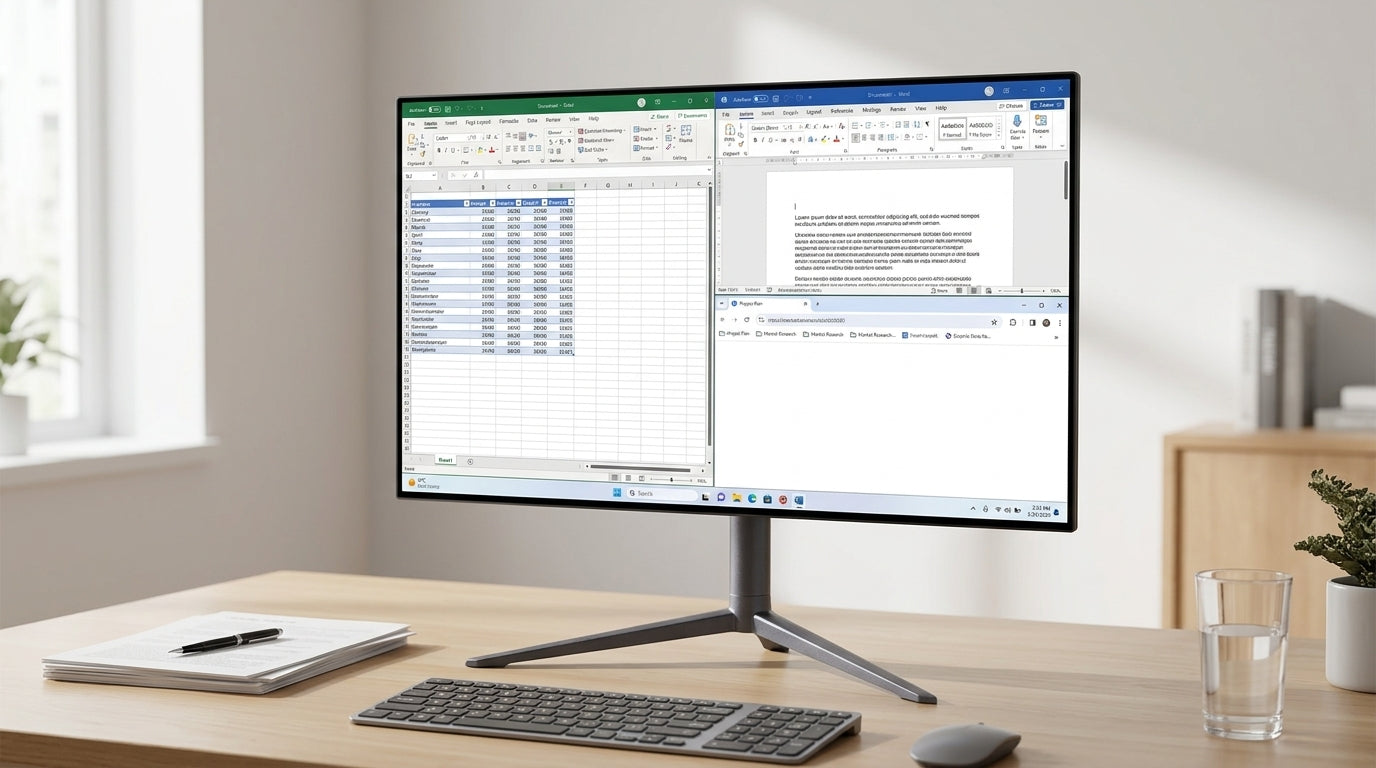
The adjustment is practical, not mysterious. You stop maximizing every app and start arranging zones. One window in the center becomes your main task, while side areas hold reference material, chat, dashboards, preview panes, or toolbars.
The First Decision: 21:9 or 32:9?

Most first-time ultrawide buyers should treat 21:9 as the safer starting point. It gives a meaningful workspace jump while staying easier to drive, easier to fit on a desk, and more compatible with games and video calls. A 34-inch 3440 x 1440 panel is the most balanced format for many mixed-use buyers because it supports productivity and immersive PC gaming without the extreme width of 49-inch displays.
Super ultrawide 32:9 is a different commitment. It can replace two side-by-side monitors in one seamless panel, which is powerful for trading dashboards, development consoles, large spreadsheets, simulation games, or multi-app command centers. But it also increases head movement, desk-depth requirements, game support questions, and cost.
Format | Typical Use | Learning Curve |
21:9 ultrawide | Office multitasking, coding, gaming, content timelines | Moderate; learn window zones and check GPU support |
32:9 super ultrawide | Dual-monitor replacement, dashboards, simulation, heavy multitasking | Higher; requires more desk depth, stronger hardware, and stricter layout discipline |
Dual monitors | Separate tasks, portrait mode, conferencing, lower-cost expansion | Familiar; more flexible but less seamless |
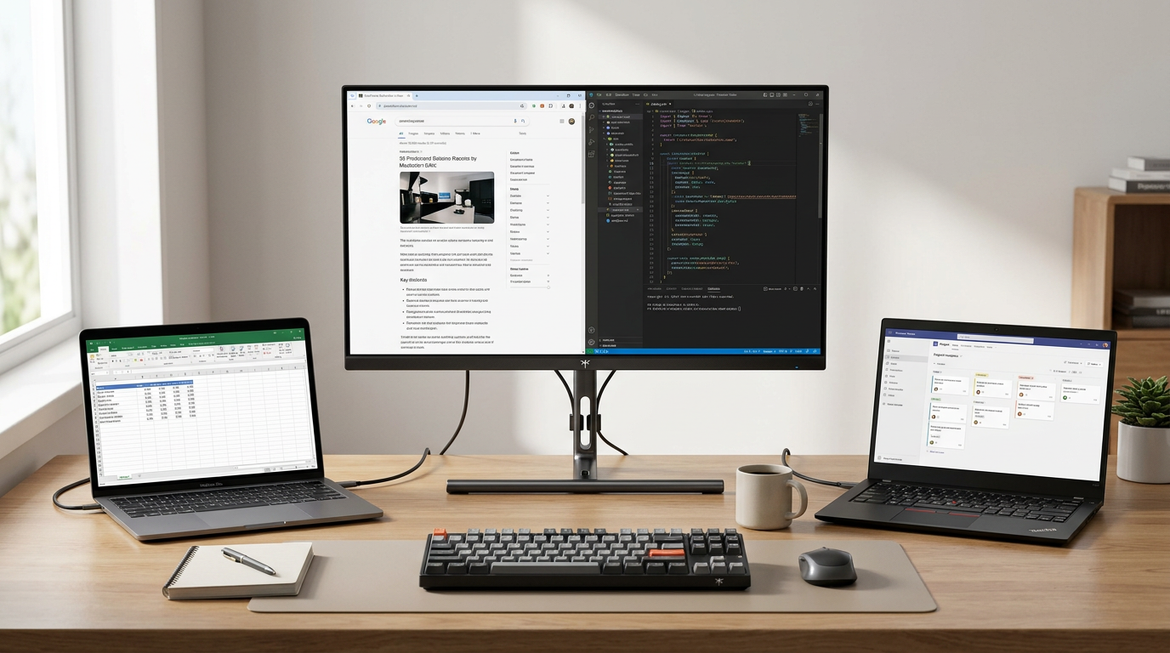
For buyers comparing one ultrawide against two monitors, the tradeoff is simple: an ultrawide gives one continuous canvas with fewer bezels and cables, while dual monitors provide more physical layout flexibility. One comparison frames this as a choice between seamless viewing and separated work zones, noting that dual monitors can be cheaper and more flexible while ultrawides are simpler and more panoramic dual monitors.
Productivity Gains Depend on Window Habits
The biggest beginner mistake is buying an ultrawide and using it like a regular monitor. If every app runs full screen, the extra width becomes wasted space. The value appears when you create repeatable layouts: document in the center, browser on the left, notes or chat on the right; code editor in the middle, documentation on one side, terminal or preview on the other.

One first-hand ultrawide productivity account is useful because it focuses on real work rather than showroom appeal. The author bought a 34-inch ultrawide and found the biggest gains in spreadsheet-heavy work, where more visible columns reduced scrolling and made data easier to compare spreadsheet-heavy work.
A simple way to test your own fit is to watch your current workday. If you constantly switch between two or three apps that belong together, ultrawide helps. If you mostly write in one centered document, answer email, or work inside a single web app, a high-quality 27-inch QHD or 4K monitor may deliver more value for less money.
Gaming Adds Another Layer

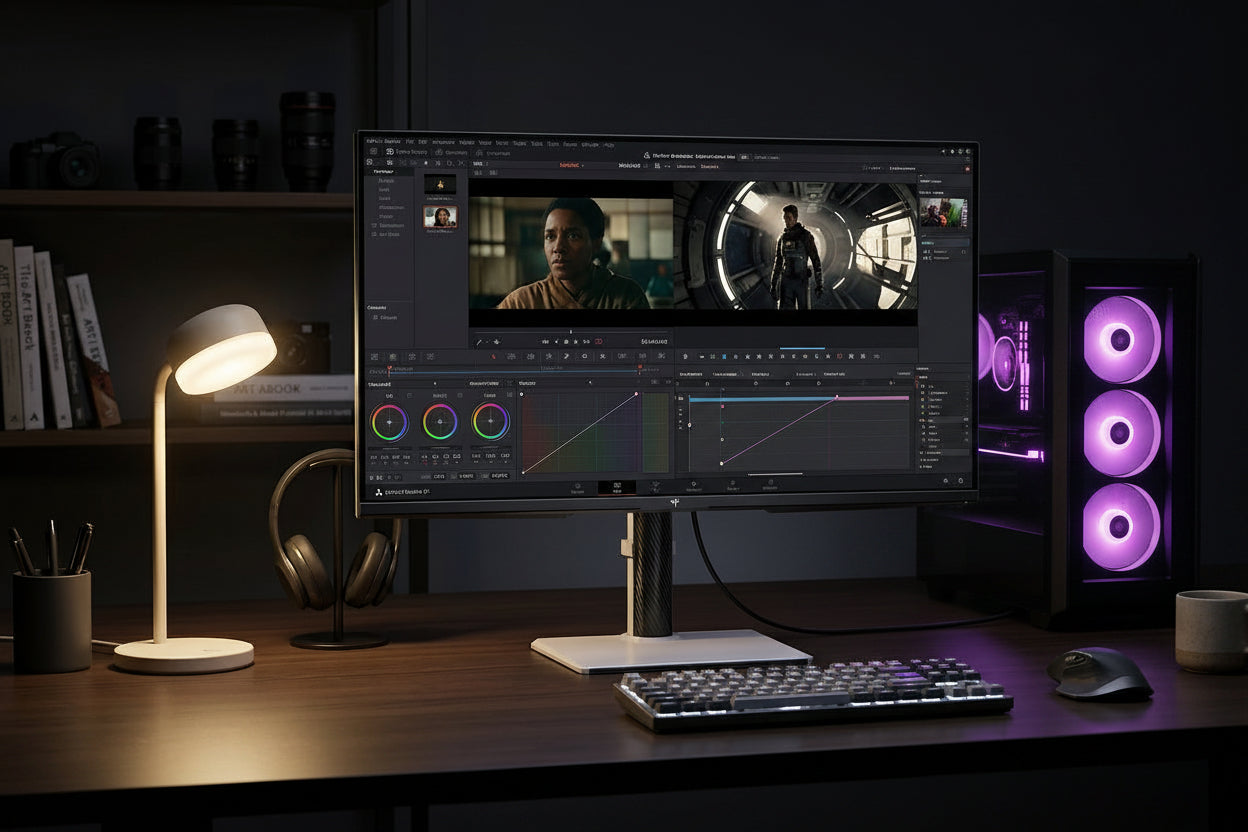
For gaming, ultrawide changes both immersion and hardware math. A 3440 x 1440 display has more pixels than standard 2560 x 1440, so it asks more from your GPU, but it is still far less demanding than 4K. That makes it appealing for players who want a wider field of view without giving up high refresh rates completely.
Ultrawide gaming recommendations emphasize the performance side: modern 34-inch OLED gaming ultrawides can reach 240 Hz, but premium models can cost around $1,299.00 and require a serious graphics card to use their speed well 240 Hz. For value-focused buyers, that means refresh rate, response time, adaptive sync, and GPU capability matter as much as size.
The catch is compatibility. Many cinematic, racing, simulation, and open-world games benefit from a wider view. Some esports titles, older games, and console-first setups may not. Competitive players who care most about consistent tournament-style framing may still prefer a fast 24-inch or 27-inch 16:9 monitor.
Ergonomics Become More Important, Not Less

Ultrawide buyers often think width equals comfort. It can, but only if the setup is controlled. Wider screens reduce some window switching and can eliminate the awkward bezel gap of dual monitors, yet they also increase eye travel and possible neck rotation if your active work lives at the far edges.
The practical rule is to keep your highest-focus task in the center third of the screen. Use the outer zones for lower-frequency material: chat, music, system monitoring, documentation, or passive dashboards. If you spend five hours editing a document, that document belongs directly behind the keyboard, not on the left edge.
Desk depth is the hidden spec. Large ultrawide stands can push the screen too close, especially on shallow desks. A monitor arm can solve this, but only if the display supports VESA mounting and the arm can handle the monitor’s weight. The KTC ergonomics guide highlights that large ultrawides require enough viewing distance and recommends checking stand footprint and arm support before buying viewing distance.
Specs New Buyers Should Decode First
Resolution is the first spec to understand. A 2560 x 1080 ultrawide may be cheaper, but text can look softer at larger sizes. For most 34-inch buyers, 3440 x 1440 is the performance-driven sweet spot because it balances sharpness, workspace, and GPU demand.
Refresh rate matters differently by use. For general office work, 60 Hz to 75 Hz can be usable, though 100 Hz or 120 Hz makes scrolling and cursor movement feel smoother. For gaming, 144 Hz or higher is the better target if the GPU can support it. Business monitor testing shows that work-focused ultrawides now often include 120 Hz panels, Thunderbolt, Ethernet, USB hubs, and daisy-chaining, which makes them more than wide screens; they become desk hubs 120 Hz panels.
Connectivity is the second learning curve. USB-C with Power Delivery can charge a laptop and carry video through one cable, but wattage matters. A slim laptop may be fine with 65W, while a workstation-class laptop may need more. DisplayPort is often the safest choice for full resolution and high refresh rate. HDMI support varies by version and monitor implementation, so buyers should verify the exact resolution and refresh rate supported through each port.

When a Standard Monitor Is Still the Better Buy
Ultrawide is not automatically the premium answer. A 27-inch 4K monitor can be better for photo editing, dense text, native 4K video review, and users who value vertical clarity over horizontal span. General monitor guidance still treats 4K as important for image-heavy work and best possible image quality 4K.
A flat 16:9 display is also easier for screen sharing. When you share a full ultrawide screen on a video call, viewers on laptops may see tiny text. The workaround is to share a single window or create a 16:9 zone, but that is another habit to learn.
Budget also matters. Retail ultrawide listings can climb quickly, especially with OLED, high refresh rates, large 32:9 panels, USB-C hubs, or premium warranties. Current retail categories show how wide the market has become, but buyers should compare actual specs rather than assuming every large curved display belongs in the same class ultrawide listings.
A Practical Buying Path
Start with your main task, not the monitor size. If your daily work is spreadsheets, coding, research, editing timelines, or multi-window operations, choose a 34-inch 3440 x 1440 ultrawide first. If you need two clearly separated workspaces, frequent portrait orientation, or cheaper expansion, dual monitors may be stronger. If you want maximum text clarity or visual-detail review, prioritize 4K.
Then measure the desk. Confirm that the screen can sit far enough back, that the stand will not consume your keyboard space, and that a monitor arm is realistic if needed. Next, check your computer’s video output. A laptop that cannot drive 3440 x 1440 at 60 Hz or higher will make an expensive ultrawide feel sluggish.
Finally, buy for the full setup: panel type, refresh rate, ports, stand adjustment, warranty, and window-management software. The monitor is only one part of the experience. The real upgrade is a controlled workspace that lets your eyes, hands, and attention move less.
FAQ
Is 34 inches too big for a first ultrawide?
For most desks, 34 inches is the practical starting point for ultrawide. It gives enough width to justify the format without the more demanding ergonomics of 49-inch super ultrawide displays.
Is ultrawide better than dual monitors?
Ultrawide is better for a seamless view, cleaner cabling, immersive gaming, and wide single workflows. Dual monitors are better for separated tasks, lower-cost expansion, portrait layouts, and keeping one app full screen while another stays independent.
Should office buyers choose curved or flat?
For 34 inches and larger, a gentle curve can make the edges feel more natural because the sides sit closer to your viewing angle. Flat panels can still work well, especially for design tasks where straight-line perception matters.
Ultrawide is worth learning when it matches how you actually work or play. Choose the aspect ratio that reduces friction every day, not the one that looks most impressive in a product photo.