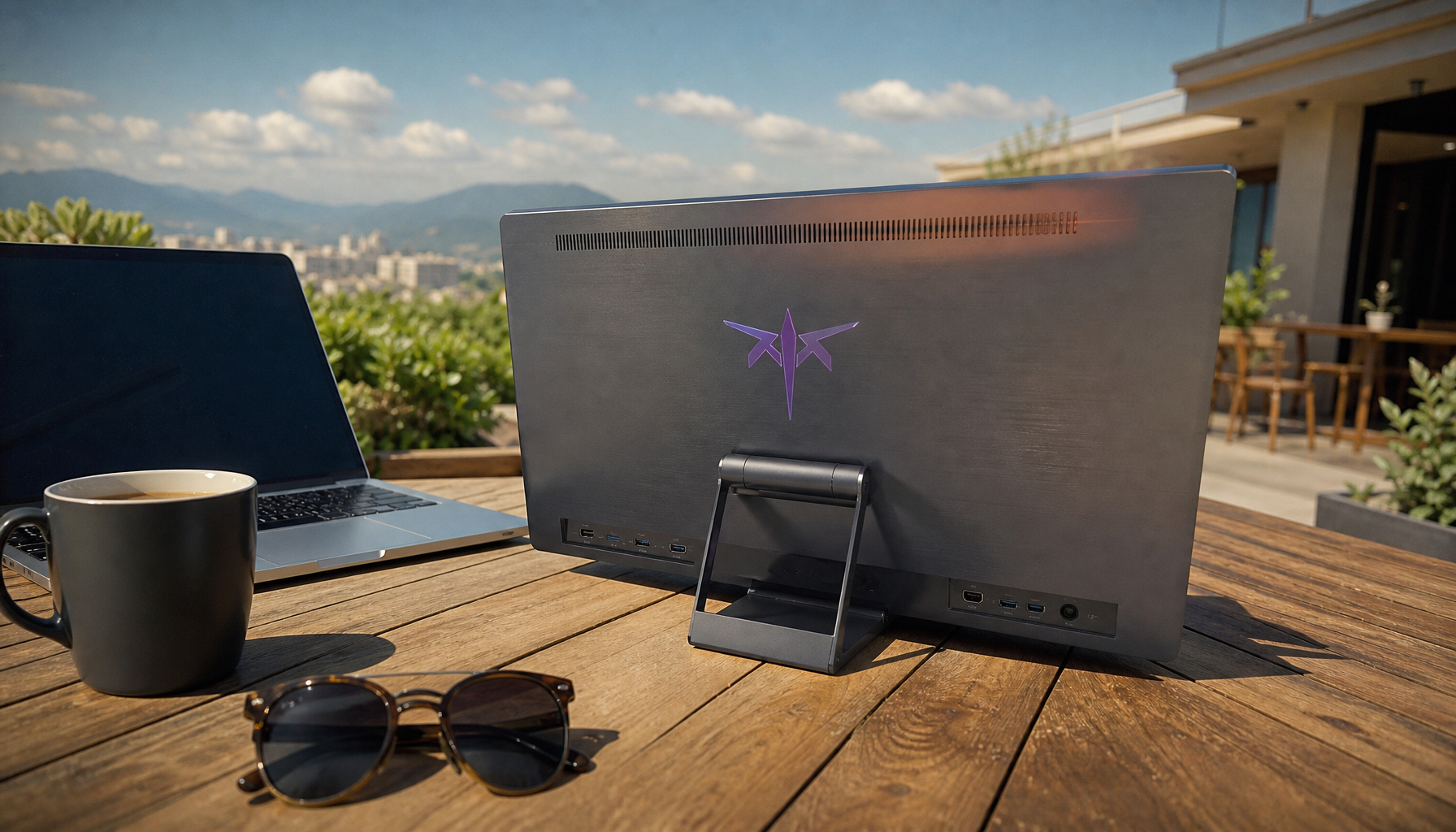
Yes, 4K 240Hz can run over DisplayPort 1.4 with DSC, but uncompressed 4K 240Hz 10-bit output needs DisplayPort 2.0/2.1-class bandwidth, ideally UHBR20 with a DP80-certified cable.
Does your new 4K 240Hz monitor go black for a second when you alt-tab, wake the PC, or switch refresh rates? That behavior is often a link negotiation issue, not a broken panel, and choosing the right DisplayPort path can reduce it. Here is the practical way to decide whether DP 1.4 with DSC is enough or whether DP 2.0/2.1 bandwidth is worth paying for.
The Short Answer: DP 1.4 Works, But It Uses Compression
DisplayPort 1.4 can carry a 4K 240Hz signal by using Display Stream Compression, usually shortened to DSC. DSC is a hardware-level compression method designed for high-bandwidth display signals, and DisplayPort implementations commonly rely on it to push 4K high-refresh output through links that do not have enough raw bandwidth for the full uncompressed stream.
The important distinction is not whether it can run, but how it runs. A DP 1.4 connection typically runs 4K 240Hz through DSC. A DisplayPort 2.0 or 2.1 UHBR20 connection can provide enough headroom for uncompressed 4K 240Hz 10-bit output, with up to 80 Gbps raw bandwidth and about 77.37 Gbps effective bandwidth for UHBR20.
For most gaming, streaming, and office work, a well-implemented DSC connection looks visually indistinguishable from an uncompressed UHBR20 link. The buying decision is more about behavior, compatibility, cables, and GPU features than visible image quality.
What 4K 240Hz Actually Demands
A 4K 240Hz monitor is not just a sharper 240Hz screen. It moves a huge amount of pixel data: 3,840 by 2,160 pixels, refreshed 240 times every second, often with 10-bit color and HDR involved. That is why the connection standard matters as much as the panel spec.
DisplayPort 1.4 does not have enough practical bandwidth for uncompressed 4K 240Hz 10-bit output. DSC solves that by reducing the data rate, commonly around a 3:1 compression ratio, so the monitor can receive the signal without forcing you down to a lower refresh rate or color format. The DisplayPort standard history reflects how newer versions have expanded bandwidth over time, which is why DP 2.0 and DP 2.1 matter for extreme refresh-rate displays.
In a real setup, a DP 1.4 GPU and monitor can still deliver the headline experience: 4K resolution, 240Hz refresh, smooth mouse movement, and responsive play. The tradeoff is that the signal is compressed in transit, even if the final image is intended to look the same to your eyes.
DSC: The Compression That Usually Should Not Scare You
DSC is not the same kind of compression people associate with a low-quality video stream. It is display-link compression, performed in hardware, with extremely low latency. DSC latency is typically measured in microseconds, far below human reaction time, so it should not meaningfully affect competitive gaming.

VESA certifies DSC 1.2a as visually lossless, and authorized display test tools exist because modern display signaling is validated through standardized compliance processes rather than guesswork. In day-to-day use, artifacts are generally not something you can reliably identify without lab tools, especially during fast motion in games or ordinary desktop work.
Text clarity is also often blamed on the wrong thing. If a 4K 240Hz monitor looks slightly soft, the more likely causes are panel coating, subpixel layout, operating system font smoothing, scaling behavior, calibration, or the monitor’s own sharpness processing. DSC can be part of the signal chain, but it is usually not the first suspect when spreadsheets, code editors, or browser text look off.
DisplayPort 2.0 and 2.1: Why UHBR20 Still Matters
DisplayPort 2.0 and 2.1 become valuable when you want the same 4K 240Hz experience with less compression dependency and more bandwidth margin. DP 2.1 UHBR20 is the key version because it can provide up to 80 Gbps raw bandwidth, enough for uncompressed 4K 240Hz 10-bit output.

That extra headroom is not just a spec-sheet luxury. Native UHBR20 links can reduce handshake delays and lower the chance of cascading black screens across multiple displays. If you run a main 4K 240Hz monitor beside another high-refresh display, the difference can show up when waking from sleep, changing resolution, alt-tabbing from exclusive fullscreen games, or switching HDR modes.
There is also a cable requirement that buyers often miss. A DP80-certified cable is needed to guarantee full UHBR20 80 Gbps performance. A standard DP 1.4 cable may still make the screen light up, but it can force the system back into DSC or lower-bandwidth behavior even when both the GPU and monitor support UHBR20. Retail listings for DisplayPort cables marketed for 4K 240Hz often blur these details, so the certification label matters more than marketing copy.

DP 1.4 With DSC vs DP 2.1 UHBR20
Connection path |
Typical 4K 240Hz behavior |
Main advantage |
Main drawback |
DisplayPort 1.4 with DSC |
Runs 4K 240Hz using visually lossless compression |
Strong value and wide compatibility |
Possible handshake delays or feature limits |
DisplayPort 2.0/2.1 UHBR20 |
Can run uncompressed 4K 240Hz 10-bit |
More bandwidth headroom and cleaner multi-monitor behavior |
Requires compatible GPU, monitor, and DP80 cable |
DP 2.1 without full UHBR20 chain |
May still fall back to DSC |
Can still work well |
The version number alone does not guarantee maximum bandwidth |
The most practical advice is to treat the whole chain as one system. Your GPU output, monitor input, cable rating, refresh rate, color depth, HDR setting, and driver behavior all matter. One weak link can turn an expensive DP 2.1 setup into a DSC setup anyway.
When DP 1.4 Is the Smart Buy
DP 1.4 with DSC is the right choice when your priority is cost-effective 4K 240Hz gaming, mixed productivity, and a clean single-monitor setup. If your main workload is esports, AAA gaming, browsing, office apps, and media, a well-implemented DSC monitor should deliver the performance feel you bought it for.
This is especially true if you do not rely on advanced GPU scaling features. Some systems may limit driver-level super-resolution scaling at maximum refresh rates when DSC is active because DSC can consume more internal GPU display-head resources. If you never use those features, that limitation may not matter.
For a practical example, imagine a single 32-inch 4K 240Hz gaming monitor connected to a modern GPU over DP 1.4. If the display reaches 240Hz, HDR behaves correctly, text looks sharp after calibration, and wake behavior is acceptable, upgrading purely to avoid DSC is unlikely to transform the experience.

When You Should Pay for DisplayPort 2.0 or 2.1
A higher-bandwidth DisplayPort path makes more sense when your setup is demanding beyond the headline resolution and refresh rate. If you run multiple high-refresh monitors, switch often between games and desktop workloads, use driver-level super-resolution scaling, or dislike one- to three-second black screens during wake and mode changes, UHBR20 becomes a functional upgrade.
It is also a better fit for buyers who keep monitors for many years. A DP 2.1 UHBR20 display paired with a DP80 cable gives you more bandwidth margin for future GPUs and cleaner operation when you push 10-bit color, HDR, and high refresh at the same time.
The cable is not optional in that equation. DisplayPort PHY testing exists because high-speed signal integrity is difficult, and at these bandwidths a cable that worked fine before is not proof that it can sustain UHBR20. For a premium 4K 240Hz setup, buying the right cable is part of the monitor purchase, not an accessory afterthought.
Practical Setup Advice for 4K 240Hz
Start by confirming what your GPU, monitor, and cable actually support. A monitor with a DP 2.1 label is not automatically a full UHBR20 monitor, and a cable advertised for gaming is not automatically DP80-certified. Look for explicit bandwidth or certification language instead of relying on broad 8K or 240Hz claims.
Use DisplayPort rather than HDMI when your monitor’s highest refresh mode is clearly designed around DP. Then set the monitor to its full refresh rate in the operating system, confirm 10-bit color only if you need it, and test HDR, sleep/wake, and alt-tab behavior before declaring the setup stable. If black screens appear, try a shorter certified cable, update GPU drivers, test a different DP port, and check whether lowering color depth or refresh rate changes the behavior.
For office productivity, tune the basics before blaming the connection. Set the correct scaling, run the operating system’s font smoothing tool, check the monitor’s sharpness setting, and disable unnecessary image enhancement modes. At 4K, a good panel with proper calibration should make dense documents, timelines, dashboards, and code feel stable and precise.
FAQ
Do I need DisplayPort 2.0 for 4K 240Hz?
No. You can run 4K 240Hz over DisplayPort 1.4 when DSC is supported by the GPU, cable path, and monitor. You need DP 2.0 or DP 2.1-class bandwidth if you specifically want uncompressed 4K 240Hz 10-bit output.
Does DSC hurt gaming latency?
DSC latency is typically measured in microseconds, far below human reaction time. For practical competitive play, frame rate stability, panel response time, overdrive tuning, and input processing matter much more.
Is DP 2.1 always better than DP 1.4?
Not automatically. DP 2.1 is only a meaningful upgrade if the implementation supports the bandwidth mode you need, such as UHBR20, and if you use the right cable. Otherwise, the system may still rely on DSC.
Final Buying Call
Choose DP 1.4 with DSC when you want high-value 4K 240Hz gaming and productivity without overpaying for bandwidth you may not notice. Choose DP 2.0/2.1 UHBR20 when you want uncompressed 10-bit output, stronger multi-monitor stability, fewer handshake annoyances, and maximum headroom for a premium display setup.