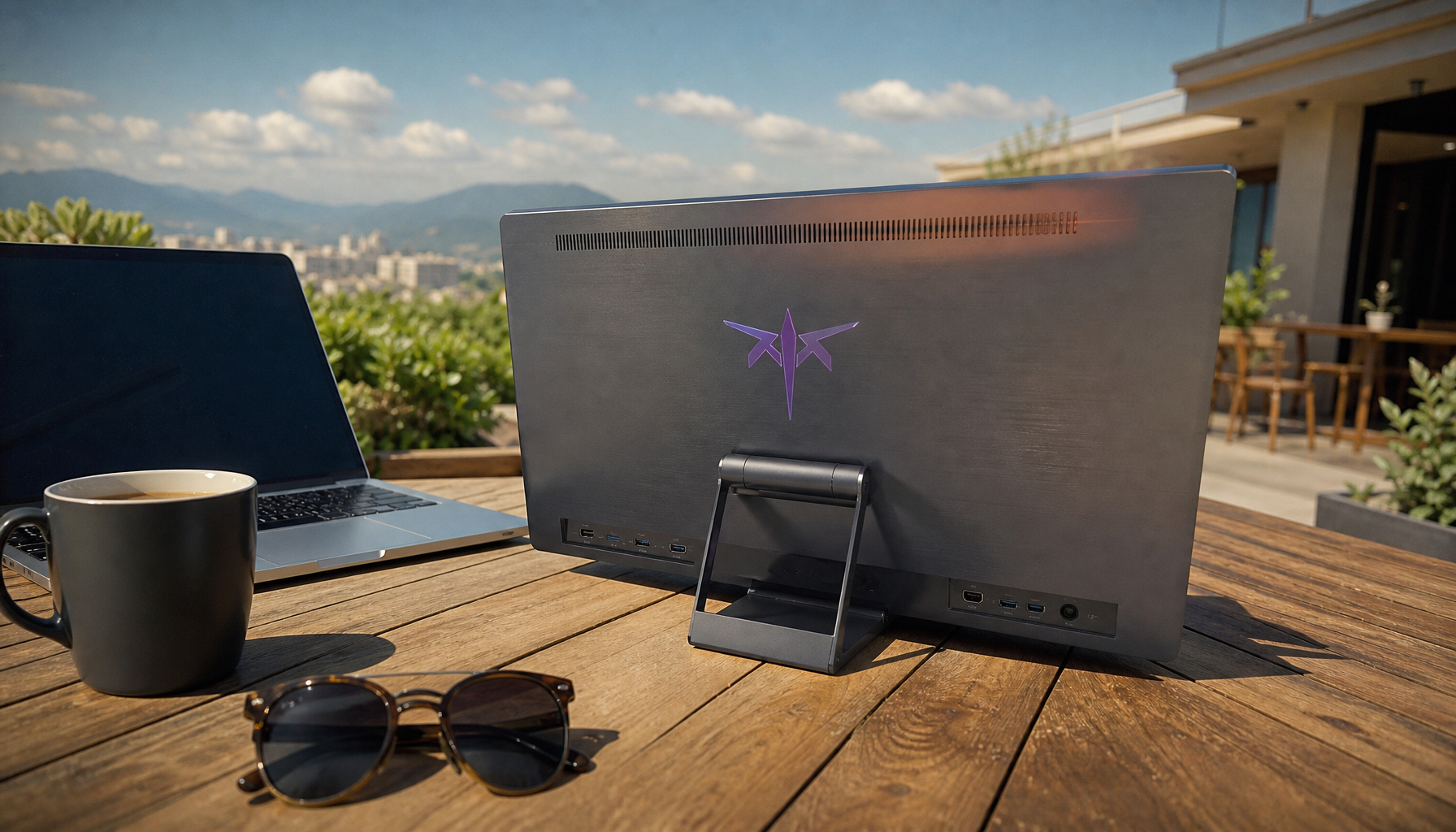
A charging-only USB-C cable usually powers the device but does not carry the video signal a monitor needs. In most cases, the result is a charging laptop and a monitor that still shows no image.
Why a charging-only USB-C cable usually fails with a monitor
The biggest mistake is assuming the USB-C connector shape tells you what the cable can do. It does not. Two USB-C cables can look identical while one handles charging only and the other carries power, data, and video for a monitor.
A USB-C cable may still be limited to USB 2.0-class data speeds, which is fine for power delivery and basic syncing but usually not enough for monitor use. External display output over USB-C commonly depends on DisplayPort Alt Mode or Thunderbolt/USB4 capability, and those require the right internal wiring and signaling support inside the cable.
A video-capable USB-C connection uses high-speed lanes very differently from a charge-first cable. That is why a laptop can charge normally through the same cable that completely fails to light up a 27-inch office monitor or a high-refresh gaming display.
What you will actually see on your desk
The most common outcome is blank-screen or no-video behavior even though charging still works. From a user point of view, that feels confusing because part of the setup is clearly alive: the battery icon changes, maybe the monitor hub powers a keyboard, yet the panel never receives a usable picture.

In day-to-day troubleshooting, a USB-C cable display support check often points to one of three patterns. The first is no image at all. The second is an image that works only at a lower resolution or refresh rate than expected. The third is an unstable picture with flicker, random disconnects, or HDR and high-refresh options disappearing from the display menu.
That instability makes sense once you look at the bandwidth gap. A basic 480 Mbps charging cable operates in a completely different class from a 10 Gbps, 20 Gbps, or 40 Gbps cable intended for docks, fast storage, or display traffic. If your goal is 4K at 60Hz, a 1440p ultrawide display, or a portable USB-C monitor that also draws power from the same cable, the low-spec cable quickly becomes the weak link.

Why charging can work while video does not
A USB-C monitor connection can carry power, data, and video over one cable, but those functions do not all use the connection in the same way. Power delivery relies on negotiated charging support, while video needs the cable and both ports to expose the proper high-speed path.
The practical rule for DisplayPort Alt Mode is simple: if the cable is marketed only for charging, fast charging, or sync-and-charge, assume it is the wrong cable for a monitor unless the specifications explicitly say otherwise. A “100W” label does not change that. Wattage tells you how much power a cable may carry, not whether it can transport display data.
That distinction matters even more in single-cable desk setups, where the same USB-C link may be expected to handle power, video, and hub traffic at once. A cable that is good enough to top off a battery can still fail when you ask it to run a monitor, an external SSD, and a webcam through the monitor’s hub.
How to tell whether a USB-C cable is monitor-ready
The safest buying habit is to look for official cable markings and speed logos, not just marketing adjectives. If the packaging clearly shows USB4, Thunderbolt, or a defined data rate such as 10 Gbps, 20 Gbps, or 40 Gbps, you are in much better shape than with a cable that only advertises 60W, 100W, or 240W charging.

A full-featured cable with explicit video support is the right target for most monitor users. For a portable smart screen or a 1080p travel display, a solid USB-C data-and-video cable may be enough. For a docking monitor, a 4K desktop panel, or a gaming display where refresh rate matters, USB4 or Thunderbolt-class cables are usually the more reliable choice.
Cable length is where many otherwise solid setups go sideways. Shorter high-speed cables are usually more reliable for display use, and real-world experience is consistent: once you push for more bandwidth, long convenient cables become harder to trust. If you need 4K, high refresh, or hub traffic at the same time, a cable around 2.6 to 3.3 ft is often a safer bet than a bargain 6 ft or 10 ft cable making aggressive claims.
Cable type |
What usually happens with a monitor |
Best use |
Charging-only or charge-first USB-C |
Laptop may charge, but the monitor may stay black or become unstable |
Phones, tablets, basic charging |
Full-featured USB-C 10 Gbps or 20 Gbps |
Often suitable for office displays and many portable monitors |
Productivity desks, moderate dock use |
USB4 or Thunderbolt USB-C |
Best match for high-bandwidth monitors, docks, and premium setups |
4K desks, high-refresh displays, multi-device workstations |
How to troubleshoot before you blame the monitor
The first check is the source device’s USB-C port support. Some USB-C ports do not output video at all, even when the connector looks identical to one that does. If the laptop or handheld does not support DisplayPort Alt Mode, the right cable still will not fix the problem.
The second check is to replace the cable with a known video-capable cable and connect directly, without a dock or adapter. That single swap often answers the question in under two minutes. If the display suddenly works, the old cable was the problem, not the monitor.
The third check is to match expectations to the available bandwidth. Certified cable selection matters more than price alone. For example, if a monitor should run at 4K and 60Hz but appears only at 1080p, or if a gaming panel loses refresh-rate options, the cable may be passing some signal but not enough clean bandwidth for the full mode you want.
A USB-C cable rated for charging only is fine for power, but it is a poor choice for display use. If your goal is a clean one-cable monitor setup that actually works well, choose video support first, charging second, and use the shortest full-featured cable that meets your display target.