



Color banding appears when the source signal or display cannot show enough fine shade steps. Monitor settings can reduce its visibility, but they cannot fully repair missing tonal detail.
Why Console Gradients Show Bands
A smooth gradient needs many closely spaced color levels. When those levels get rounded, the transition turns into visible steps, which is the core definition of color banding.
Console games make this more noticeable because they often use large, clean gradients: night skies, volumetric fog, ocean horizons, loading screens, and HDR bloom. These areas have little texture, so even a small jump between shades stands out.

Compression can add to the problem. So can 8-bit output, limited RGB range, tone mapping, aggressive sharpening, and low-quality in-game post-processing. Even a high-end monitor cannot invent missing tonal data after the signal has already been flattened.
The Console Signal Chain Matters
For console users, the signal path is usually more important than one display preset. Console output, HDMI bandwidth, HDR mode, RGB range, and monitor processing all affect how clean gradients look.
A common issue is mismatched video range. If the console sends full RGB but the monitor expects limited range, shadows can crush and midtones can look harsh. If the opposite happens, the image can look washed out, which makes banding easier to spot.
Refresh rate is not a direct banding fix, but it still matters for the overall experience. Higher refresh rates reduce motion blur and latency, while most current consoles top out at 120 Hz rather than taking full advantage of 240 Hz displays, as noted in gaming monitor refresh rates.
Monitor Settings That Can Help
Start with settings that protect tonal detail instead of chasing maximum punch. Too much contrast, sharpness, or dynamic enhancement can exaggerate bands around subtle gradients.
Try these quick adjustments:

- Match the console and monitor RGB range; Auto is fine only if it detects correctly.
- Use Game, Custom, or sRGB mode as a clean baseline.
- Keep sharpness near default or low; high sharpness can outline gradient steps.
- Set gamma around 2.2, then adjust only if dark scenes lose detail.
- Disable dynamic contrast, extreme black boost, and automatic brightness shifts.
Brightness is not color depth, but it changes perception. A very bright screen in a dark room can make sky bands and HDR posterization jump out, while moderate brightness helps gradients feel smoother. Practical monitor setup often starts with brightness, contrast, color temperature, and refresh rate because defaults are rarely ideal for real rooms and real games.

What Settings Cannot Fix
If the game renders a gradient with visible steps, your monitor cannot truly reconstruct the missing colors. It can only hide the defect with processing, softer contrast, or dithering-like noise.
That is why some games look banded on multiple screens, while others look clean on the same console. The source image, HDR implementation, and compression quality matter as much as the panel.
A 10-bit monitor helps only when the full chain supports 10-bit output or high-quality dithering. If the console, game, or display mode falls back to rough 8-bit handling, bands may remain.
Best Practical Fix Path
First, match RGB range and enable HDR only when the game supports it well. Then calibrate HDR using the console’s calibration tool and the monitor’s real peak brightness, not an inflated marketing number.
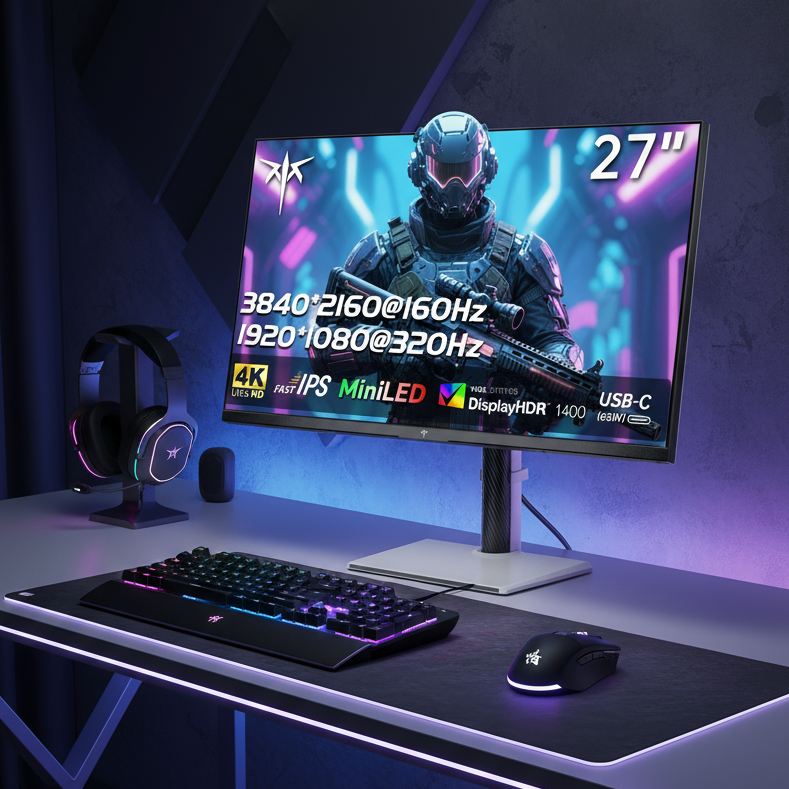
Next, choose a picture mode that preserves shadow and highlight detail. For most console players, a 4K 120 Hz display with good HDR tone mapping, clean gradients, and reliable HDMI 2.1 behavior is more valuable than a 240 Hz spec the console cannot fully use.
If banding appears in only one game, it is probably caused by that game’s rendering or compression. If it appears everywhere, check the cable, color range, HDR calibration, monitor mode, and firmware before blaming the panel.