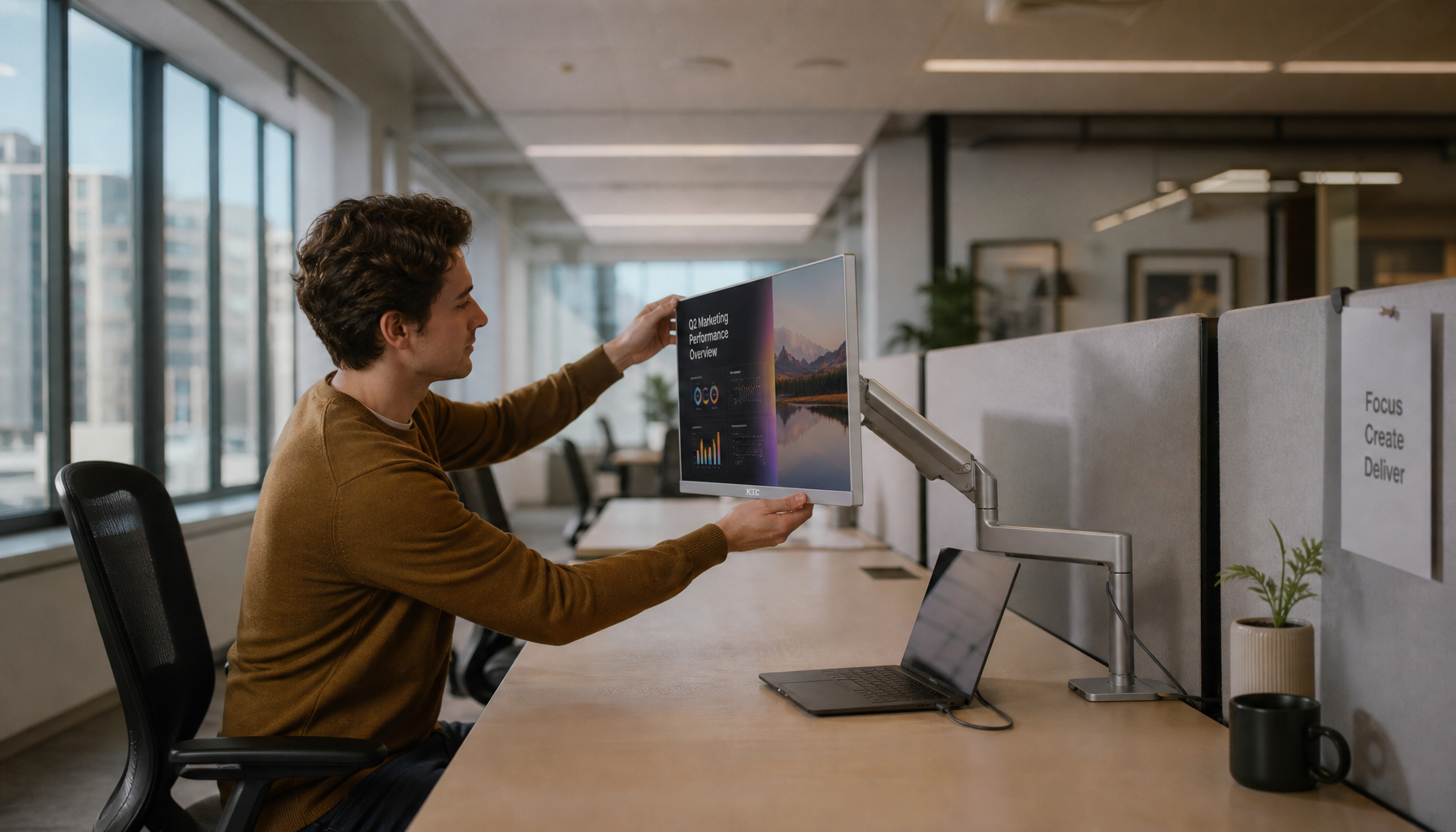
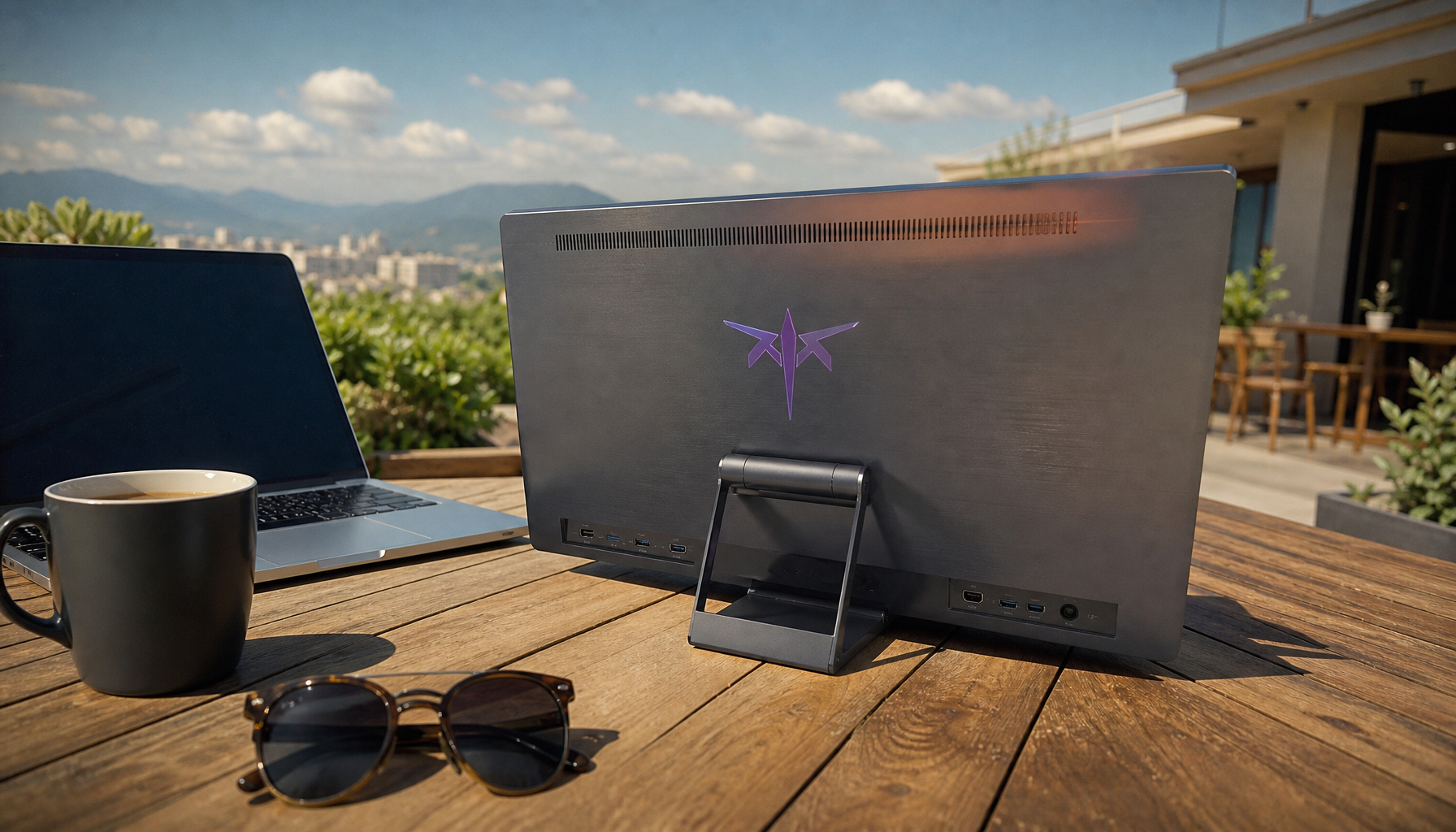
The best smart monitor shortcuts jump straight to your main input, app, or display control instead of sending you through layered menus.
If your high-refresh-rate gaming monitor also handles work, streaming, and a console, repeated menu-diving gets old fast. Modern smart-display ecosystems already support long-press app shortcuts, customizable quick-launch keys, and even monitor-side button maps with 3-button or 6-button layouts on some panels. A smarter shortcut layout lets you switch tasks in one move, and the steps below show how to build it without turning your home screen into clutter.
Pick the shortcuts that actually save time
A central smart display dashboard works best when it is treated as an always-available control surface, and that same rule applies to a smart monitor on a desk or media station. Before you move icons around, decide which three actions waste the most time today. On most mixed-use displays, those are input switching, launching a favorite app, and reaching one display-specific control such as brightness or backlight.
Match shortcuts to the monitor’s job
A customizable button map is most valuable when the shortcut matches the screen’s role. On a gaming monitor, that usually means one input shortcut for the console or secondary PC and one display-control shortcut for brightness or backlight. On an ultrawide work monitor, the better picks are your main browser-based dashboard, a meeting app, and the input that returns you to your main workstation.
Task-specific app shortcuts are usually better than plain app icons because they skip an extra tap. A shortcut that opens a timer, starts navigation, creates a note, or opens a camera feed is more useful than a generic launcher when you are trying to move quickly between work and entertainment on the same display.

Customize the home screen without overloading it
A platform-style home screens let you add apps, in-app shortcuts, widgets, and folders by long-pressing and dragging, and some shortcut steps depend on a recent platform version. Put your highest-frequency actions on the center page or main row first. If an item is not used daily, it does not belong in that prime space just because the monitor can show it.
Use direct actions, not a wall of apps
A shortcut-only layout is effective because it reduces distraction and removes dead space between intent and action. On a smart monitor, that can mean replacing a full streaming-app row with one shortcut to the app you actually use, one shortcut to a wired input for a console, one shortcut to a timer, and one shortcut to a camera or doorbell view. The result is cleaner on a 27-inch gaming monitor and even more important on a portable monitor with limited touch area.
A customizable quick-launch key is a good place for one universal action such as search, apps, or screen capture, and interfaces with a centered main page plus side pages make it easier to keep priority actions upfront. Keep the main page short on purpose. A crowded ultrawide home screen is slower to scan than a small set of obvious targets.
Set up faster input and hardware shortcuts
Keyboard-based DDC input switching is the most practical upgrade for a desk with two PCs, a game console, or a docking station. If your monitor supports it, you can assign a specific key combination to a specific display and input, which is far faster than opening the on-screen display with rear buttons. This matters most on high-refresh-rate and ultrawide monitors because they often serve more than one system.

Use monitor-side controls for display functions
A monitor shortcut system with user buttons makes sense when the action is display-specific rather than app-specific. Good assignments include Input Select, Backlight Toggle, and Backlight Custom, because those are the settings you want instantly when room lighting changes or when you move from desktop work to a darker game. If your monitor supports all-page or global assignments, use that for the one function you never want buried.

A reported shortcut-button quirk on a brand gaming monitor is a good reminder to test every shortcut twice before you depend on it. Assign the function, power-cycle the display, and verify that the button still behaves correctly on the second and third press. Shortcut menus are only useful if they stay predictable.
Build different layouts for gaming, ultrawide work, and dashboard use
Display layouts that change by room or routine are common in professional smart-home setups, and the same logic works at a single desk. A high-refresh-rate gaming display should not share the exact same shortcut priorities as an ultrawide productivity monitor or a small sidecar screen used for cameras and timers. Build one layout around what you do most on that specific panel.
Gaming and mixed-use desks
Desktop OS shortcut tools pair well with smart monitor home screens because the monitor shortcut can get you to the right input, while the PC handles the next layer of speed. A practical mixed-use setup is one home-screen tile for console input, one for the main PC input, one pinned app row for streaming or chat, and one taskbar or app-launcher shortcut group for work apps. Window-layout tools and virtual desktops then keep the PC side organized after the monitor has already put you on the right source.
Wall-mounted and family dashboards
A wall-mounted dashboard screen needs a different shortcut hierarchy: bigger touch targets, fewer total actions, and obvious placement for security, lighting, or cameras. If the panel is near a door, put entry and camera actions first; if it is in a bedroom or office, prioritize climate, shades, lighting, and a media shortcut. The layout should reflect where the display lives, not just what the software can technically expose.

What to look for in a smart monitor if shortcut control matters
A customizable home-screen framework matters more than raw panel specs if quick access is your main goal. The most useful features are editable home pages, long-press shortcut support, folders, widgets you can resize, touch gestures that feel consistent, and at least one dedicated quick-launch control. For buyers comparing smart monitors, gaming monitors, and portable displays, that software layer is what determines whether shortcut customization feels fast or frustrating.
The smart display market reached $10.24 billion in 2025, but cost remains a real restraint because these screens add speakers, processors, voice hardware, and a fuller operating system. If your only pain point is switching inputs between a work PC and a console, a standard monitor with DDC/CI support and keyboard shortcuts may be better value than a full smart monitor. If you also want built-in apps, camera feeds, or home-control tiles, the extra software is easier to justify.
A thin touchscreen with wired video input and wall-mount support is the better fit when the screen’s job is dashboard duty rather than color-critical desktop work. For a desk monitor, add one more buying check: physical controls that are easy to reach. Rear buttons that are hard to identify by feel can undo the value of otherwise good shortcut software.
Shortcut types compared
Shortcut type |
Best for |
Fastest example |
Main advantage |
Common limitation |
App shortcut |
Smart monitors with built-in apps |
Open a meeting app or camera feed directly |
Skips the app’s home screen |
Limited to actions the app exposes |
Input shortcut |
Gaming monitors and mixed-use desks |
Jump from the work PC input to the console input |
Saves the most time in dual-purpose setups |
Some displays only accept DDC input changes in certain states |
Display-control shortcut |
High-refresh-rate and production-style monitors |
Toggle backlight or open brightness control |
Useful when room lighting changes often |
Often depends on firmware and model-specific OSD behavior |
Quick Launch key |
Touchscreen smart displays |
Open search, apps, or screen capture |
Easy to teach and easy to remember |
Usually only one or two prime slots |
Widget |
Dashboard-style and family screens |
Show weather, calendar, or camera status |
Good for glanceable info |
Can crowd the main page if overused |
Folder or grouped row |
Ultrawide productivity monitors |
Group work apps or media apps |
Keeps the home screen cleaner |
Adds one extra tap compared with a direct shortcut |
FAQ
Q: Are app shortcuts or widgets better on a smart monitor?
A: Home-screen widgets and shortcuts do different jobs. Use shortcuts for actions you want to launch immediately, such as a camera feed, timer, or input-switch companion app, and use widgets only for information you need to glance at without opening anything.
Q: Can I switch monitor inputs with one keyboard shortcut?
A: DDC input shortcuts can do that on compatible monitors, and each shortcut can be tied to a specific display and input source. The catch is that some monitors accept those commands only from the active input, so test the behavior before you build your routine around it.
Q: How many shortcuts should stay on the main page?
A: A main dashboard layout works best when it reflects your highest-priority actions, not every possible action. For most monitors, four to six primary shortcuts is enough: one input, one app or task shortcut, one display control, and one or two context-specific items such as cameras, lighting, or streaming.
Practical Next Steps
The best shortcut layout is usually the one that removes one repeated annoyance from your setup first, whether that is input switching, app launching, or brightness control. Start small, test for a week, and only then add a second layer such as widgets or folders.
- Audit your current routine and write down the three actions that force the most menu taps.
- Put those three actions on the main page or assign them to the fastest physical control available.
- Use direct shortcuts instead of plain app icons whenever the platform supports them.
- Add one input shortcut for every device you truly switch to during a normal week.
- Move low-frequency widgets and secondary apps to side pages or folders.
- Test every button, gesture, and keyboard shortcut after a reboot so you know the setup is reliable.