You can daisy-chain USB-C displays without Thunderbolt if your laptop’s USB-C port supports DisplayPort Alt Mode and MST, and your first monitor has a DisplayPort Out port. If that chain is not supported, use a USB-C MST hub or dock instead.
Is your laptop stuck with one USB-C port, no Thunderbolt logo, and a desk full of display cables? A properly matched USB-C DisplayPort MST setup can give you an extended dual-monitor workspace from one laptop connection while keeping the desk clean and reliable. Here is how to confirm compatibility, wire the displays, and avoid the most common bandwidth and setup traps.
USB-C Is the Connector, Not the Display Standard
USB-C is only the physical port shape. For monitor chaining, the important question is what signal that USB-C port carries. A USB-C display chain without Thunderbolt usually depends on DisplayPort Alt Mode, which lets USB-C carry a DisplayPort video signal, and MST, which splits that signal into separate extended displays.
That distinction matters because a USB-C port can support charging and data without supporting video. Dock setup guidance makes this point clearly: the laptop port must support video output through DisplayPort Alt Mode or Thunderbolt, because a charging-and-data-only USB-C port will not drive an external monitor through video cables or docks USB-C port.
Think of it like a high-performance monitor cable hidden inside a USB-C shell. If the laptop supports DisplayPort Alt Mode and MST, the signal can leave the laptop, enter the first monitor, then continue from that monitor’s DisplayPort Out to the second display.
What Daisy-Chaining Means Without Thunderbolt
A daisy chain means the computer connects to the first display, then the first display passes video to the next display. Monitor setup guidance describes this as using one main DisplayPort or Thunderbolt connection from the computer, followed by one extra cable for each additional monitor daisy chaining.
Without Thunderbolt, the practical version is usually DisplayPort MST over USB-C. The first monitor receives DisplayPort over USB-C, then its DisplayPort Out port sends the next stream to the second monitor. The second monitor usually only needs a DisplayPort In port; it does not need its own output unless you are adding a third display.
This is different from HDMI. PC setup guidance notes that DisplayPort 1.2 or higher with MST is required for DisplayPort chaining, while HDMI does not support true monitor daisy chaining in the same way DisplayPort 1.2. HDMI splitters often mirror the same image, which is not the same as a real extended desktop.
The Hardware Checklist Before You Buy Anything
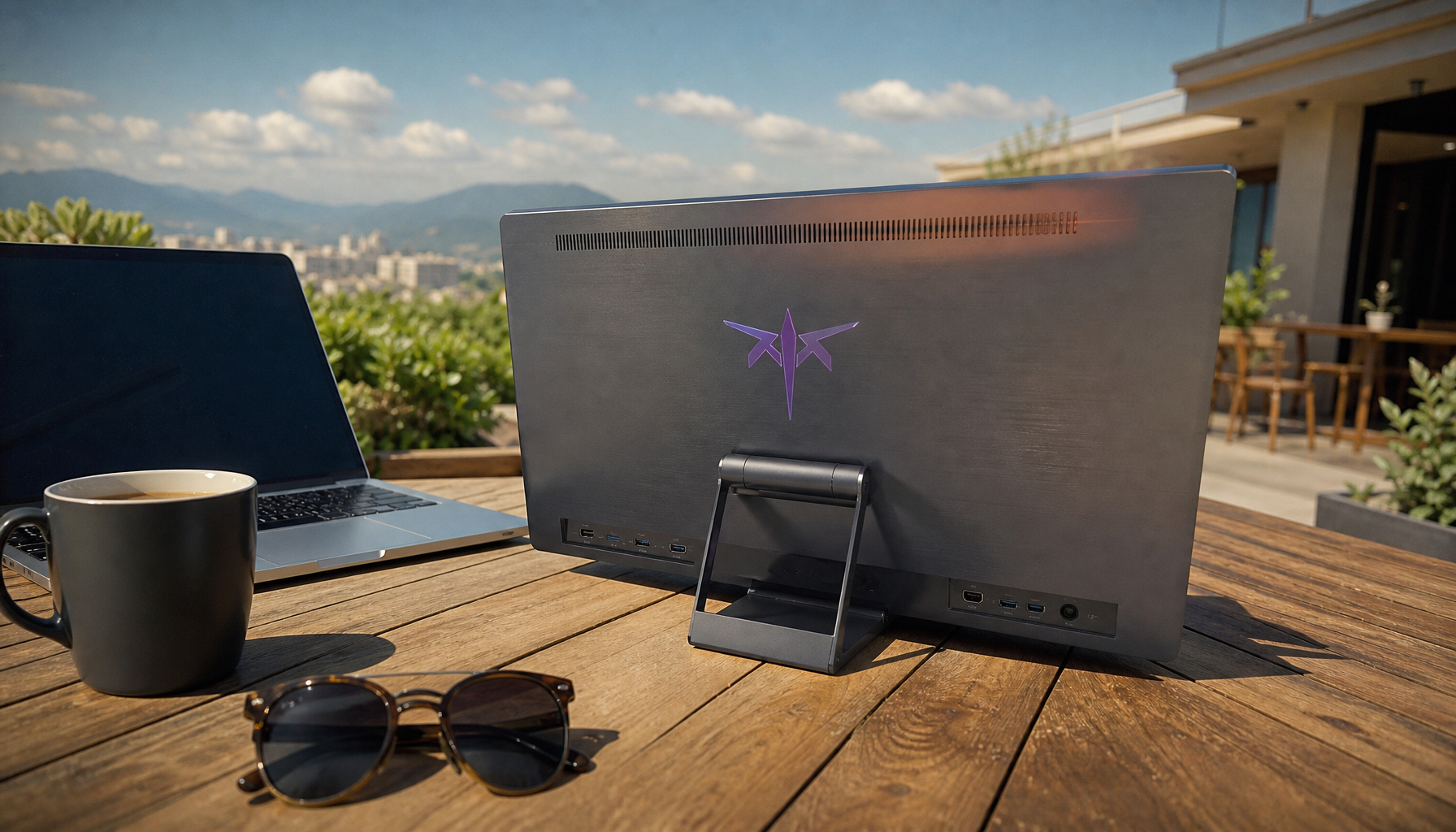
Your source device needs a USB-C port with DisplayPort Alt Mode and MST support. Your first monitor needs USB-C video input and DisplayPort Out, sometimes labeled DP Out or MST Out. Your second monitor needs a compatible DisplayPort input. Your cable from laptop to first monitor must support video, not just charging. Your DisplayPort cable from the first to second monitor should be rated for the resolution and refresh rate you want.

A real-world example is a 27-inch USB-C productivity monitor with 90W power delivery and a DisplayPort output. The buying lesson is straightforward: “USB-C monitor” alone is not enough. You need USB-C video input plus a downstream display output.
Campus IT setup notes for a 34-inch USB-C hub monitor show another important detail: on hub-style USB-C monitors, the laptop docking port may be a specific rear USB-C port, while front-facing USB-C ports may only serve accessories or charging rear USB-C port. If the chain does not light up, check the exact port labels before blaming the laptop.
Requirement |
What to Look For |
Why It Matters |
Laptop USB-C video |
DisplayPort Alt Mode, DP Alt Mode, or USB-C video output |
A data-only USB-C port cannot drive the display chain |
MST support |
DisplayPort MST in laptop/GPU specs and monitor menu |
MST creates separate extended displays |
First monitor output |
DisplayPort Out, DP Out, or MST Out |
This passes video to the next monitor |
Correct mode |
Extend, not mirror or duplicate |
Extend gives each screen its own workspace |
Bandwidth headroom |
Resolution and refresh rate within DP limits |
Prevents black screens, 30Hz fallback, or flicker |
How to Connect the Chain
Start with the laptop powered on and the monitors connected to power. Connect the laptop’s USB-C video-capable port to the first monitor’s USB-C input. Then connect the first monitor’s DisplayPort Out to the second monitor’s DisplayPort In. Open the first monitor’s on-screen display menu and enable DisplayPort MST or DP Out Multi-Stream if it is not already active.
After cabling, open Windows Display settings and choose Extend these displays. PC setup advice aligns with this workflow: connect the compatible cables, confirm MST support, power on the displays, then arrange the screens and choose extend or duplicate mode in system display settings.
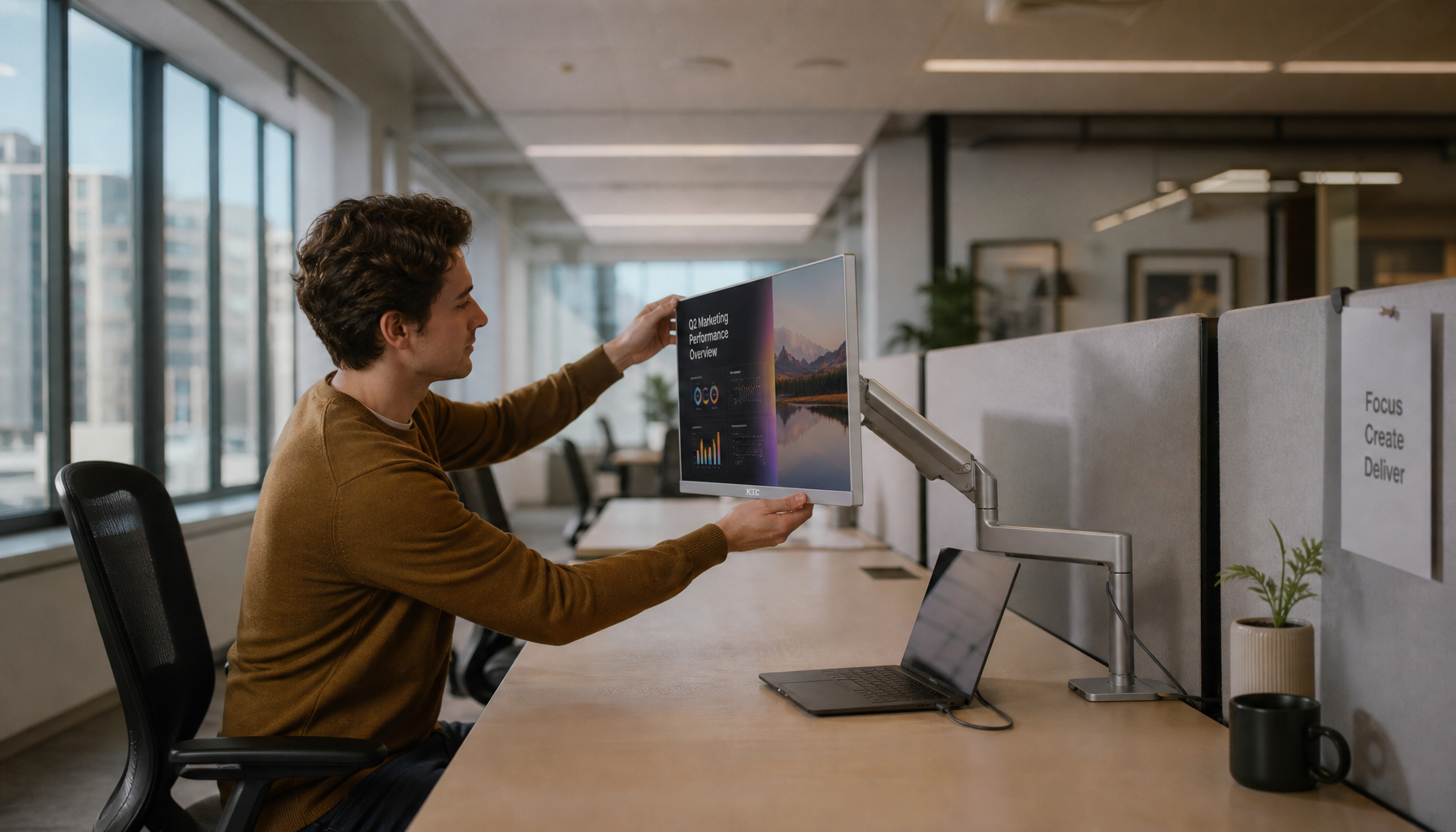
A simple office setup might place a laptop below two 27-inch QHD monitors. The USB-C cable runs to the left monitor, then one DisplayPort cable runs from the left monitor to the right monitor. In Windows, drag the display boxes so the left and right screens match the physical desk layout. That step is small, but it makes mouse movement feel natural and prevents the daily annoyance of the cursor jumping the wrong way.
Bandwidth Limits
Display bandwidth is the performance budget of the chain. Higher resolution, higher refresh rate, HDR, and high color depth all consume more of that budget. A community discussion summarized a practical rule of thumb from user experience: DisplayPort 1.2 can handle about one 4K 60Hz display or two WQHD 60Hz displays over a single DisplayPort connection, while higher-bandwidth setups depend on newer DisplayPort versions, DSC, and hardware support DisplayPort MST.
For productivity, dual 1440p at 60Hz is often the sweet spot. Text remains sharp, spreadsheets have room to breathe, and the system is less likely to fall back to awkward refresh rates. For gaming, the decision changes. If you want 144Hz or above, especially at 1440p or 4K, avoid assuming a daisy chain will preserve the full refresh rate on both displays. Put the gaming monitor directly on the strongest display output when possible, then use the chain for the secondary productivity panel.
There is also a USB tradeoff on some USB-C monitors. Some displays offer a high-resolution mode that prioritizes video bandwidth and a high-data-speed mode that keeps USB peripherals faster. If your keyboard, mouse, and webcam are plugged into the monitor hub, and your second display suddenly drops resolution or refresh rate, check that monitor menu before replacing cables.
When a USB-C MST Hub or Dock Is Better
If your monitor does not have DisplayPort Out, you cannot build a true monitor-to-monitor chain from that display. In that case, a USB-C MST hub or dock can split the laptop’s DisplayPort Alt Mode signal into multiple monitor outputs. This is not a visual daisy chain on the desk, but it solves the same port-saving problem.

A technical support discussion about a laptop without straightforward DisplayPort chaining points to this distinction: a multi-display adapter or splitter can support multiple extended displays, but driver-dependent solutions may behave differently across operating systems multiple extended displays. Native DisplayPort MST is usually cleaner than USB graphics workarounds because the GPU still handles normal display output.
A dock is also better when you need Ethernet, USB accessories, audio, card readers, and laptop charging in one landing point. Dock setup notes describe the desk value clearly: one USB-C dock can expand a laptop to monitors, USB peripherals, wired Ethernet, and power delivery through a single USB-C connection.
Driver-Based USB Graphics Is Not MST
Driver-based USB graphics can drive monitors through USB data using a dock and software driver. It is useful when a laptop lacks enough native display outputs, but it is not the same as DisplayPort MST. This approach depends more heavily on drivers, USB bandwidth, CPU/GPU resources, and sleep-wake behavior.
Forum notes in the research describe a Windows setup with one USB-C driver-based dock connected to three 1080p monitors, with reported concerns around refresh stutter, intermittent disconnects, and instability after switching display profiles or waking from sleep driver-based dock. That does not mean driver-based USB graphics is bad. It means it should be chosen deliberately, especially for static office apps, dashboards, email, documentation, and chat rather than color-critical editing or high-refresh gaming.
For a reliable pro display workflow, prefer native USB-C DisplayPort Alt Mode plus MST when your hardware supports it. Use driver-based USB graphics when the laptop’s native display pipeline is limited and your workload can tolerate software-managed display output.
Pros and Cons of USB-C Daisy-Chaining Without Thunderbolt
The biggest advantage is desk control. One USB-C cable to the first monitor can handle video and, on many displays, power and USB hub access. The second display needs only a short DisplayPort cable from the first monitor. That reduces clutter, frees laptop ports, and makes docking feel immediate.
The second advantage is cost. Thunderbolt docks and Thunderbolt monitors are powerful, but they are often more expensive. A DisplayPort MST chain can deliver a strong office productivity setup without paying for Thunderbolt hardware you may not need.
The tradeoff is certainty. Thunderbolt 4 systems tend to offer clearer multi-display guarantees, while USB-C implementations vary by laptop, GPU, monitor firmware, cable, and operating system. The community discussion highlights that USB4 and Thunderbolt overlap but are not identical, and some features that Thunderbolt requires may be optional in USB4. In plain terms, two laptops with identical-looking USB-C ports can behave differently.
Troubleshooting a Chain That Does Not Work
If only one monitor appears, first confirm that the second monitor is connected to DisplayPort Out on the first monitor, not DisplayPort In. Then open the first monitor’s menu and enable MST or DP Out Multi-Stream. If the two screens mirror instead of extending, change the operating system setting from Duplicate to Extend.
If the second display appears but runs at a low refresh rate, lower one display’s resolution as a test. A chain that works at 1080p 60Hz but fails at dual 4K 60Hz is usually hitting a bandwidth limit, not a bad monitor. If the display drops after sleep, update the graphics driver, monitor firmware, and dock firmware if a dock is involved.
If nothing appears through USB-C, verify the laptop port itself. A USB-C charging port without DisplayPort Alt Mode will never become a video output through a passive cable. At that point, a driver-based USB graphics dock, a different laptop port, or a direct HDMI/DisplayPort connection may be the practical fix.
FAQ
Can I daisy-chain two USB-C monitors without Thunderbolt?
Yes, if the laptop supports DisplayPort Alt Mode with MST and the first monitor can pass the signal downstream through DisplayPort Out or a supported equivalent. If both monitors only have USB-C inputs and no downstream display output, you likely need a dock or MST hub.
Can HDMI be used for USB-C monitor daisy-chaining?
Not for true daisy chaining. HDMI can connect displays directly or through certain splitters, but true extended-display daisy chaining is normally a DisplayPort MST or Thunderbolt feature. Some HDMI devices mirror the same screen, which is not the same as an extended workspace.
Is USB-C daisy-chaining good for gaming?
It can work for a secondary display, but it is not the first choice for high-refresh competitive play. For 144Hz, 240Hz, HDR, or 4K gaming, connect the main gaming monitor directly to the strongest GPU display output and reserve the chain for productivity screens.
Final Word
A non-Thunderbolt USB-C display chain is viable when you build it around DisplayPort Alt Mode, MST, the right first monitor, and realistic bandwidth targets. For most office, creator, and trading-desk-style workflows, the winning setup is simple: USB-C into the first monitor, DisplayPort Out to the second, Extend mode enabled, and no mystery adapters in the signal path.