Dark mode can modestly reduce burn-in risk on OLED-class HDR displays by lowering bright static screen areas. It helps most when combined with lower brightness, fewer fixed UI elements, and regular panel-maintenance routines.
Burn-In, Retention, and Why HDR Changes the Conversation
Burn-in is permanent uneven pixel wear, while image retention is temporary ghosting that may fade after rest or a refresh cycle. That distinction matters because permanent uneven pixel wear is mainly an OLED issue, whereas LCD and many Mini-LED displays are more likely to show temporary sticking than true long-term panel damage.

High-brightness HDR displays add a second variable: luminance. HDR hardware is built to deliver much brighter highlights than SDR, and on serious panels that can mean 600, 1,000, or even 1,400 nits of peak output. The practical lesson peak HDR output and real HDR monitor guidance is that peak brightness should be reserved for highlights, not used as an all-day desktop baseline. When static UI stays bright for hours, especially on self-emissive pixels, it consumes panel life where it is not needed.
What Dark Mode Actually Changes
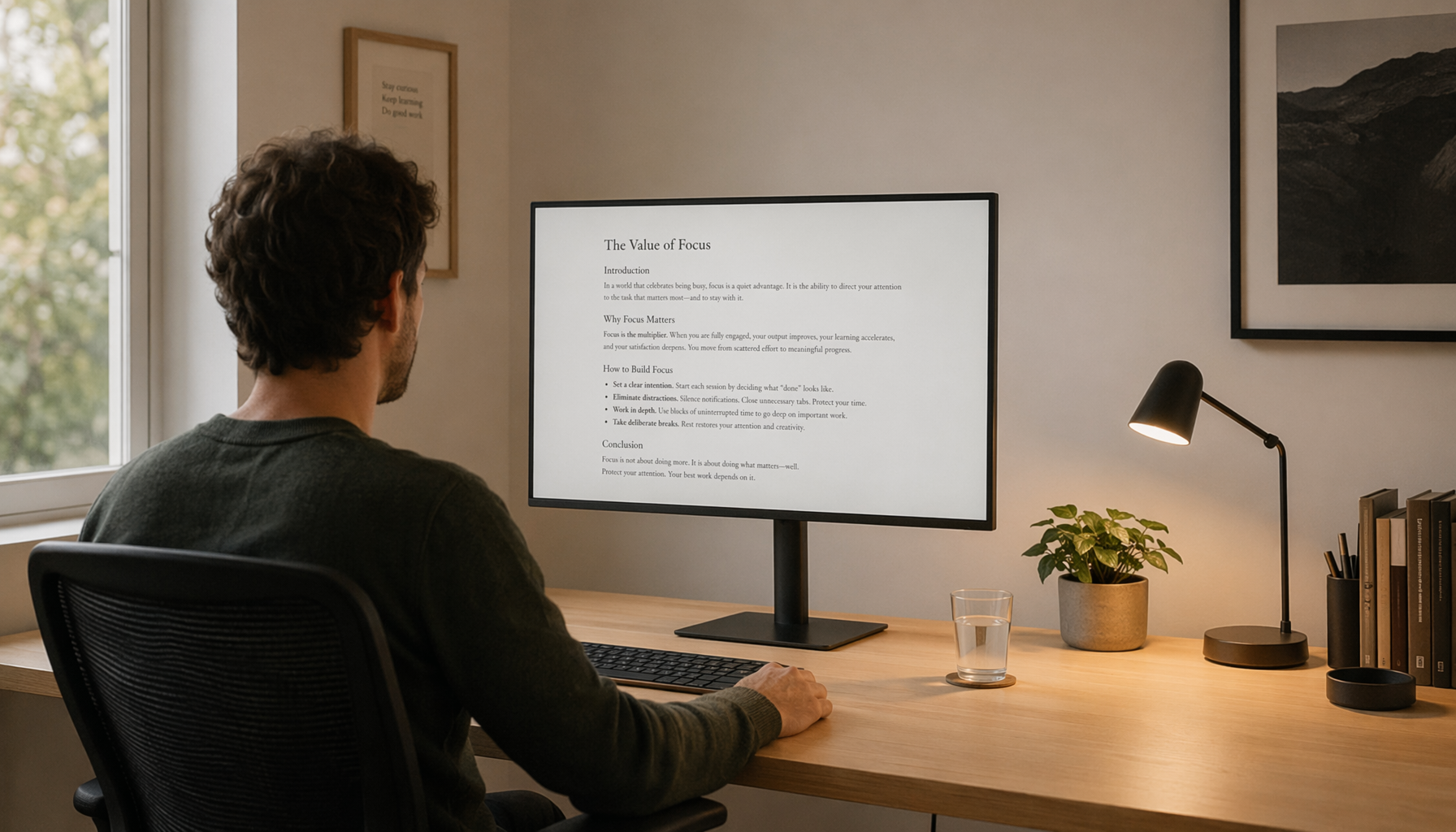
Dark mode does not repair damage, and it does not make an OLED immune to burn-in. What it can do is reduce average picture level, so less of the screen stays bright for long periods. On an OLED desktop, a dark app window with gray panels and low-luminance backgrounds demands far less from the panel than a full-screen white spreadsheet or browser page.

That is why daily OLED brightness guidance often pairs dark mode with moderate SDR brightness, hidden static UI, and rotating wallpapers. The logic is simple: if fewer pixels stay bright, and the pixels that do remain bright are driven less aggressively, cumulative uneven aging slows down. In practice, that matters most for office work, coding, chat apps, launchers, and any desktop view that remains on screen for hours at a time.
There is also a power and heat advantage. Self-emissive panels work harder when they display more bright content. Darker UI usually means lower total pixel output, which supports the same prevention logic found in consumer OLED advice and QD-OLED desktop setup habits.
When Dark Mode Helps Most, and When It Barely Matters
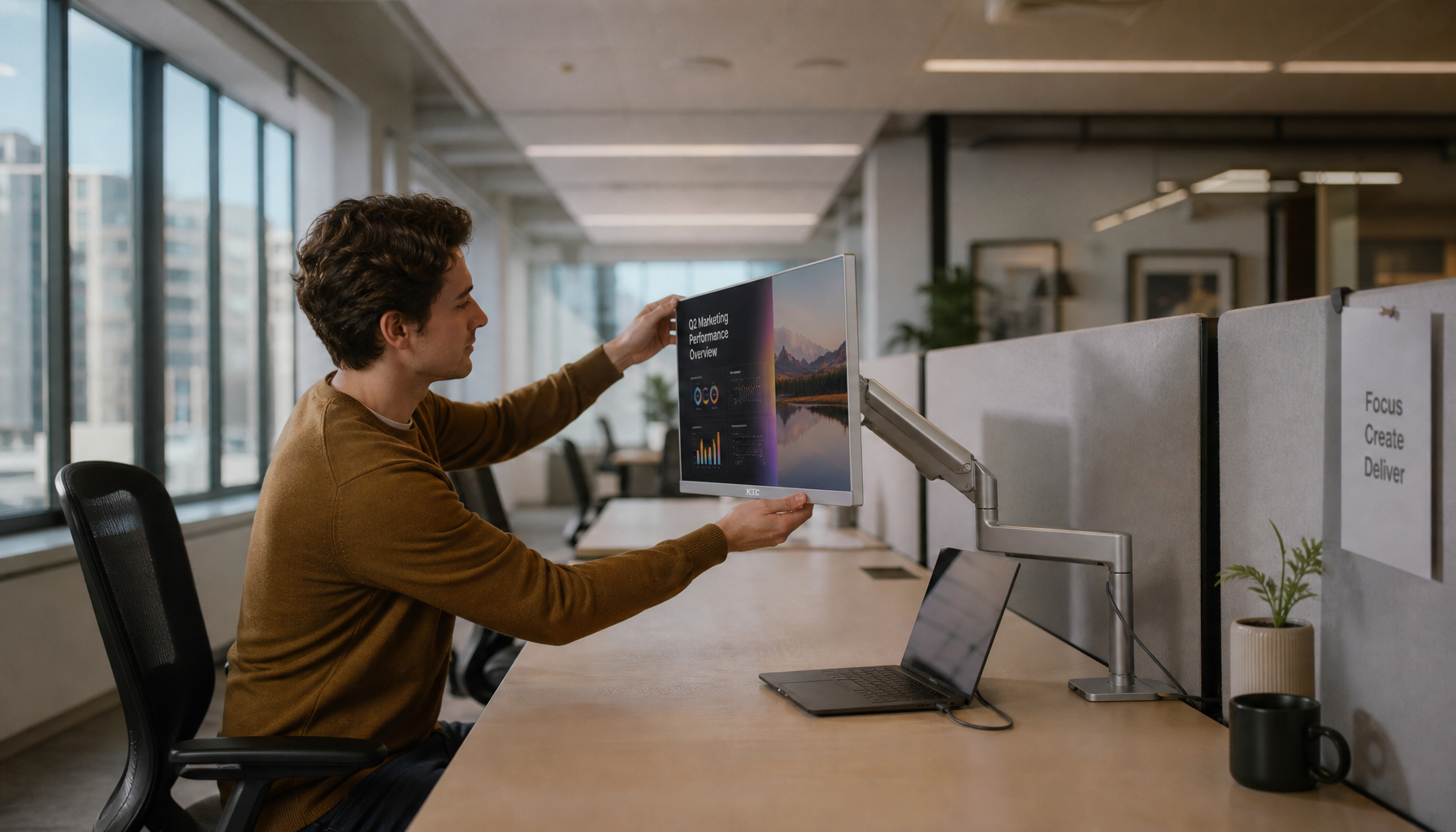
Dark mode helps most on OLED and QD-OLED monitors used as monitors rather than TVs. A desktop environment is full of fixed elements: taskbars, menu bars, browser tabs, app sidebars, status icons, and game HUDs. Windows 11 OLED prevention settings are useful here because they target those static zones with auto-hide taskbars, lower brightness, and changing backgrounds.

The effect is much smaller on LCD and Mini-LED. Those displays can suffer image retention or backlight non-uniformity, but dark mode is not a major anti-burn-in tool there because the panel is not aging per pixel in the same way. If your bright HDR monitor is IPS with Mini-LED local dimming, dark mode is mainly a comfort and aesthetics choice, not a serious longevity strategy.
It also helps less during actual HDR playback or gaming. In HDR movies and games, the panel is supposed to show bright highlights, and that is not inherently the problem. The bigger issue is repeated bright static elements in the same place: a minimap, health bar, sports scoreboard, editing toolbar, or desktop taskbar. That is why repeated bright static elements matter more than the fact that a display is HDR-capable.
The Catch: Dark Mode Can Concentrate Wear
Dark mode lowers whole-screen brightness, but it can also leave small clusters of very bright, always-on elements against a nearly black background. White text, bright icons, a fixed crosshair, or a notification badge may stand out more sharply and stress the same pixels repeatedly while surrounding pixels rest.

The better-supported conclusion from burn-in mechanics and OLED monitor prevention practice is that dark mode helps when it reduces large bright static areas, but it is not enough if the remaining bright elements never move.
A simple example makes this clear. If you work eight hours a day with the same taskbar and app chrome visible, that adds up to about 40 hours of repeated stress each workweek. In a 24/7 dashboard scenario, the same UI reaches 168 hours per week, which is why continuous-monitoring guidance treats static exposure as the real enemy.
The Smart Way to Use Dark Mode on a Bright HDR Display
The most reliable approach is to treat dark mode as one layer in a broader panel-care strategy. If you use an OLED or QD-OLED for mixed work and play, keep a restrained SDR desktop profile for daytime productivity and reserve eye-catching HDR peak output for games, movies, and shorter active sessions. That matches OLED brightness strategy, which treats peak brightness as HDR headroom rather than a permanent desktop setting.

Auto-hide the taskbar, reduce persistent desktop icons, and rotate or animate wallpapers. Practical QD-OLED desktop habits and Windows OLED settings point to the same pattern: remove fixed bright shapes, not just bright backgrounds.
Let the display run its compensation or pixel-refresh cycles. On some OLED monitors, pixel refresh can take more than an hour, which is inconvenient but important. Skipping those routines while relying on dark mode alone is the display equivalent of buying performance tires and never checking alignment.
Which Displays Benefit Most From Dark Mode for Burn-In Prevention?
Display type |
Dark mode benefit for burn-in risk |
Why |
OLED |
Meaningful but limited |
Fewer bright static pixels reduce uneven wear |
QD-OLED |
Meaningful but limited |
The same core OLED risk applies, though newer panels add mitigation |
Mini-LED LCD |
Small |
Dark mode helps comfort more than panel longevity |
Standard LCD |
Minimal |
True burn-in risk is much lower; retention is the bigger issue |
Should You Rely on It?
Dark mode is worth using on OLED and QD-OLED if you spend long hours at a desktop, especially with a high-brightness HDR monitor that can easily be run brighter than necessary during ordinary work. But it is not the main defense. Lower brightness, hidden static UI, varied content, sleep timers, and scheduled panel maintenance do more to preserve the display.
Use dark mode as a load reducer, not as a warranty policy. The best-looking HDR screen is the one that still looks even and clean after years of real use, not just the one that can hit the highest nit number on day one.