Your monitor arrangement resets because your computer often treats HDMI and DisplayPort as different display identities, especially when cables, docks, hubs, scaling, refresh rate, or sleep behavior change during the switch.
Does your perfect desk layout fall apart the moment you switch from a work laptop on HDMI to a gaming PC on DisplayPort? A focused setup pass can usually restore predictable monitor order, sharper text, and smoother input switching without replacing the display.
The Real Reason Input Switching Breaks Your Layout
When you switch between HDMI and DisplayPort, you are not just changing a cable path. You may be changing the display handshake your operating system sees. HDMI, DisplayPort, USB-C, high-speed USB-C docks, adapters, and hubs can all expose different connection data, and modern systems use that data to decide resolution, scale, orientation, refresh rate, and screen position.

A monitor connected by HDMI may appear to the computer as one display profile, while the same panel connected by DisplayPort may appear as another. That is why your left monitor can become the right monitor, your 150% scaling can fall back to default, or your portrait screen can return to landscape. Display layout controls usually work by selecting a specific display first, then changing scale, resolution, and orientation in system settings, and official display resolution guidance reinforces using the recommended native resolution for the sharpest result.
The reset is more common when two monitors are identical, when both are routed through the same dock, or when one connection wakes faster than another. In real desks I troubleshoot, the pattern is often simple: DisplayPort wakes first, HDMI wakes second, and the OS rebuilds the desktop before every screen has reported consistently.
HDMI vs. DisplayPort: Same Picture, Different Behavior
HDMI is common because it works across PCs, consoles, TVs, capture cards, and office displays. DisplayPort is more common in high-refresh PC setups and multi-monitor workstations because it is heavily used on graphics cards and performance monitors. One port overview describes HDMI as a digital audio/video standard widely used for home entertainment, while DisplayPort is positioned as a strong computer-focused alternative for high-resolution displays.

For office productivity, HDMI may be completely fine at 1080p or 1440p. For high-refresh gaming, ultrawide panels, or 4K displays, DisplayPort is often the cleaner choice because many GPUs and monitors expose their best refresh-rate modes through it. The practical issue is consistency: if one input gives you 144 Hz and another gives you 60 Hz, the operating system may store those as separate layouts.
Connection choice |
Strength |
Common reset trigger |
HDMI |
Broad compatibility with laptops, consoles, and TVs |
Different scale or refresh mode than DisplayPort |
DisplayPort |
Strong for high refresh, high resolution, and PC gaming |
Wake-order issues or monitor identity changes |
USB-C or docked video |
Cleaner laptop desks with fewer cables |
Dock firmware, hub detection, or random monitor order |
Adapter chain |
Useful for legacy or limited ports |
Inconsistent detection and lower bandwidth |
Why the OS Forgets Your Preferred Arrangement
Display Identity Can Change
Operating systems remember layouts by matching stored display data to the connected hardware. If the same monitor appears through HDMI today and DisplayPort tomorrow, the OS may not see it as the same screen. The KDE community has discussed monitor arrangement problems where some displays identify themselves imperfectly or inconsistently, and one practical workaround was using kscreen-doctor to reapply exact output positions, scaling, and priority.
That matters on mixed desks. Imagine a 27-inch 1440p gaming monitor on DisplayPort and a 24-inch 1080p office monitor on HDMI. If the GPU reports the 24-inch panel first after wake, the OS may rebuild the desktop around the wrong primary display. Your mouse then exits the wrong edge, windows reopen on the wrong screen, and your taskbar lands where it does not belong.
Docks and Hubs Can Randomize the Order
USB-C hubs and docks are convenient, but they add another layer between the computer and the screens. Users have reported dual-monitor arrangements being forgotten or scrambled when identical displays run through a hub, with a common workaround being a layout restore tool such as displayplacer. In one discussion, the problem was especially painful because one monitor was rotated, so the wrong display could inherit the wrong rotation through the same USB-C hub.
The fix is not always to buy a new dock. Start by connecting each display directly to the computer or GPU for a test session. If the arrangement stays stable without the dock, the dock is part of the detection problem. If it still resets when directly connected, focus on the OS display cache, GPU driver, cable quality, and monitor firmware.
Scaling and Resolution Are Stored Per Display State
A reset can look like a layout problem when it is actually a scaling problem. If one input exposes a display at 4K 60 Hz and another exposes it at 4K 144 Hz, the OS may apply different scale values. Some startup behavior can also differ from normal wake behavior, so a scaled setting may survive sleep but revert after a full reboot or shutdown.
For a productivity display, scaling is not cosmetic. A 27-inch 1440p panel usually works well near 100% scaling, while a 32-inch 4K monitor may need scaling so text does not become too small. If the reset changes both layout and scaling, fix scaling after the physical arrangement is stable, not before.
The Fast Diagnostic Path
Start with the physical path. Confirm every monitor is on the intended input, then reseat HDMI and DisplayPort cables at both ends. Monitor issue roundups commonly point to loose cables, wrong input source, outdated drivers, mismatched refresh rates, and bad adapters as repeat causes of black screens, flicker, blurry text, and missing high-refresh options. The same suspects can also destabilize arrangement memory in a multi-display chain through common monitor issues.
Next, simplify the desk. Use one computer, one monitor, and one direct cable. Set the native resolution and preferred refresh rate. Add the second monitor only after the first behaves consistently across reboot, sleep, and input switching. This feels slower, but it prevents you from changing five variables and learning nothing.
Then rebuild the layout in the OS. Open display settings, identify the monitors, drag the display rectangles to match the desk, apply the change, then move the mouse across edges to confirm the virtual layout matches your physical layout. If the problem is text size or blur, use the recommended resolution and scale first, because lower-than-native resolution can make content look stretched, soft, or boxed.
How to Make the Arrangement Stick
Pick a Primary Connection Strategy
The most reliable arrangement is usually the one that changes least. If your gaming PC uses DisplayPort for high refresh and your work laptop uses HDMI, avoid swapping the same cable between machines. Give each device a dedicated input and keep the monitor’s input assignments consistent.
For performance displays, use DisplayPort for the system that needs the highest refresh rate. One monitor buying guide notes that DisplayPort is common for high-resolution or high-refresh setups, while HDMI remains broadly useful. In practical terms, that means a 165 Hz gaming display should usually stay on DisplayPort for the gaming rig, while HDMI can serve a laptop, console, or secondary office machine.
Match the Virtual Desk to the Real Desk
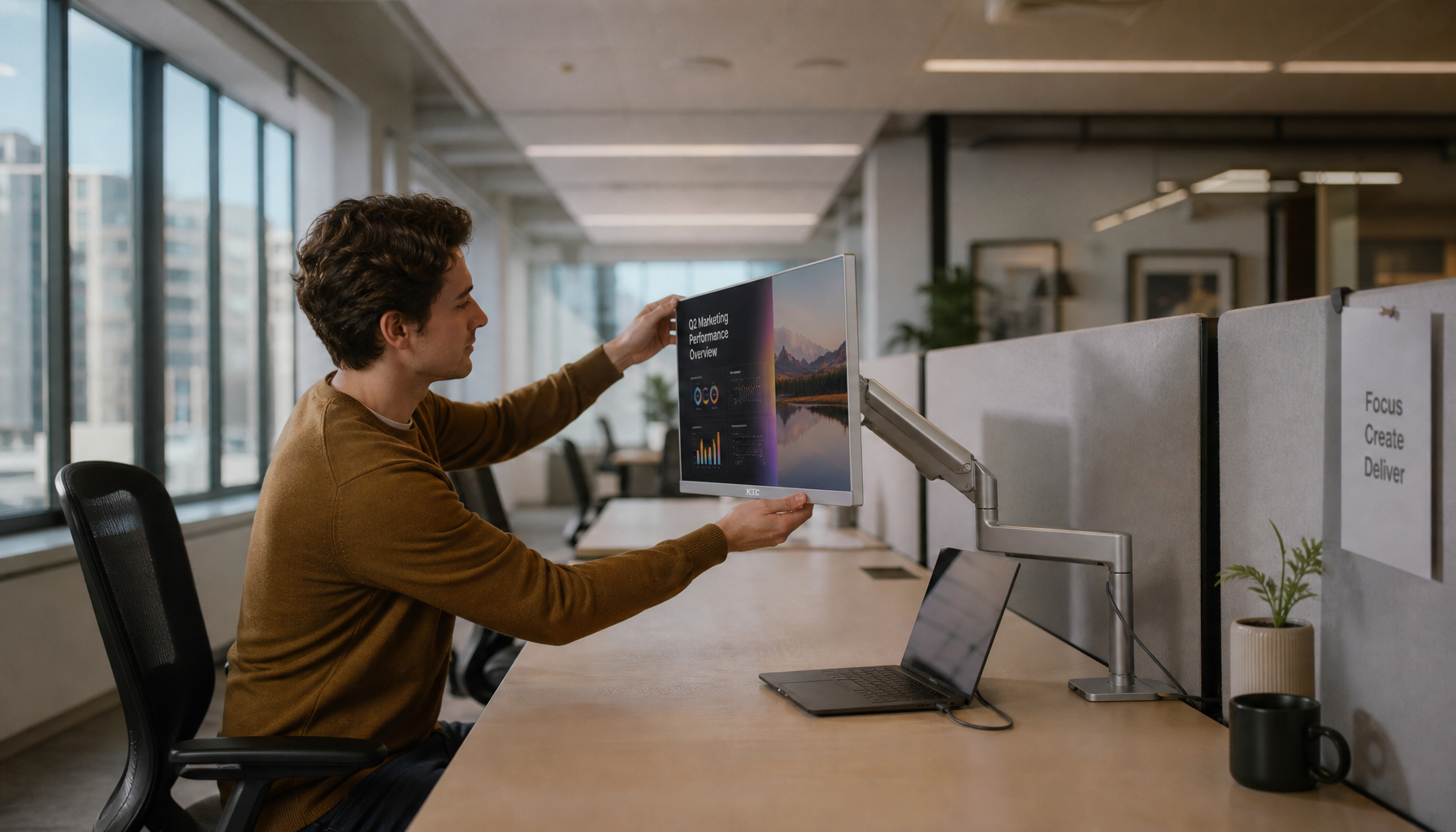
Arrangement resets are easier to catch when your physical desk is disciplined. Put the primary display directly in front of your keyboard, keep the secondary display angled toward you, and align the top edges or center lines depending on how the panels are mounted. KTC’s dual-monitor setup advice emphasizes matching OS layout to the real desk, using native resolutions, and tuning scaling as part of an unbalanced dual monitor fix.

A simple example helps: if your 27-inch screen is centered and your 24-inch screen sits to the left, the display rectangle for the 24-inch monitor should sit to the left too. If the smaller display is physically lower on the desk, drop its rectangle slightly in settings so the pointer crosses at the height your hand expects.
Avoid Weak Adapter Chains
Every adapter adds another chance for the display identity to change. HDMI-to-DisplayPort, USB-C-to-HDMI, and dock-to-dual-DisplayPort chains can all work, but cheap adapters can limit resolution, remove high-refresh options, or report display data inconsistently. Dual-monitor troubleshooting advice often points to connection errors, outdated drivers, OS settings, mismatched specifications, faulty cables, adapters, and docks as common causes of dual-monitor problems.
If you need a dock, choose one that explicitly supports your target monitor count, resolution, and refresh rate. “Supports dual displays” is not enough. You want the actual mode, such as dual 1440p at 60 Hz or single 4K at 144 Hz, because bandwidth limits can force the OS into fallback modes.
Pros and Cons of Common Fixes
Fix |
Pros |
Cons |
Rebuild layout in OS settings |
Fast, safe, and built into the system |
May not survive identity changes |
Use better certified cables |
Improves bandwidth and detection reliability |
Does not fix every dock or OS cache issue |
Connect directly to GPU or laptop |
Removes dock variables |
Less tidy cable management |
Use a layout restore script |
Fast recovery for stubborn systems |
Requires comfort with command-line tools |
Replace dock or adapter |
Can solve random detection order |
Costs more and needs compatibility checking |
When a Scripted Restore Makes Sense
If the hardware is good but the OS still scrambles the layout, a restore command can be the most practical solution. KDE users can use kscreen-doctor, while other systems often have equivalent layout restore tools. These tools record the desired layout and reapply it when the OS forgets.
This is especially useful for streamers, editors, developers, and traders who need a known workspace every time. If your left display holds chat, your center display runs the game or timeline, and your right display holds telemetry or documentation, a one-command restore is faster than dragging monitors around before every session.
Final Calibration for Comfort and Performance
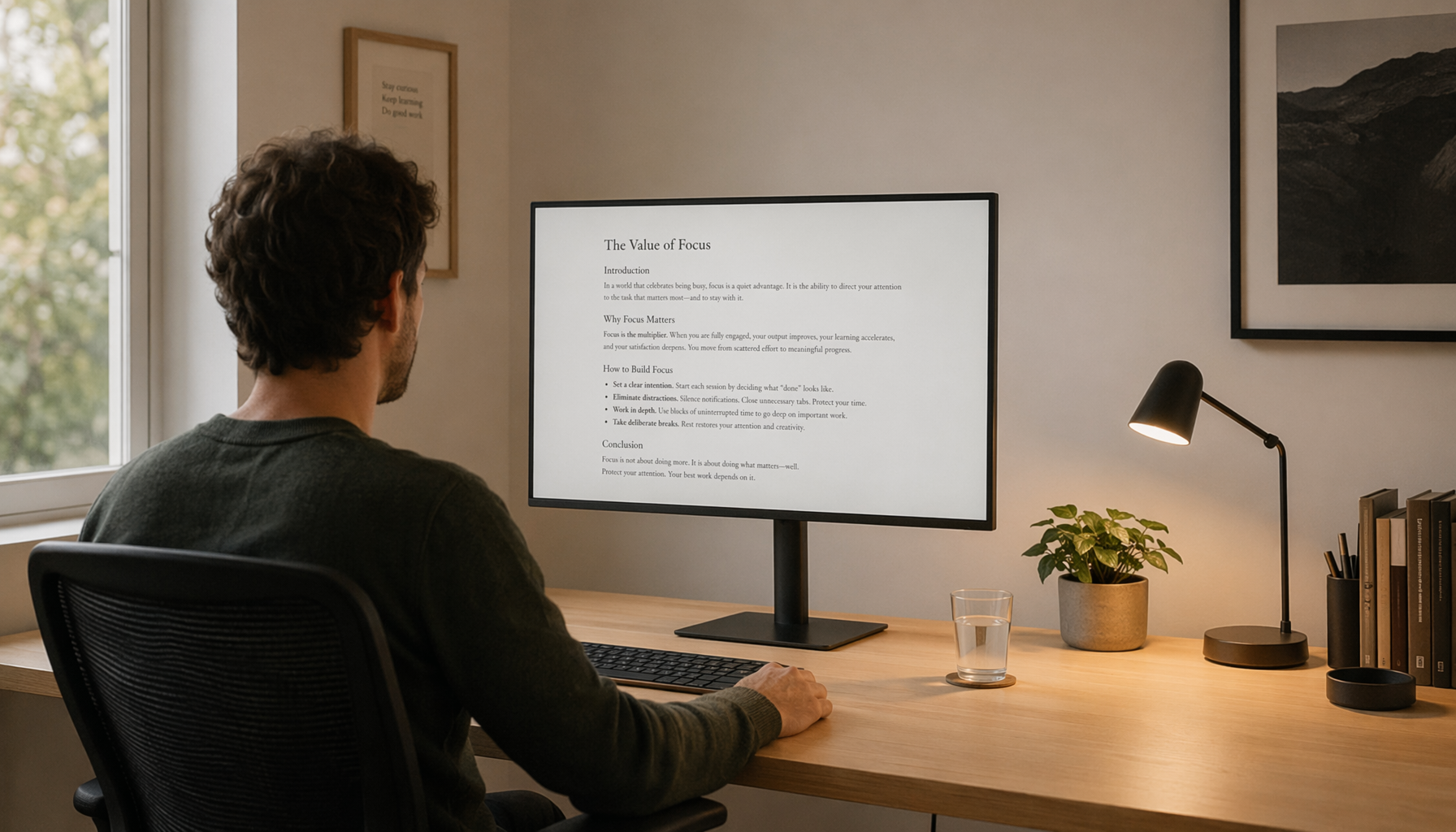
Once the layout sticks, tune the workspace for actual daily use. Set each panel to native resolution, select the refresh rate your cable and port can sustain, then match brightness and color temperature by eye or with calibration hardware. Multi-monitor issue summaries note that resolution mismatch, blurry text, flickering, cursor problems, and inconsistent color can all show up when displays differ in specs or settings across a multi-monitor setup.
For a clean productivity baseline, keep your main monitor centered, set the top of the screen around eye level, and push larger displays farther back so you can see the full panel without turning your head constantly. For gaming, make the fastest, lowest-latency monitor the primary display and keep secondary screens on lighter tasks during competitive play.
FAQ
Does switching from HDMI to DisplayPort erase my settings?
It usually does not erase them permanently. More often, the OS creates or recalls a different display profile because the monitor is being detected through a different input path.
Why does my monitor arrangement reset only after sleep or reboot?
Sleep and reboot trigger a fresh detection sequence. If one monitor wakes later than another, or a dock reports displays in a different order, the OS may rebuild the layout incorrectly.
Should I use HDMI or DisplayPort for a gaming monitor?
Use DisplayPort when it gives you the monitor’s full resolution and refresh rate. HDMI is still useful for consoles, laptops, and office displays, but the best choice is the connection that consistently supports your target mode.
A stable monitor arrangement comes from consistent identity, clean bandwidth, and a layout that mirrors the real desk. Lock down the cable path, rebuild the OS layout carefully, and reserve scripts or dock changes for the stubborn cases where detection order keeps changing.