



Washed-out color after moving from console to PC usually comes from mismatched display settings, not a bad panel. The fastest fix is to check resolution, refresh rate, picture mode, color temperature, and HDR behavior in a clear order.
Do your blacks suddenly look gray and your bright scenes look flat the moment you swap HDMI inputs or boot a game on PC? In real desk setups, this is often corrected in one session by restoring native resolution, the right refresh rate, sane picture presets, and a clean color profile. You’ll leave with a practical order of operations that gets your image punchy, balanced, and reliable again.
Why colors look worse on PC than on console
When a console looks richer than a PC on the same screen, the monitor usually is not “better at console.” The more common issue is that the PC exposes more variables, and one wrong setting can flatten the entire image. Display settings should be checked first because a non-native resolution or incorrect scaling can make the image look soft, stretched, or oddly processed before you even touch color.
Another common cause is that your monitor keeps separate picture memories for each input. A console HDMI port may be using a warmer, higher-contrast preset, while the PC input falls back to a bland default or an overprocessed mode. Picture controls like brightness, contrast, color temperature, and sharpness interact with each other, so a single bad preset can make colors look faded even when the panel itself is fine.
There is also a PC-specific trap: the signal path. Using the motherboard video output instead of the graphics card output can create configuration problems, limit features, or leave you troubleshooting the wrong device entirely. On a gaming rig, the monitor should normally be connected to the GPU.

Start with the fastest fixes that actually matter
Confirm the right resolution and refresh rate
The first thing to verify is whether the operating system is driving the monitor at its intended settings. The recommended display resolution is usually the panel’s native resolution and the sharpest option. If you are on a 27-inch display, this matters even more because 1080p can look noticeably less crisp there than it does on a 24-inch panel, while 1440p is generally the better visual match for that size, as discussed in 24-inch vs. 27-inch monitor sizing.
Refresh rate is the second check because the system does not always land on the highest available mode after a new connection or driver change. Higher refresh rates improve smoothness and responsiveness, but they also confirm that the PC is talking to the monitor correctly. If your 165 Hz or 240 Hz screen is somehow running at 60 Hz, there is a decent chance other display settings are also not where they should be.
Reset the monitor preset before you chase color
If the picture looks washed out, reset the monitor input you use for PC back to factory defaults, then choose a neutral preset such as User, Custom, or Standard rather than Vivid, Cinema, or a heavy “FPS enhancer” mode. Overprocessed modes often boost or distort image controls, which can make whites glare, blacks lift, and colors lose realism.

From there, tune the three controls that matter most. Lower brightness until dark detail is visible without turning blacks gray. Raise contrast only until bright areas still keep detail instead of blowing out. Sharpness should usually stay low or near default, because too much of it adds halos that make the image look cheap rather than vivid.
Set color temperature to neutral, not icy blue
A lot of “washed-out” complaints are really a white-balance problem. If the monitor is running a Cool preset, whites can look harsh and the entire image can feel thin. A neutral 6500K target or a Warm preset is a better baseline for long sessions and more natural color. That does not mean yellow; it means less blue-heavy than many factory defaults.
Fix the operating system side, not just the monitor
Run display calibration if the panel controls are close but not right
Once the monitor itself is sane, use the operating system to clean up the rest. The built-in display calibration tool is a legitimate first pass for gamma, brightness, contrast, and color balance. If your monitor looks foggy in shadows, gamma is often part of the problem. If whites look dingy or tinted, color balance is the likely culprit.

This step is especially useful after switching from a console because consoles often hide the complexity behind a simple HDR or picture setup wizard, while PC leaves the final result up to the operating system, the GPU driver, and the monitor together. The practical benefit is straightforward: you can often get rid of milky blacks and restore more believable skin tones without spending any money.
Be careful with ICC profiles
An ICC profile is a color correction file the operating system uses to map colors more accurately. Forum experience from long-term monitor owners lines up with real-world use: applying a good profile can noticeably improve color balance, but it works best when it is made for your exact unit or created on your own display. The advantage is better accuracy and consistency in color-managed apps. The downside is that some games ignore color-managed behavior, so an ICC profile is helpful but not magic.
If you install a profile and games still look off, that does not automatically mean the profile failed. It may simply mean the game is bypassing part of the color-management chain, which is one reason hardware calibration remains the more reliable long-term route.
HDR can help, but it can also be why the image looks wrong
HDR is one of the biggest swing factors when a console image looks great and a PC image looks disappointing. Some PC setups handle HDR poorly on modest displays, which can lead to dropped frames, odd tone mapping, or flatter-than-expected highlights. At the same time, practical limits of HDR on real displays make an important point: enjoyable HDR is not only about chasing 1,000 nits. Color gamut, panel contrast, and game implementation matter too.
That means the correct move is not “always disable HDR” or “always enable HDR.” If SDR looks richer and more stable on your monitor, use SDR for that game. If HDR improves depth without crushing blacks or bleaching highlights, keep it on. In this area, testing the same scene both ways is more useful than trusting a badge on the box.
When manual adjustment is not enough
A hardware calibrator is the strongest fix when you care about repeatable results across gaming, work, and content creation. A colorimeter measures what the screen is actually showing and then builds a correction profile around that behavior. The upside is accuracy, reuse across multiple displays, and less guesswork. The downside is cost, and it will not turn a weak panel into a premium one.

That limitation matters. Native contrast ratio still defines how much separation you see between deep blacks and bright highlights, so calibration cannot fully compensate for a panel that simply lacks depth. If your monitor has poor native contrast, strong glow, or backlight aging, the image may improve but never become truly rich.
A practical example that mirrors the usual fix
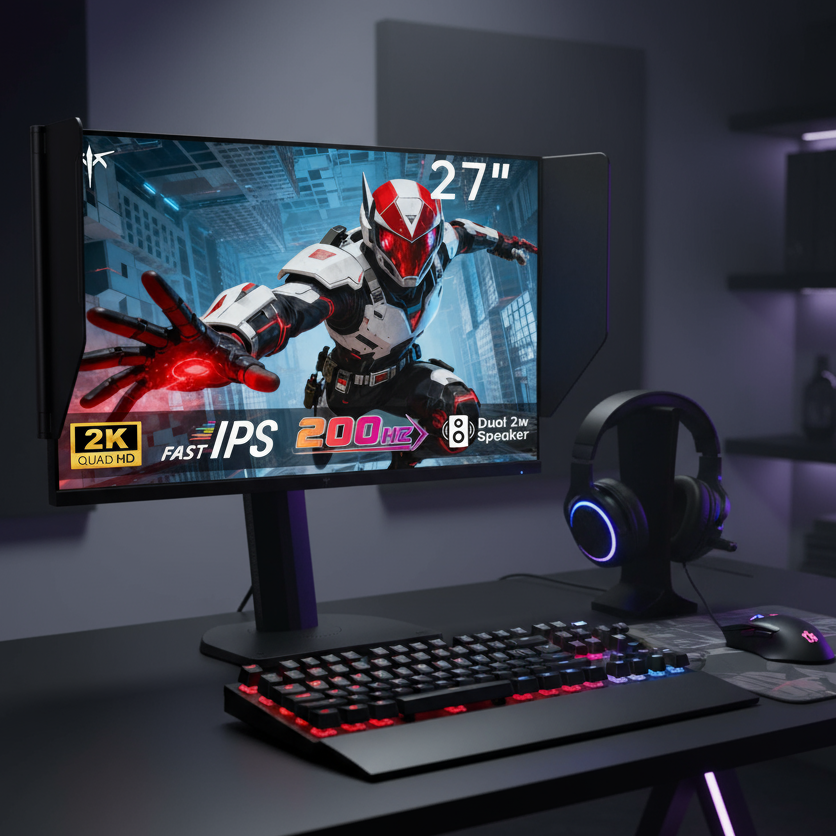
Picture a 27-inch 1440p gaming monitor that looked excellent on a console but flat on a PC. The quickest recovery path is usually to set the system back to the recommended 2560 x 1440 resolution, raise refresh rate to the panel’s actual maximum, reset the PC input preset, switch color temperature to Warm or 6500K, lower brightness until blacks stop glowing gray, and then test HDR against SDR in one familiar game scene. In many setups, that sequence restores the missing contrast and color far faster than random tweaking ever will.
A good display should feel immersive, not confusing. When the PC image looks washed out, treat it like a signal-and-calibration problem first, not a reason to distrust the monitor. Clean up the chain, tune the panel with intent, and the screen usually snaps back into the performance you paid for.