The safest fix is simple: stop the monitor from moving, keep pressure off the glass, protect the corners, and carry it in the cabin whenever possible. A rigid sleeve, soft screen layer, separated cables, and a final shake test prevent most luggage-shift damage.
Is your portable monitor sliding inside your carry-on every time the bag tips under an airplane seat or gets squeezed in the overhead bin? A testable win is simple: you should be able to shake the packed bag gently and feel no screen movement, no loose connectors, and no hard pressure points. Here is the packing method that keeps a travel display ready for work, gaming, and second-screen productivity after landing.
Why Portable Monitor Damage Happens in Flight
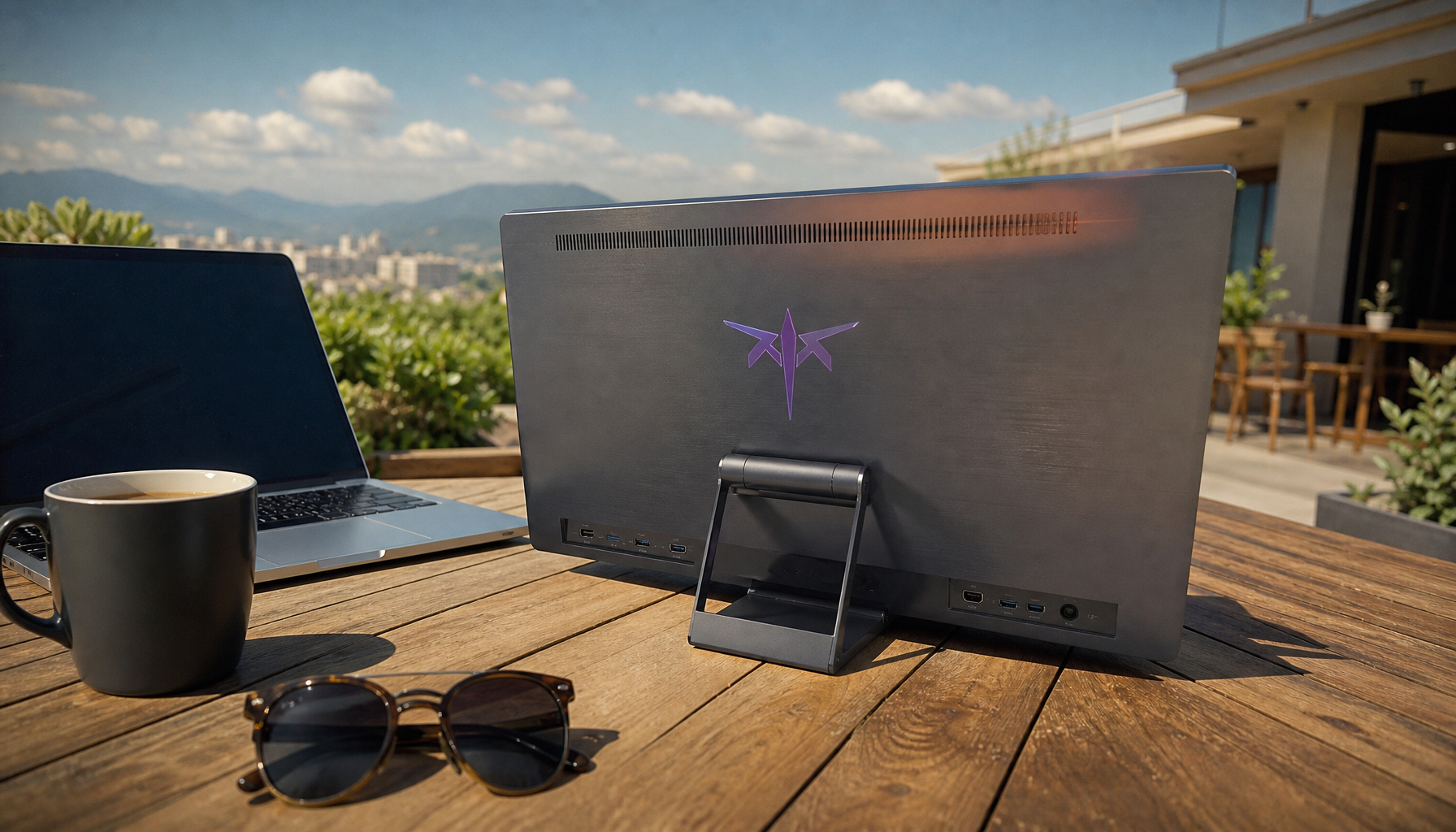
A portable monitor is a compact external display that connects to a laptop, phone, or workstation to create a larger or secondary workspace, often through USB-C or HDMI. Travel-focused displays are valuable because they add screen space without the bulk of a desktop monitor, and buying advice often emphasizes balancing portability, resolution, connectivity, and task-specific features rather than choosing by size alone travel monitor.
The weakness is physical, not digital. A portable display is a thin glass panel inside a slim chassis, so damage usually comes from flex, corner impact, point pressure, scratches, vibration, or compression from heavier items. KTC’s carry-on packing guidance treats the device like a thin glass panel and recommends immobilizing it inside a rigid sleeve or structured bag thin glass panel.
The flight environment makes shifting worse because your bag changes orientation several times. It may stand upright in a security line, lie flat in a bin, slide under a seat, then get compressed by another passenger’s bag. If the monitor has even half an inch of room to travel inside its sleeve, that motion can turn a charger brick, cable connector, or hard notebook into a pressure point.
Carry-On Beats Checked Luggage for Screen Protection
For most portable monitors, cabin carry is the stronger choice. Portable laptop monitors are generally allowed on planes as personal electronics, while checked luggage exposes fragile devices to rough handling, stacking, scanning, vibration, theft risk, humidity, dirt, and temperature swings personal electronics.

The practical advantage is control. In carry-on, you choose the monitor’s orientation, keep heavy items away from the screen plane, and remove it quickly for inspection if needed. The drawback is space: a 15.6-inch portable monitor usually fits within common carry-on dimensions, but a larger display or multi-screen kit may crowd out clothes, chargers, and camera gear.
Checked luggage can work only when the display is heavily protected and centered inside the suitcase. Monitor-moving guidance favors original molded packaging when available and recommends a double-box method when it is not, because internal movement is a major breakage risk double-box method. For a portable monitor, that translates into a hard-shell case inside soft clothing, not a bare sleeve dropped against the suitcase wall.
Build a No-Shift Packing Stack
Start With a Clean, Soft Screen Layer
Power the monitor off, unplug every cable, and wipe dust away with a clean microfiber cloth. This is not just cosmetic. Dust, grit, and rough foam can create micro-scratches when the panel vibrates for hours.
Place microfiber or thin foam directly over the display before it goes into the sleeve. Avoid alcohol wipes unless the monitor maker specifically approves them, because modern display coatings can haze or streak after repeated chemical cleaning. If the screen needs more than a dry wipe, use a lightly damp microfiber cloth and keep liquid off the panel itself.
Use Rigidity Before Bulk
Soft padding absorbs shock, but rigidity prevents bending. The best carry-on setup is a rigid sleeve, a padded laptop compartment, or two flat rigid items larger than the monitor placed around it. KTC recommends packing the monitor vertically and parallel to a laptop, with the screen facing inward toward a flat padded surface.

A real-world example makes the difference clear. If your portable monitor is in a floppy neoprene sleeve against the outside wall of a backpack, an overhead bin door or seat frame can press directly into the panel. If that same monitor sits between your laptop and a rigid document board inside the laptop compartment, the pressure spreads across a larger surface instead of landing on one fragile point.
Separate Cables and Hard Accessories
USB-C, HDMI, and power connectors should never sit loose against the display. A metal connector can become a tiny hammer when the bag shifts, and a charger brick can create enough pressure to distort the panel.
Coil cables with a soft tie and place them in a separate pouch. Put power banks, wall chargers, mice, cameras, shoes, books, and water bottles below the monitor compartment or in a different section of the bag. The goal is to keep the entire screen plane boring: flat surface on one side, flat surface on the other, no lumps.
Protect the Corners Like Failure Points
Corners deserve extra attention because impact force can travel through the bezel into the glass. Monitor-transport guidance emphasizes foam corner protection and warns that movement inside the package increases breakage risk.
For portable monitors, slim foam corner guards are ideal. If you do not have them, fold a microfiber towel around the corners before the sleeve goes into the bag. The padding should be firm enough to stop edge knocks but not so thick that it bends the chassis when zipped closed.
Use the Shake Test Before You Leave
The final check is simple: pack the bag, close it, hold it in the same orientation it will travel, and shake it gently. If you feel the monitor sliding, hear cables tapping, or notice the bag wall pressing into the screen, the packing is not done.

A pass means the monitor stays immobilized in every common position: upright, flat, and slightly tilted. A fail means you add padding around the sleeve, move hard items elsewhere, or switch to a more structured compartment. This one-minute test is the most reliable way to catch the exact problem that causes in-flight luggage-shift damage.
Overhead Bin or Under-Seat Storage?
Under-seat storage is usually safer if the bag fits without bending. It limits other passengers’ bags from landing on top of your monitor and keeps the device near you. The risk is compression from your feet or the seat frame, so keep the screen side facing inward and away from the outer wall.

Overhead bins are fine when you place the bag deliberately. Set the screen side up or against a sidewall, not face-down under rolling suitcases. If the bin is packed tightly, do not force the bag into a curved position; flex is exactly what the packing stack is designed to prevent.
Battery and Security Screening Considerations
Portable monitors without built-in batteries are simpler to fly with because they behave like passive electronics powered by a laptop or adapter. Monitors with built-in batteries need more attention, since lithium battery rules may apply. Travelers should verify airline size, weight, and electronics policies before flying airline electronics policies.
At security, pack the monitor so it can be removed and replaced without dismantling the whole workstation. If it must go in a bin, place it flat with nothing above or below it. TSA PreCheck may reduce unpacking, but the safer packing habit is still to keep the display accessible.
When a Larger Travel Setup Changes the Packing Strategy
If you travel with more than one screen, treat each panel as its own fragile surface. Remote-work guidance separates portable monitors, laptop screen extenders, and portable workstation systems, noting that professionals such as developers, analysts, designers, and financial workers may need more than a single extra display multi-monitor options.
The packing rule scales with the setup: no screen-to-screen contact, no stand pressing into a panel, and no loose accessories between displays. If you use a laptop screen extender, protect the hinge and side rails as carefully as the screen. If you use a portable workstation case, confirm the internal foam still holds the displays tightly after repeated trips, because worn foam can create new movement.
What to Do After Landing
Open the bag before powering the display on and inspect the corners, ports, and screen surface. If the monitor was exposed to unusual heat, cold, or humidity, let it sit at room temperature before use so condensation risk drops.
If you find damage, photograph the packed bag, the sleeve, the screen, and the luggage condition before leaving the airport. Claims for fragile electronics can be difficult, especially if the device was checked, but documentation gives you the best chance with airline support, travel insurance, or credit card protection.
FAQ
Can I Pack a Portable Monitor in Checked Luggage?
You can, but it is the higher-risk option. If checking is unavoidable, place the monitor in a rigid sleeve or hard case, center it inside a hard-shell suitcase, surround it with soft clothing, keep hard items away from the screen, and run the shake test before closing the bag.
Should the Screen Face My Laptop or Face Outward?
Face the screen inward toward a flat padded surface, ideally parallel to your laptop or a rigid board. Avoid placing the display against the outer wall of a backpack or suitcase where direct impact and pressure are more likely.
Is the Original Box Worth Bringing?
For larger monitors, yes, because molded inserts are designed around the display’s weak points. For slim portable monitors, a rigid sleeve inside a structured carry-on is usually more practical, but the same principle applies: shaped support beats loose padding.
A portable monitor earns its place in your travel kit only if it arrives ready to perform. Keep it rigid, cushioned, corner-protected, cable-separated, and motionless, and your travel workspace stays as dependable in a hotel room as it is at your desk.