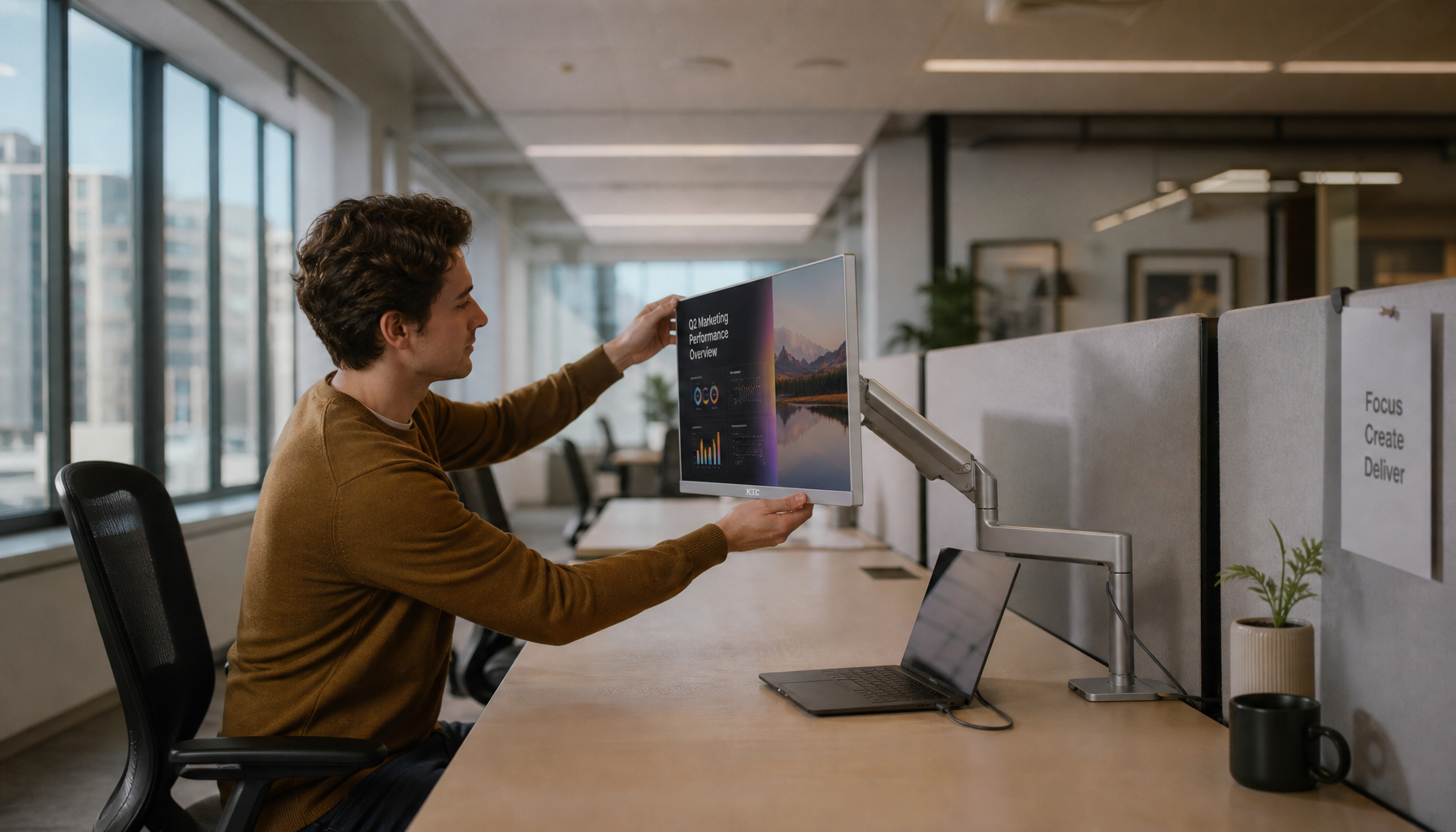
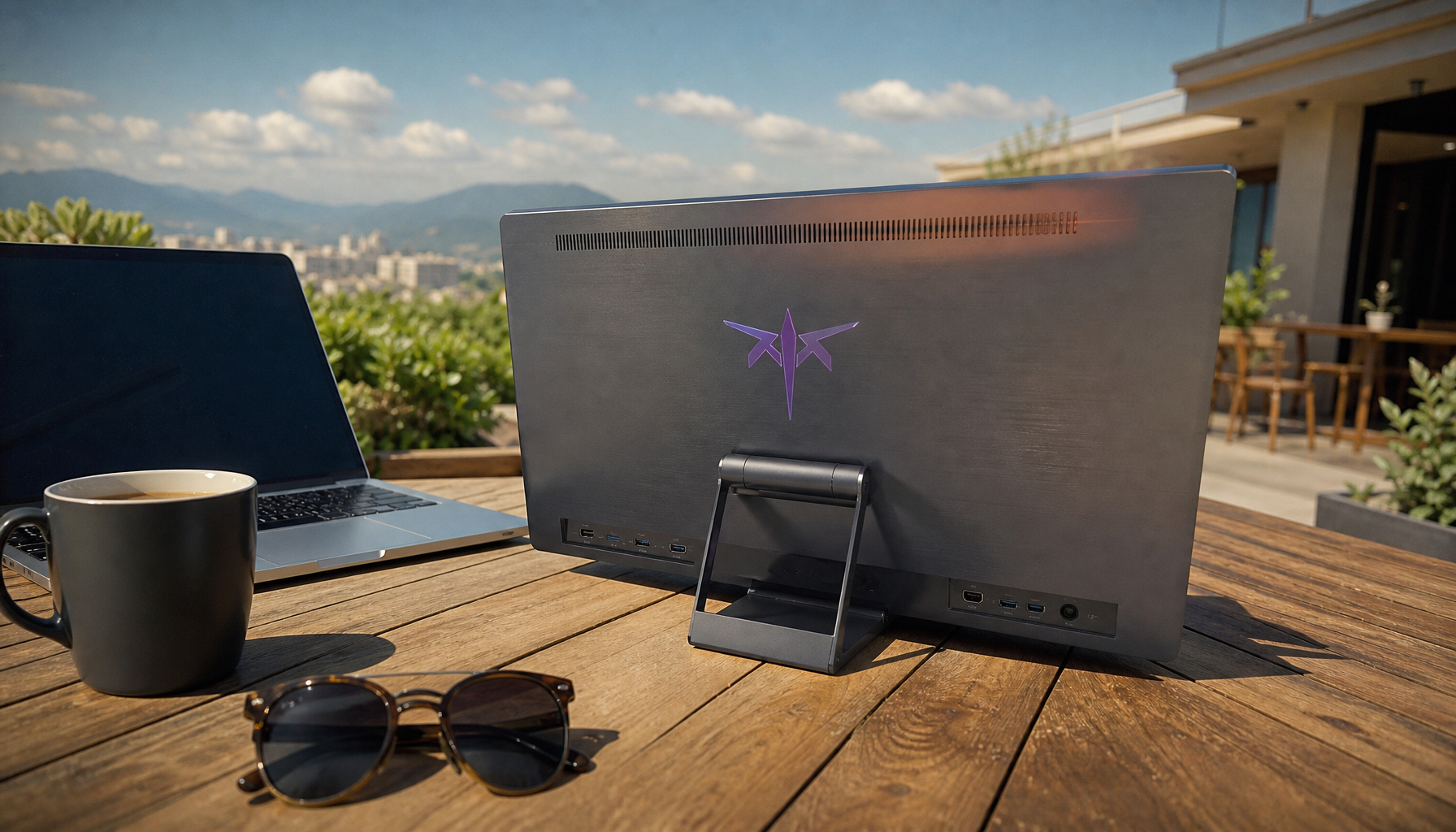
A true 120Hz console setup depends on the console output, cable, port, monitor settings, and on-screen signal readout all matching. The most reliable confirmation is the monitor reporting a 120Hz input while motion looks smooth in a supported game.
Does your new monitor say “120Hz” on the box, but your game still feels like it is sliding through mud during fast camera turns? A clean verification pass can separate a real 120Hz console signal from a 60Hz fallback in a few minutes, without guessing from marketing specs. You’ll learn how to confirm the signal at the console, the monitor, and the motion layer.
Why “120Hz Enabled” Is Not Always the Same as True 120Hz
Refresh rate is the number of times a display updates its image each second, and a 60Hz screen updates 60 times per second while a 120Hz screen updates twice as often. Display documentation explains that higher refresh rates can reduce perceived blur, tearing, and input lag, which is exactly why console players chase 120Hz for shooters, racers, sports games, and fast action titles.
The trap is that every link in the chain has to support the same output. A monitor may advertise 120Hz or higher, but the console can still send 60Hz if the game mode, HDMI port, cable bandwidth, resolution, HDR setting, or monitor input mode blocks the higher signal. In real setup terms, “my monitor supports 120Hz” is only the starting point; “my monitor is receiving 120Hz right now” is the result you need.
The Three-Layer Verification Method

The most reliable check uses three layers: the console output setting, the monitor’s own on-screen display, and a motion validation test where available. This mirrors the same logic used on PC displays, where operating-system settings show the intended mode, while the monitor and motion tools reveal whether the display is actually operating at that refresh behavior.
Verification Layer |
What It Tells You |
Best Use |
Console video settings |
What the console is trying to output |
First configuration check |
Monitor OSD |
What signal the monitor is receiving |
Most important hardware confirmation |
Motion test or game test |
Whether frames look smooth and consistent |
Real-world validation |
The monitor OSD matters most because it reads the incoming video signal at the display. If your console menu says 120Hz is allowed but the OSD says 3840 x 2160 at 60Hz, the display is not receiving true 120Hz at that moment.
Start With the Console’s Video Output Settings
Open your console’s display or video settings and look for the refresh-rate, performance mode, or 120Hz output option. The exact menu name varies by console generation and software version, but the principle is stable: the console must be set to allow 120Hz, and the game must support a 120fps or 120Hz mode.
This is where resolution tradeoffs often appear. A display setup that handles 1080p at 120Hz may not handle 4K at 120Hz unless the console, monitor port, and HDMI cable all have enough bandwidth. A refresh-rate explainer makes the broader point that refresh rate and frame rate are related but different: frame rate is what the system produces, while refresh rate is what the monitor can display.
For example, if a game offers “Quality” and “Performance” modes, Quality may prioritize resolution, ray tracing, or visual effects at 30fps or 60fps, while Performance may reduce some visual load to target 120fps. If the game itself is rendering at 60fps, the monitor may still be in a 120Hz mode, but you will not get the full motion advantage of 120 unique frames per second.
Confirm the Monitor OSD, Not Just the Console Menu

After enabling 120Hz on the console, open the monitor’s built-in menu using its joystick or buttons. Look for an information page, input signal page, gaming status panel, or refresh-rate overlay. The wording differs by brand, but you are looking for a live readout such as 1920 x 1080 at 120Hz, 2560 x 1440 at 120Hz, or 3840 x 2160 at 120Hz.
This is the decisive moment. If the OSD shows 60Hz, the monitor is receiving 60Hz. If it shows 120Hz, the monitor is receiving a 120Hz timing signal. Some monitors also show VRR, Adaptive Sync, HDR, or input latency modes on the same page, which helps you confirm whether the display is in the right gaming profile.
There is one nuance: some monitors show the maximum panel refresh rate in one menu and the current input signal in another. You want the current input signal. A 165Hz monitor can still be receiving 60Hz from a console, no matter how high its panel specification is.
Check the Cable and Port Before Blaming the Monitor

Cable and port bandwidth are the most common silent bottlenecks. A high-refresh monitor can have multiple HDMI ports, and not every port always supports the same maximum signal. For a console targeting 4K at 120Hz, the safest path is the monitor’s highest-bandwidth HDMI input with a certified high-speed cable appropriate for that mode.
Resolution also changes the bandwidth demand. The KTC gaming monitor overview frames resolution, refresh rate, and response time as core specs that must work together, because higher resolution increases visual detail but also raises the load on the video chain. For console use, that means 1080p 120Hz is much easier to pass than 4K 120Hz.
If your OSD is stuck at 60Hz, move the HDMI cable to the monitor port labeled for the highest standard, replace long or low-quality cables, and test again. Keep the setup simple during troubleshooting: console directly to monitor, with no HDMI splitter, capture card, soundbar passthrough, or receiver until 120Hz is confirmed.
Use a Motion Test When the Console Browser Allows It
A browser-based tool can help verify refresh behavior, especially when testing a display with a PC or a console browser that supports the needed rendering path. One refresh-rate page is designed to measure the current display rate and advises users to wait at least 30 seconds for the refresh rate test to stabilize.
For console players, the monitor OSD is usually more dependable than a browser test because console browsers may cap frame delivery or behave differently from games. Still, if the browser can run the test correctly, a stable 120Hz reading supports what the OSD is reporting. If the browser reports 60Hz while the OSD says 120Hz, the browser may be capped, so validate inside an actual 120fps game before changing hardware.
A simple real-world test is to launch a game with a known 120fps mode, enable that mode in the game settings, and use the monitor’s live refresh overlay if available. If VRR is on, the number may fluctuate around the game’s output rather than sit perfectly at 120, which is normal when the frame rate is variable.
Understand the Pros and Cons of Running 120Hz
The benefit of true 120Hz is responsiveness. Camera pans look cleaner, aiming feels more immediate, and fast UI motion feels less smeared. Higher refresh rates can improve fast-paced gaming by reducing motion blur and input lag, while also making general movement feel smoother.
The tradeoff is that 120Hz can require compromises. Some console games reduce resolution, lighting quality, crowd density, ray tracing, or other visual settings to reach a higher frame rate. That is not a flaw; it is a performance budget decision. The best setting depends on the game. Competitive shooters and racers usually benefit from 120Hz immediately, while cinematic adventure games may look better in a 60Hz quality mode.
Power and heat can also matter in portable smart screen setups or compact gaming stations. Higher refresh behavior can consume more display power, and display guidance notes that lowering refresh rate can save battery on portable systems. If you use a portable monitor with a console while traveling, 120Hz is worth enabling for action games, but 60Hz may be the more efficient choice for menus, streaming, or slower games.
Common Reasons Your Monitor Still Shows 60Hz
A 60Hz readout usually comes from one of a few practical causes. The console may not have 120Hz enabled, the game may not support 120fps, the monitor may be using the wrong HDMI port, or the cable may not support the selected resolution and refresh combination. HDR or high-resolution output can also push the connection beyond what the current cable or port can carry.
Monitor settings can be another blocker. Some displays require an “enhanced HDMI,” “HDMI 2.1,” “performance,” or “overclock” mode in the OSD before high-refresh input becomes available. Others reserve the highest refresh behavior for specific ports. If the OSD has a reset option for the current input, use it only after noting your picture settings, then re-enable the gaming input mode and check the signal page again.
The last check is compatibility. Gaming monitor coverage highlights that modern gaming monitors increasingly include HDMI 2.1, DisplayPort, Adaptive Sync, OLED, and high-refresh features, but the right gaming monitors still need the right connection path to deliver their full capability. A console cannot use DisplayPort directly without additional hardware, so HDMI capability is the key spec for console 120Hz.
A Reliable Pass-Fail Standard
Treat 120Hz verification like a short signal audit. The console must allow 120Hz, the game must have a 120fps or high-frame-rate mode when required, the cable and HDMI port must support the target resolution, and the monitor OSD must report a 120Hz input. If all of that is true, you are receiving a true 120Hz signal.
If motion still feels wrong after the OSD confirms 120Hz, shift attention from signal to performance. The game may not be maintaining 120fps, VRR may be smoothing frame-rate dips, or the monitor’s response-time mode may be set too low or too aggressive. A balanced overdrive setting often looks cleaner than the fastest setting because extreme overdrive can create inverse ghosting.
FAQ
Can a 144Hz or 165Hz monitor receive 120Hz from a console?
Yes. A monitor with a higher maximum refresh rate can usually accept 120Hz if its HDMI input supports the console’s selected resolution and timing. The OSD should show 120Hz when the signal is active.
Is 120Hz the same as 120fps?
No. Refresh rate is the display update rate, while frame rate is the number of frames produced by the console or game. For the cleanest feel, the game should output close to 120fps while the monitor receives a 120Hz signal.
Should I use VRR with 120Hz?
Use VRR if your console, monitor, and game support it well. VRR helps reduce tearing and stutter when frame rate fluctuates, but the monitor’s refresh readout may vary instead of staying locked at exactly 120Hz.
Why does my monitor say 120Hz in menus but the game feels like 60Hz?
The console may be sending a 120Hz signal while the game itself runs at 60fps, or the game may require a separate performance mode. Check the game’s graphics settings and use the monitor’s live refresh or frame-rate overlay if available.
True 120Hz is a signal check, not a guess. When the console setting, HDMI path, monitor OSD, and in-game performance line up, your display is finally delivering the speed you paid for.