



KVM switching can interrupt the audio handshake between your PC, monitor, and operating system, causing silent monitor speakers, changed volume, or audio that falls out of sync after switching inputs.
The Display Audio Handshake Gets Interrupted
Display audio is convenient because HDMI and DisplayPort carry video and sound over one cable. That convenience depends on a clean chain: GPU, cable, KVM, monitor, and operating system all need to agree on what device is connected.
When you switch a KVM, the computer may see the monitor as disconnected and reconnected. That can trigger a new audio-device handshake, especially if the KVM does not preserve display data consistently. Weak EDID handling can also cause display instability, and EDID is the monitor information computers use to identify supported modes through display identification data.
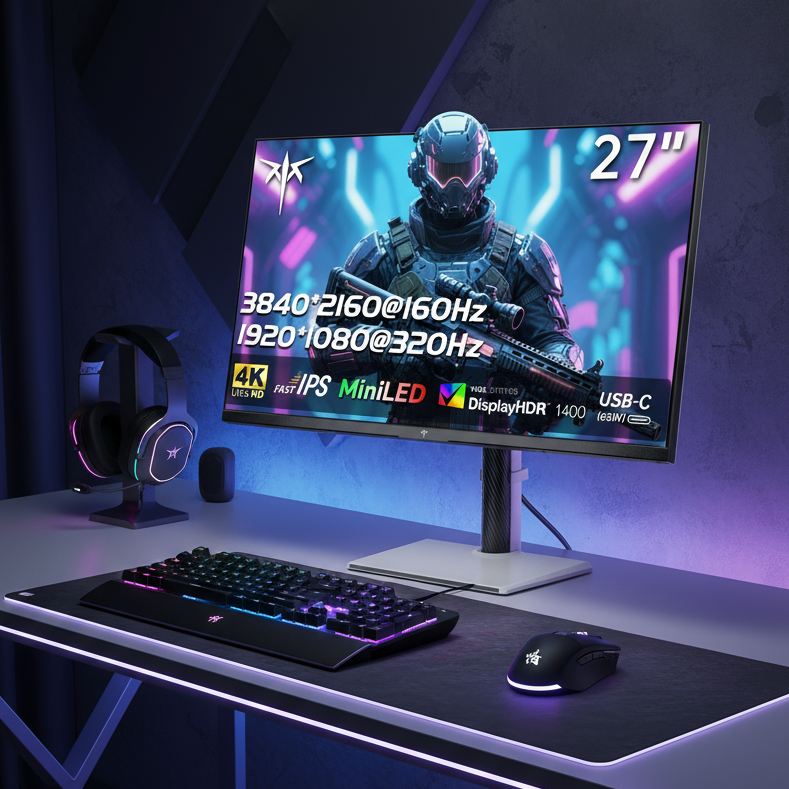
For high-refresh gaming monitors, this matters more. A 144 Hz or 240 Hz display already pushes more bandwidth and tighter timing than a basic office screen, so a marginal KVM or cable can expose both video and audio issues.

Your Operating System May Pick the Wrong Audio Output
The most common “no sound after switching” problem is not always the KVM failing. Often, the operating system simply changes the default output device.
After a switch, your PC may choose headset audio, motherboard speakers, a USB device, or another monitor instead of the display you actually use. KVM audio troubleshooting often starts by manually selecting the monitor, HDMI, or display-audio output, because the operating system can revert after switching computers through sound output settings.

This is especially annoying in hybrid setups: game audio may go to the monitor, while chat, browser audio, or system alerts stay on another output. For productivity users, that means missed call audio; for gamers, it can mean delayed comms or silent capture monitoring.
USB Audio Devices Add Another Failure Point
Many KVMs handle keyboard and mouse switching well but treat USB audio as a more sensitive peripheral. A USB headset, DAC, microphone interface, or audio adapter may disconnect and reconnect every time you switch.

That re-enumeration can cause dropouts, volume changes, or driver resets. In one reported case, switching away from a PC lowered audio volume because a USB headset adapter changed the system’s communication-audio behavior during KVM switching.
Quick checks:
- Use the KVM’s USB 3.0 data port for audio interfaces, not a keyboard-only HID port.
- Try display audio first, then test USB audio as a separate path.
- Set communication-audio behavior to “Do nothing.”
- Keep firmware, GPU drivers, and audio drivers current.
- If HDMI audio is unreliable, use a simple USB audio adapter outside the display path.
Sync Issues Come From Latency, Not Just Silence
Audio dropouts are obvious. Sync drift is more subtle: video starts instantly, while sound arrives a fraction of a second later, or audio keeps playing after video pauses.
This can happen when the KVM path adds device resets, buffering, USB delays, or driver scheduling delays. In virtualization-heavy KVM setups, users have seen audio/video timing improve only after separating emulator and I/O work from the same CPU resources used by the guest. That shows sync can be a full-system latency problem, not only a cable problem.
“KVM” can mean a physical keyboard-video-mouse switch or kernel-based virtualization, and both can affect audio timing for different reasons.
The Reliable Fix Path
Start simple: remove the KVM and connect the monitor directly. If display audio works directly at the same resolution and refresh rate, the issue is likely KVM handling, cable quality, or device switching behavior.

Then isolate the chain. One troubleshooting guide recommends testing source, display, cable, KVM, and configuration separately, including a full unplug reset with a short wait before reconnecting source, display, cable, KVM, and configuration.
For a performance display setup, the best answer is usually not “any KVM will do.” Choose a powered KVM rated for your exact resolution, refresh rate, HDR needs, DisplayPort or HDMI version, EDID emulation, and USB device load. That protects the immersive experience: clean switching, stable monitor audio, and fewer sync surprises when you move between gaming, work, and portable-screen workflows.