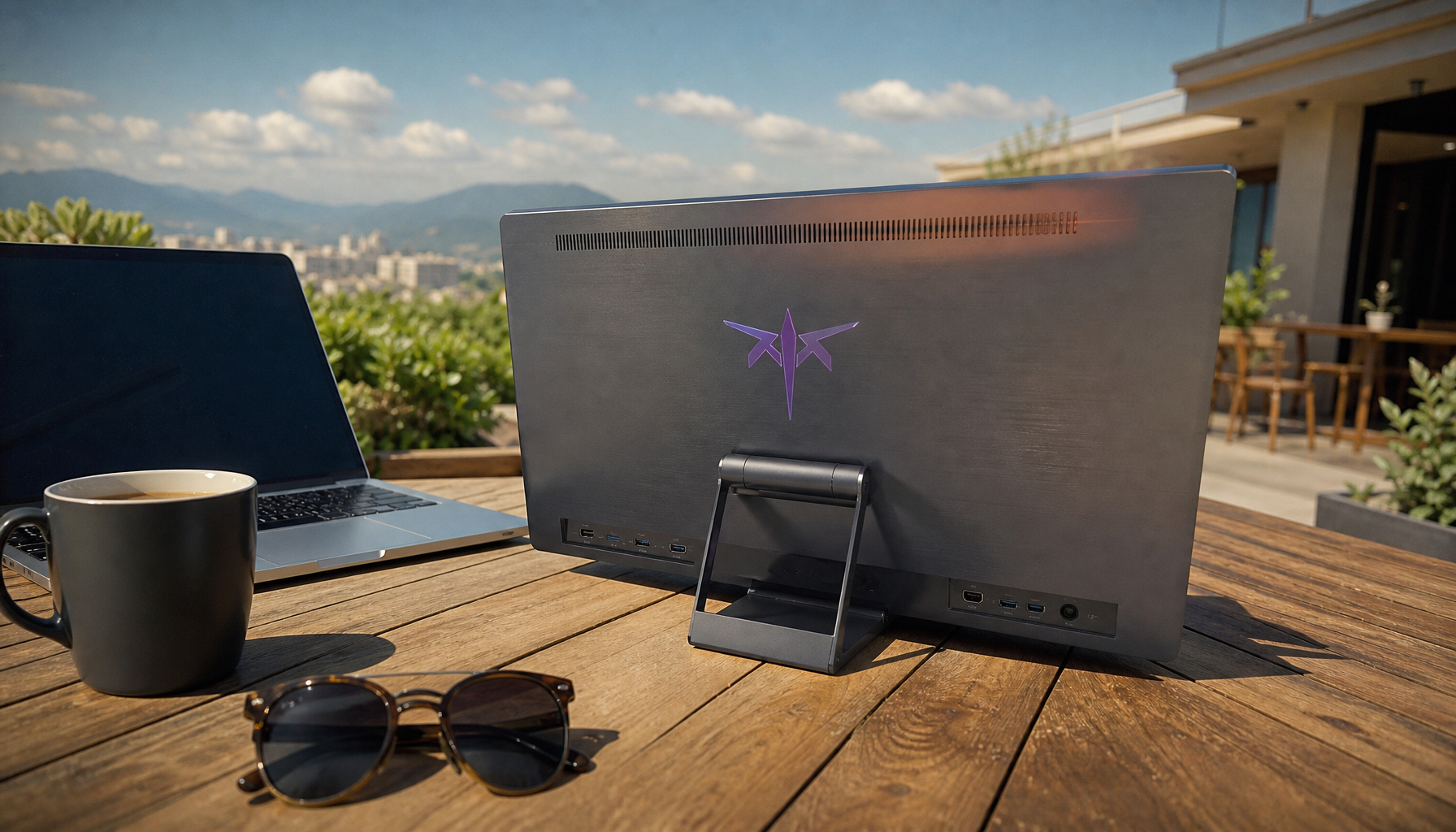
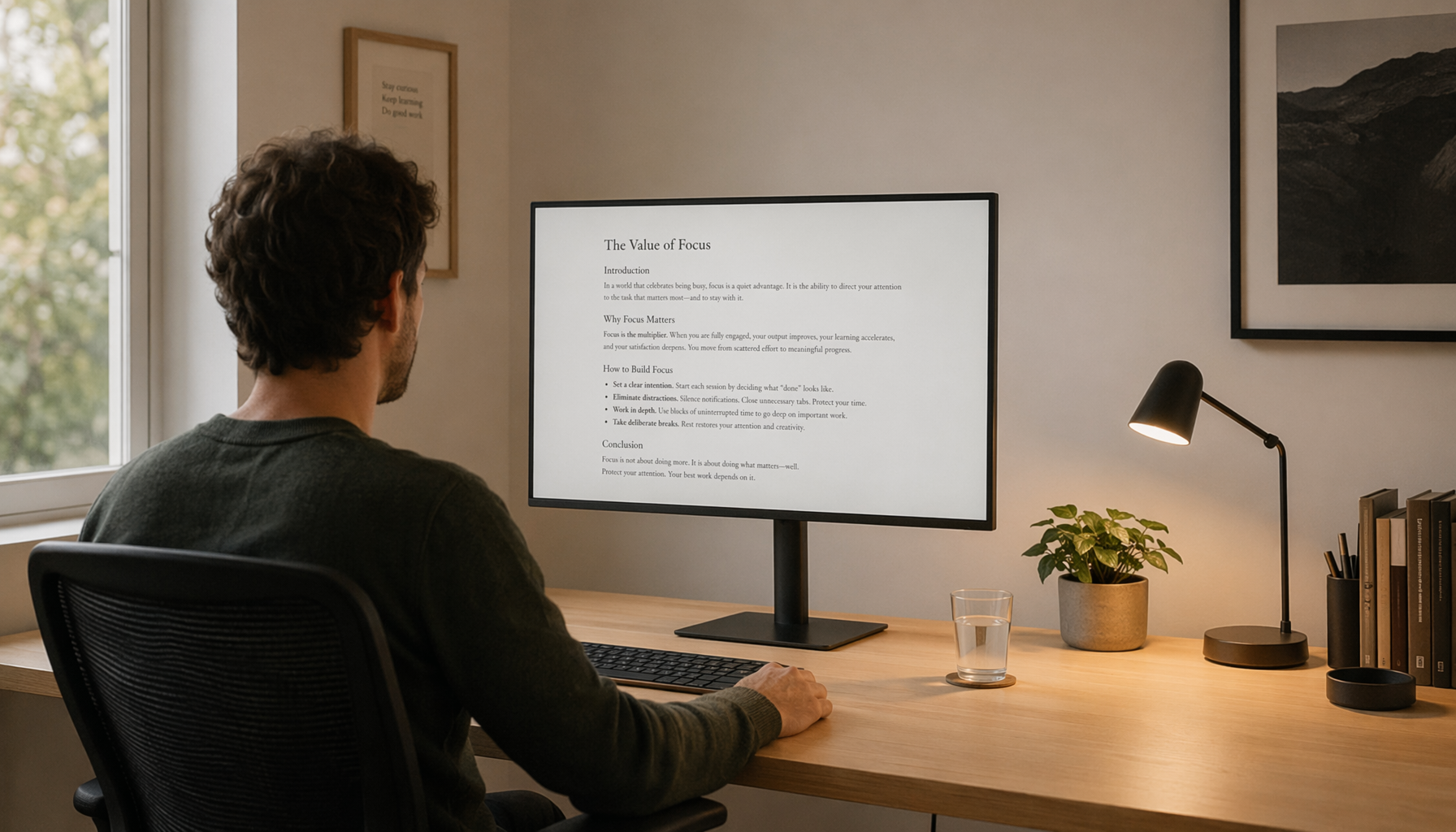
Matte screens often feel easier on the eyes because they diffuse harsh reflections before your visual system has to fight them. The tradeoff is that the same surface texture can slightly soften text edges, so comfort improves while perceived sharpness may dip.
Matte Comfort Starts with Glare Control
A glossy screen can look razor-clear in a dark room, but under overhead lights, windows, or bright desk lamps, it can act like a mirror. Your eyes then compete with reflected objects, bright hotspots, and the actual image at the same time.

A matte coating breaks up those reflections. Instead of one sharp glare patch, it spreads light across the surface, making the screen more stable to look at during long work, gaming, or reading sessions.
That matters because screen glare is a common contributor to eye strain, especially when your display is brighter or more reflective than the room around it.
Why Matte Can Look Less Sharp
The downside is optical: matte coatings scatter light slightly. That scattering can make fine text, thin UI lines, and bright white backgrounds look less crisp than they would on glossy glass.

You may notice it most in spreadsheets, code editors, white webpages, and 4K monitors with small scaling. A glossy screen preserves edge contrast more directly, while matte adds a faint grain or softness depending on coating quality.
This is why two monitors with the same resolution can feel different. A 27-inch 1440p matte IPS panel may be more comfortable in daylight, while a glossy OLED or laptop panel may look cleaner in a controlled room.
Matte is not automatically better for every user; some people are more bothered by coating grain than by reflections.
Comfort Is About Total Visual Load
Sharpness is only one part of eye comfort. Your eyes also respond to brightness, contrast, flicker, viewing distance, font size, and how often the image changes.
If a matte screen lets you lower brightness from a harsh 80% to a calmer 45% without losing readability, that can be a bigger comfort win than a small loss in crispness. The American Academy of Ophthalmology also notes that digital device use can contribute to dryness and fatigue, so display setup and habits matter together.

For dual-monitor setups, consistency is critical. If one screen is glossy, brighter, or cooler in color temperature than the other, your eyes keep adapting every time you glance across.
Quick comfort steps:
- Match brightness between monitors.
- Avoid facing windows or bright lamps.
- Increase text scaling before increasing brightness.
- Use a warmer color temperature at night.
- Take short distance-viewing breaks.
How to Choose the Right Finish
For office productivity, coding, trading dashboards, and hybrid work, matte usually wins because it keeps the image usable across changing lighting. A 24- to 27-inch matte display with good pixel density, flicker-free backlighting, and an adjustable stand is the practical sweet spot.
For immersive gaming, glossy or semi-gloss can deliver stronger perceived contrast, deeper blacks, and cleaner HDR highlights, especially in a dim room. If you play during the day or use overhead lighting, matte may keep you focused longer.
Eye-comfort monitor recommendations often prioritize automatic brightness adjustment, low-blue-light modes, and flicker-free technology alongside surface finish. In real use, the best screen is the one that lets you read, aim, edit, and multitask without constantly adjusting your posture or squinting.
Choose matte when your room is bright, variable, or shared. Choose glossy when you control lighting and value maximum image punch. For most desk setups, a high-quality matte or light anti-glare finish is the reliable performance pick.