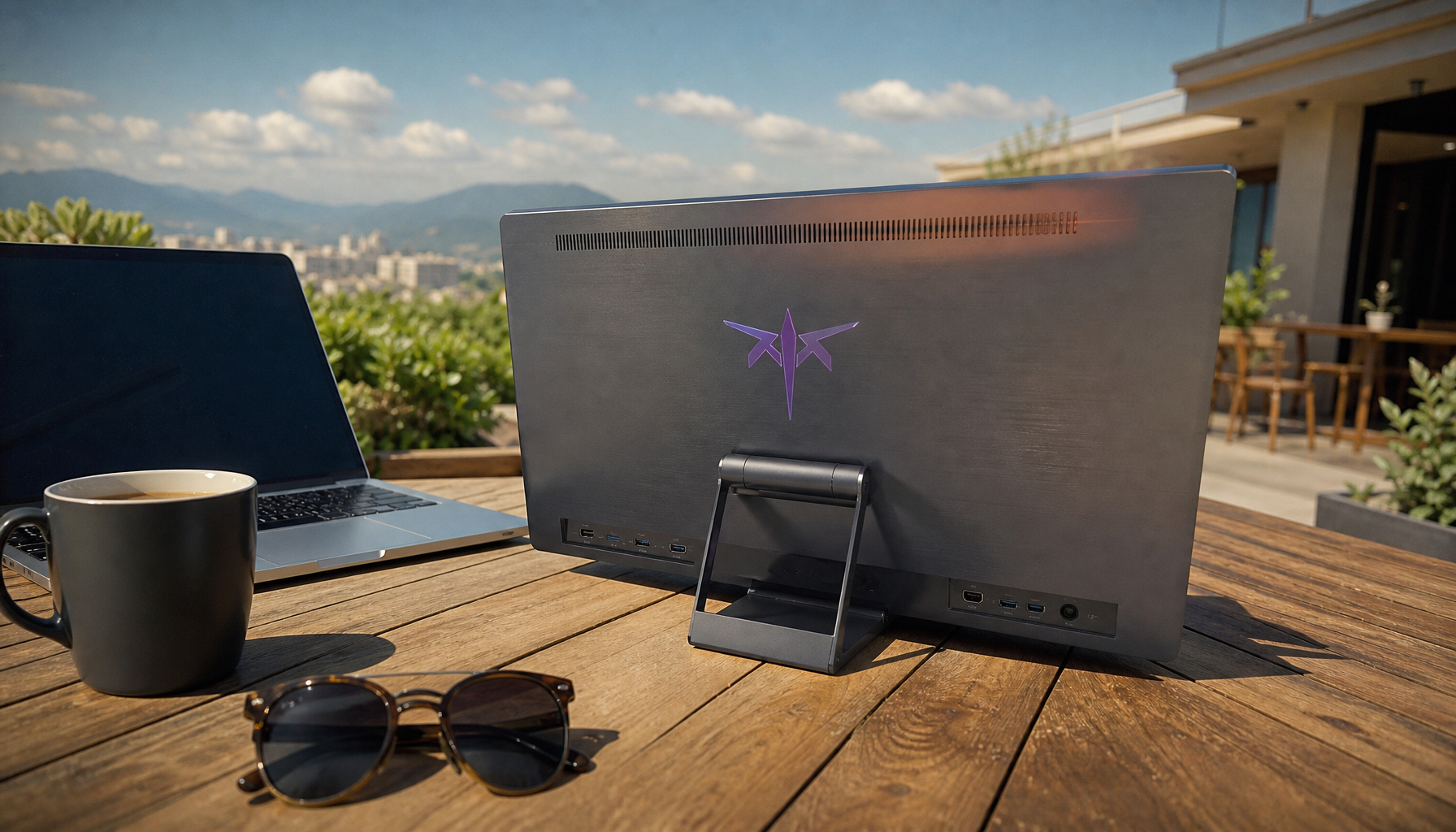
A MegPad home gym placement guide starts with the room, not the screen. The right setup keeps the display easy to read during workouts, easy to roll away afterward, and out of the movement path so the room does not feel cluttered or risky.

Start With the Gym Layout
The first decision is where the screen belongs in the room. A rolling smart display works best when it can face the workout zone without blocking the path you use to step, lift, or stretch. That matters most in compact rooms, garage gyms, and shared spaces where one corner has to do several jobs.
A functional home gym layout should preserve clear sight lines and separate activity zones, which is why a mobile screen often makes more sense than a fixed setup in smaller rooms. In that kind of space, the display can move in when you train and move out when the room needs to be open again. If the setup starts to feel like furniture you have to work around, the placement is probably wrong.
For readers comparing options, the featured 32-inch MegPad is a natural example of a rolling workout screen because it combines a built-in battery, Android-based smart functions, and a mobile stand. That does not make it right for every room, but it does make the category easier to picture in a home gym workflow. For a broader room-planning reference, multi-purpose gym layout guidance is useful background.
Choose the Right Viewing Position
For most home gyms, the better question is not "What is the perfect height?" It is "What position keeps the screen comfortable to scan while the workout is actually happening?" A mobile display allows height adjustments tailored to the activity, such as lowering it for floor work or raising it for standing cardio sessions. That activity-based approach is more realistic than trying to force one universal number onto every workout.

Floor Workouts and Mat Sessions
For mat work, the screen should stay easy to read from the floor without making you crane your neck or keep turning your head. It usually works better when the display sits a bit closer to the active zone than it would for standing exercise, as long as you still leave room to extend your arms, roll over, and transition between movements.
That is the main trade-off: closer can improve readability, but too close can steal space from planks, sit-ups, or mobility work. In a MegPad home gym placement guide, floor sessions are the strongest case for keeping the screen aligned with your natural eye line instead of treating it like a desk monitor.
Treadmill and Cardio Viewing
For treadmill or cardio sessions, the screen should stay in a position you can glance at without dropping your chin too far or twisting toward the base. A slightly higher placement often feels more natural here, because your posture is already upright and moving.
This is where room layout matters again. The screen needs to stay readable while still clearing the treadmill deck, handlebars, or the walking lane in front of the machine. If the display crowds the cardio station, the convenience disappears quickly.
Strength Training and Mirror Checks
Strength work usually needs the screen as a cue source, not as another obstacle. The display should let you check sets, timers, or demo clips between reps without narrowing your stance or getting in the way of dumbbell returns, barbell paths, or bench movement.
A practical rule is simple: if you have to turn sharply or step around the base to start a set, the screen is too close to the lifting zone. If you can glance at it between sets and forget it during the lift, the position is probably closer to right.
If you want a broader idea of how rolling screens fit different rooms, the article on daily rolling display use cases is a useful follow-up.
Placement by Workout Mode
| Workout mode | Screen position | Movement clearance | Cord safety |
|---|---|---|---|
| Floor workouts | Lower and closer to the mat area | Leave room for rolls, planks, and transitions | Keep the cord out of the floor path |
| Cardio / treadmill | Slightly higher and easy to glance at | Clear the deck, handlebars, and walking lane | Route power along the wall or baseboard |
| Strength training | Visible between sets, not inside the lifting zone | Preserve dumbbell, barbell, and bench space | Avoid loops or crossings near foot traffic |
Build a Simple Workout App Workflow
The cleanest workout setup is usually the one that takes the fewest taps before you start moving. If you repeat the same class, timer, or music flow every week, a simple app stack is better than constantly switching between sources. That keeps the screen useful without turning the workout into a tech project.
The safest general rule is to choose the flow you will actually keep using. Built-in apps can reduce setup friction when you want fast startup, while casting works better when content changes often and you want to keep a phone or tablet nearby. HDMI can still be useful for a wired source, but the article should stay generic unless the exact app or input behavior is verified for the model you are buying.
For the featured model, the MegPad 32-inch Android display gives you a reasonable example of a built-in smart screen with battery-powered mobility. That makes it easier to keep workout content in one place, but the real benefit comes from a repeatable routine, not from the spec sheet alone.
If you are comparing workflow styles, the difference between a rolling display and a DIY setup is worth a look in this battery-display comparison.
Route Power Without Creating Hazards
Power planning is where a tidy setup can turn into a trip hazard if you are not careful. The safest approach is to keep cords short enough to manage, visible enough to check, and out of the active movement path. Guidance on avoiding cable trip hazards consistently points in the same direction: route power along walls or protected edges instead of across walkways. A second reference on home cable safety says the same thing in plainer terms: keep cords controlled, covered when needed, and away from places where people step.
That matters in a gym more than in a living room, because the room is full of repeated stepping, turning, and equipment handling. If the cord has to cross the place where you lunge, walk, or reload weights, it is a poor route even if it looks neat when the room is empty.
A second check is to test the cable path while you actually move through the workout, not just while you are standing still. That is especially important when the screen rolls between positions, because the cord must still have enough slack for repositioning without creating a loop in the walking lane.
The 32-inch MegPad with battery can reduce how often you have to think about outlet access, but it does not remove the need for a sensible cord path. A battery helps with mobility; it does not replace layout discipline.
Make Room for Roll-Away Storage
Post-workout storage should be part of the setup, not an afterthought. If the screen has nowhere obvious to park, it will either stay in the way or end up in a spot that makes the next workout slower to start. In shared spaces and apartment gyms, that friction matters as much as viewing comfort.
The best parking spot is usually the one that keeps the screen easy to reach, clear of damp areas, and away from doors, racks, or tight corners. Then check the path between the workout position and the storage spot for rugs, thresholds, weights, or anything else that could snag a wheel or block the turn.
A useful test is to roll the display through the real path you will use after training, not just the path that looks widest from across the room. If the base needs careful steering every time, the storage spot is too cramped for a routine that should feel quick.
For shoppers who want to browse the broader category after they settle the room layout, mobile touch screen options are the cleaner starting point than a fixed monitor aisle. If they want a more general smart-display path, smart monitor choices are worth a look too.
Final Takeaway
A good MegPad home gym placement guide is really a room-planning guide. Put the screen where you can see it, keep it out of movement lanes, and make sure the cord path and storage spot work during a real workout, not just when the room is empty. If your setup feels awkward on day one, it will probably feel worse later. Compare the room, then compare the model.
FAQs
How High Should a Rolling Workout Screen Be in a Home Gym?
Use the height that keeps the screen easy to scan during the workout you actually do most often. Floor work usually needs a lower, more direct view, while cardio and standing training often feel better with the screen a bit higher. The better rule is comfort plus clear sight lines, not a universal number.
What Is the Cleanest Way to Stream Workout Videos on a MegPad?
The cleanest workflow is the one that takes the fewest steps before you press play. If you use the same workouts often, built-in apps are usually simpler. If you change content frequently, casting can be more flexible. HDMI is useful when you want a wired source, but keep the setup to one repeatable routine.
Can a Rolling Smart Display Replace a Fixed TV in a Workout Room?
Yes, when the room has to do double duty or the screen needs to disappear after training. A rolling display is often a better fit for shared rooms, apartments, and garage gyms because you can move it out of the way. A fixed TV still makes more sense if the viewing position never changes.
How Do I Keep Cords Out of the Way During Exercise?
Run cables along the wall or another protected edge instead of across the active floor. Then test the route during the exact movements you will do, such as lunges, rows, or equipment changes. If you keep stepping over the cord, the route is wrong even if it looks organized.
What Should I Check Before Rolling the Screen Away After a Workout?
Make sure the screen is stable, the cord has enough slack to move, and the parking spot is clear of obstacles. Then roll it along the path you already tested, not a shortcut through weights or rugs. A fast cleanup only works when the return path is as planned as the workout position.
Is the MegPad Better for Floor Work or Cardio Sessions?
It can work for both, but the placement changes. Floor workouts usually benefit from a lower, more direct view, while cardio often works better with the screen placed higher and farther from the active lane. The main decision is not the device itself, but whether the room gives it enough clearance in each mode.