



A “Cable Not Connected” warning usually means the monitor is powered on but not receiving a valid video signal from the selected input. The cable may be loose, the wrong port may be in use, the monitor may be set to the wrong source, or the PC may not be sending video.
Start With the Signal Path
Think of your display setup as a chain: PC output, cable, monitor input, and monitor source selection. If any link is wrong, the screen can act as if nothing is connected even when the plug is physically seated.
First, make sure the computer is actually awake and running. A powered-off PC, a failed boot, or a system stuck before startup cannot send a usable display signal, which is why a no input signal message is often about the source device, not the monitor.
Then check both ends of the cable. HDMI and DisplayPort should seat firmly; VGA and DVI should be tightened with screws. If the cable has bent pins, a crushed connector, or feels loose in the port, replace it before chasing deeper settings.
 Match the Right Port to the Right Input
One of the most common setup mistakes is plugging the monitor into the motherboard instead of the dedicated graphics card. If your desktop has a separate GPU, use the ports on that card, because motherboard video outputs may be disabled when a dedicated card is installed.
 This matters most on gaming PCs and creator workstations. A high-refresh monitor connected to the wrong output may show “Cable Not Connected,” or it may work only after you switch ports.
Also confirm the monitor’s input source. If the cable is in HDMI 1 but the monitor is listening to DisplayPort or HDMI 2, the connection will fail silently. Many monitors hide this setting behind a joystick or input button on the bottom, rear, or side edge.
Quick check:
- Use only one video cable between the PC and monitor.
- Select the matching input: HDMI, DisplayPort, DVI, or VGA.
- Plug into the GPU, not the motherboard, on desktops with graphics cards.
- Remove protective caps from new GPU ports before connecting.
- Try a different port if your device has more than one.
Power Cycle Before You Replace Hardware
A full power cycle can clear stuck display states, sleep-wake glitches, and residual power issues. Turn off the PC, unplug the power cable, hold the power button for about 30 seconds, reconnect power, and restart.
Do the same for the monitor: unplug it from power, wait about a minute, reconnect it, then choose the correct input again. This low-cost step often solves a “connected but not detected” problem after docking, GPU swaps, or a failed wake from sleep.
For laptops, open display projection settings and choose Duplicate or Extend. The system may be sending the image to the internal panel only, even though the external screen is connected. It also helps to confirm that one external monitor works before troubleshooting a multi-monitor setup, because the display adapter determines how many screens your system can drive.
A splitter usually duplicates one signal; it does not create two independent extended displays.
Isolate the Fault
If the warning remains, test one variable at a time. Swap the video cable first, because it is cheaper and more failure-prone than the monitor or graphics card.
Next, connect the monitor to another known-working computer. If it works there, your original PC, GPU, port, or driver path is likely the issue. If it fails there too, the monitor or cable is the stronger suspect.
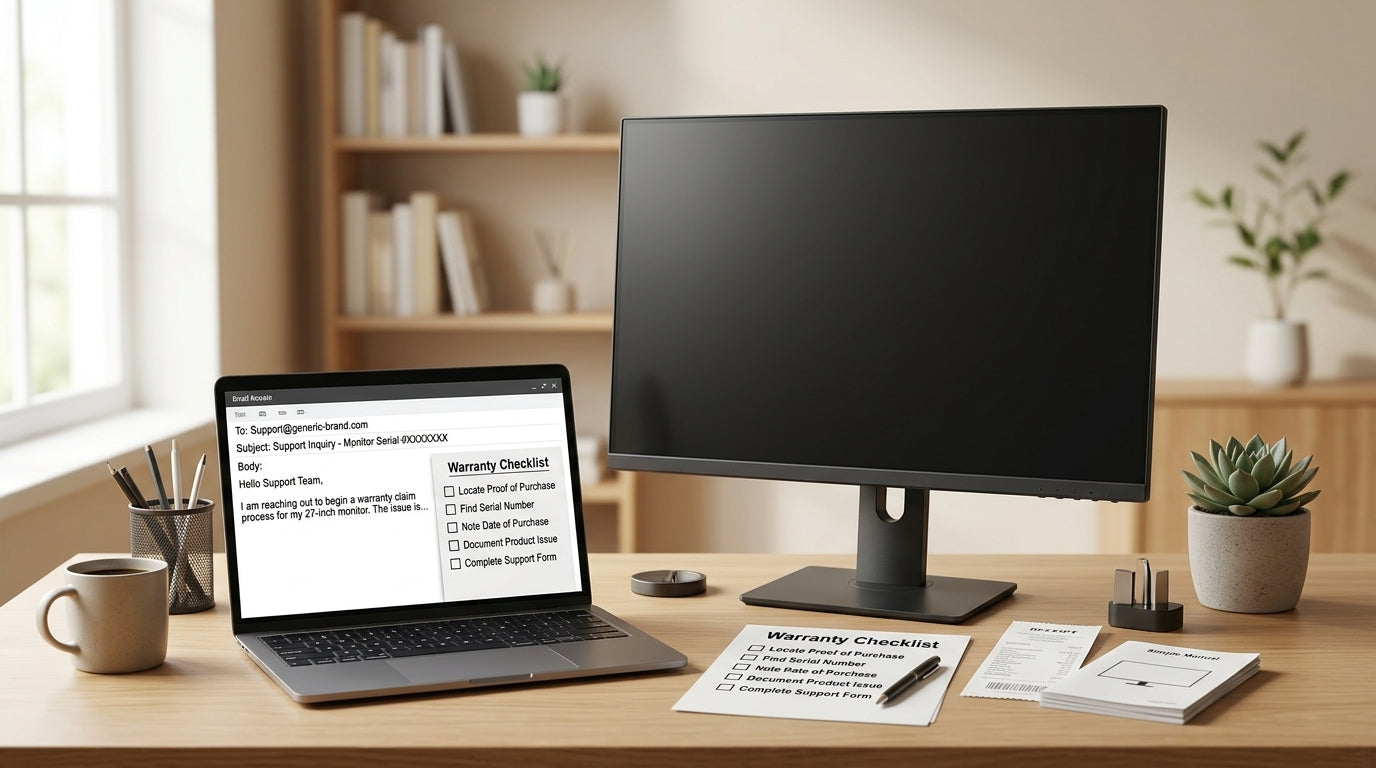
Then test a known-working monitor on the original PC. This separates a monitor problem from a system problem. A practical monitor checklist starts with power, source selection, cable seating, and whether the connected computer is awake.
For performance displays, also verify that your cable supports the resolution and refresh rate you expect. A bargain cable may be fine at 1080p 60Hz but unreliable for 1440p, 4K, HDR, or high-refresh gaming.
When It Points to the PC
If every cable and monitor test passes, the PC may not be producing video. Possible causes include a loose graphics card, a failed GPU, a damaged port, BIOS settings, bad drivers, or a boot failure before display output begins.
On a desktop, reseat the GPU only if you are comfortable working inside the case with the power disconnected. Update or reinstall the graphics driver once you can get a display through another port or monitor.
The reliable sequence is simple: confirm power, verify the cable, match the input, use the correct GPU port, power cycle, swap the cable, swap the monitor, then inspect the PC. That path gets you back to a working screen faster without replacing parts you did not need to replace.