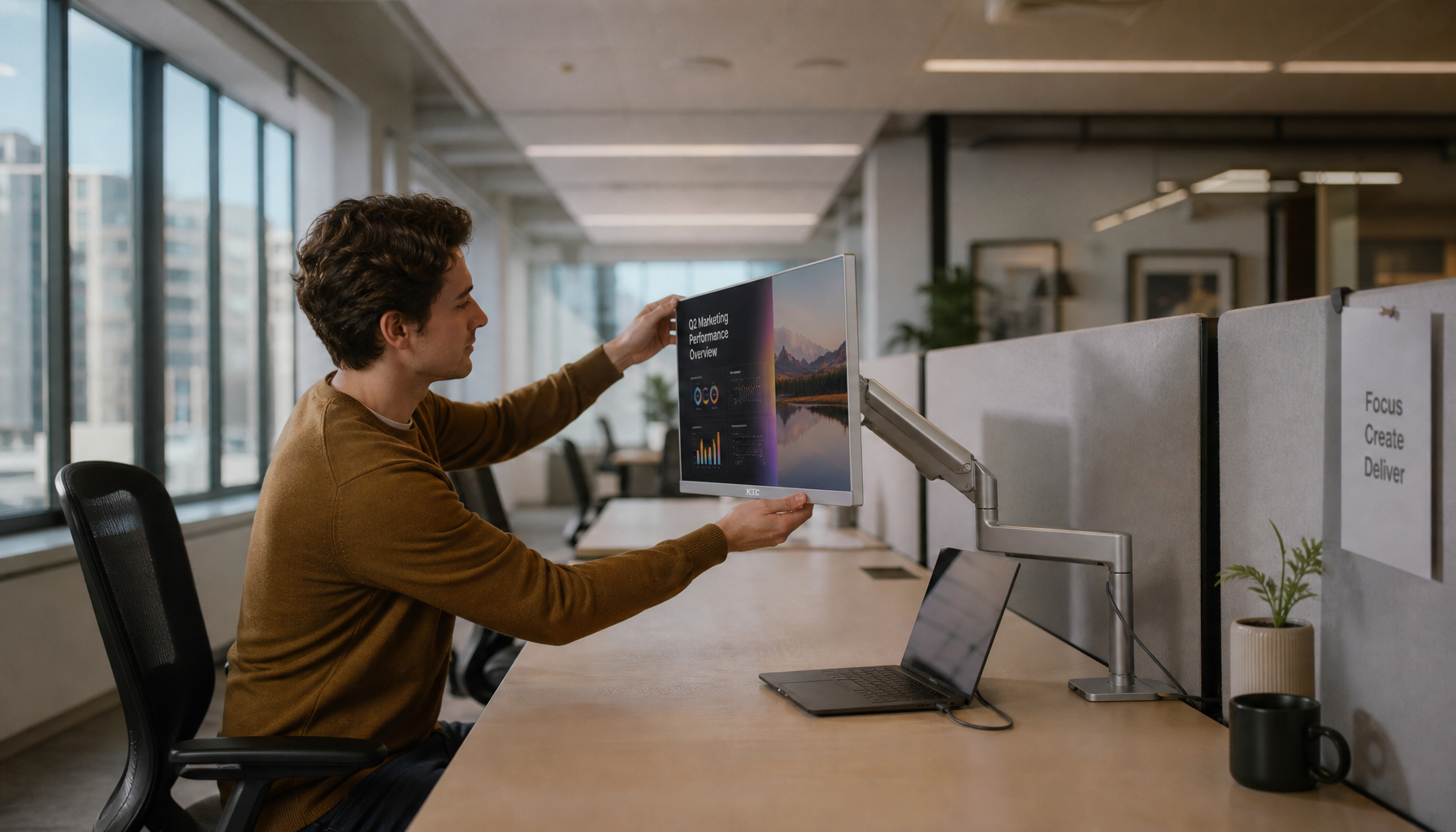
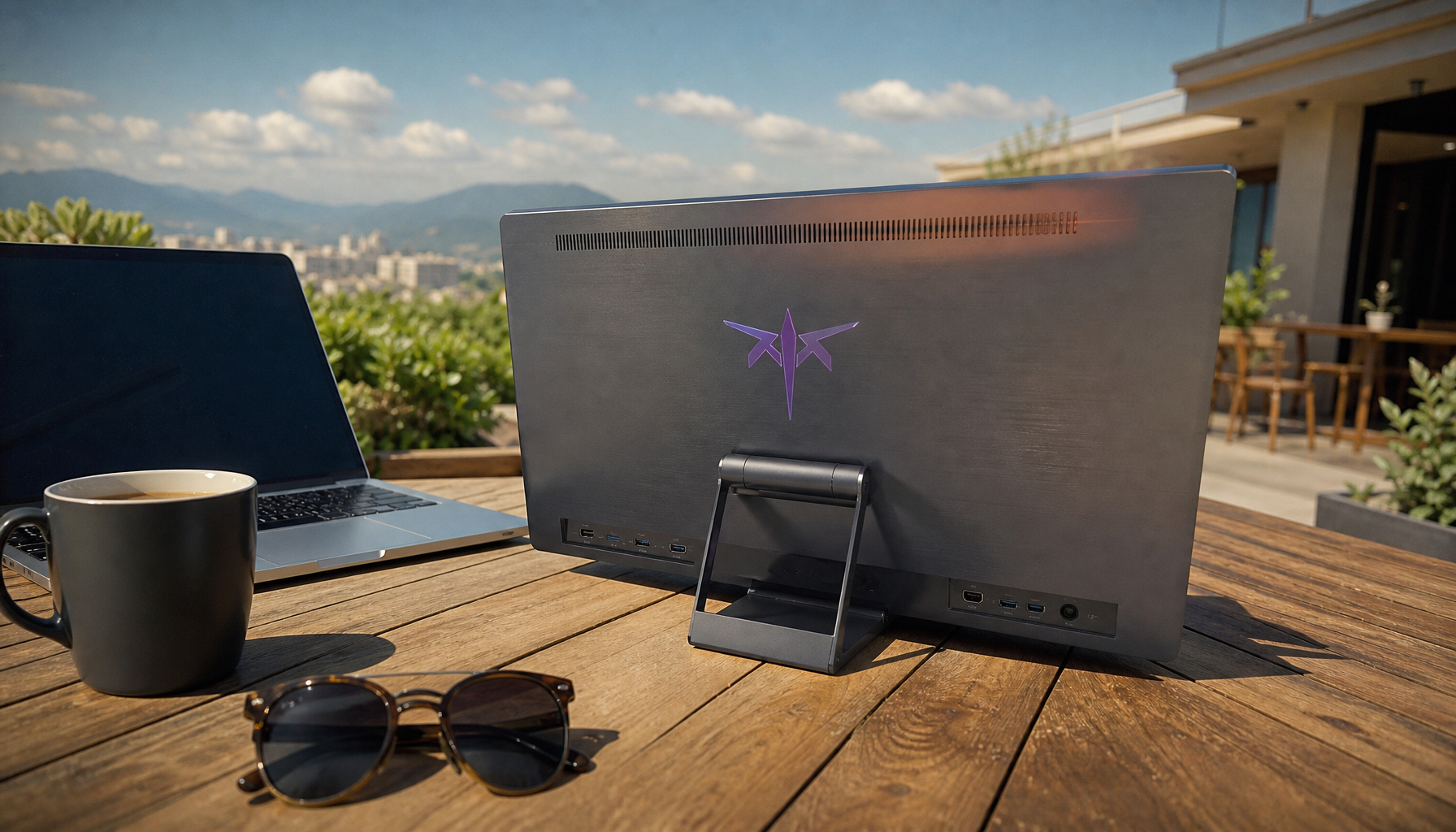
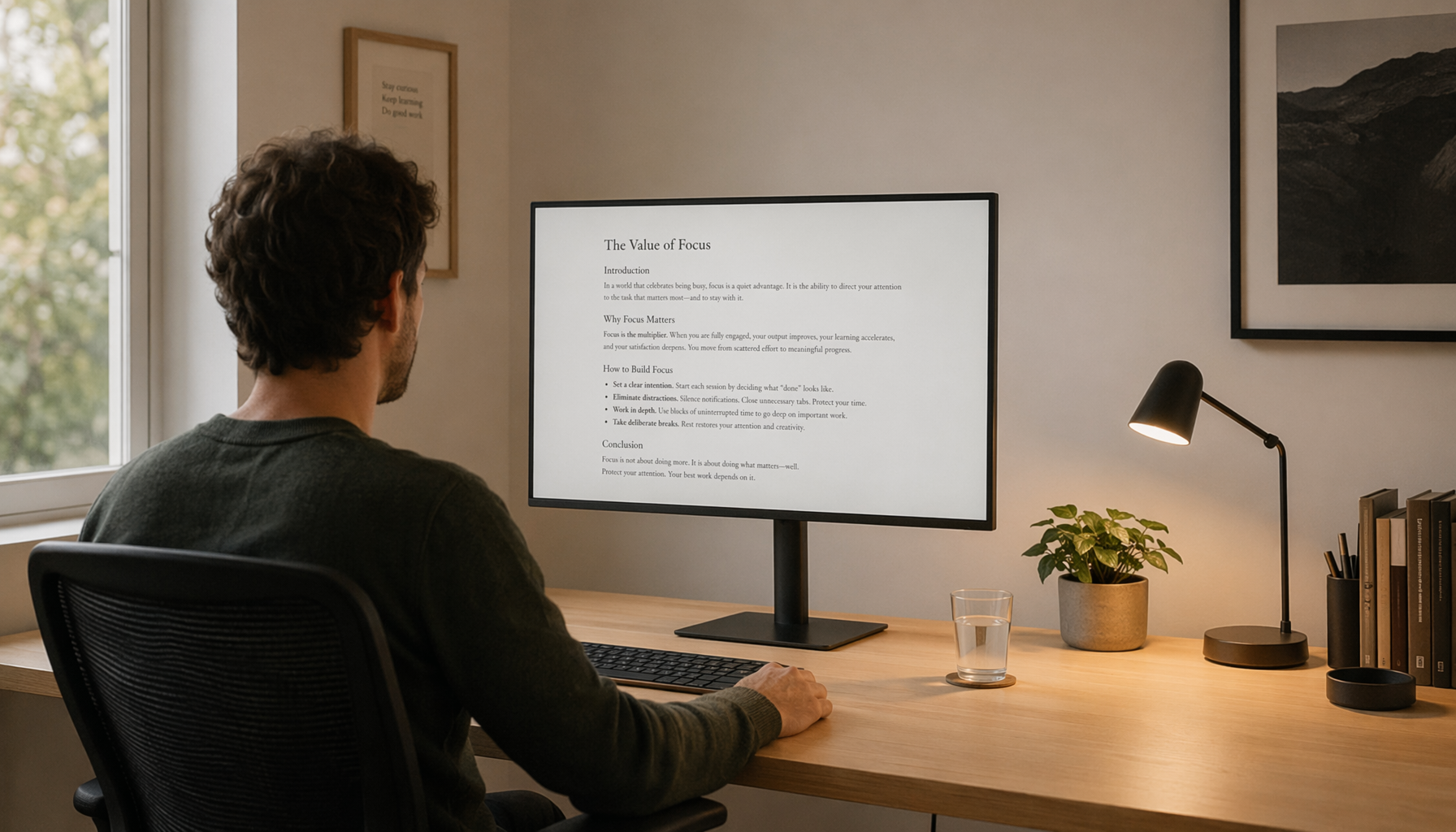
Afternoon fatigue is not always just a sleep, coffee, or workload problem. A monitor that flickers, runs too dim, reflects glare, or forces constant refocusing can add enough visual stress to make your eyes, head, and attention feel worse by late day.
Do your eyes feel fine at 9:00 AM but heavy, dry, or headache-prone by 3:00 PM after staring at the same screen? The average office worker in the United States spends about 7 hours a day on a computer, and people who use screens for 2 or more continuous hours are at higher risk for digital eye strain. This guide shows how monitor flicker fits into that pattern and how to choose and set up a display that is easier to use for long work, gaming, and mixed-use sessions.
Why a Steady-Looking Monitor Can Still Feel Draining
Monitor discomfort is easy to misread because the screen may look normal. You may not see obvious flashing, yet your eyes are still managing pixel edges, brightness changes, reflections, and repeated focusing demands for hours. Computer-related eye fatigue is tied to prolonged screen use because screen work asks the eyes to move, focus, and align repeatedly, especially when text and images are made from pixels rather than continuous print-like surfaces computer-related eye fatigue.
The “afternoon” part matters because discomfort compounds. A monitor that is barely annoying for 30 minutes can become a problem after a full morning of spreadsheets, code, video calls, or ranked matches. A professional eye-care association lists eyestrain, headaches, blurred vision, dry eyes, and neck or shoulder pain among common symptoms of computer vision syndrome, and notes that many contributing factors overlap with monitor setup: glare, poor lighting, wrong viewing distance, poor posture, and uncorrected vision problems computer vision syndrome.
The Blink Problem Behind Late-Day Dryness
One overlooked mechanism is blinking. During screen use, people blink far less often than usual; a university health system notes that computer use can reduce blinking to about half the normal rate, which contributes to dry and blurry eyes reduce blinking. Other eye-care summaries describe screen users blinking three to five times less often, which is why a display can feel “sharp” in the morning but irritating after lunch.

For monitor buyers, this means a brighter or faster screen is not automatically more comfortable. A 27-inch gaming monitor at 240 Hz, a 34-inch ultrawide, and a 15.6-inch portable monitor can all become tiring if the brightness is mismatched to the room, text is too small, or the backlight pulses in a way your eyes dislike.
How Monitor Flicker Happens Even When You Cannot See It
Flicker is a repeated change in light output or image presentation. Sometimes it is visible as shimmer, flashing, or pulsing. More often, it is subtle enough that you only notice the aftermath: eye tension, headaches, reduced concentration, or the urge to look away from the screen. Display flicker can come from backlight behavior, refresh behavior, frame pacing, strobing modes, cable issues, firmware, or graphics settings display flicker.
Pulse-width modulation, or PWM, is one common source. Instead of lowering the backlight smoothly, a monitor may dim by turning the backlight on and off very quickly. Some users never notice it; others feel worse at low brightness because the off/on cycle becomes more pronounced. That is why two monitors with the same size, resolution, and advertised refresh rate can feel very different after a 6-hour work block.

Refresh Rate Helps, But It Is Not the Whole Answer
Refresh rate still matters. A 60 Hz monitor can create more noticeable flicker or motion discomfort for some users, while guidance cited in display-comfort discussions often points to 70 Hz or higher as a threshold that can reduce flicker-related strain 70 Hz or higher. Modern gaming monitors often run at 120 Hz, 144 Hz, 165 Hz, 240 Hz, or higher, and the smoother motion can be easier on the eyes during scrolling, tracking targets, or switching windows.
However, refresh rate alone does not guarantee comfort. A 240 Hz monitor with aggressive backlight strobing enabled may feel worse than a well-tuned 144 Hz display. A high-refresh ultrawide can still cause fatigue if the graphics hardware cannot maintain stable frame pacing, the cable falls back to a lower mode, or the operating system is set to 60 Hz after a driver update.
Specs and Settings That Matter Most for Eye Comfort
When buying a monitor for long sessions, prioritize the features that affect real viewing conditions: flicker behavior, refresh rate, brightness range, coating, ergonomics, and connection stability. Blue-light settings can make a screen look warmer and less harsh at night, but lowering blue light does not fix backlight flicker. Flicker and blue light can feel worse together when brightness, lighting, glare, and session length are already working against you blue light.
The most practical buying move is to look beyond the headline specs. A “165 Hz gaming monitor” sounds comfortable, but you still want reviews or product notes that discuss PWM behavior, brightness control, backlight strobing, low-brightness performance, and text clarity. For office use, also check stand adjustment: the screen center should sit roughly 4 to 5 inches below eye level, and the monitor should usually be 20 to 28 inches from your eyes 20 to 28 inches.
Parameter |
Why It Matters |
Better Choice for Long Sessions |
Watch Out For |
Refresh rate |
Affects flicker perception, scrolling, and motion smoothness |
120 Hz to 165 Hz for most work and gaming; 240 Hz+ for competitive play |
Monitor set to 60 Hz in the operating system |
Backlight dimming |
PWM can create invisible or visible pulsing |
Flicker-free or high-frequency dimming behavior |
Discomfort that worsens at low brightness |
Brightness range |
Too bright or too dim increases strain |
Match screen brightness to room light |
Running a high-dynamic-range-capable display at harsh desktop brightness |
Strobing mode |
Reduces motion blur but can introduce pulsing |
Keep off for office work unless clearly comfortable |
Motion-response or blur-reduction modes left on all day |
Screen coating |
Affects reflections and contrast |
Matte or well-controlled glossy setup based on room light |
Window reflections, overhead lights, gray haze |
Size and resolution |
Determines text size and eye movement |
27-inch QHD, 32-inch 4K with scaling, or ultrawide with readable UI |
Tiny text on portable or high-DPI screens |
Cable and port |
Determines available refresh and stability |
A certified display cable matched to the monitor |
Random flicker from weak cables, adapters, or docks |
A Real-World Setup Example
A common mistake is buying a bright high-refresh monitor and then using it like a TV: max brightness, vivid color mode, desk lamp pointed toward the panel, and tiny text. A better starting point for a 27-inch or 32-inch desktop monitor is 120 Hz or higher, brightness adjusted until white pages do not glow, contrast around the manufacturer’s neutral range, text at a readable size, and the top edge of the monitor at or slightly below eye level.
For ultrawide monitors, comfort depends heavily on distance and curvature. A 34-inch ultrawide can reduce window switching, but if it is too close, your eyes and neck scan a wider field all day. Keep it about an arm’s length away, then adjust scaling so body text is readable without leaning forward.
Gaming, Ultrawide, Portable, and Office Monitors: Different Fatigue Risks
A high-refresh gaming monitor can be a strong choice for visual comfort because smoother motion reduces the jarring feel of scrolling and fast camera movement. But the buyer’s trap is assuming every gaming feature is good for all-day use. Backlight strobing, black-frame insertion, and extreme overdrive modes may improve motion clarity in games while making desktop work feel harsher.
Ultrawide monitors solve one fatigue problem and can create another. They reduce the need for dual-monitor bezels and constant app switching, which is useful for editing timelines, dashboards, and research workflows. But they also make brightness uniformity, viewing angle, and desk depth more important. A large display has a bigger apparent visual field, and research on LED display comfort found that flicker frequency, luminance, and viewing angular size affected visual-comfort ratings, even though that study focused on LED billboards rather than desktop monitors visual-comfort ratings.
Portable Monitors Need Extra Scrutiny
Portable monitors are convenient for travel, apartment desks, and second-screen work, but they are often used in worse ergonomic conditions: low stands, cramped tables, USB-C docks, hotel lighting, and smaller text. If you use a 14-inch to 16-inch portable monitor for more than an hour at a time, place it on a stand so the top edge is closer to your main display height, increase scaling, and avoid dimming it so low that PWM or contrast problems become more noticeable.
For office monitors, the safest comfort bet is usually boring on paper: stable refresh, good stand adjustment, readable pixel density, low-reflection coating, and brightness that can be tuned gently. For gaming monitors, keep the speed but audit the comfort features. For portable monitors, assume you will need a stand, an external keyboard, and a reliable wired display connection to avoid turning a travel screen into a neck and eye strain machine.
How to Tell Whether Flicker, Glare, or Software Is the Problem
The simplest diagnostic is to separate the monitor from the environment. Glare is reflected light that reduces visibility and contrast; lighting changes can reduce glare and harsh contrast, but they cannot eliminate true monitor flicker caused by PWM, refresh behavior, frame pacing, cable problems, firmware, or hardware true monitor flicker. If your symptoms improve when you move the monitor 1 to 2 ft, block a window reflection, or add soft bias lighting behind the screen, glare and contrast were probably part of the issue.

If the flicker is visible in the operating system, check software before replacing hardware. A software company’s troubleshooting path starts with the system task manager: if the task manager flickers along with everything else, the display driver is likely involved; if the task manager stays stable while other areas flicker, an incompatible app may be the cause screen flickering. On a desktop operating system, a built-in graphics-driver reset shortcut can reset the graphics driver, and updating or rolling back the driver may resolve flicker after an update.
A 10-Minute Comfort Checklist

- Set the monitor to its intended refresh rate in display settings, such as 120 Hz, 144 Hz, 165 Hz, or higher if supported.
- Turn off motion blur reduction, backlight strobing, motion-response, branded blur-reduction, or similar modes for office work.
- Match brightness to the room; avoid both a glowing white screen and a screen so dim that contrast collapses.
- Check reflections with a dark screen, then move the monitor, desk, or lamp by 1 to 2 ft if needed.
- Use readable text size: for most work, do not force small 100% scaling on a high-resolution display if you lean forward to read.
- Keep the monitor about 20 to 28 inches away, with the screen center slightly below eye level.
- Take a 20-second distance look every 20 minutes and a longer 15-minute rest after about 2 hours of continuous screen use.
Practical Next Steps
The best upgrade is not always the fastest panel you can afford. If you feel afternoon fatigue, shop for a monitor that combines stable refresh, comfortable brightness control, good ergonomics, and a coating that fits your room. Then tune the setup before blaming your eyes, your sleep, or the monitor panel itself.
For most people buying a primary display today, a 27-inch QHD monitor at 120 Hz to 165 Hz is a practical comfort baseline. Competitive gamers may prefer 240 Hz or higher, while productivity users may benefit more from a 32-inch 4K display with scaling or a carefully positioned ultrawide. If your eyes still hurt after setup changes, schedule a comprehensive eye exam; computer vision syndrome can be worsened by uncorrected vision problems, focusing issues, or dry-eye conditions that a monitor upgrade will not solve.

FAQ
Q: Can invisible monitor flicker really make me tired in the afternoon?
A: It can contribute to fatigue-like symptoms, especially during long sessions. Flicker is not the only cause, but it can add to eyestrain, headaches, dry eyes, and reduced comfort when combined with glare, poor brightness settings, small text, and hours of continuous screen use.
Q: Is a high-refresh-rate monitor always better for eye strain?
A: Not always. A higher refresh rate can make motion and scrolling smoother, but comfort also depends on backlight dimming, PWM behavior, strobing modes, brightness, cable support, frame pacing, viewing distance, and text size. A well-set 144 Hz monitor can feel better than a poorly configured 240 Hz monitor.
Q: Should I use blue-light mode to fix afternoon fatigue?
A: Blue-light mode may make the screen look warmer and less harsh, especially later in the day, but it does not fix flicker. If fatigue appears during work hours, check refresh rate, brightness, glare, text size, strobing settings, room lighting, and your blinking habits before treating blue light as the main cause.
References
- Computer-Related Eye Fatigue
- Computer Vision Syndrome
- Monitor Eye Strain: Flicker, Blue Light & How to Fix It
- What Is Eye Strain? Symptoms, Causes & Treatments
- Troubleshoot Screen Flickering in Windows
- Monitor Flicker vs. Glare: What Lighting Can Actually Fix
- Flicker-Glare and Visual-Comfort Assessments of LED Displays