Most cases come down to a weak point in the signal chain: a strained cable, a loose port, an unstable monitor arm, or a video mode with little margin for movement. If the screen drops out when you nudge the desk or touch the cable, the failure is usually physical first and software second.
Does your screen go black the moment you slide the desk an inch, raise a standing frame, or tidy one stubborn HDMI cable? That pattern is one of the fastest ways to separate a true monitor failure from a stressed connection, because a movement-triggered dropout is testable and usually repeatable. You can pinpoint whether the problem is the cable, the arm, the desk, the port, the GPU, or the room power.
What a movement-triggered signal loss usually means
A brief “No Signal” condition means the monitor still has power, but it is no longer receiving a usable video feed from the source. In practice, that matters because a powered-on display with a lost signal is telling you to inspect the path between the PC and the panel, not just the panel itself.
When the dropout happens only while moving the desk or adjusting the cable, the odds shift heavily toward strain, leverage, or a marginal connector. Cable movement triggering blanking is a strong clue that the cable or port is no longer holding a stable electrical connection under tension. That can mean a worn cable, a connector that is not fully seated, a damaged jack, or a route that pulls straight back on the port every time the desk shifts.
There is also a mechanical side that many setups underestimate. Monitor wobble is often a system problem, where desk flex, arm extension, cable tension, and screen weight amplify each other. On a standing desk, that effect gets worse near full height, because longer leg extension creates more movement and gives every stiff cable more leverage.
Why cable strain causes black screens so easily

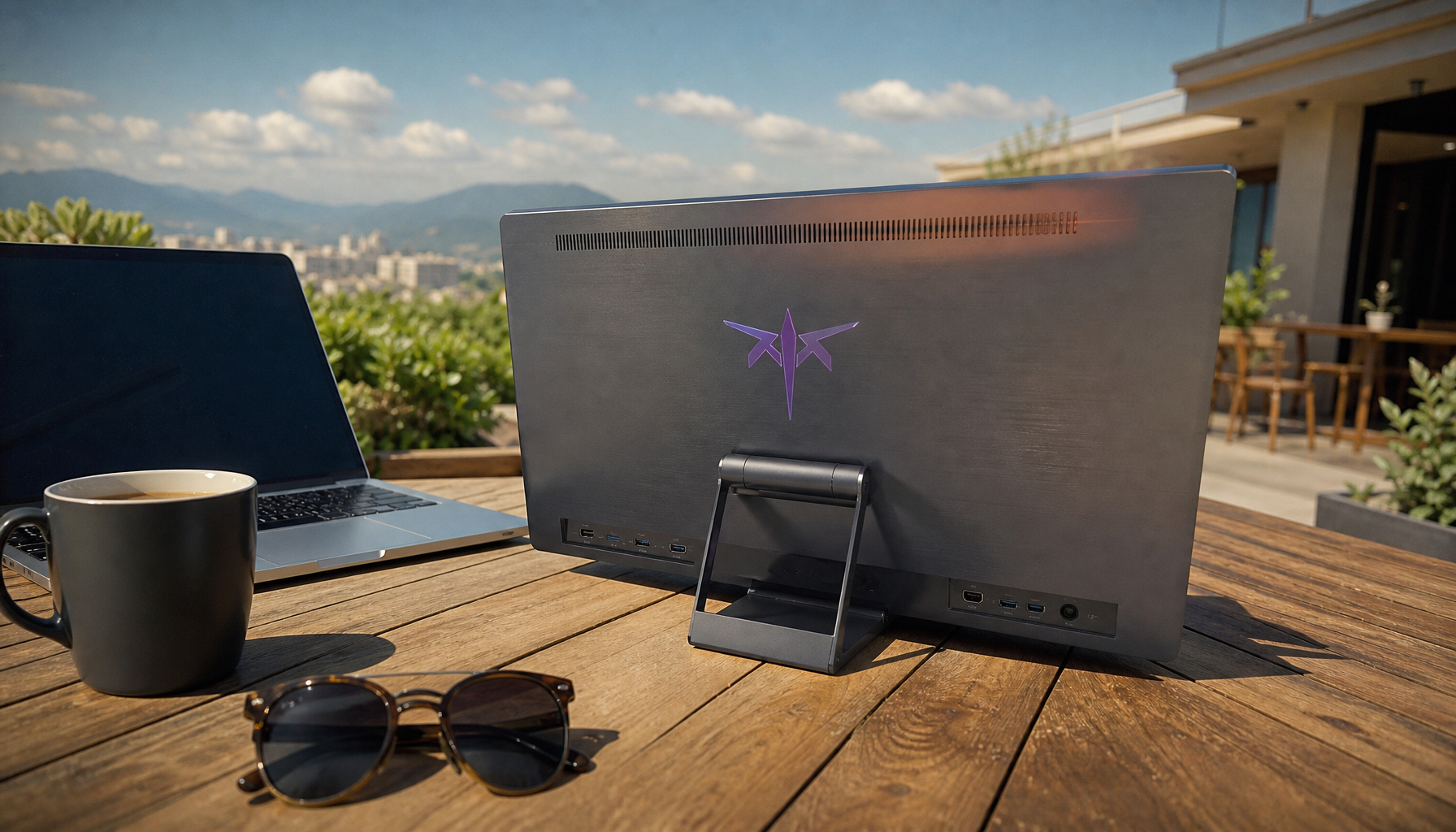
A monitor cable does not have to fall out to fail. Sharp bends and rearward cable pull can act like a lever on the connector and the monitor’s tilt point, especially on heavier gaming displays and ultrawides. In real setups, this shows up when a thick high-refresh cable exits straight back, bends hard against a wall, and then tugs the port every time the desk rises or the arm swings.
That is why the first hands-on test is simple: gently move the cable near each connector while the display is on. Light flexing that reproduces the dropout is useful evidence already. A healthy connection should not cut out from a careful touch.
Slack matters more than most people think. Standing-desk cable guidance recommends a service loop of about 4 to 8 inches at full height so the cable can travel without pulling on the monitor or arm. If your cable is stretched tight at the top of the desk’s travel, every adjustment becomes a tug test whether you intended it or not.

A clean route usually beats a tight route. Bring the cable downward first, then back, instead of forcing it straight into the wall or arm channel. If the bundle includes power, USB, and video lines, separate the display cable enough to reduce twist and strain. This is especially important when the desk moves daily.
The desk and monitor arm can be the hidden culprit

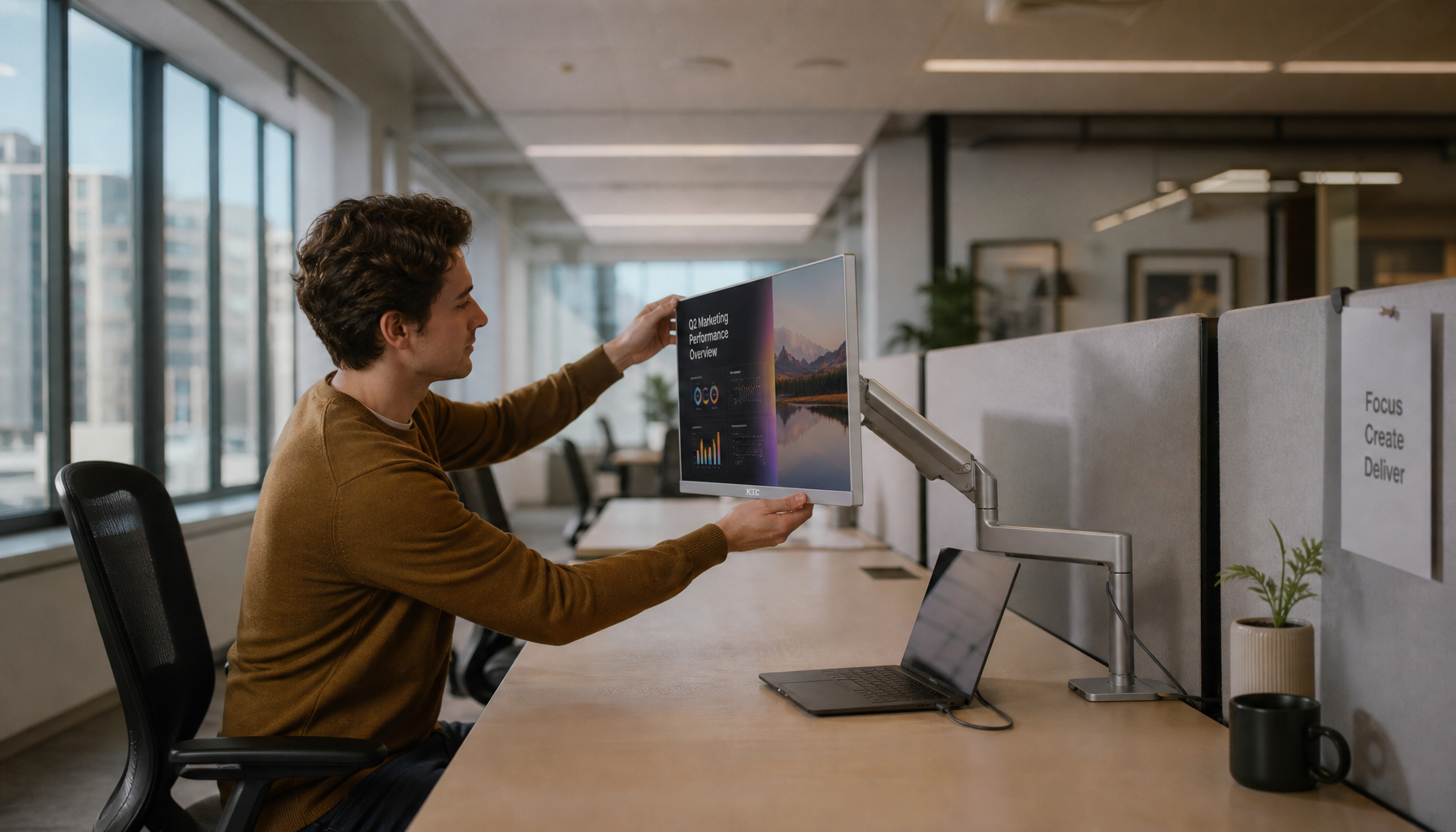
A lot of bad-cable diagnoses are really desk rigidity and monitor-arm leverage problems. An arm that is extended too far from its mounting post bounces more, and that bounce feeds motion into the connector. The result is a cable that seems unreliable even though the deeper problem is constant micro-movement.
A useful rule from multi-screen stability testing is that moving a display just 3 to 5 inches farther forward can noticeably increase leverage and wobble. If you run a 32-inch gaming monitor on a long arm, that extra reach can turn a harmless desk nudge into a visible shake and a brief signal loss.
The fast audit is mechanical, not digital. Tighten the desk frame, arm joints, VESA plate, and clamp or grommet mount. Level the desk so all feet contact the floor firmly. Then do a tap-and-settle test: tap one corner of the screen lightly and watch how long it oscillates. A stable setup should calm down in under about two seconds. If it keeps bouncing, solve that before blaming software.
High refresh and HDR leave less room for a mediocre cable
Even when the movement issue is real, the reason it blanks out instead of shrugging it off may be bandwidth margin. High-refresh and high-resolution modes are less forgiving because the cable and ports must hold a stable handshake at the full data rate. A cable that behaves perfectly at 1080p and 60 Hz can fail at 1440p and 165 Hz or 4K and 120 Hz.
That is why certified modern cables matter on gaming setups. If your monitor only loses signal in its highest mode, step down one tier for testing. Run native resolution, reduce refresh once, disable HDR temporarily, and retest the same desk movement. If the dropout disappears at the lower mode, you likely have a marginal cable, port, or handshake rather than a dead monitor.
The tradeoff is straightforward. Lower settings improve stability and help isolate the fault, but they also reduce the performance you bought the display for. Replacing the weak link is the better long-term fix if you need the full refresh rate.
When the problem is not the cable at all
Sometimes the cable is only exposing a deeper fault. In one hardware forum case, signal loss became more frequent after the tower was moved slightly, even though the display itself worked with another device. That pattern points toward a marginal GPU seating issue, a power connector problem, or a flaky output port rather than the monitor alone.
If audio continues while the screen goes black, the PC may still be running and only the video path is failing. If the whole system powers on but never displays anything, startup-level faults such as GPU, RAM, motherboard, or PSU issues move higher on the list. External monitor troubleshooting also supports isolating the chain one piece at a time rather than changing everything at once.
Room power can complicate the picture too. Location-specific dropouts sometimes trace back to an overloaded circuit, weak grounding, or voltage dips, especially when the issue appears under gaming load. If the setup is stable in one room and unstable in another, do not ignore the outlet.
The fastest way to isolate the real cause
Use one known-good cable, one monitor, and one PC output first. Methodical testing beats guesswork here because the failure is often a chain problem, not a single bad part. If possible, test HDMI against DisplayPort, try another port on the GPU, and check whether manual input selection on the monitor stops any false input hunting.
The table below is the simplest way to read the symptom pattern.
What happens |
Most likely cause |
Best next move |
Screen drops when you touch the cable |
Bad cable, loose connector, damaged port |
Replace with a known-good cable and inspect both ports |
Screen drops when the desk rises or wobbles |
Tension, poor slack, unstable arm or desk |
Add 4 to 8 inches of slack, tighten mounts, reduce arm extension |
Screen is stable at lower refresh but not at max refresh |
Bandwidth margin or handshake instability |
Use a certified cable, test DisplayPort, update GPU driver |
Every display fails on one PC |
GPU, PSU, motherboard, or power issue |
Reseat GPU and power leads, test another output path |
The same monitor fails on multiple devices |
Monitor-side fault |
Factory reset, firmware check, then repair or replace |
One last practical note: displays can last a long time, with typical LCD life often cited around 30,000 to 60,000 hours, so a monitor is not automatically worn out just because it flickers when moved. When movement is the trigger, start with mechanics and signal integrity before you retire the panel.
A stable display setup should feel locked in, not delicate. If nudging the desk or straightening a cable can knock the image out, treat that as a design flaw in the setup and correct the strain path first. Once the physical chain is solid, the remaining software or hardware faults become much easier to identify.