



Your cursor usually sticks at a monitor edge because the virtual display layout does not match the physical placement of your screens. The fix is often simple: align the display boxes, match scaling where possible, and verify your graphics connection path.
The Real Cause: Your Screens Don’t Line Up Digitally
Your operating system treats multiple monitors as one large virtual desktop. If one display is even slightly higher, lower, or offset in Display settings, the pointer can hit an invisible wall instead of crossing smoothly.

This is why the issue often appears only at the top corner, bottom edge, or a narrow part of the shared edge. Your mouse is not broken; it is running into a virtual boundary created by the monitor arrangement.
For a clean dual-screen workflow, the on-screen layout should mirror your desk layout. A strong setup starts with the same principle used in productivity display planning: keep screens aligned, close, and easy to scan across a wider multi-monitor workspace.
Quick Fix in Display Settings
Start with the fastest, highest-value fix: rearrange the monitors in Display settings.
- Right-click the desktop and open Display settings.
- Click Identify so you know which numbered box matches each screen.
- Drag the monitor boxes to match your real desk layout.
- Align the top edges if your monitors are physically level.
- Click Apply, then test the cursor edge again.

If your second monitor is slightly lower on its stand, you can reflect that in the display layout. But if you want the cursor to cross anywhere along the shared edge, align the display boxes evenly.
This is especially important with laptop-plus-monitor setups, vertical side screens, and mixed-size displays. Cursor movement follows the virtual rectangle, not the bezel you see in front of you.
Scaling, Resolution, and Refresh Rate Can Add Friction
Even when the display boxes look aligned, mismatched scaling can make cursor movement feel inconsistent. A 27-inch 4K monitor at 150% scaling beside a 24-inch 1080p monitor at 100% scaling can create awkward edge behavior and odd pointer transitions.

Matching monitor size, resolution, and refresh rate where practical helps the setup feel more seamless. Display-focused setup advice often recommends consistent specs because they reduce visual jumps and make motion across the desktop feel more natural in a dual-monitor setup.
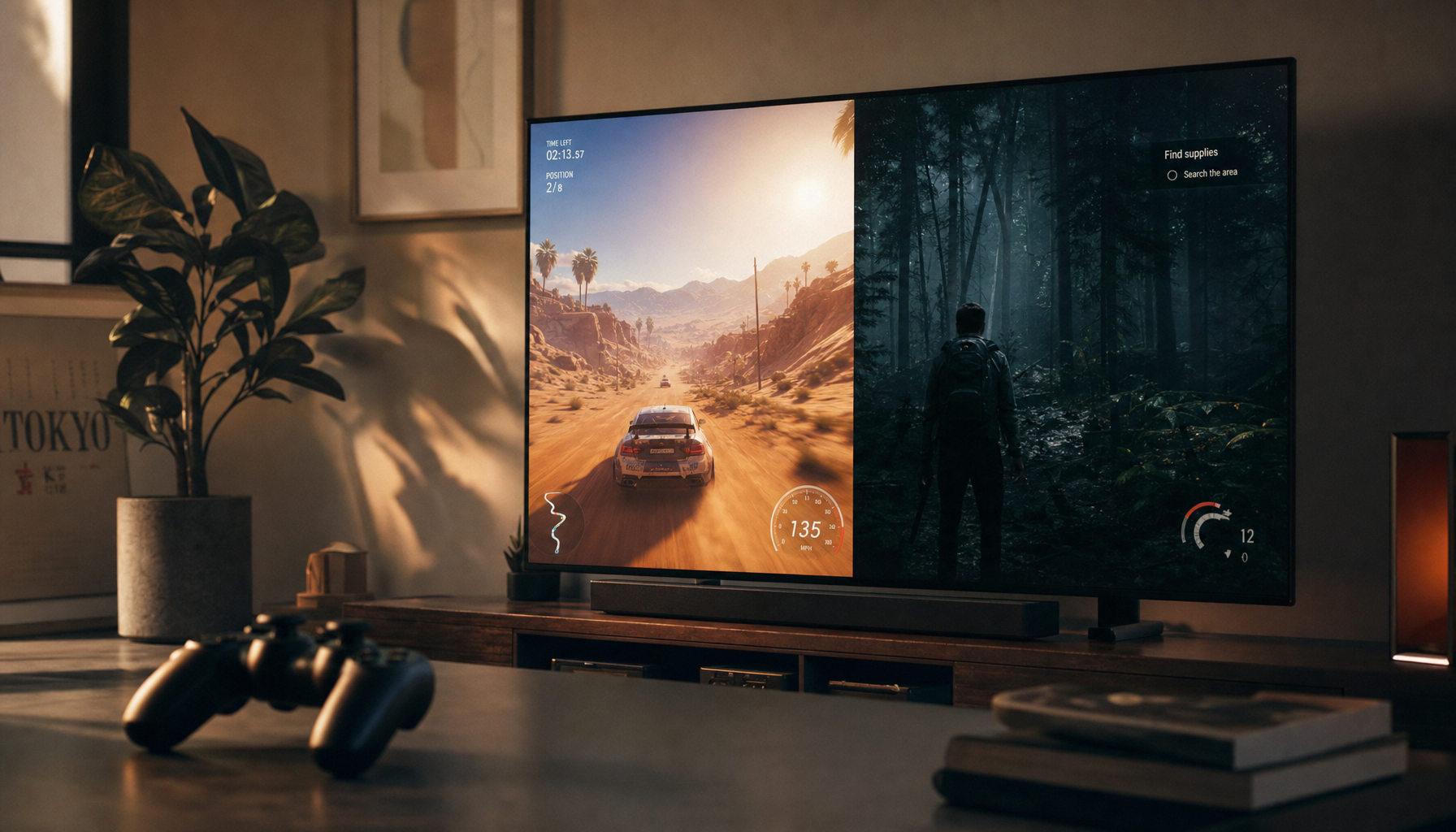
For gaming and streaming, also check whether the game is running in fullscreen or borderless windowed mode. Borderless mode can let the cursor escape to another display, while true fullscreen usually keeps focus more tightly on the main gaming panel.
When It’s Not Just Alignment
If the cursor visually stops but you can still click items on the other screen, the issue may be cursor rendering rather than pointer movement. That can point to graphics drivers, tablet drivers, pointer effects, or display output quirks.
Try these next:
- Update or reinstall graphics drivers.
- Test another video cable or port.
- Disable pointer trails or cursor enhancement settings.
- Match scaling temporarily to test behavior.
- Restart after changing monitor order or ports.
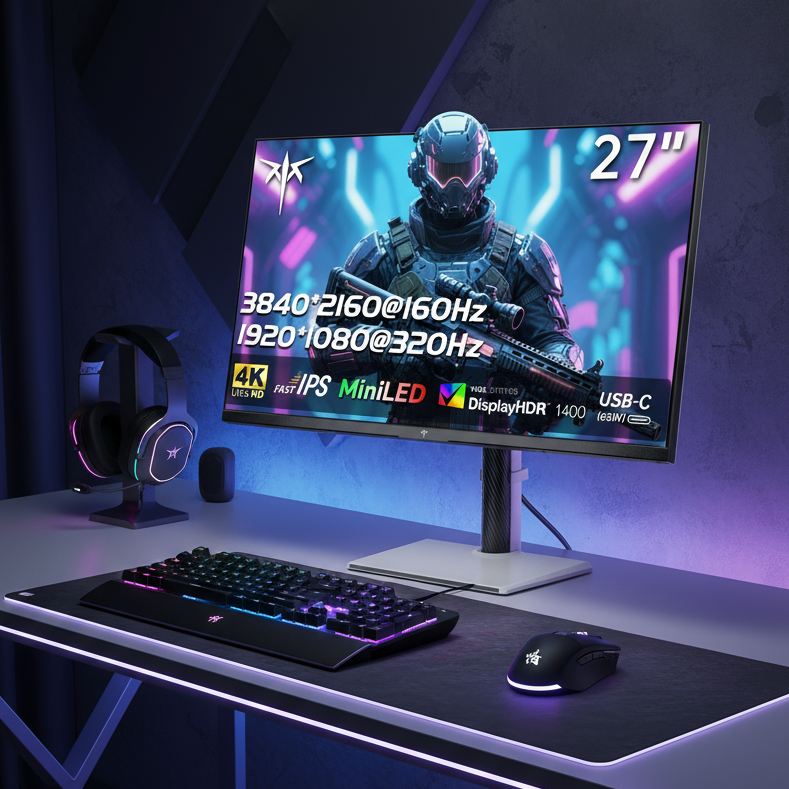
Portable smart screens and USB-C displays add another variable: the dock or hub may limit resolution, refresh rate, or video mode. If the cursor issue started after adding a dock, test the display directly from the laptop or graphics card.
If alignment is already perfect and the issue happens only at a specific edge, it may be a software edge case rather than a setup mistake.
Build a Seamless Cursor Path
A premium multi-display setup is not just more pixels; it is a predictable movement system. Your cursor should cross screens with the same confidence you expect from a high-refresh gaming monitor or a color-accurate productivity panel.
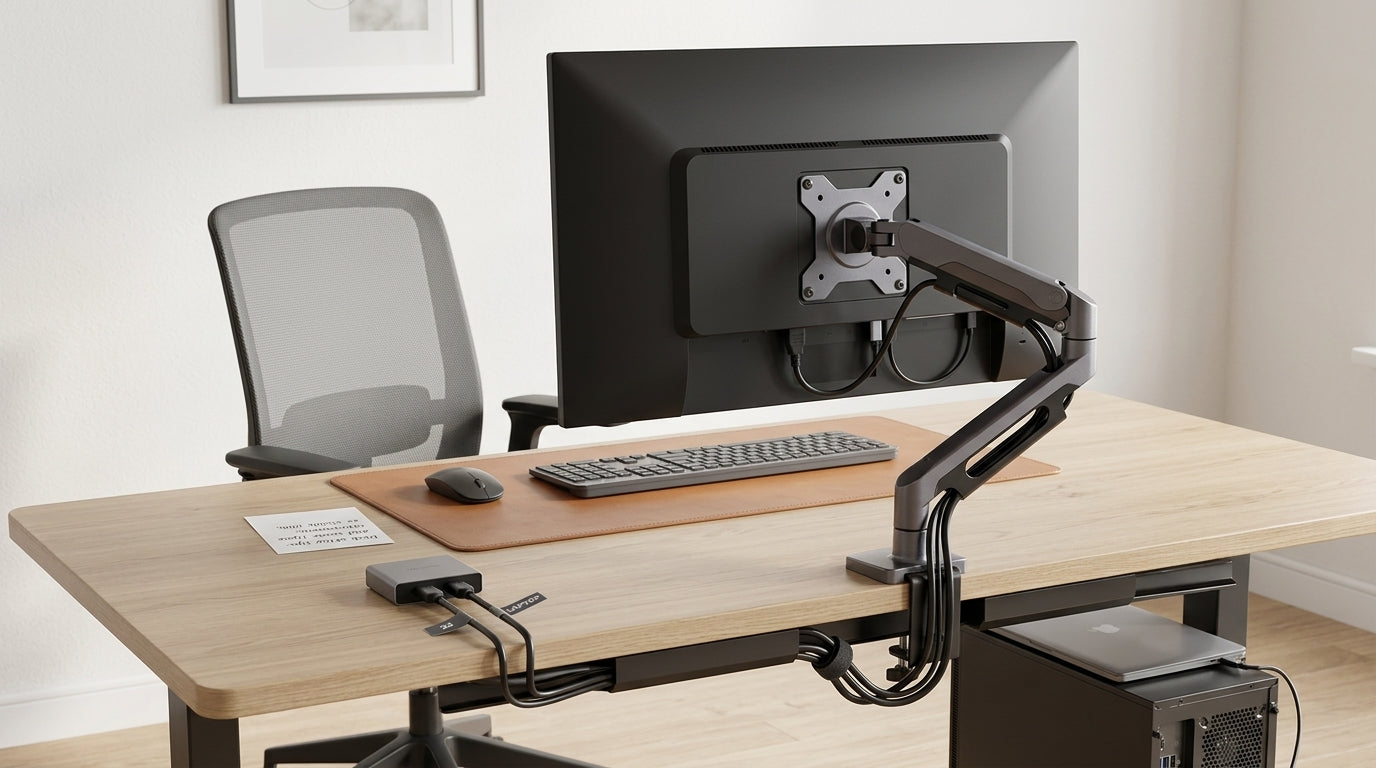
For the best feel, keep the main display centered, align secondary displays at eye level, and use monitor arms if the stands do not line up. For immersive gaming, keep the primary screen in the center and use side monitors for chat, maps, tools, or streaming controls; gaming setup advice often favors multi-monitor layouts when flexibility and peripheral visibility matter in gaming and streaming.

The practical takeaway: fix the virtual layout first, then tune scaling, drivers, cables, and display modes. Most stuck-cursor problems are not mouse problems; they are screen geometry problems.