Use a layered setup: apply the operating system filter when you want all screens warmed together, use each monitor’s built-in low-blue-light mode when you need different settings per display, and use third-party screen-temperature tools when you need finer scheduling and automation.
Does one screen feel calm at night while the other blasts your eyes with a cold white desktop? A practical per-monitor setup can keep your main gaming display color-true while warming a side productivity screen, without buying new hardware. You’ll get a clear decision path for desktop operating systems, monitor menus, and third-party tools.
Why Per-Monitor Blue Light Control Matters
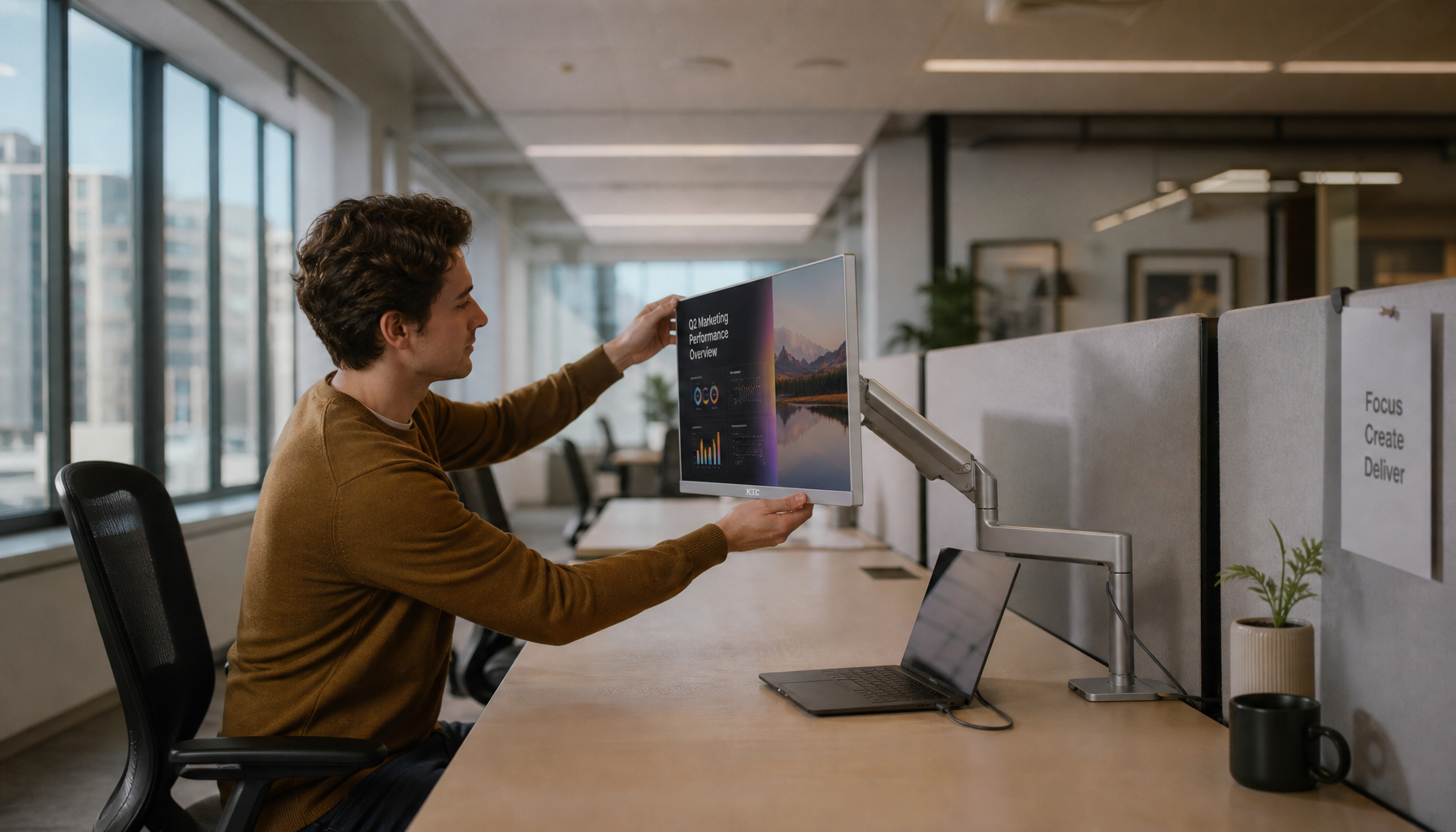
A multi-monitor desk is rarely uniform. A 27-inch gaming monitor may run high refresh rates, HDR, and vivid color for competitive play, while a vertical office display holds chat, spreadsheets, code, or dashboards. A portable screen may sit closer to your eyes, making the same brightness and color temperature feel harsher.
Blue light filters work by shifting the screen toward warmer tones, reducing cooler blue-heavy output. Blue light filters are widely treated as assistive technology for reducing monitor-related strain, and modern operating systems usually include built-in versions. The catch is control. Many system-level filters treat your displays as one visual space, while monitor firmware settings are often per-device.
That distinction matters when you need accuracy. If you are editing a product photo, tuning a game’s black levels, or comparing monitor color, a strong night filter can mislead your eyes. If you are reviewing email at 11:00 PM, a warmer side screen may be exactly what keeps the desk usable.
The Fast Decision: OS, Monitor Menu, or Third-Party App?
The best method depends on whether you need identical warmth across all screens or different behavior on each display.

Setup Need |
Best Control Point |
Practical Result |
Warm every screen at night |
Built-in operating system filter |
Simple schedule, consistent tint |
Warm only one external monitor |
Monitor on-screen display menu |
True per-monitor control when supported |
Fine-tune schedules and color curves |
Third-party screen-temperature app |
More automation and app-aware behavior |
Keep a gaming monitor color-neutral |
Monitor menu plus quick OS toggle |
Less color distortion during play |
Reduce glare and harshness, not just blue |
Brightness, room lighting, matte filter |
More complete eye-comfort improvement |
Start With the Operating System Filter
Built-In Desktop Night Filters
Most desktop operating systems include a night filter under display settings, usually with controls for strength and schedule. A moderate strength is the best starting point because an extreme amber tint can make whites look muddy and game visibility less reliable.
An operating system night filter was found by the linked testing source to reduce blue light more effectively than the built-in monitor filters it tested, and it is more customizable than many monitor presets. That makes it a strong baseline for evening browsing, office work, and reading.
The limitation is per-monitor targeting. Many built-in filters apply broadly rather than giving you a clean “Monitor 1 only” switch. If your goal is to warm a secondary display while leaving your main gaming monitor neutral, the operating system alone may not be enough.
A good real-world setup is to keep the operating system filter scheduled from 9:00 PM to 6:00 AM at a mild strength, then manually disable it before competitive games, photo work, or video grading. For a dual-screen desk, that gives you quick comfort most nights while avoiding permanent color compromise.
Laptop and External Display Setups
Laptop-based night filters follow the same general principle: they warm the color temperature after sunset or during custom hours. They work well when you want the whole workspace calmer at night, but they are better for global behavior than precise per-monitor differences.
For a designer or analyst, the smarter move is to use the built-in filter lightly and rely on the external display’s own menu for stronger filtering. That way, the laptop screen and reference display are not forced into the same color behavior.
Open-Source Desktop Environment Limits
Behavior on open-source desktops depends heavily on the desktop environment, graphics stack, and tool used. Community discussions around dual-screen night-filter setups show that users often want one display warmed while another remains normal, but accessible page captures do not provide a reliable universal command. Treat per-monitor filtering as environment-specific rather than guaranteed.
Test the built-in night filter first. If it warms all screens together, move to monitor firmware settings or a third-party utility that supports your compositor and GPU path.
Use the Monitor’s Built-In Blue Light Mode for True Per-Screen Control
The most reliable way to configure different settings per monitor is through the monitor’s on-screen display, often controlled by a joystick or physical buttons. Look for names like Low Blue Light, Eye Saver, Reader, Comfort, Warm, Paper, or Night mode.

Built-in monitor blue light filters vary widely by model and mode, so the same “Low Blue Light” label can behave differently on two displays. That is not a flaw in your setup; it is how the market is built. One display may only shift color temperature slightly, while another may apply a much stronger amber cast.
For a performance desk, use this split. Keep your primary gaming monitor in a neutral or calibrated mode near 6500K for gameplay, color checks, and streaming visuals. Set your secondary office display to Reader or Low Blue Light mode after dark. If your portable screen sits closer than your main monitor, lower its brightness more aggressively and use a warmer preset.
A simple example works well: main 27-inch monitor in Custom or Game mode at moderate brightness, secondary vertical monitor in Low Blue Light mode, and portable screen in Reading mode. This gives each screen a job instead of forcing one compromise across the whole desk.
Tune Brightness Before You Overdo the Amber Tint
Blue light filters are useful, but brightness is often the bigger comfort lever. Screen brightness should roughly match your room: brighter in a well-lit office, lower in a dark room, and never so dim that you squint.
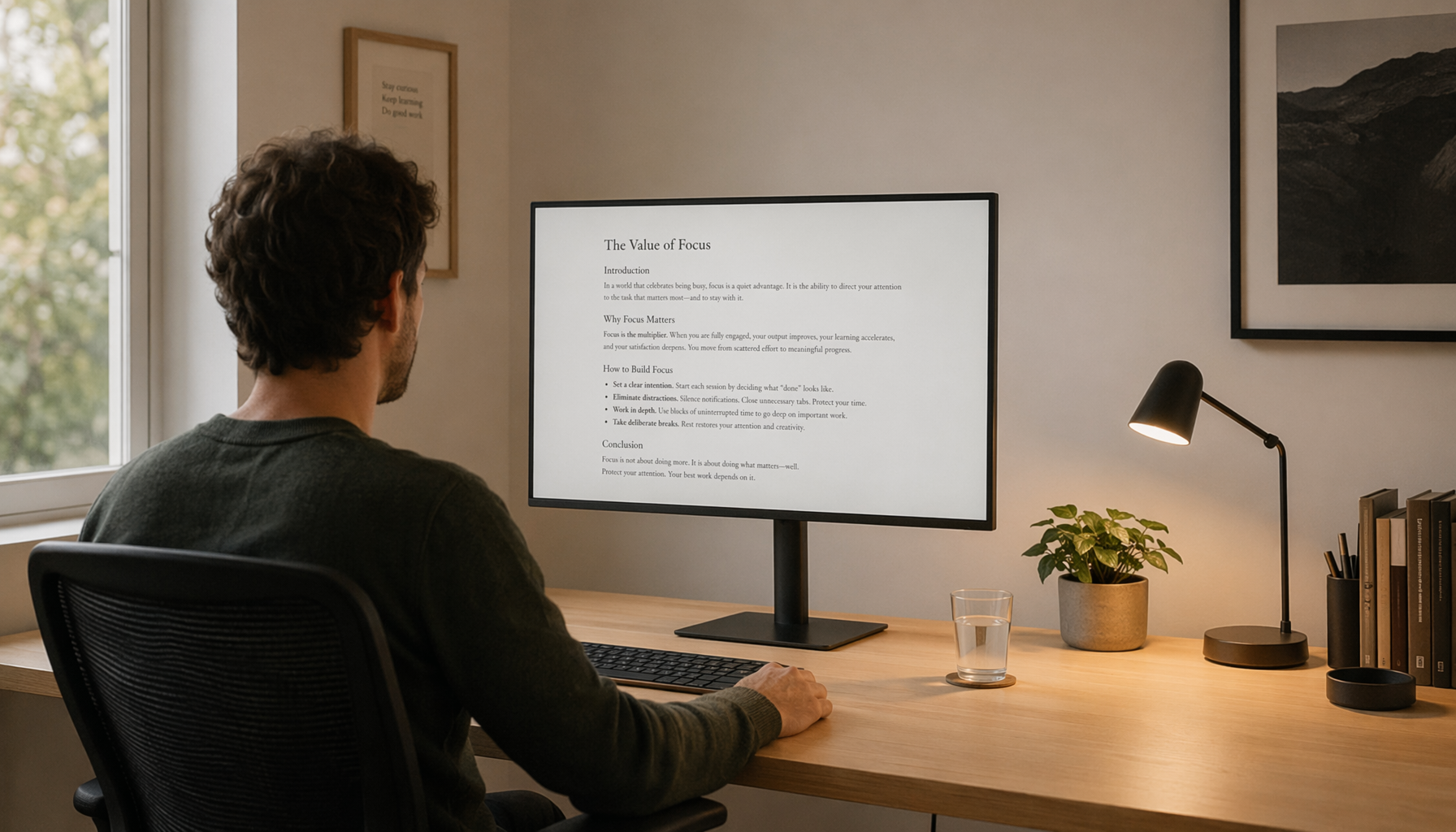
For office productivity, aim for a screen that looks like it belongs in the room. If the monitor looks like a lamp, lower brightness before increasing the blue light filter. If text looks gray and you lean forward, raise brightness slightly or increase text size rather than pushing the screen warmer.
Gaming monitors add another wrinkle. Competitive visibility often depends on shadow detail, response time, refresh rate, and contrast. Gaming monitor settings typically prioritize high refresh rate, native resolution, practical overdrive, and balanced brightness. A heavy night filter can make enemy outlines, UI colors, and dark-area detail harder to read.
Use this practical rule: if the task is visual judgment, reduce brightness first and keep color temperature closer to neutral. If the task is reading or admin work, warming the display is usually acceptable.
Third-Party Apps: When Built-In Controls Are Not Enough
Third-party tools make sense when you want smoother schedules, location-based changes, or app-specific behavior. Some free screen-temperature apps adjust color temperature based on local sunlight conditions and can disable themselves for fullscreen apps, which is valuable if you game at night or watch color-sensitive video.
Lightweight tools can also provide simple automatic or manual adjustment. They are less about a full control panel and more about reducing setup friction, which helps on a work machine where you want fewer knobs and less maintenance.
The tradeoff is compatibility. Any software filter sits in the display pipeline, so GPU drivers, HDR, overlays, docks, USB display adapters, and vendor utilities can affect results. If a filter does nothing on one monitor, test with HDR off, update the GPU driver, close other color utilities, and try the monitor’s own menu.
A Practical Per-Monitor Configuration Workflow
Set the Role of Each Display
Before touching settings, decide what each screen is for. Your main gaming monitor should preserve motion clarity, contrast, and predictable color. Your office monitor should prioritize text comfort and reduced harshness. Your portable screen should be tuned for proximity, because a smaller display often sits closer and feels brighter at the same setting.

On a two-monitor desk, that might mean neutral color on the main display and warm Reader mode on the second. On a three-screen setup, the portable screen may deserve the lowest brightness because it is usually closest to your face.
Match Brightness Across the Desk
Open a white document on each display in your normal room lighting. Adjust brightness until none of the screens visually dominates the others. Do this before enabling any blue light filter, because a very bright warm screen can still feel tiring.
Then lower brightness again for nighttime. Blue light screen filters work best as part of a broader lighting setup, because glare, dryness, posture, harsh overhead lights, and reduced blinking can also drive discomfort. If headaches persist, the problem may be the room, not just the screen.
Apply Warmth by Priority
Use the monitor on-screen display first for any screen that needs unique behavior. Use the operating system filter when you want all screens warmed together. Use third-party tools when schedules, location awareness, or fullscreen exceptions matter.
A strong productivity setup is to set the side monitor to a warm mode permanently after sunset, leave the main monitor neutral, and keep a mild operating system night-filter schedule as a backup. If the system filter makes the main monitor too warm for a game, disable it and let the side monitor’s hardware setting keep doing its job.
Pros and Cons of Each Method
Method |
Pros |
Cons |
Operating system night filter |
Free, fast, easy to schedule |
Often global across displays |
Monitor on-screen low-blue-light mode |
Best for per-monitor differences |
Quality and labels vary by model |
Third-party screen-temperature app |
Better automation and customization |
Can conflict with HDR, overlays, or drivers |
Physical screen filter |
Works independent of OS |
May reduce sharpness or alter color |
Blue light glasses |
Works across screens and room lighting |
Lens quality and color distortion vary |
Troubleshooting When One Monitor Will Not Change
If the night filter works on your laptop screen but not an external display, do not assume the monitor is broken. The issue can be the connection path, GPU driver, dock, HDR mode, or display firmware. Community support threads also show that display settings do not always expose deep color controls, so the GPU control panel may be the next place to check.
For systems with major GPU driver utilities, look for desktop color or display color controls. If the night filter appears stuck, toggle it off, restart the PC, and turn it back on. If the problem affects only one external monitor, test a direct HDMI or DisplayPort connection instead of a hub.
Also check for conflicts. Running an operating system filter, a third-party app, monitor Eye Saver mode, and a vendor utility all at once can make colors unpredictable. For a clean test, disable every filter, confirm the display is neutral, then add one layer at a time.
Eye Comfort Is Bigger Than Blue Light Alone
The strongest desk setups combine filtering with ergonomics. The 20-20-20 rule is simple: every 20 minutes, look about 20 ft away for at least 20 seconds. That habit helps because eye strain is often tied to focus lock, dryness, and reduced blinking, not just color temperature.

Keep the top of the monitor near eye level or slightly below, reduce window glare, and avoid using a bright screen in a dark room. If you wear prescription glasses, make sure they work at screen distance. If you have persistent headaches, dry eyes, blurred vision, or sleep disruption, treat display settings as a comfort tool rather than a medical fix and get professional guidance.
Final Setup Recommendation
For most multi-monitor users, the cleanest configuration is simple: use the monitor’s own low-blue-light mode for screens that need unique treatment, use the operating system night filter only when you want the whole workspace warmed, and reserve third-party tools for smarter schedules and fullscreen exceptions. Keep the gaming display accurate, make the office display comfortable, and tune brightness before chasing stronger amber color.