OLED burn-in is most worrying when you leave the same desktop elements in the same place for hours, but the risk is manageable if you lower brightness, use sleep timers, and keep static UI exposure under control. That makes OLED a reasonable desktop choice for many users, while very static office workflows may still fit Mini-LED better.

Why Desktop OLED Burn-In Happens
Desktop burn-in concern usually starts with the same bright UI areas staying visible day after day. Taskbars, browser tabs, toolbars, timelines, and dashboard panels can all keep lighting the same pixels in similar patterns. Over time, that is the basic condition that makes OLED burn-in anxiety feel different from normal monitor wear.
For most users, the biggest variables are not one short session but the pattern across weeks: how bright the screen runs, how often it sits idle, and how static the layout stays. That is why a desktop monitor used for mixed tasks feels less risky than one that shows the same spreadsheet, code editor, or dashboard all day.
Static desktop elements are the kind of thing that can create uneven wear over time.
Static UI and Uneven Wear
Static UI is the core problem because it concentrates use in the same screen regions. That does not mean every taskbar or toolbar is dangerous on its own. It means repeated exposure at similar brightness is the part worth managing.
If your workflow constantly anchors the same items in the same place, think of burn-in reduction as exposure control. Move what you can, hide what you do not need, and avoid leaving one fixed layout glowing for long stretches.
Brightness, Time, and Heat
Brightness is the first practical lever because it directly changes how hard the panel works during long sessions. Lowering it usually improves comfort too, which makes the habit easier to keep.
Time matters just as much. A monitor that sits on a bright desktop for ten hours is a different case from one that spends part of the day asleep. Heat can add another reason to stay conservative during all-day desk use, especially if the monitor already runs warm in a tight setup.
As a decision sentence: if you routinely leave static windows up all day, low-to-moderate brightness plus a short sleep timer is a better default than chasing bright, always-on desktop use.
Why Office Use Feels Riskier Than Games
Office work feels riskier because it often freezes the same visual pattern in place. Games and video tend to move content around more, even when they are bright and demanding. That means a monitor can be heavily used without every use case carrying the same burn-in profile.
This is also why productivity buyers should judge OLED differently from gamers. If your day is mostly documents, dashboards, and tabs, your risk is shaped by static dwell time. If your use is more mixed, OLED can be easier to justify.
Settings That Reduce Risk Most
The safest settings are the ones you can leave alone without thinking about them every day. That usually means moderate brightness, automatic sleep, and the panel's own care tools set up the way the manufacturer intends. It is less about finding a perfect number and more about creating a setup you will actually keep using.

A practical rule of thumb is to start lower than you think you need, then raise brightness only until the desktop is comfortable in your room. That keeps the display usable without running it harder than necessary.
For a quick external reference on why users focus on brightness and idle exposure, see this OLED burn-in mitigation discussion and the general desktop taskbar and sleep guidance. Both point in the same direction, even if the exact numbers vary by panel.
Brightness Targets for Workdays
Brightness is not a universal threshold. What works depends on your room, the monitor generation, and how long the desktop stays static. That is why the safer guidance is to use a range instead of a hard promise.
For many desk setups, a brightness setting that feels comfortable without turning the panel into a light source is the better choice. If you need to push brightness very high just to make text readable, that is a sign to check ambient light, distance, and font scaling first.
Auto Dimming and Sleep Timers
Auto-hide behavior and short sleep timers reduce the time fixed content stays parked on screen. That matters more than people think because burn-in risk is cumulative. The less time the same pixels stay lit, the better your odds of slowing wear.
If your computer stays unlocked during meetings or lunch, a short idle-to-sleep setting is one of the easiest wins. It does not get in the way of work, and it prevents the most common "I forgot the screen was on" problem.
Pixel Refresh and Panel Care Features
Pixel refresh, compensation cycles, and similar panel care tools are worth using as directed, not improvising around. They are maintenance features, not magic shields.
A good rule is to let the monitor manage its own care routines rather than forcing extra cycles or skipping the ones it recommends. The safest habit is usually consistency, not micromanagement.
Desktop Habits That Matter More Than Fancy Features
-
Lower the most persistent UI first. Taskbars, pinned widgets, always-open side panels, and static overlays are the first things to trim back if burn-in is on your mind.
-
Use dark mode selectively. Dark mode can reduce average brightness in some apps, but it does not cancel burn-in risk by itself. If a dark theme still keeps the same bars and panels in place, you still want sleep timers and screen breaks.
-
Move content through the screen when you can. Video, documents, and full-screen apps are less of a problem when the layout changes often. Even small shifts in window placement help spread use around.
-
Turn the display off during idle stretches. Lunch, meetings, and breaks are easy opportunities to stop static content from sitting there all day.
-
Rotate wallpapers and overlays occasionally. You do not need to change everything constantly, but a layout that stays identical for months is a worse fit than one that changes from time to time.
Choosing an OLED for Office Work
OLED can still make sense for office work if you value contrast, deep blacks, and a more premium image, but it fits best when your desktop use is mixed and you are willing to manage static exposure. If your workflow is mostly spreadsheets, toolbars, or always-on dashboards, Mini-LED is often the simpler choice because it removes burn-in anxiety entirely.
A decision sentence worth keeping: if your desk life is mostly static windows and long uptime, choose the lower-maintenance display type first, then add OLED only if its image quality is worth the extra care.
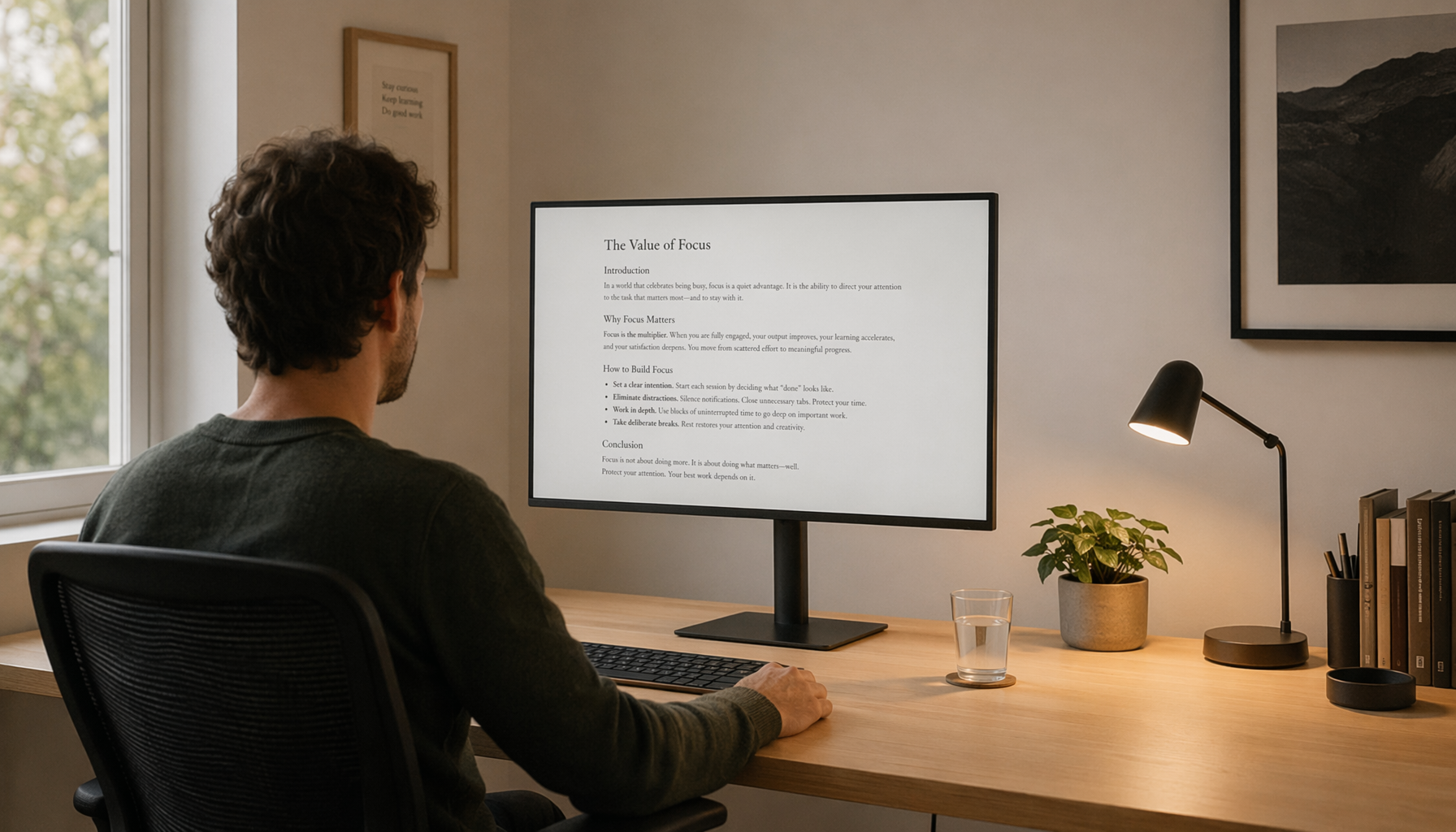
Text clarity matters too. Higher pixel density can make office text look cleaner at normal desk distance, but subpixel layout and font rendering can still affect how sharp text feels. That means a high-spec panel on paper is not always the same thing as a comfortable office monitor in practice.
If you want to compare the trade-off directly, the Tandem OLED vs. The Field: The Longevity & Brightness Audit and the Mini-LED vs. OLED ambient light guide are good background pieces. They reinforce the same filter: OLED shines when you want contrast and can manage habits, while Mini-LED is usually easier in brighter or more static setups.
For readers who want to stay in the OLED category, the All-OLED Monitor collection is the natural browsing path after you decide that OLED is still the right panel type. When Mini-LED or LCD fits the workflow better, compare options in the All-Mini-LED Monitors and LCD Monitors collections.
What to Check Before You Pick an OLED
Check the monitor's text comfort, brightness behavior, ergonomics, and built-in panel care tools. Those are the practical factors that change daily use more than gaming-style spec sheets do.
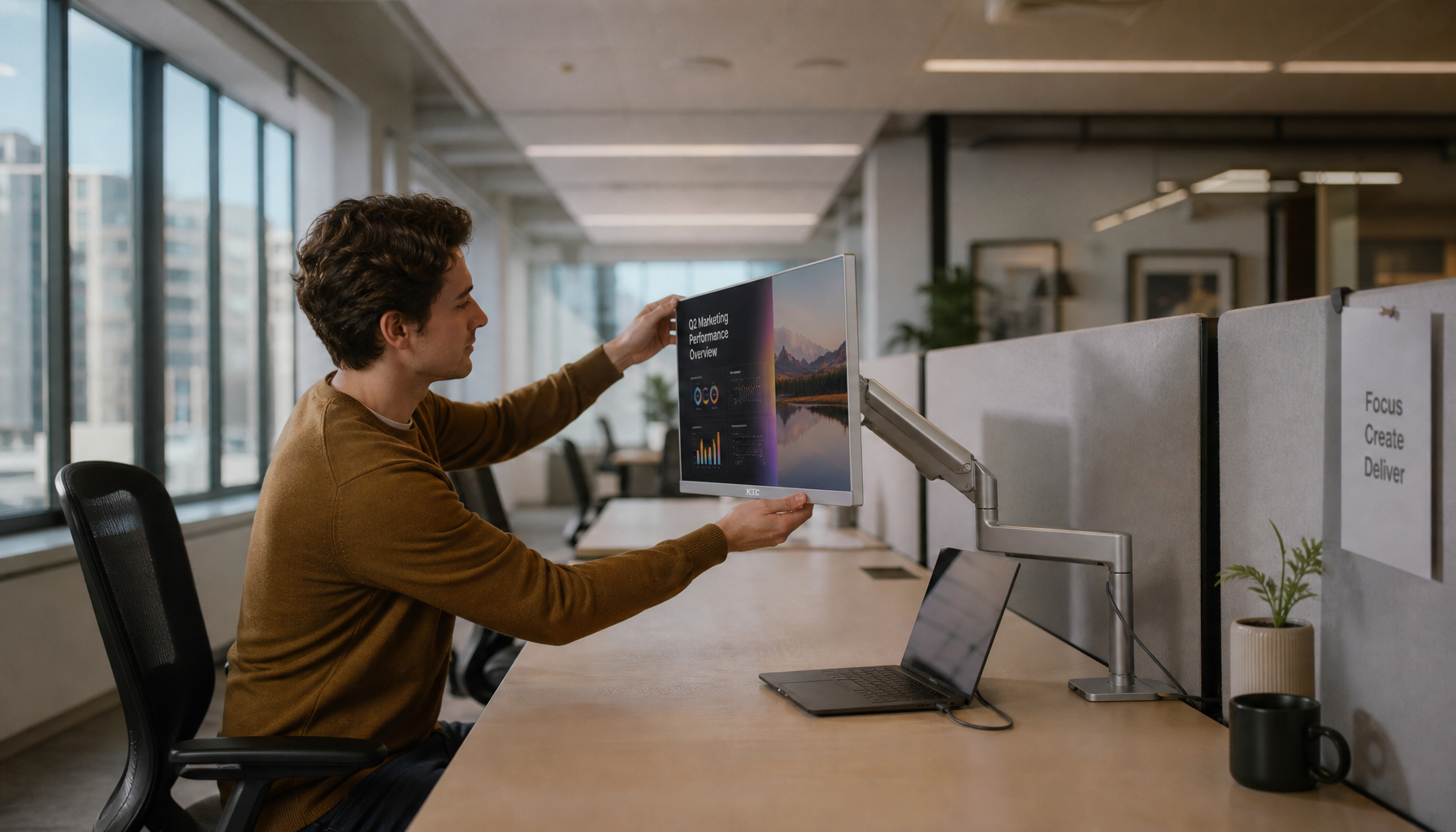
Ergonomic adjustment also matters because a better desk posture makes it easier to keep the screen at a sane distance and to vary how you work. If the stand is fixed and the layout is static, you are more likely to leave the display parked in one setup for too long.
If you are comparing a support-focused OLED option, the KTC OLED 27" 2K 240Hz/0.03ms USB-C Gaming Monitor | G27P6 is best treated as a featured OLED candidate rather than a cure for burn-in. Its anti-burn-in nano-textured glass is a supportive feature, but it still depends on the same good habits discussed above.
When Mini-LED Is the Better Call
Mini-LED becomes more attractive when your concern is not image quality but simplicity. If you want a monitor that can sit behind static UIs without the same burn-in anxiety, that trade-off is easy to understand.
A practical boundary: if you work long hours with spreadsheets, ticket queues, dashboards, or pinned toolbars, the lower-risk choice is usually a Mini-LED or other non-OLED display. The All-Mini-LED Monitors collection is the right place to compare that path.
A Safer Long-Session Checklist
- Confirm how many hours per day static UI will stay visible.
- Check whether you can realistically keep brightness moderate instead of maxed out.
- Make sure the monitor has sleep behavior, pixel refresh, or other care tools you will actually use.
- Decide whether your desk setup supports quick screen-off habits during breaks.
- If your workflow is mostly static, compare OLED against Mini-LED before you buy.
- Treat returns and warranty coverage as part of the decision if you are still unsure.
If you want a lower-maintenance alternative, the KTC Mini LED 27" 4K 160Hz HDR1400 Gaming Monitor | M27P6 is worth checking because it matches the general "static UI is part of my day" use case better than OLED does. For a faster 1440p option, the KTC Mini LED 27" 200Hz 2K HDR1000 Gaming Monitor | M27T6S is another browse-first alternative.
Desktop OLED Burn-In Decision Split
| Desktop pattern | OLED is usually manageable | OLED needs stricter habits | Mini-LED is the safer fit |
|---|---|---|---|
| Mixed use | 3 | 0 | 1 |
| Mixed + static UI | 1 | 3 | 2 |
| Office-heavy static UI | 0 | 2 | 3 |
What to Do Next If You Still Want OLED
If you still want OLED, treat the purchase like a setup decision, not just a spec decision. Start with moderate brightness, enable sleep behavior, and decide in advance how you will handle taskbars, dashboards, and idle time. That keeps OLED burn-in risk lower without making the monitor annoying to use. If your workflow is relentlessly static, Mini-LED remains the calmer buy. Review the long-session checklist above, test text clarity at your normal viewing distance, and confirm return policies before committing.