A commuter-ready portable monitor case must stop flex, corner hits, screen scratches, and accessory pressure while staying slim enough for a backpack. The best daily choice is usually a water-resistant sleeve with a rigid layer, soft screen lining, protected corners, and a separate cable pocket.
Is your portable monitor riding next to a charger brick, keys, and a laptop every morning? A sleeve that fits correctly can prevent the most common daily damage modes: panel pressure, connector scratches, corner cracks, and bag compression. Here is how to choose a case that protects the screen without turning your fast dual-screen setup into bulky travel gear.
Why Portable Monitor Cases Need Different Protection
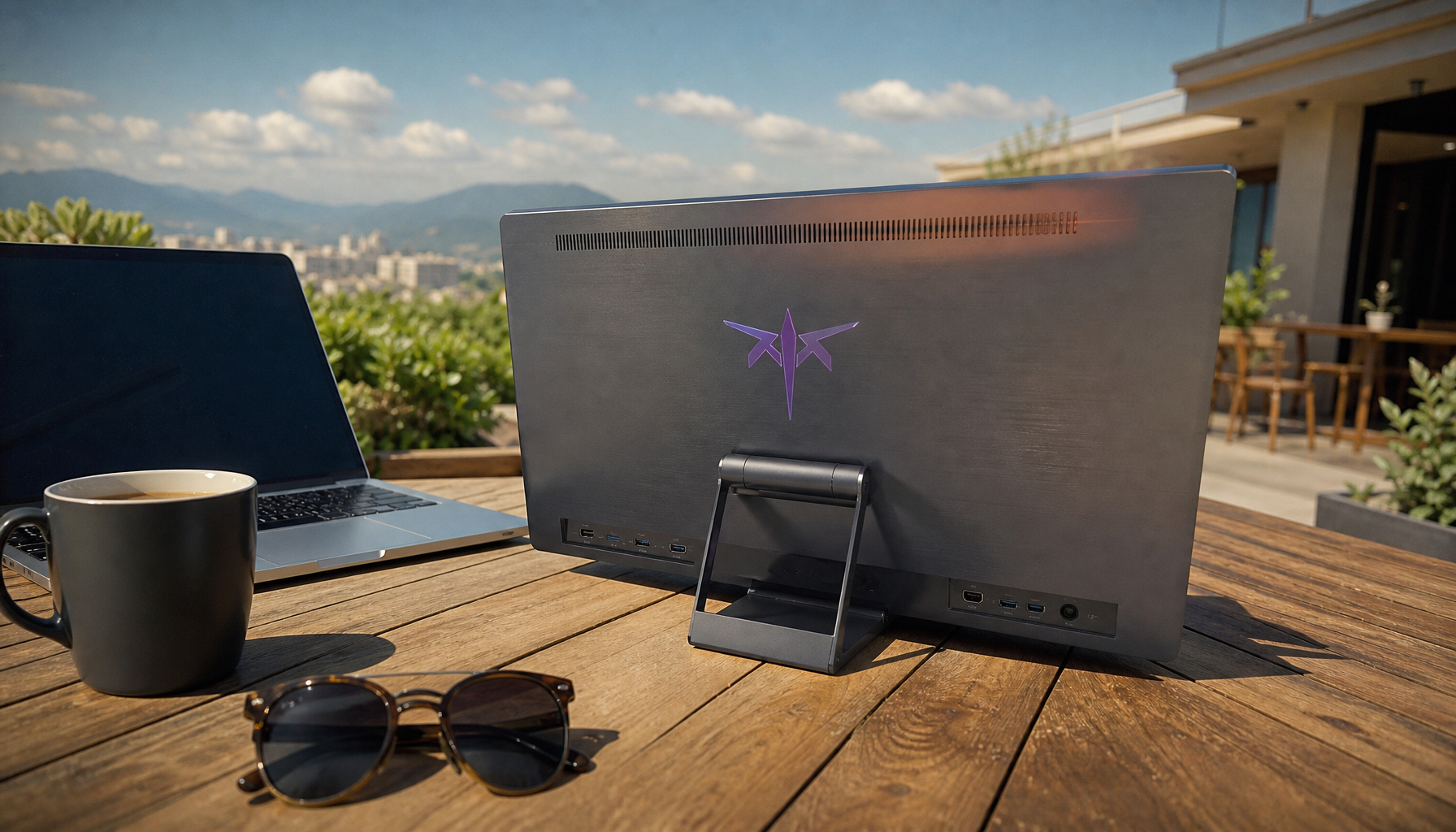
Portable monitors are not just small laptops without keyboards. They are thin glass panels with exposed USB-C or HDMI ports, slim bezels, lightweight frames, and often a magnetic cover or folding stand. Laptop sleeves can work in a pinch, but they are usually shaped around a thicker device body, not a display panel that can flex under pressure.
Most laptop companion portable monitors sit in the 12- to 17-inch range, with many buyers matching the size of their laptop display for a balanced mobile workspace balanced mobile workspace. That size is ideal for a second screen on a train, in a coworking booth, or at a hotel desk, but it also means the monitor is often packed vertically beside a laptop where bag pressure is concentrated across the panel.
A protective case, in this context, is a fitted sleeve or shell that prevents movement, spreads pressure across a flat surface, separates accessories from the screen, and shields the corners. A good commute case is not judged by how rugged it looks on a product page. It is judged by whether the monitor comes out ready for a meeting, a spreadsheet review, or a quick gaming session with no new pressure marks or port damage.
The Core Requirements for Daily Commute Protection
Precise Fit Without Compression
Fit is the first requirement because a case that is too tight can stress the panel, while a loose case lets the monitor slide and tap against hard edges. The practical rule is to measure the full outside dimensions of the monitor, including any hinge bulge, raised port area, magnetic cover thickness, or rubber feet, then choose a case with slight clearance rather than a stretched fit.
For 15.6-inch portable monitors, daily users are often pointed toward sleeves compatible with 15.6- to 16.1-inch displays, but size labels alone are unreliable. The better method is to compare the case’s internal dimensions with your monitor’s actual width, height, and depth. Portable monitor case research highlights fit, impact resistance, water resistance, and accessory integration as the main buying priorities for a 15.6-inch case.
A simple real-world check works well: place the monitor in the sleeve, close it, hold it upright, and gently tilt it left and right. If the monitor slides, you need more internal padding or a better-sized sleeve. If the zipper or flap presses into the screen edge, the case is too tight for daily use.
Rigid Support Against Flex

Padding absorbs bumps, but rigidity prevents bending. That distinction matters because commuters often pack a monitor beside a laptop, notebook, water bottle, charger, or lunch container. A soft sleeve with no stiff panel may protect against scuffs while still allowing the screen to flex when the backpack bends around your body.
For daily commuting, the best balance is usually a soft sleeve with a semi-rigid front or back panel, or a sleeve carried inside a structured backpack laptop compartment. Flight-focused packing advice reaches the same practical conclusion: rigidity matters because it spreads pressure and keeps the panel from bending during movement.
Think of the case as a pressure distributor. If your backpack gets squeezed in an elevator, under a desk, or against a bus seat, the case should spread that force across a flat layer instead of letting one charger corner or cable connector push into the display.
Screen-Safe Interior Materials
The interior should be smooth, soft, and cleanable. Rough woven fabric, exposed seams, or gritty dust trapped inside the sleeve can mark the display over time, especially when the monitor is removed and reinserted several times a day.
A screen-safe packing layer means the display surface is separated from anything hard, abrasive, or raised. In practice, that can be a microfiber-lined sleeve, a thin foam sheet, or a clean microfiber cloth placed against the panel before the monitor goes into the case. This is especially important for glossy portable OLED or touchscreen displays, where fine scratches are easier to notice under bright office lighting.
Review patterns point to a meaningful daily-use problem: overly tight fit, weak accessory pockets, and scratches during removal. The fix is not complicated. Choose a soft interior, avoid cases with exposed zipper teeth near the panel, and clean the sleeve interior every few months so dust does not become abrasive.
Corner and Edge Protection

Portable monitor cracks often start at the corners because the glass and frame have less room to absorb impact there. A daily commute case should have reinforced corners, thicker perimeter padding, or enough structure that the monitor edge never takes the first hit when the bag is set down.
This is where many magnetic covers fall short. They are excellent for quick setup and can double as a stand, but they usually protect the front and back better than the corners. Budget portable monitors often use foldable magnetic covers that serve as stands and screen protectors. For a desk-to-desk workflow, that may be enough. For a subway, rideshare, campus walk, or airport shuttle, the magnetic cover should go inside a real sleeve.
A useful example is the “bag drop” moment at the end of the commute. Even a careful user will eventually set a backpack down faster than intended. If the bottom corner of the monitor is the lowest hard point in the bag, the case needs enough perimeter cushioning to absorb that impact before it reaches the glass.
Water Resistance for Real Commutes
A daily commute case should resist light rain, spilled coffee mist, wet umbrellas, and damp bag floors. It does not need to be a waterproof dive case, but coated polyester or nylon, a water-resistant zipper flap, and tight seams are worthwhile.
For commuters, a practical target is splash resistance rather than full waterproofing. Case guidance recommends coated nylon or polyester and splash resistance for humid or commuter environments. That level of protection is enough for walking from the parking lot in rain or setting a bag under a cafe table, but it does not make the monitor safe inside a soaked backpack.
The best habit is still separation. Keep the monitor case in the laptop compartment, keep bottles in an exterior pocket, and never pack a damp microfiber cloth against the screen.
Accessory Storage Must Not Threaten the Screen
A portable monitor setup is more than a display. It usually includes a USB-C video cable, a charging cable, a compact charger, maybe a mini-HDMI cable, and a cleaning cloth. KTC’s backpack setup guidance frames a commuter kit around repeatable packing, fast setup, reliable power, and organized accessories.
The case requirement is simple: accessories need their own space, and that space must not bulge into the monitor cavity. A front pocket is useful only if it has depth and structure. A charger brick pressed against the panel can create a pressure point, while loose USB-C or HDMI tips can scratch the screen or stress ports.
For a clean daily kit, the accessory pocket should hold a roughly 5 ft USB-C cable, a compact charger, and a microfiber cloth without making the case look swollen. If you carry a power bank, mouse, earbuds, or portable stand, put them in a separate tech pouch rather than forcing the monitor sleeve to do too much.
Soft Sleeve, Hard Shell, or Magnetic Cover?

The right case depends on how rough the commute is. A soft sleeve is the value choice for most office, campus, and coworking routines because it is light, slim, and easy to slide into a backpack. A hard-shell EVA case adds better crush and drop protection, but it takes more room and slows down quick deployment. A magnetic cover is convenient, but it is not a complete commute case.
Case Type |
Best Use |
Strength |
Trade-Off |
Soft padded sleeve |
Daily backpack commute |
Slim, affordable, easy to pack |
Needs rigid bag support for crush protection |
Semi-rigid sleeve |
Train, bus, coworking, frequent setup |
Better pressure spreading with moderate bulk |
Usually costs more than a basic sleeve |
Hard-shell EVA case |
Air travel, shared gear, rough handling |
Stronger drop and crush resistance |
Adds bulk and weight |
Magnetic cover only |
Desk-to-desk carry inside another protected bag |
Fast setup and stand function |
Weak corner and edge protection |
Soft sleeves cover most daily-use scenarios because they balance protection and packability, with mid-tier options often giving the best value. Hard-shell cases make more sense when the monitor is packed with heavier gear, shared between team members, or carried in a less structured bag.
The performance-driven answer is not always “buy the thickest case.” A heavy case can discourage you from carrying the monitor at all. The better requirement is sufficient protection for the actual route: apartment to car to office, backpack plus train, campus walks in rain, or airport-plus-commute days.
Daily Packing Method That Protects the Panel

A strong case still needs disciplined packing. Power the monitor off, disconnect all cables, wipe the panel with a clean microfiber cloth, and make sure no connector is trapped against the screen. Place the monitor vertically beside the laptop with the screen facing inward toward a flat padded surface, not outward toward the backpack wall.
Monitor-packing guidance for moving uses the same damage logic at a larger scale: remove stands, pack cables separately, protect corners, and fill empty space so the monitor cannot shift. For commuting, the scaled-down version is to keep the sleeve tight enough to prevent sliding, then keep hard items away from the screen plane.
The final test takes five seconds. Close the bag, hold it as you would during the commute, and give it a gentle shake. If you hear connector tapping or feel the monitor moving, the setup is not ready. Add a microfiber layer, move the charger, or change the sleeve.
What to Check Before Buying
Compatibility is more than screen size. A 15.6-inch label does not guarantee the sleeve fits your exact portable monitor, especially if the display has a built-in stand, thicker bottom bezel, raised speakers, or an attached cover. Retail listings can be useful starting points, but the decisive spec is always the interior case size compared with your actual monitor body.
Return policy also matters because case fit is tactile. One sleeve policy notes a 14-day return window for direct purchases and excludes certain compatibility issues if the buyer did not verify requirements before purchase. That is a reminder to check dimensions, port layout, and sleeve depth before relying on the case for daily work.
If you are buying from a general retailer, confirm padding thickness, interior lining, pocket depth, zipper placement, and whether the case is made for portable monitors rather than generic laptops. Large-store search pages may show availability, but they often do not provide enough technical detail to judge protection quality.
Practical Specification Target
For most commuters, the ideal protective case is a water-resistant sleeve with about 0.3 to 0.5 inch of closed-cell EVA foam, a smooth microfiber-style lining, reinforced corners, a semi-rigid panel, and a separate pocket that does not press into the display. It should fit the monitor with slight clearance, slide into a backpack laptop compartment, and allow a full setup to come out cleanly in under a minute.
Gamers and creators should be more demanding. A high-refresh gaming portable monitor or color-focused OLED panel is not just another accessory; it is the center of the portable experience. Portable monitor testing often treats image quality, build quality, covers, stands, size, and weight as part of real usability. If the display is expensive enough that color accuracy, refresh rate, or 4K clarity matters, the case should be treated as part of the performance system, not an afterthought.
A commute case succeeds when it disappears from the workflow. The monitor stays protected, the cables stay organized, setup remains fast, and the screen arrives ready to expand your workspace instead of becoming another fragile item to worry about.