









Portable monitors become hard to use when ambient light overwhelms screen brightness or creates mirror-like glare. The fix depends on the right nit range, surface finish, angle, and power plan for the space.
Direct Sunlight Is the Biggest Failure Point
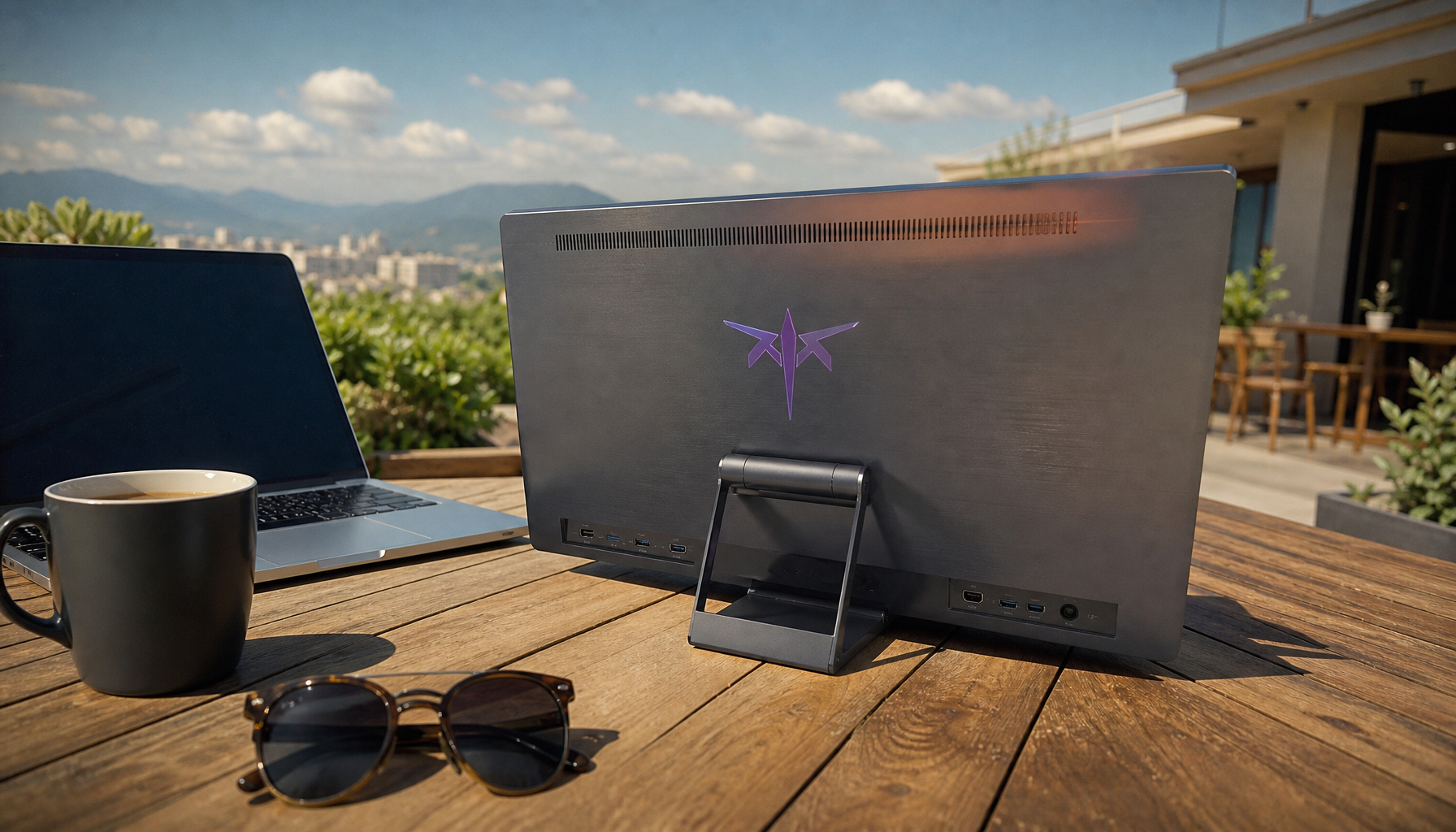
Direct sun is where most portable monitors struggle. A 300-nit screen can look sharp in a hotel room, then washed out on a patio because bright daylight can exceed the output of normal indoor displays, while outdoor visibility often depends on far higher luminance.

For portable work, treat 400 to 500 nits as the practical outdoor minimum, not a luxury spec. If you routinely work near windows, in vehicles, or outside, a 600-nit-class panel gives more headroom before text turns gray and UI borders disappear.
Compensate by moving first, then brightening. Shift into open shade, put the screen perpendicular to the sun, and use a stand that lets you tilt the panel slightly downward. A small angle change can restore contrast faster than maxing out brightness.
Glare Makes Good Screens Feel Bad
A monitor can be bright enough on paper and still feel unusable if reflections sit on top of your content. Glossy panels look punchy in controlled lighting, but windows, lamps, and white walls can turn them into a mirror.

For mobile productivity, matte or anti-glare surfaces are usually the safer buy. Anti-glare coatings scatter reflected light, which helps your eyes lock onto text instead of fighting the room. This matters in cafes, airports, classrooms, coworking spaces, and any desk near glass.
To reduce glare, rotate the screen away from windows and overhead lights before raising brightness. Use dark UI themes only when reflections are not hiding dark areas, increase font weight or scaling before pushing the backlight higher, and add a foldable hood only when angle control is not enough.
Glossy screens can still work well for gaming, movies, and color work when you control the room lighting.
Dim Rooms Can Be Just as Uncomfortable
Portable monitors are not only unusable when they are too dim. In a dark room, an overbright screen becomes fatiguing because your eyes constantly adapt between the panel and the surrounding darkness.

For indoor work, many displays feel comfortable around 250 to 350 nits, while screen brightness should drop further at night. If a white document looks like a flashlight, the monitor is too bright for the room.
Set evening brightness closer to the room, use a warmer color mode, and keep a soft lamp behind or beside the display. Avoid working in total darkness with a bright portable monitor, especially during long writing, coding, or spreadsheet sessions.
High Brightness Has a Battery Cost
Brightness is performance, but it is also power draw. A USB-C portable monitor running at maximum output can shorten laptop battery life, heat up the setup, and make a single-cable workstation less reliable.

Use the lowest brightness that keeps whites clean and text crisp. Since nits measure screen luminance, the number only matters in context: 300 nits may be excellent indoors, weak outdoors, and excessive in a dark bedroom.
For travel, set up practical brightness profiles instead of adjusting from scratch every time. An office profile can sit around 250 to 350 nits with neutral color and native resolution. A bright cafe profile may need 350 to 500 nits, an anti-glare angle, and higher contrast. A night profile should drop closer to 150 to 250 nits, use warmer color, and include a room lamp.
Buy for the Worst Light You Actually Face
If you mostly work indoors, a 300-nit portable monitor with a matte coating is a reliable value pick. If you present near windows, game in bright rooms, or work outdoors, prioritize 500-plus nits, anti-glare glass, a rigid adjustable stand, and USB-C power pass-through.
Do not chase peak brightness alone. The most usable portable screen is the one that balances brightness, contrast, reflection control, viewing angle, and battery demand in the places you actually work.


,%20anti-glare%20finish,%20and%20viewing%20angle%20ensure%20clarity%20indoors%20and%20out.
)