Portable monitor touch fails when video, USB data, power, operating-system support, or touch mapping is missing. The fix is to isolate each part of the signal chain instead of assuming one cable or port handles everything.
Tap works perfectly on one laptop, then the same portable screen becomes display-only on another laptop, phone, console, or docked setup. In real troubleshooting, the fastest win is separating video, power, and touch data instead of treating USB-C or HDMI as one universal answer.
The Core Issue: Video Is Not the Same as Touch
A portable touch monitor is really two devices in one chassis. It is a display, and it is also a USB human-input device. A cable can make the image appear while still failing to carry the touch signal back to the computer.
USB-C is the cleanest setup when everything supports it, because a full-featured USB-C connection can carry video, data, and power through one cable. A full-featured USB-C connection depends on USB-C video output, commonly DisplayPort Alt Mode, plus data and adequate power. If one of those pieces is missing, you may still get a bright 1080p picture with no touch response at all.
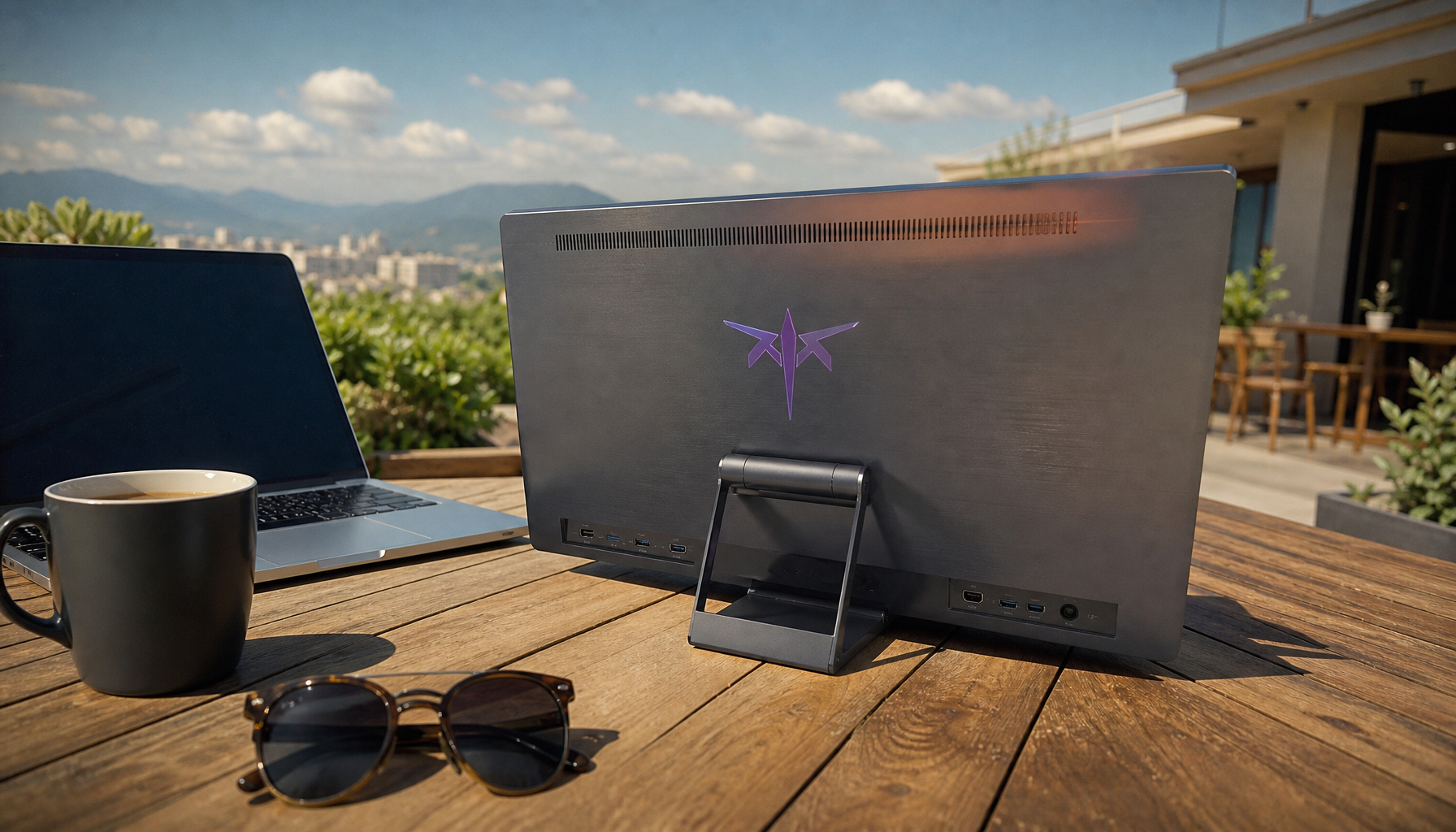
HDMI is simpler to misunderstand. HDMI carries video and audio, not touch input. When you connect a portable touchscreen by HDMI, you normally need a second USB cable from the monitor to the host device so the touch controller can report taps, swipes, and gestures. This is why a monitor may work by touch on a USB-C laptop but lose touch on a desktop connected by HDMI unless USB data is also connected.

Why One Laptop Works and Another Does Not
The most common difference is the USB-C port itself. Two laptops can have identical-looking USB-C ports while only one supports video output, power delivery, and USB data at the same time. Some USB-C ports are charging-only or data-only, while others support DisplayPort Alt Mode and richer connection paths.

For productivity buyers, spec sheets matter more than connector shape. A USB-C port supports video and power only when the laptop maker enabled those functions. A cheap charging cable can also be the bottleneck, because many inexpensive USB-C cables are built for charging and basic data, not video plus touch.
A practical test is to connect the monitor to the laptop that works, using the same cable and port order. Then move only one variable at a time: use the second laptop with the same cable, try a known full-featured USB-C cable, and add external monitor power. If touch returns after changing the cable, the original cable was not carrying the needed data path. If touch returns after adding power, the laptop port was likely under-supplying the monitor.
Operating System Support Changes the Result
Some desktop systems are more predictable with external touch monitors because they broadly support HID-compliant touch devices. Even then, the setup is not always automatic. On multi-monitor desks, touch can register on the wrong screen if the operating system has not mapped the touch controller to the correct display.

The fix is not just updating a driver. First, set the displays to Extend mode, then open the system’s touch calibration or tablet settings and assign touch input to the portable monitor. Multi-display alignment also matters: a display arrangement should match the physical layout so cursor movement and touch mapping feel continuous. If the portable touchscreen sits below your main monitor but the operating system thinks it sits to the right, touch can feel broken even when the hardware is fine.
Some laptop operating systems can display to a portable monitor but may require manufacturer software for touch. Multi-touch behavior also varies by monitor model and system version. Some monitor makers explicitly limit or qualify support, so a laptop that produces a perfect image may still treat the screen as non-touch unless the right driver exists.
Phones and consoles add another layer. Many flagship phones support video output over USB-C, but budget phones often do not. USB-C phones can output video more easily than older adapter-based models, while adapter setups may need separate monitor power. Game consoles are usually display-only for portable touch monitors; the console may show the game over HDMI, but it will not use the monitor as a touch controller.
Power Can Make Touch Fail Even When the Picture Stays On
Portable monitors often run close to the edge of what a laptop or phone port can provide. Touch adds another active subsystem, and brightness, refresh rate, and charging behavior all increase power demand. A monitor can have enough power to show an image but not enough stability for touch input to enumerate correctly.
This can look like touch working when the laptop is plugged in but failing on battery, or working at low brightness but dropping at high brightness. It can also appear after waking from sleep, when the system renegotiates the display and USB device at the same time.
Use external power as a clean diagnostic step. Keep the video connection unchanged, then power the monitor from a proper USB-C Power Delivery charger or the manufacturer’s recommended adapter. Portable monitor buying advice often favors USB-C with Power Delivery because one cable can simplify video and charging, but troubleshooting is easier when power is separated temporarily.

The Cable Setup That Usually Works
For a modern laptop with the right port, the best setup is one full-featured USB-C cable from laptop to monitor. That cable should support video, data, and enough power for the display. If the monitor has two USB-C ports, check the markings carefully, because one may be full-function while the other is power-only.
For HDMI devices, the reliable setup is HDMI or Mini HDMI for video, USB-A to USB-C for touch data, and separate USB-C power if the host cannot supply enough. A Mini HDMI connection remains useful for older laptops, consoles, and cameras, but it usually needs that extra USB path for touch.

Here is the decision rule: if the monitor displays but touch does nothing, assume the video path is working and the USB touch-data path is missing, blocked, unpowered, or unsupported.
Multi-Monitor Setups: Touch May Be Working on the Wrong Screen
A frustrating version of this problem is when touch technically works, but taps control the laptop screen or main desktop monitor instead of the portable display. That is not a cable failure. It is a mapping problem.
This can happen after changing ports, adding a dock, rearranging displays, or switching from Duplicate to Extend mode. Set the portable monitor as an extended display, arrange it to match your desk, then run touch setup so the system asks you to tap the touch screen. If the touch monitor is mounted under a main display, as many compact workstation users prefer, the operating system still needs to know that physical relationship.
Resolution and scaling matter, too. A 15.6-inch 1080p portable screen beside a 4K laptop panel may need different scaling so touch targets feel consistent. Dual-monitor guidance recommends using each display’s native resolution and then adjusting scaling for usable window size, which applies directly to touch accuracy on compact screens.
Pros and Cons of Portable Touch Displays
The upside is real. A portable touchscreen can turn a travel laptop into a dual-screen workstation, speed up document review, make creative controls more direct, and improve presentation workflows. Models around 15.6 inches are often the sweet spot because they provide meaningful workspace without becoming awkward in a backpack, and portable monitors range widely enough to fit travel, desk, and gaming roles.
The tradeoff is compatibility discipline. Touch is less universal than display output. Recent desktop systems are usually the most straightforward, phones depend on USB-C video output and operating-system support, some laptops may need drivers, and consoles generally should be treated as non-touch hosts. Higher-end display specs such as 4K, OLED, high refresh rate, and wide color coverage can be excellent for immersion, but they also raise power and bandwidth demands.
When to Blame the Monitor
After you test a known full-featured USB-C cable, an HDMI-plus-USB touch path, external power, a touch setup pass, and a second host device, repeated failure points back to the monitor. The issue may be a damaged USB-C port, failed touch digitizer, firmware problem, or defective touch controller.
Before service, clean the screen, inspect cable fit, try both monitor USB-C ports if available, and check whether the on-screen display has a touch toggle. Some portable displays also let you disable touch at the monitor level or through the connected operating system, which can make a healthy touchscreen appear dead.
FAQ
Why does my portable monitor show video over HDMI but not support touch?
HDMI does not carry touch input. You need HDMI for video plus a USB cable for touch data, and the monitor still needs enough power.
Why does touch work on one computer but not another?
One computer may support the needed USB touch path while another only sends video, lacks the right driver, under-supplies power, or maps touch to the wrong display.
Can my phone use the portable monitor’s touchscreen?
Sometimes, but it depends on the phone, monitor, cable, and operating system. Many flagship phones support USB-C video output, while other phones may mirror video only or need adapters. Touch support is less guaranteed than display output.
Is USB-C always enough for touch?
No. USB-C is only the connector shape. The port and cable must support video, data, and enough power for the monitor’s touch controller to work.
Final Checks
Treat touch failure as a signal-chain problem, not a mystery. Confirm the host supports video and USB input, use a full-featured cable, add stable power, and map touch to the right display. When those pieces line up, a portable touchscreen stops feeling like an accessory and starts behaving like a serious second control surface.