The fastest way to reduce eye strain is to make your laptop and portable monitor feel like one visual system: matched brightness, similar text size, aligned height, controlled glare, and scheduled focus breaks.
Do your eyes feel fine on the laptop, then tired or gritty the moment you drag work onto the portable screen? In display setup testing, the most reliable comfort gains usually come from matching screen brightness and viewing distance before buying blue-light accessories. This workflow helps you move between screens without constant refocusing, squinting, or neck tension.
Why Switching Screens Feels Hard on Your Eyes
Frequent laptop-to-portable-monitor switching creates several small visual disruptions at once. Your eyes must refocus at slightly different distances, adapt to different brightness levels, track text that may render at different sizes, and compensate for different screen angles. That is why a technically sharp portable monitor can still feel tiring after an hour of spreadsheet work, code review, or competitive match analysis.
Digital eye strain is a cluster of temporary symptoms such as blurred vision, headaches, dry eyes, burning, and fatigue that worsen during screen use. The American Academy of Ophthalmology notes that digital screens do not permanently damage the eyes, but they can cause uncomfortable strain, especially when brightness, distance, glare, and blinking habits are poor.
For portable screens, the biggest trap is treating the second display as an accessory instead of a full monitor. If it sits lower, closer, brighter, or more reflective than your laptop display, your eyes and neck pay the price every time you shift focus.
Match Screen Distance Before Adjusting Anything Else
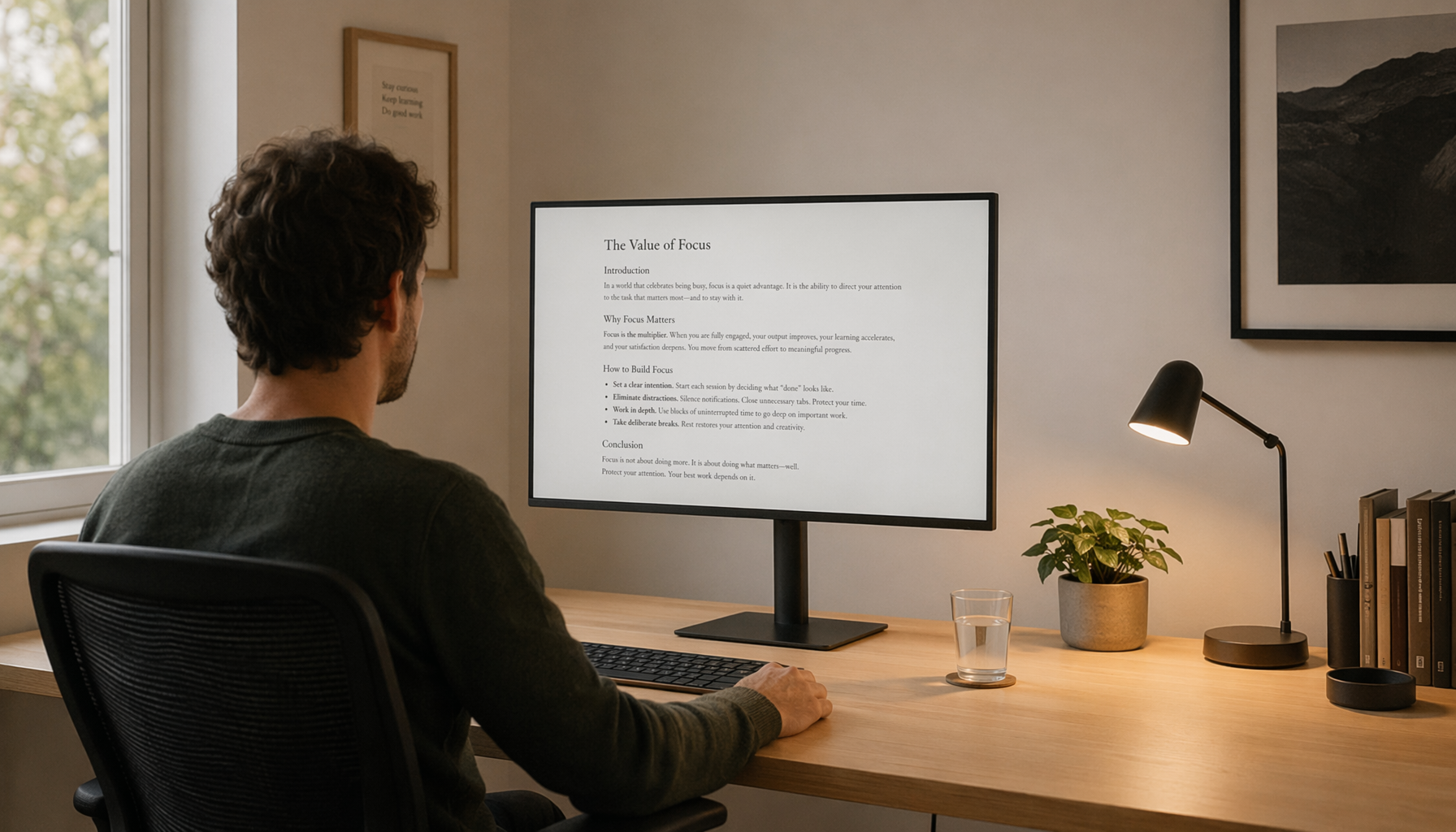
A portable monitor should sit close to the same distance as your laptop screen, ideally around arm’s length for desk work. The recommended computer position is about 25 inches from the face, with your gaze slightly downward. Harvard Health gives similar practical guidance, recommending roughly 2 ft from the screen with the monitor center slightly below eye level.
In practical terms, if your laptop is 22 inches away but your portable monitor is 13 inches away because it is propped beside the keyboard, your eyes are doing extra focusing work every time you move a document or video call across displays. A better setup is to push both screens back, use a laptop stand, and bring the keyboard and mouse forward.
The Portable Monitor Height Rule
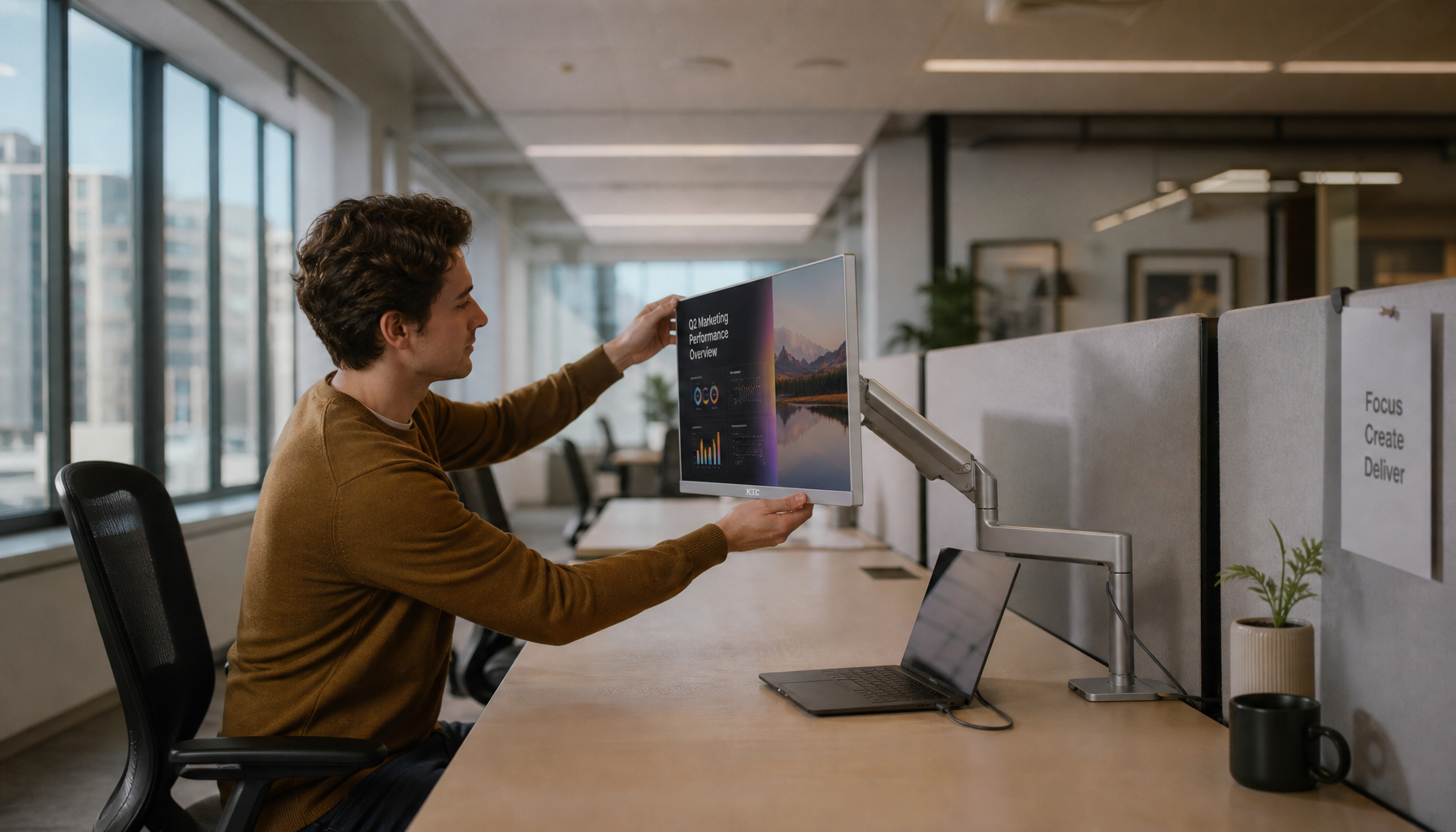
Keep the top edge of both screens at roughly the same visual height, with each screen’s center slightly below your straight-ahead gaze. The goal is not showroom-perfect alignment; it is reducing repeated up-and-down eye and head movement.

For a 14-inch laptop beside a 16-inch portable monitor, the portable screen often needs a height-adjustable stand, not just a folding cover. If the laptop is too low, raise it and use an external keyboard. If the portable monitor is too low, use a compact riser. The comfort benchmark is simple: you should be able to move your eyes between screens without lifting your chin.
Match Brightness Like a Display Calibrator
Brightness mismatch is one of the most common causes of strain in dual-screen portable setups. If one screen looks like a lamp and the other looks dull gray, your pupils and visual system keep adapting as you switch. The screen brightness should match the surrounding light, and Harvard also recommends reducing glare with softer lighting and matte filters when needed.
A useful field test is the white-paper check. Put a sheet of white paper on your desk under the same lighting, open a blank white document on both screens, and adjust each display until the white areas feel similar to the paper. They should not glow aggressively, and they should not look muddy.

For portable monitors powered by USB-C, brightness can change when the laptop switches battery profiles. If your eyes feel worse after unplugging, check whether the laptop dimmed while the portable monitor stayed bright, or the reverse. Matching them again usually helps more than turning both screens down blindly.
Fix Text Size and Scaling So Your Eyes Stop Hunting
Portable monitors often have different pixel density than laptops. A 15.6-inch 1080p portable screen can look comfortable at 100% scaling, while a 14-inch high-resolution laptop may need 125% or 150% scaling. If text changes size when a window crosses screens, your eyes must recalibrate constantly.
Washington University Ophthalmology recommends adjusting brightness, contrast, and font size for comfortable reading. In practice, the best setting is the one that lets you read body text at your normal sitting distance without leaning in. For office work, text that feels slightly larger than “just readable” is usually more productive over a full day.
Setting |
Comfort Target |
Common Mistake |
Laptop scaling |
Text readable without leaning forward |
Keeping 100% scaling on a dense display |
Portable monitor scaling |
Similar apparent text size to laptop |
Matching percentages instead of visual size |
Contrast |
Crisp text without harsh edges |
Maxing contrast because it looks “sharp” |
Browser zoom |
Comfortable for long reading |
Using tiny default web text all day |
Control Glare Before Relying on Blue-Light Filters
Blue-light tools can be useful at night, but glare is often the more immediate problem. Reflections from windows, ceiling lights, glossy bezels, or a bright wall behind the screen force your eyes to work harder. Screen glare from ambient lighting is a known strain contributor, especially when the display is used at an uncomfortable angle.
Place your laptop and portable monitor perpendicular to windows when possible, rather than directly facing them or sitting with windows behind the screens. If you work in a hotel, coworking space, or bright office, rotate the portable screen a few degrees until reflections disappear. A matte portable display or matte screen protector can be worth it for frequent travel, especially if you use productivity apps with large white backgrounds.

Blue-light glasses are less decisive than marketing suggests. CU Anschutz notes that evidence for blue-light filtering glasses is unclear for computer-related eye strain, though some users report subjective relief. For most people, a warmer screen tone in the evening is reasonable, but it should come after distance, brightness, glare, and text size are fixed.
Use Breaks That Match Real Workflows
The 20-20-20 rule remains useful because it interrupts near-focus lock. Every 20 minutes, look at something at least 20 ft away for 20 seconds. CU Anschutz recommends this habit for digital eye strain, and the 20-20-20 rule is especially relevant when you are using two close displays.
For high-focus work, make the break visual, not just physical. Looking from your laptop to your portable monitor does not count. Looking from your spreadsheet to your cell phone does not count either. Look across the room, out a window, or down a hallway, then blink fully several times before returning.
Gamers and power users need longer resets too. During a two-hour work sprint or gaming session, add a real off-screen pause. Stand, stretch, refill water, and let your eyes focus at distance. Extended gaming adds rapid visual tracking and intense focus, so breaks matter even more during high-refresh, high-contrast sessions.
Blink and Hydrate Like Performance Settings
When you concentrate on screens, you blink less. The normal blink rate is about 15 times per minute, while screen use may drop it to five to seven times per minute. That reduced blinking destabilizes the tear film, which can create dryness, burning, gritty sensation, and fluctuating clarity.
This matters when switching screens because dry eyes make refocusing feel slower and less precise. A portable monitor with higher brightness or stronger reflections can make the problem feel worse, but the underlying issue may be tear-film fatigue.
Try a simple reset: every time you move a window to the second screen, blink slowly twice before reading. It sounds minor, but it ties the habit to a repeated action. If dryness persists, artificial tears may help, and persistent redness, pain, light sensitivity, or blurry vision should be evaluated by an eye care professional.
Choose Portable Monitor Features That Actually Help
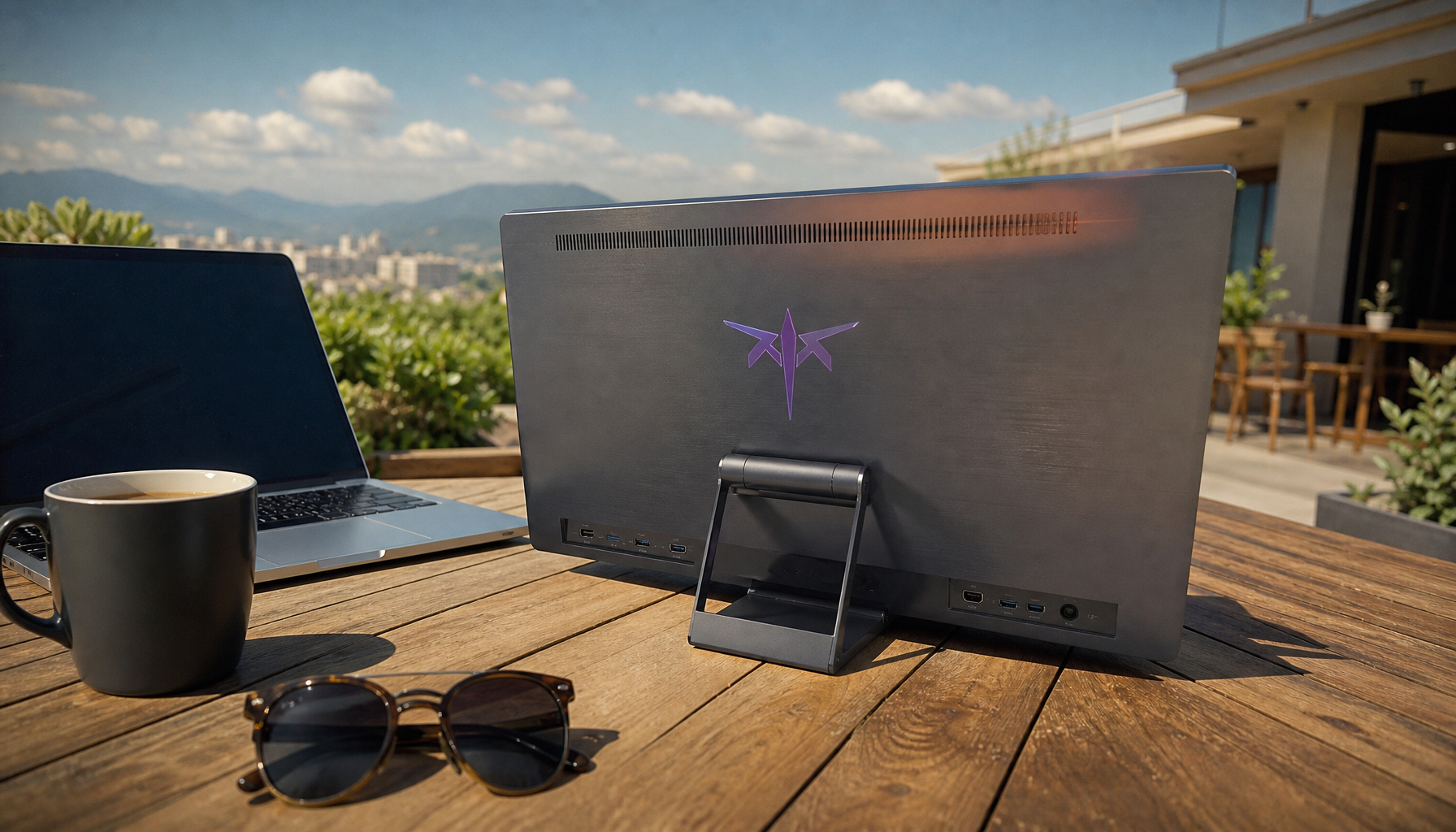
A better portable monitor is not automatically the brightest or highest-refresh model. For productivity, the most eye-friendly portable display is adjustable, matte or low-glare, bright enough for the room without maxing out, and sharp enough that you can use comfortable scaling.

For mixed work and gaming, higher refresh can improve motion comfort, but it is not a cure for poor ergonomics. A 120 Hz or 144 Hz portable monitor may feel smoother than 60 Hz when scrolling, tracking timelines, or playing fast games, yet glare and tiny text will still cause fatigue. For office-heavy use, prioritize stand quality, brightness control, anti-glare coating, USB-C power stability, and readable pixel density.
Portable Monitor Pros and Cons for Eye Comfort
Factor |
Pro |
Con |
Larger workspace |
Less window stacking and less constant zooming |
More eye travel if screens are poorly aligned |
Portable size |
Easy to position in small spaces |
Often sits too low without a real stand |
High brightness |
Better visibility in bright rooms |
Can feel harsh in dim rooms |
Matte coating |
Reduces reflections during travel |
May slightly soften perceived contrast |
Warm color mode |
More comfortable at night for some users |
Can reduce color accuracy for design work |
A Simple Setup Routine for Laptop and Portable Monitor Users
Start by placing both screens at the same distance. Then align the top edges as closely as practical and angle the portable display inward so it faces you directly. Next, match brightness using the white-paper test, set scaling so text appears similar on both screens, and remove glare before changing color temperature.
After that, tune by task. For writing, email, coding, and spreadsheets, use larger text and moderate contrast. For design or color-sensitive work, keep color temperature neutral and control room light instead of making the display overly warm. For evening use, warmer tones and dark mode can help comfort, but dark mode may be worse in a bright room because reflections and bright surroundings reduce readability.
The best setup feels boring in the best way: your eyes move between screens without noticing a brightness jump, text-size shock, or posture change.
When Eye Strain Means You Need More Than Settings
If you still get headaches, burning, blurred vision, or trouble focusing after fixing your setup, do not keep tuning monitor settings endlessly. Digital eye strain can overlap with dry eye, outdated prescriptions, focusing issues, or eye-alignment problems. CU Anschutz notes that clinicians often ask about device type, screen placement, viewing distance, and computer-specific glasses because screen discomfort is sometimes a vision-correction issue, not a monitor issue.
Computer glasses are different from generic blue-light glasses. The AAO describes computer eyeglasses as prescription lenses designed for intermediate screen distance, often around 20 to 26 inches. If you use progressive lenses and tilt your head to find the right zone, a dedicated screen prescription can be a major comfort upgrade.
Final Calibration
Eye comfort across a laptop and portable monitor is a performance setup problem: align the screens, match the light, scale the text, remove glare, and build in focus breaks. Once both displays behave like one workspace, switching screens feels faster, calmer, and more immersive without asking your eyes to fight the hardware.