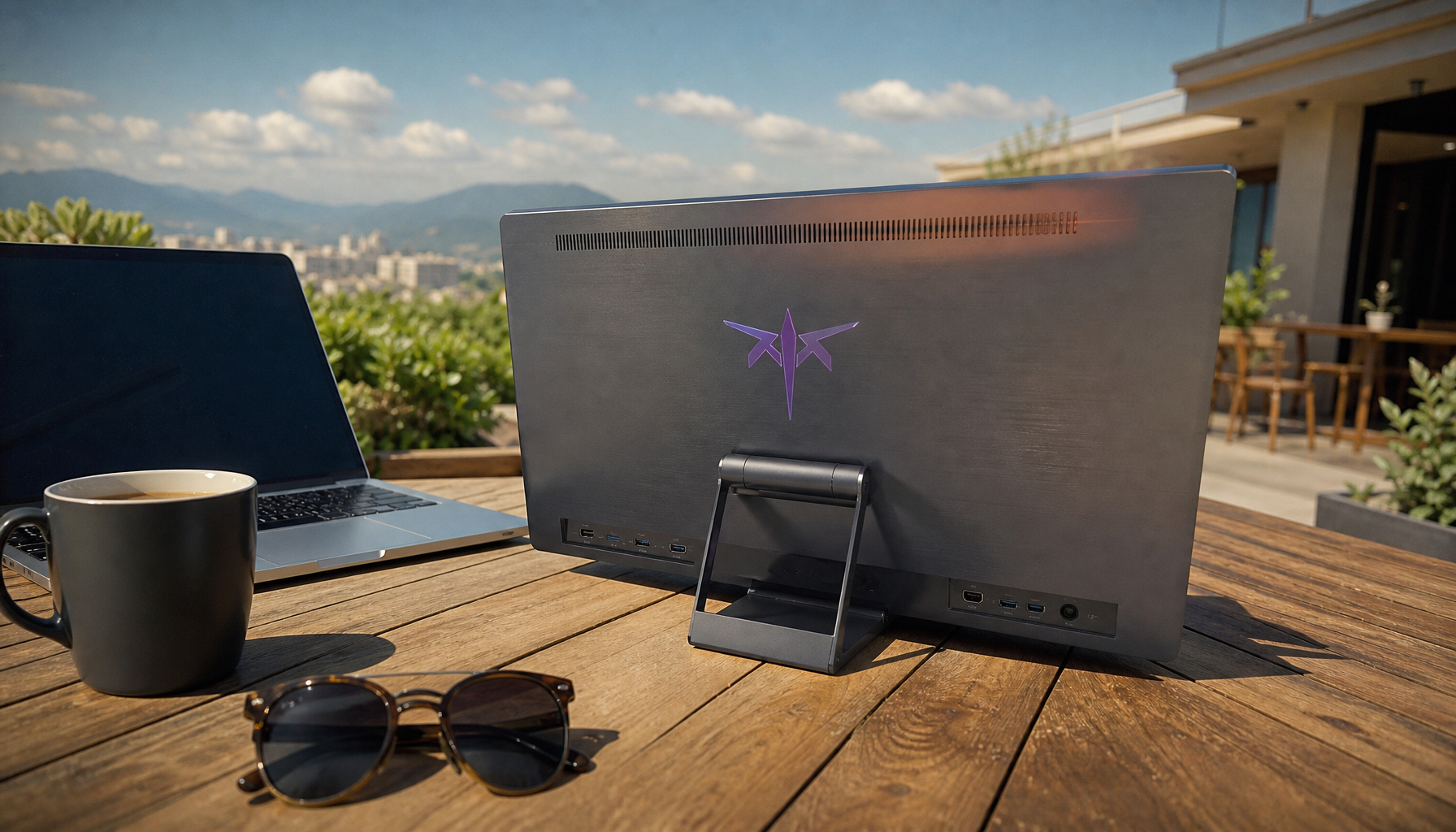
UHBR20 connectivity guide for high refresh monitors starts with checking the whole signal path, not just the monitor box. If you want a high-refresh uhbr20 monitor setup without surprises, verify the GPU output, monitor input, and cable label together before you buy.

What UHBR20 Means for Buyers
UHBR20 is the DisplayPort 2.1 tier that matters when you are trying to move a lot of display data cleanly. In buyer terms, it is useful when your goal is a very capable signal path, not a blanket promise that every mode on every monitor will work the same way.
The practical question is simple: does your GPU output, monitor input, and cable all support the mode you actually want to run? That is why UHBR20 connectivity guide searches for high refresh monitors should be treated as compatibility checks first, spec reading second.
UHBR20 can reduce pressure on display stream compression in extreme high-bandwidth setups, but that does not mean compression disappears from every scenario. For many shoppers, the safer move is to treat compression, handshake, blank-screen behavior, and fallback resolution as things to verify, not things to assume. TFTCentral's DisplayPort 2.1 overview is a useful background explainer if you want the standards context.
A good decision sentence here is: if your target mode is high-refresh 4K and you want the cleanest possible connection path, UHBR20 is worth checking early; if your display target is more modest, a different connection path may already be enough.
How UHBR20, GPU, and Monitor Work Together
The first check is the chain, not the logo. A display can have a modern input, a GPU can have a modern output, and the setup can still fail if the exact port path or mode does not line up.
For buyers, the safest rule is to verify the exact GPU port, the exact monitor input, and the cable standard as one set. Matching family names are not the same thing as guaranteed mode support. If a card family supports a feature, that still does not mean every port behaves the same way in every setup.
DisplayPort 2.1 and UHBR20 Labels
A DisplayPort 2.1 label helps, but it does not answer everything. Do not assume every DP 2.1 label means the device or cable is UHBR20-capable. Read the exact wording on the product page or spec sheet, then check whether the seller explains the supported mode clearly.
GPU Output Checks Before Purchase
This is where the official pages matter. NVIDIA says the GeForce RTX 50 series officially supports DisplayPort 2.1b with UHBR20, which gives buyers a clean anchor for a current high-end path. AMD's Radeon RX 7000 series supports DisplayPort 2.1 too, but buyers should still verify the exact model and output before assuming UHBR20 behavior.
That distinction matters because card name and port name are not always the same thing in real-world shopping. If you are planning a high-refresh 4K setup, check the specific output you will actually use, not only the GPU family badge. If you want a deeper pairing breakdown, the related GPU pairing check keeps the focus on the same decision.
Monitor Input Labels and Mode Support
The monitor side matters just as much. A monitor can advertise a resolution or refresh rate without making every connection path equally capable. Confirm the input spec, then confirm that the mode you want is listed as native, supported, or available on the chosen port.
This is the place to slow down before checkout. A buyer who only sees "4K" or "high refresh" on the box can miss the real question, which is whether that mode is supported on the input path they plan to use. If the monitor has more than one connection option, compare them port by port.
Where HDMI 2.1 Fits In
HDMI 2.1 can be enough for some high-refresh setups, but it is not interchangeable with UHBR20 in every case. The better question is which exact mode your monitor and GPU support over each port.
In some setups, HDMI 2.1 is the simpler path. In others, DisplayPort 2.1 UHBR20 gives you more headroom. The difference matters most when you are pushing demanding 4K or other bandwidth-heavy modes, not when you are using a monitor class that already runs comfortably within less demanding limits.
How to Choose a UHBR20 Cable
A cable choice should solve a path problem, not become one. The best cable is usually the one that clearly matches your port standard, fits your desk layout, and comes from a listing that tells you exactly what it is.
- Look for explicit standard wording, not vague style language. A listing that clearly names the cable type is easier to trust than one that only says "high performance."
- Match the length to the desk, not to a guess about signal strength. Longer is not automatically better.
- Prefer a product page that shows interface, length, and support details plainly. That makes it easier to compare against your GPU and monitor ports.
- If the listing is unclear, treat that as a warning sign. Buyers chasing stable high-refresh setups usually do better with transparent documentation than with marketing-heavy shorthand.
- If you want a store-side place to compare cable families, the Display Signal Cables page is useful for browsing the available HDMI, DP, and USB-C options, but it should be checked against your required spec before buying.
VESA's DP80LL active-cable update is also a useful reminder that cable runs can matter more than shoppers expect. The new active cable specification was introduced to extend practical UHBR20 cable length, which is helpful if your desk layout is awkward or the tower sits farther away.
A strong decision sentence here is: if your cable listing is specific, your desk run is reasonable, and the port path is correct, you are in much better shape than if you just bought the longest cable you could find.

Which Monitor Types Make Sense for This Setup
This table helps shoppers match monitor class to a UHBR20-style buying decision. It is a connection-planning aid, not a claim that every monitor in a class supports UHBR20. The main takeaway is that the highest-bandwidth setups matter most when your target mode and full signal path actually need that headroom.
| Monitor class | UHBR20 fit | Why it matters |
|---|---|---|
| 4K high refresh OLED | Strongest fit | Most likely to justify careful bandwidth checks |
| 4K IPS / Mini LED | Good fit | Often works well, but port and mode support still matter |
| 3440×1440 ultrawide | Conditional fit | May need less headroom depending on refresh target |
| 1440p high refresh | Usually optional | Often works fine with a simpler connection path |
| Office / productivity 60–120Hz | Low priority | UHBR20 is usually not the main decision point |
For most buyers, 4K high refresh is the class most likely to justify UHBR20-level attention. 4K IPS or Mini-LED can still be a strong fit, especially if the monitor uses HDMI 2.1 or DSC well. Ultrawide and 1440p high-refresh setups often need less connection headroom, so UHBR20 becomes more of a check-box than a requirement.
If you are comparing KTC models, the 4K 160Hz dual-mode option and the 32-inch 4K 165Hz model show why this matters. They are both high-refresh choices, but neither should be treated as proof that every buyer needs the same cable or GPU path.
Setup Checks Before You Buy or Unbox
Start with a short checklist, not a long troubleshooting spiral. Most first-boot problems come from a port mismatch, a cable question, a settings issue, or a driver problem, and those are easier to isolate when you check them in order.
- Confirm the monitor input you plan to use. Do not assume every port on the display behaves the same way.
- Confirm the GPU output you will actually plug in. Official support on a product family is helpful, but the exact port still matters.
- Check the cable label and length before connecting. If the listing is vague, pause and verify.
- Set the intended refresh rate in the OS or GPU control panel after the display is detected.
- If you get blank screen, flicker, or fallback resolution, re-test the cable and port path before blaming the monitor.
That last step is the one many buyers skip. If your setup does not land on the target mode immediately, the fastest fix is usually to work backward through port, cable, and settings instead of assuming the panel is defective. If you want a companion walkthrough, this refresh-rate test guide is a practical next stop.
For shoppers comparing product pages, the KTC cable page also gives a neutral example of how to inspect cable families, warranty info, and interface details before checkout. The goal is not to buy the most expensive cable. The goal is to buy the one you can actually verify against your setup.
Final Buying Checklist
Choose UHBR20 when your target setup really needs it, not because the label sounds newer. If your GPU output, monitor input, and cable all line up, UHBR20 can be the cleanest path for a demanding high-refresh display. If they do not, pick the simpler standard that still supports your actual mode.
Before you buy, ask three questions: does the GPU port support the mode, does the monitor input list it, and does the cable listing say enough to trust it? If any answer is unclear, slow down and verify the spec sheet or support docs first.
FAQs
How Do I Know If My GPU Supports UHBR20?
Check the exact GPU spec page and the exact output you plan to use. Do not assume the entire card family behaves the same way. NVIDIA's RTX 50 series has a clear official UHBR20 anchor, while AMD's RX 7000 series still deserves a model-by-model check.
What Should I Look for on a UHBR20 Cable Label?
Look for explicit standard wording, connector type, and length. A clear label is better than a vague marketing name. If the listing does not say enough to identify the cable path, treat it as a check-before-buying situation.
Can HDMI 2.1 Replace DisplayPort 2.1 for High-Refresh Monitors?
Sometimes it can, but only if the exact monitor mode and GPU output support it. HDMI 2.1 is not a universal substitute for UHBR20. Compare the supported mode, not just the logo.
Why Does My Monitor Fall Back to a Lower Refresh Rate?
Common causes include a port mismatch, an uncertain cable, incorrect settings, or a driver issue. Start with the active input, then the cable, then the OS refresh setting. That order usually tells you where the mismatch lives.
Can I Use a Shorter Cable to Improve Stability?
A shorter cable can make desk routing simpler and reduce strain, but length is not the only factor. The more important check is whether the cable is clearly labeled for the path you need and matches your GPU and monitor ports.
When Should I Choose a Different Standard Instead?
If your target refresh mode is already covered by a simpler, well-supported path, you do not need to overbuy. Choose the standard that cleanly supports the mode you plan to use, then verify it in the spec sheet before checkout.
Wrap-Up
Choose the path that matches the mode you actually plan to run. A careful uhbr20 monitor setup is less about chasing the newest label and more about confirming the GPU port, monitor input, and cable before you click buy.