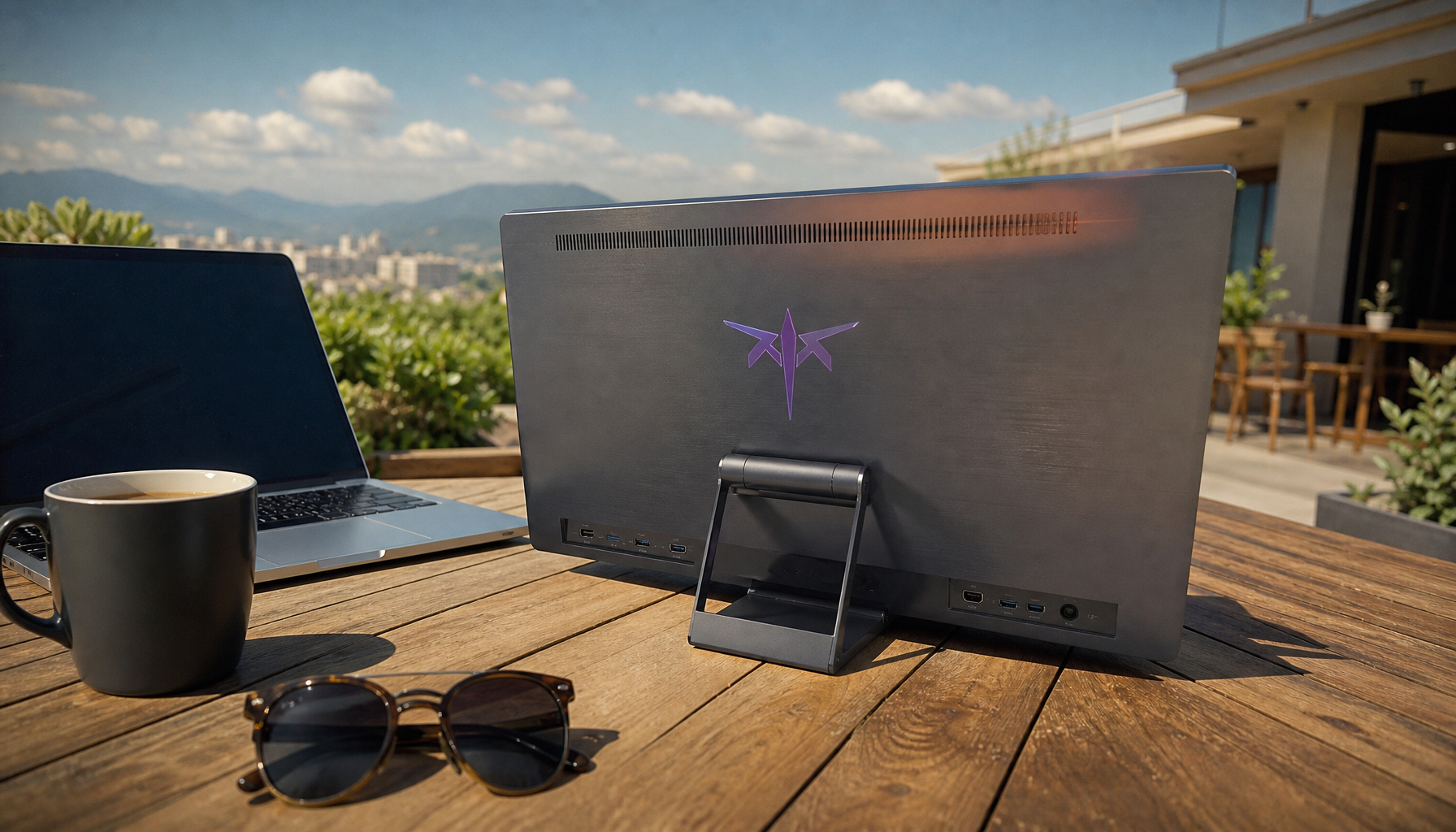
A USB-C monitor usually fails on one laptop because its port, cable, dock, power delivery, or display settings do not support the same video path as the working laptop.
Does your monitor light up instantly on your work laptop, then show “No Signal” on your personal laptop with the same cable? A simple port-and-cable check can often distinguish a hardware failure from a compatibility mismatch in minutes. Here is how to identify the weak link and build a reliable display setup for gaming, office work, or portable screen use.
The Short Answer: USB-C Is a Shape, Not a Promise
The biggest trap is assuming every USB-C port does the same job. A laptop can have a USB-C port that charges, transfers files, and runs a keyboard yet still cannot send video to a monitor. For display output, the port usually needs DisplayPort Alternate Mode, USB4, or Thunderbolt support.
A USB-C monitor depends on the entire connection chain. The laptop must output video, the cable must carry video, the monitor must accept video over USB-C, and any dock or hub between them must preserve enough bandwidth. USB-C monitors can carry video, audio, data, and sometimes power through one cable, but only when the connected device supports the required functions.
The common pattern is simple: Laptop A has Thunderbolt or DisplayPort over USB-C, so the monitor works. Laptop B has a USB-C data-and-charging port only, so the same monitor shows no signal. Nothing is wrong with the monitor; the second laptop simply lacks a video lane.
Check the Laptop Port Before Blaming the Monitor
The port label and technical specifications matter more than the connector shape. Look for wording such as “DisplayPort over USB-C,” “DP Alt Mode,” “Thunderbolt 3,” “Thunderbolt 4,” “USB4,” or “video output.” A plain “USB-C 5 Gbps” listing may indicate only data transfer, not display support.
This is why a dock can still charge your laptop and connect a mouse while the screens stay black. Charging support does not prove video support. USB-C video output depends on whether the port supports the correct display protocol, not merely whether it accepts a plug.
Imagine two 14-inch laptops on the same desk. One has a Thunderbolt icon beside the port and drives a 27-inch 4K monitor. The other has a USB-C port used mainly for charging accessories. With the same cable and display, the first laptop sends video while the second sends only power or data.
How to Read the Symbols

A lightning bolt usually indicates Thunderbolt, a strong sign of support for high-bandwidth displays, docking, storage, and charging through one connection. A DisplayPort-style mark or a “DP” reference in the laptop specifications suggests USB-C video support. If there is no symbol, search for the exact laptop model rather than relying on the family name, because similar-looking models often have different port capabilities.
This check is especially important for gaming and creative monitors. A 1080p office display at 60 Hz is easier to run than a 4K, ultrawide, HDR, or 144 Hz panel. If the port supports video but has limited bandwidth, the monitor may work at a lower refresh rate, flicker, or fail when a hub is loaded with peripherals.
The Cable May Be the Silent Bottleneck

USB-C cables are visually deceptive. A cable that fast-charges a laptop may not carry video at all. Another cable may carry video at 1080p but become unstable with 4K or high-refresh output. USB-C cables can differ in wattage, data speed, shielding, internal wiring, and Alt Mode support even when they look identical.
For monitor use, choose a cable explicitly rated for USB-C video, DisplayPort Alt Mode, USB4, or Thunderbolt. If you are driving a 4K monitor, a high-refresh gaming display, or a docking monitor with Ethernet and USB accessories, avoid vaguely labeled “fast charging” cables. They may deliver power but fail at the exact job your display needs.
Use the original cable that came with the monitor if you still have it. Then test a short, certified video-capable cable before changing drivers or resetting the operating system. In a common setup, the included USB-C cable works because it supports display signaling, while a longer replacement cable causes a “No USB-C Signal” message because it was built for charging or basic data.
Docks, Hubs, and KVM Switches Add More Variables
A direct USB-C connection is the cleanest diagnostic path. Docks and hubs split bandwidth across displays, USB devices, Ethernet, audio, storage, and power pass-through. That can work well on a Thunderbolt or USB4 laptop but become unreliable on a lower-bandwidth USB-C port.
A USB-C docking monitor can simplify a workstation because one cable can handle the display, charging, keyboard, mouse, network, and storage. USB-C docking monitors are designed to reduce desk clutter, but the laptop still needs compatible video output and enough bandwidth for the full load.
If one laptop works through the dock and another does not, connect the laptop directly to the monitor’s USB-C input. If direct video works, the dock may be the bottleneck. If direct video also fails, the next suspects are the laptop port, cable, monitor input setting, or operating system configuration.
Symptom |
Likely Cause |
Best First Test |
Monitor says no signal, but laptop charges |
USB-C port may lack video output |
Check the exact laptop specifications for DP Alt Mode, USB4, or Thunderbolt |
Keyboard and mouse work through the dock, but displays do not |
Dock data works, but the video path does not |
Connect the monitor directly by USB-C |
Works at 1080p but fails at 4K or high refresh |
Bandwidth or cable limitation |
Try a certified USB4 or Thunderbolt cable |
Works on one laptop only |
Different port capability or driver state |
Compare port specifications and test the same cable on both laptops |
Portable monitor flickers or dims |
Host power or cable instability |
Lower the brightness and test with external power if supported |
Power Delivery Can Help, but It Can Also Mislead
USB-C Power Delivery is the charging negotiation between the monitor and laptop. Many office USB-C monitors provide enough power for lightweight laptops, while larger gaming or workstation laptops may still need their original chargers. USB-C monitor charging can combine video, data, audio, and power in one cable, but power capability and video capability are separate checks.
If your monitor provides 65 W and your lightweight laptop normally ships with a 45 W or 65 W charger, a one-cable setup is likely reasonable for office productivity. If your gaming laptop ships with a 180 W power adapter, a 65 W monitor may keep it running at idle but allow the battery to drain during a game, export, or multi-monitor workload.
Power is even more important for portable screens. Many portable USB-C displays rely on the laptop for both power and video. If one laptop has stronger USB-C output than another, the screen may work on the first device but flicker, dim, or fail on the second.
Display Settings and Drivers Still Matter
If the hardware supports USB-C video, check the software next. The operating system may need a manual display detection, the monitor may be set to HDMI instead of USB-C, or the graphics driver may be stuck after an update. USB-C input troubleshooting commonly begins with port inspection, testing another device, updating drivers, checking display settings, and resetting the monitor.
Open the operating system’s display settings and choose Detect. Switch between duplicate, extended, and second-screen-only modes. Then update the graphics and USB controller drivers from the appropriate hardware provider. If the problem began immediately after an update, rolling back the driver may be more useful than reinstalling it.
Monitor settings also deserve attention. Some USB-C monitors have bandwidth modes that trade USB hub speed for display performance. A monitor may support a high refresh rate over DisplayPort but cap it over USB-C, especially when the built-in hub is active. For competitive gaming, check the monitor manual and choose the input that supports your target refresh rate.
Pros and Cons of USB-C Monitor Setups

When it works, a USB-C monitor provides a cleaner desk, fewer adapters, faster laptop docking, and easier movement between office, home, and travel setups. For productivity displays, one cable can wake the monitor, charge the laptop, connect the keyboard, and put your files on screen. For portable screens, it can provide a lightweight second display without a separate power adapter.
The tradeoff is compatibility discipline. USB-C hides multiple standards behind one connector, so buyers must verify port video support, cable rating, monitor power output, and bandwidth requirements. USB-C monitor buyers should treat the port list as a performance specification, not a convenience detail.
For a value-oriented setup, prioritize the correct cable and a monitor with suitable power delivery. For a performance setup, prioritize DisplayPort 1.4 over USB-C, USB4, or Thunderbolt, especially for 4K, ultrawide, high-refresh, or daisy-chained displays. For a reliable office setup, confirm 65 W to 90 W charging, USB hub behavior, and an HDMI or DisplayPort fallback.
The Fastest Troubleshooting Path

Start with the known-good laptop, monitor, and cable, then swap only one part at a time. If the monitor works with Laptop A but not Laptop B using the same cable, check Laptop B’s exact USB-C specifications. If Laptop B supports video, test another video-rated cable. If the cable works, bypass docks, hubs, and KVM switches. If direct USB-C still fails, reset the monitor input, update the graphics and USB controller drivers, and test another USB-C video device on the monitor.
This method prevents wasted effort. A laptop without DP Alt Mode will not be fixed by a better dock unless that dock uses software-based video. A charge-only cable will not become a video cable after a driver update. A high-refresh monitor will not reach its best mode if port bandwidth is the limiting factor.
FAQ
Can HDMI Be a Good Workaround?
Yes. HDMI is often the fastest fallback if your laptop lacks USB-C video output. The tradeoff is that HDMI may not support the same refresh rate, daisy chaining, charging, or USB hub features as the monitor’s USB-C input.
Does Thunderbolt Always Work With USB-C Monitors?
Thunderbolt ports use the USB-C connector and usually provide strong display support, but the cable and dock still matter. A Thunderbolt-capable laptop paired with a basic charging cable can still fail to send video.
Why Does My Monitor Charge the Laptop but Show No Picture?
Charging uses USB Power Delivery, while video uses DisplayPort Alt Mode, USB4, or Thunderbolt. A port can support charging without supporting display output, so charging is not proof that a video path exists.
A USB-C monitor is powerful when every part of the connection chain is built for the job. Verify the laptop port, use a video-rated cable, simplify the connection path, and match power delivery to the laptop’s workload. That is how to turn USB-C into a dependable one-cable display experience.