Usually, no: a standard USB-C to HDMI adapter sends video from a USB-C device to an HDMI display, not from an HDMI-only device into a USB-C-only portable monitor. For a non-USB-C device, the reliable setup is HDMI or Mini HDMI for video plus a separate USB power cable for the portable screen.
Staring at a “No Signal” message after plugging in a portable monitor is frustrating when every connector seems to fit somewhere. In real-world setups, the fix is often simple and testable: match the video direction, select the right monitor input, and give the screen enough power. You’ll leave with a clear connection path for laptops, desktops, consoles, phones, and portable screens without buying the wrong adapter twice.
The Short Answer: Direction Matters
A standard USB-C to HDMI adapter is not a universal bridge. It is normally built for one job: taking video from a USB-C source, such as a laptop, tablet, phone, or compatible computer, and outputting it to an HDMI display. One troubleshooting resource defines a USB-C to HDMI adapter this way, which is why the adapter often fails when someone tries to use it backward.

That matters because many portable monitors are not just “USB-C screens.” They may have a full-function USB-C port, a Mini HDMI port, or both. If your source device lacks USB-C but has HDMI, such as a desktop PC, older laptop, game console, camera, or media box, connect HDMI from the device to the monitor’s HDMI or Mini HDMI input. Then power the portable monitor separately with USB.
The common trap is a USB-C-only portable monitor. If the monitor has no HDMI input, a standard USB-C to HDMI adapter will not convert your HDMI-only laptop or console into a USB-C display signal. You would need a specialized active HDMI-to-USB-C display converter that explicitly supports HDMI source to USB-C display output and usually requires external power. That is a different product category from the everyday USB-C to HDMI dongle.
USB-C, HDMI, and Portable Monitor Ports Explained
USB-C is the connector shape, not a guarantee of video support. A USB-C port must support video output, commonly DisplayPort Alternate Mode, before it can drive a portable monitor. A USB-C monitor overview makes this practical point clearly: buyers should confirm that a laptop’s USB-C port supports DisplayPort Alt Mode before expecting video from USB-C.
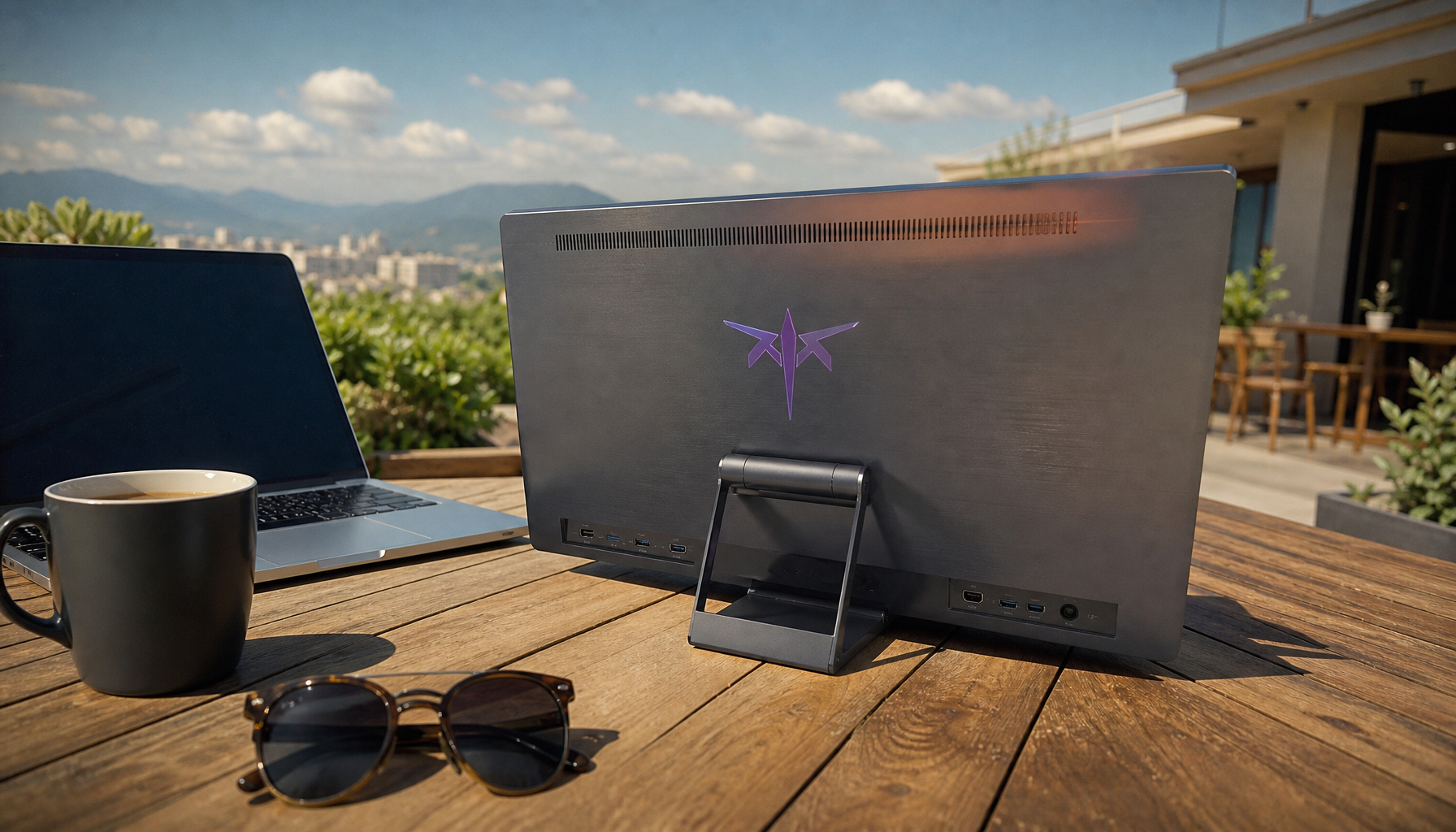
HDMI is different. HDMI carries video and audio, but it does not power a portable monitor. One portable monitor manual states that HDMI connections do not transmit power, so a PC or laptop using Mini HDMI must also connect a separate power cable. This is the single most common reason a technically correct HDMI setup still looks broken.

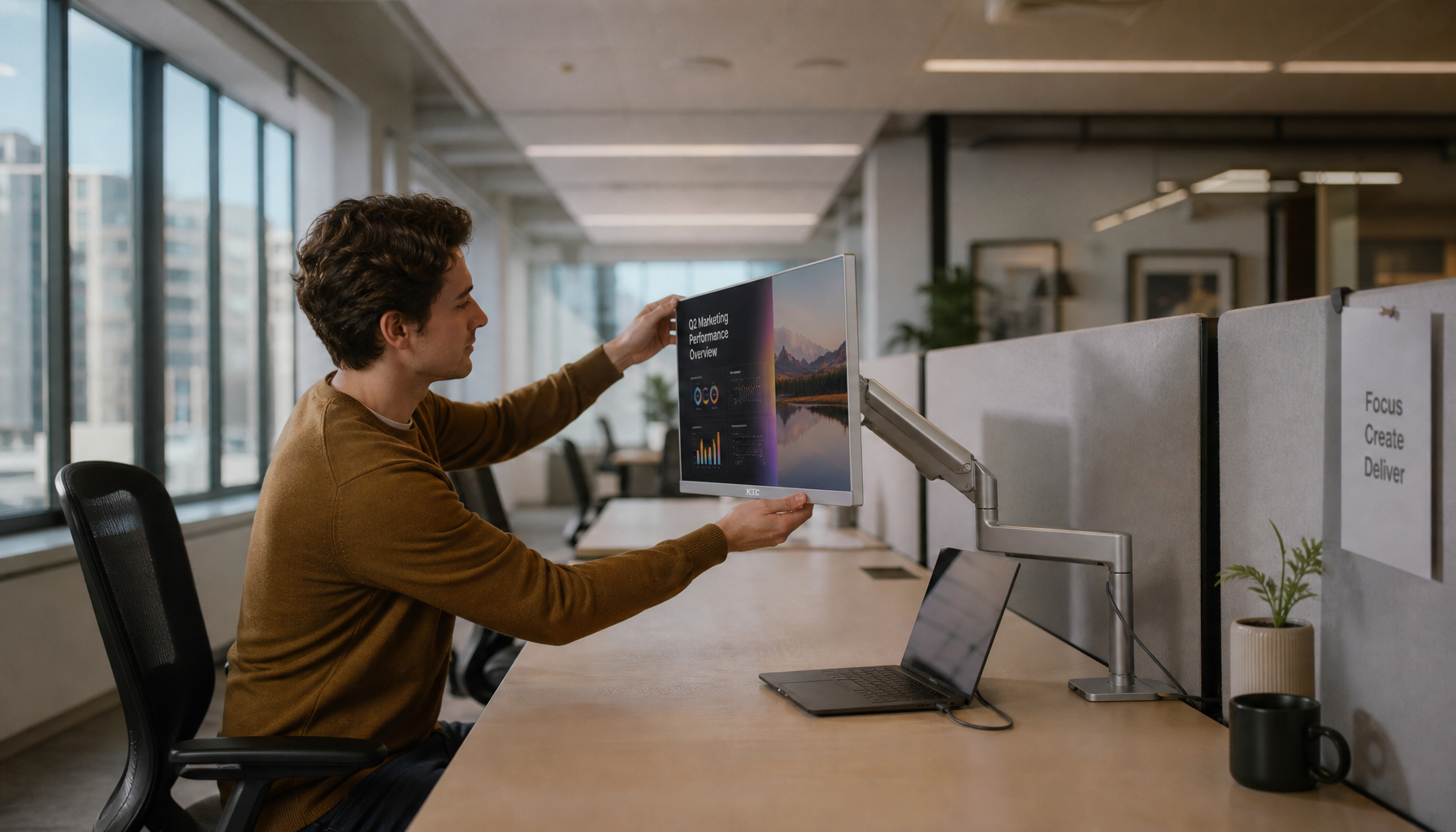
For example, imagine an older office laptop with full-size HDMI and USB-A, paired with a 15.6-inch 1080p portable monitor that has Mini HDMI and USB-C power. The clean setup is HDMI from the laptop to Mini HDMI on the monitor, then USB-A from the laptop or wall charger to the monitor’s USB-C power port. If the screen flickers when brightness rises, move power from the laptop’s USB-A port to a stronger wall charger or power bank.

Which Setup Should You Use?
Source Device |
Best Video Path |
Power Needed? |
Practical Verdict |
Older laptop with HDMI |
HDMI to Mini HDMI or HDMI input |
Yes |
Most reliable non-USB-C setup |
Desktop PC with HDMI |
HDMI to monitor HDMI input |
Yes |
Good for office and testing benches |
Game console or media box |
HDMI to portable monitor |
Yes |
Strong choice for gaming and travel screens |
USB-C laptop with DP Alt Mode |
USB-C to USB-C |
Maybe, depending on monitor and laptop power |
Cleanest one-cable option |
HDMI-only device to USB-C-only monitor |
Active HDMI-to-USB-C converter |
Yes |
Buy carefully; ordinary adapters usually will not work |
Portable monitor listings reflect this mixed-port reality. Marketplace search results for portable monitor HDMI input show many 15.6-inch Full HD models advertising both USB-C and HDMI or Mini HDMI, which is exactly the configuration that keeps older hardware, consoles, and newer laptops in play.
When a USB-C to HDMI Adapter Does Work
A USB-C to HDMI adapter works when the source device is USB-C and the display input is HDMI. That means a USB-C laptop connecting to a portable monitor’s HDMI input can work, assuming the laptop’s USB-C port supports video output. The adapter is acting like a translator from USB-C video to HDMI video.
This can be useful if your portable monitor’s USB-C video input is already occupied, unreliable, or power-only, but its HDMI input is available. Some portable monitors have multiple USB-C ports with different roles; on certain models, one USB-C port may be power-only while another supports display input. The practical habit is to check the port labels and the manual before blaming the cable.
For a performance-driven setup, also match resolution and refresh rate. One connection overview recommends High-Speed HDMI or HDMI 2.0+ for 4K portable displays. For a 1080p 60Hz office monitor, almost any decent HDMI path is enough. For a 144Hz gaming portable display, adapter specs stop being optional.
Why the Screen Says “No Signal”
“No Signal” usually means the monitor has power but is not receiving valid video. Troubleshooting guidance points to loose connections, unsupported resolution, incompatible hardware, insufficient adapter power, outdated drivers, or the device not recognizing the adapter as common causes of no display output.

Start with the physical layer. Reseat both ends of the HDMI cable, confirm the monitor is set to HDMI rather than USB-C, and try a second HDMI cable if you have one. If the portable monitor uses Mini HDMI, avoid stressing the small connector; a loose Mini HDMI plug can produce flicker, dropouts, or intermittent black screens that look like a bad panel.
Then check the operating system. On a PC, use display settings or the keyboard shortcut for projection modes to switch between duplicate and extended views. On a computer with desktop display settings, disable mirroring if you want a true second workspace. Connection notes point users toward display controls after connecting a USB-C or HDMI portable monitor, which aligns with the normal setup flow for productivity screens.
Power Is Half the Connection
Portable monitors often look like tablets, but many do not have batteries. One manual lists a minimum external power requirement of 5V/2.4A or higher for its portable monitor and notes that brightness or volume above 80% may require external power. That is roughly 12W or more, which explains why weak USB ports can create dimming, flickering, or shutdowns.
A simple power calculation helps. If a compact 1080p portable display draws about 10W and your laptop is already working hard, pulling monitor power from the laptop can shorten battery life quickly. For desk use, a wall charger is steadier. For travel, a power bank with enough output keeps the screen brighter and reduces random disconnects during calls, spreadsheets, or gaming sessions.
For consoles and HDMI-only devices, assume separate power from the beginning. HDMI from the console carries the picture and sound. USB power from a charger, console USB port, or power bank keeps the portable monitor alive. If the display powers on but immediately dims or restarts, the power source is the first suspect.
Pros and Cons of Each Connection Style
Connection Style |
Pros |
Cons |
USB-C to USB-C |
Clean one-cable setup when supported; can carry video, audio, data, and power |
Requires full-featured USB-C with video support; cable quality matters |
HDMI to portable monitor |
Broad compatibility with older laptops, desktops, consoles, and media devices |
Needs separate power; may require Mini HDMI cable |
USB-C to HDMI adapter |
Useful for USB-C sources connecting to HDMI monitor inputs |
Usually directional; not for HDMI source to USB-C display |
Wireless casting |
Convenient when ports are limited |
Lag, compression, battery drain, and lower reliability for work or gaming |
The performance choice depends on the job. For office productivity, HDMI plus solid power is dependable and inexpensive. For mobile laptop work, full-featured USB-C is the cleanest option. For gaming, prioritize the monitor’s refresh rate, response time, and the adapter or cable’s supported HDMI version before chasing a minimalist cable layout.
Buying Advice Before You Replace Anything
Before buying an adapter, inspect the portable monitor’s ports and confirm whether HDMI input exists. If it has Mini HDMI, buy the right HDMI-to-Mini HDMI cable and skip the USB-C to HDMI adapter entirely for HDMI-only devices. If it has only USB-C, confirm that it supports display input over USB-C and then look specifically for an active HDMI-to-USB-C converter designed in that direction.
Buying guidance often recommends portable monitors with both USB-C and HDMI for broad compatibility, and mainstream listings show that dual-input 15.6-inch 1080p IPS models are common. That combination is the value sweet spot because it supports newer USB-C laptops and older HDMI hardware without forcing fragile adapter chains.
For higher-end work, match the screen to the workload. A productivity user may prefer 1080p or 2K with a sturdy stand and readable scaling. A competitive gamer should care more about 120Hz or 144Hz support, response time, and adaptive sync. A creator should look at color coverage, resolution, and panel type before worrying about whether one cable looks cleaner on the desk.
Quick FAQ
Can HDMI power a portable monitor?
No. HDMI carries video and audio, not operating power. A portable monitor connected over HDMI still needs USB power from a wall charger, laptop port, console port, or power bank.
Can I use a USB-C to HDMI adapter backward?
Usually not. Most USB-C to HDMI adapters are directional from a USB-C source to an HDMI display. For an HDMI source feeding a USB-C-only portable monitor, shop for an active HDMI-to-USB-C converter that clearly states that direction.
Why does my USB-C cable charge the monitor but show no picture?
The cable or port may be power-only. USB-C must support video, typically through DisplayPort Alt Mode, and the cable must be rated for video transmission.
Is HDMI or USB-C better for a portable monitor?
USB-C is better when the host, cable, and monitor all support video and enough power through one cable. HDMI is better when you need reliable compatibility with older laptops, desktop PCs, consoles, cameras, or media devices.
Final Verdict
Use a USB-C to HDMI adapter only when the video starts from a USB-C device and ends at an HDMI display input. For a non-USB-C device, the winning setup is HDMI for the picture and a separate USB power line for the portable monitor. That keeps the signal path honest, the screen stable, and your portable display ready for real work or real play.