Moving farther from a screen slightly reduces the blue light that reaches your eyes, but the larger benefit is usually better comfort and less eye strain. For most people, distance matters more for fatigue and sleep habits than for preventing eye damage.
Do your eyes feel gritty after a long gaming session or a late-night spreadsheet session, even when the display looks great? Measured device testing shows blue-light output rises when screens are closer and brighter, while everyday discomfort is more often tied to distance, glare, and reduced blinking than to blue wavelengths alone. A better setup combines distance, brightness, and nighttime habits so the screen works with your eyes instead of against them.
What adjusting viewing distance actually changes
A longer viewing distance reduces the amount of light that reaches your eyes from a display, including blue light. In a blue-light dosimetry study, researchers found that measured blue-light dose increased when devices were brighter, larger, and closer, while night-shift modes lowered that dose.

That sounds straightforward, but the real-world effect needs context. Distance is only one variable. Screen brightness, screen size, room lighting, and how long you stay focused all matter at the same time. In daily monitor use, the difference between sitting about 10 inches from a tablet and about 20 inches away is easy to feel: your eyes relax more, text is easier to scan without over-focusing, and the screen feels less visually harsh even before any software filter is turned on.
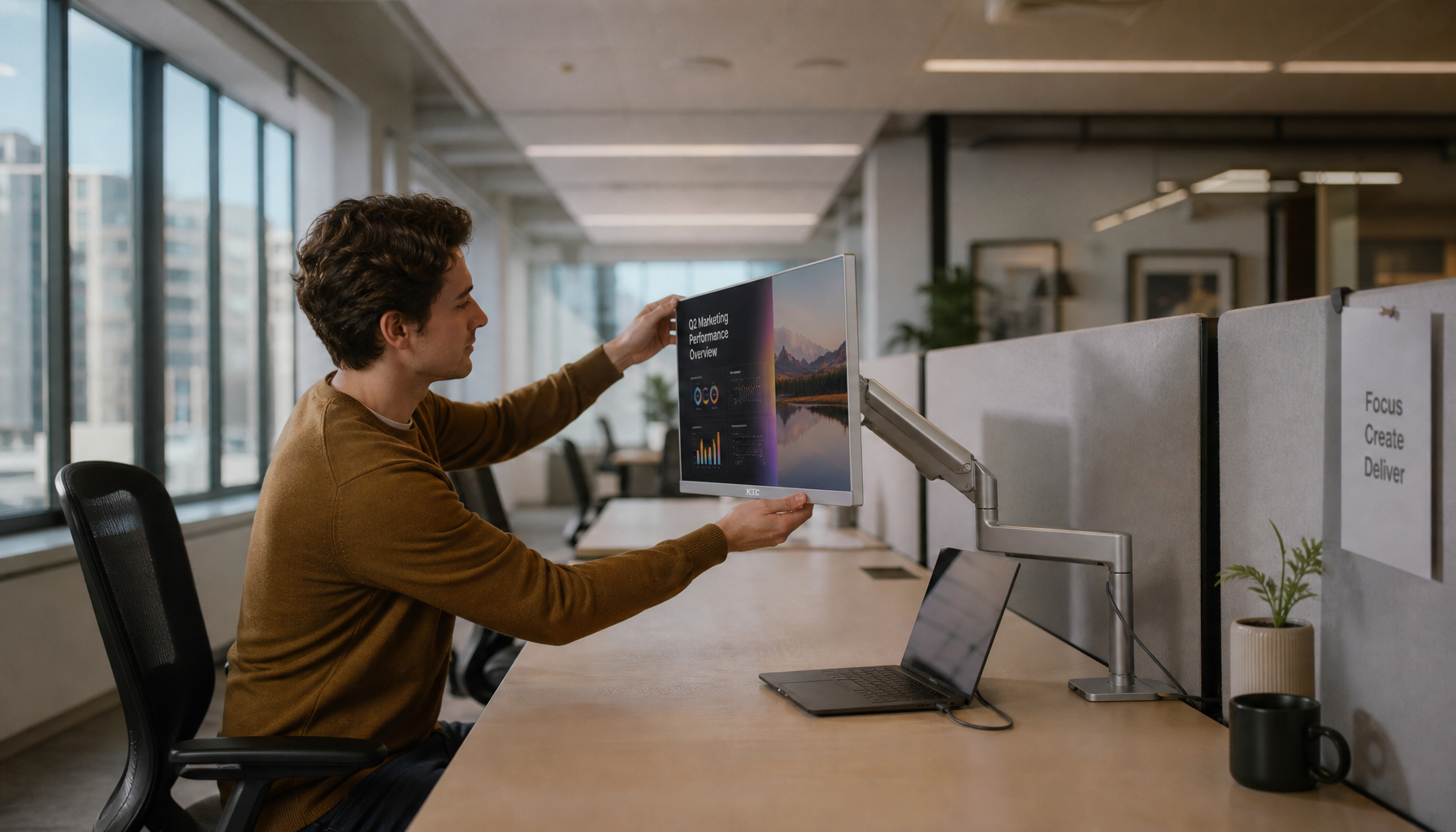
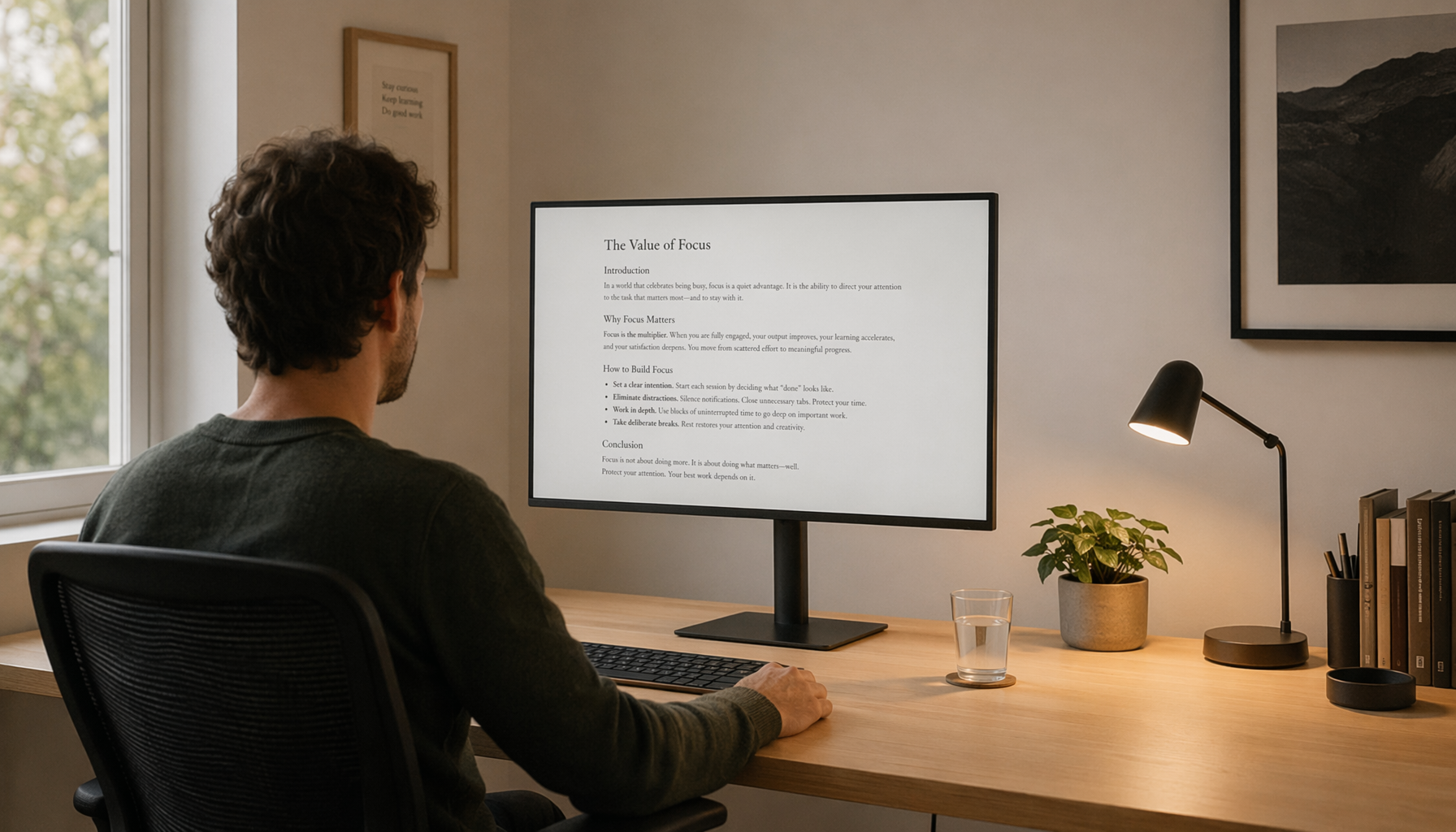
For work displays, a practical target is the 20- to 28-inch viewing range, with the top of the screen at or slightly below eye level. That range is far enough to reduce focusing stress, but close enough to keep text readable without leaning forward. For TVs, the right answer depends more on size and resolution than on blue light alone, and the ideal distance is usually the one that balances comfort, clarity, and eye fatigue.
Screen type |
Practical distance |
Why it helps |
Office monitor |
20 to 28 inches |
Reduces focusing effort, glare stress, and excess brightness impact |
Laptop |
About arm’s length when possible |
Improves posture and reduces near-work fatigue |
TV |
Based on screen size and resolution, often several feet away |
Lowers fatigue while preserving immersion and readability |
Why distance helps comfort more than it prevents damage
The strongest evidence in current eye-care guidance is that screen blue light has not been shown to damage the eyes in normal use. That is why many ophthalmology sources focus less on retinal injury from screens and more on dryness, fatigue, headaches, and sleep disruption.

The key distinction is that blue light can be biologically active without being proven harmful at typical screen levels. The evidence summary on blue light notes that everyday artificial exposure has not been convincingly linked to long-term eye harm, while the sun remains the largest daily blue-light source. Optometry guidance from Canada makes the same point: digital devices emit far less blue light than sunlight, even though people use them for long periods at close range.
That is where viewing distance matters most. The closer the screen, the harder your eyes work to maintain focus, and the more likely you are to blink less. Articles on TV and monitor eye strain consistently describe the same pattern: fatigue, blur, irritation, and dry-eye symptoms rise when viewing is prolonged and too close. For a portable screen on a desk, the problem is often not blue light in isolation. It is a stack of small stressors: close distance, high brightness, room glare, small text, and fewer blinks.
Where distance matters most: gaming, office work, and portable screens
Gaming monitors
With a high-refresh gaming monitor, sitting too close can feel intense in the wrong way. You get speed and detail, but also more eye movement across the panel, more visible brightness, and more fatigue during long sessions. A competitive player may prefer the close end of the ergonomic range for target clarity, but moving back a few inches often improves comfort without hurting reaction-based performance.
For a 27-inch monitor, many setups feel best around 22 to 30 inches away, then adjusted by genre. Fast shooters often favor the nearer side, while strategy or open-world games usually benefit from a little more distance so the whole frame fits more naturally in view. That shift does not just reduce blue-light exposure slightly; it also reduces the feeling of visual overload.

Office productivity displays
Productivity screens punish poor distance more than people expect. If you sit too close to a bright 32-inch display, spreadsheets and browser tabs may look sharp, but your eyes spend hours in a near-focus posture. Recommended computer ergonomics place the screen roughly 20 to 24 inches away, which is close enough for text but far enough to reduce strain.
A simple office example shows the point. If your font size forces you to lean in at 16 inches, the better fix is often larger text and slightly lower brightness, not just a blue-light filter. That lets you move the display back into a more comfortable zone and lowers the total visual load.
Portable screens and tablets
Portable screens create the hardest tradeoff because people naturally hold them closer. The same dosimetry evidence that found brightness and size effects also showed that shorter distance raises blue-light dose. On a tablet used in bed or on a flight, pushing the screen farther away, dimming it, and enabling a warmer night mode work better together than relying on distance alone.
Why nighttime use matters more
The clearest downside of blue light is at night. Sleep guidance on blue light explains that blue wavelengths suppress melatonin and can shift circadian timing, especially with evening exposure. A summary of blue-light effects at night makes the same point plainly: blue light is useful during the day, but late-night exposure can keep you alert when your body should be winding down.

Distance still helps here, but not enough by itself. If you sit 6 feet from a bright TV at 11:30 PM in a dark room, that is usually better than holding a bright tablet 10 inches from your face, yet both can still interfere with sleep if the screen is intense and the content keeps you engaged. At night, reducing brightness and using a warmer color temperature usually matter more than distance alone.
What to do in practice
The most reliable setup is layered rather than based on a single fix. Start by placing your main work or gaming display about 20 to 28 inches away, then set brightness only slightly above the room’s ambient light. If you use a TV, sit at a distance that matches its size and resolution so you are not squinting or over-focusing. If you use a tablet or portable display, avoid drifting into a very close posture for long stretches.
Comfort improves further when you follow the 20-20-20 rule: every 20 minutes, look at something 20 feet away for 20 seconds. That habit addresses the fatigue side of the problem better than most accessories because it restores blinking, relaxes focus, and breaks continuous exposure.

The evidence on blue-light-blocking glasses is less clear. Ophthalmology guidance from Washington University notes that the American Academy of Ophthalmology does not recommend them for routine computer use, while Littletone’s review describes mixed comfort results and possible placebo effects for some users. That does not make them useless. It means they are optional tools, not the first adjustment to make. If your goal is daytime comfort, distance, glare control, text size, and brightness usually provide more dependable value. If your goal is protecting sleep during unavoidable nighttime use, warmer display modes and less evening screen time have stronger support.
A high-performance display should feel immersive without forcing your eyes to fight the setup. Move the screen to a sensible distance, control the brightness, and treat nighttime viewing as a separate issue from daytime productivity. That is the most practical way to reduce blue-light impact where it actually matters.