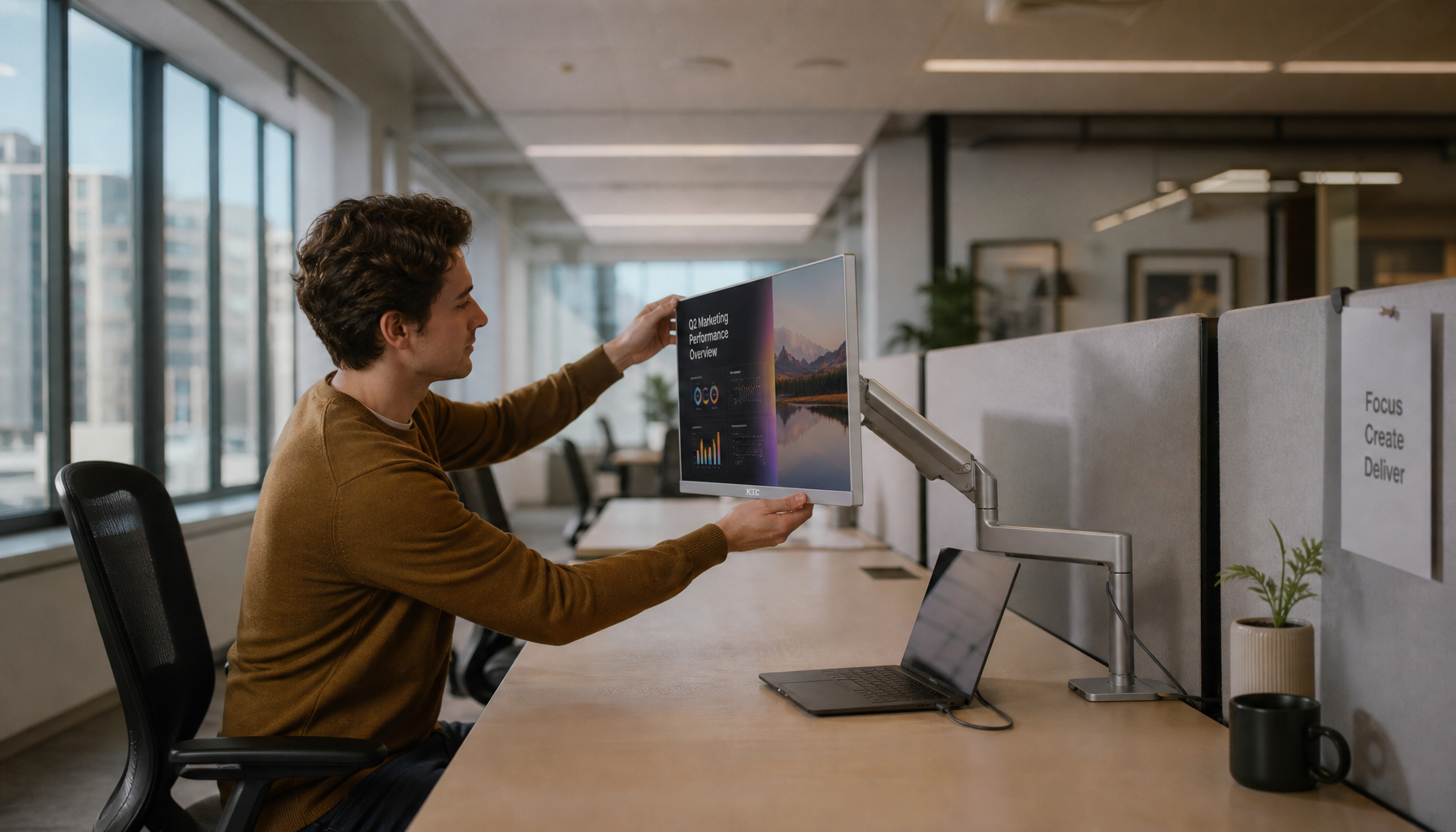
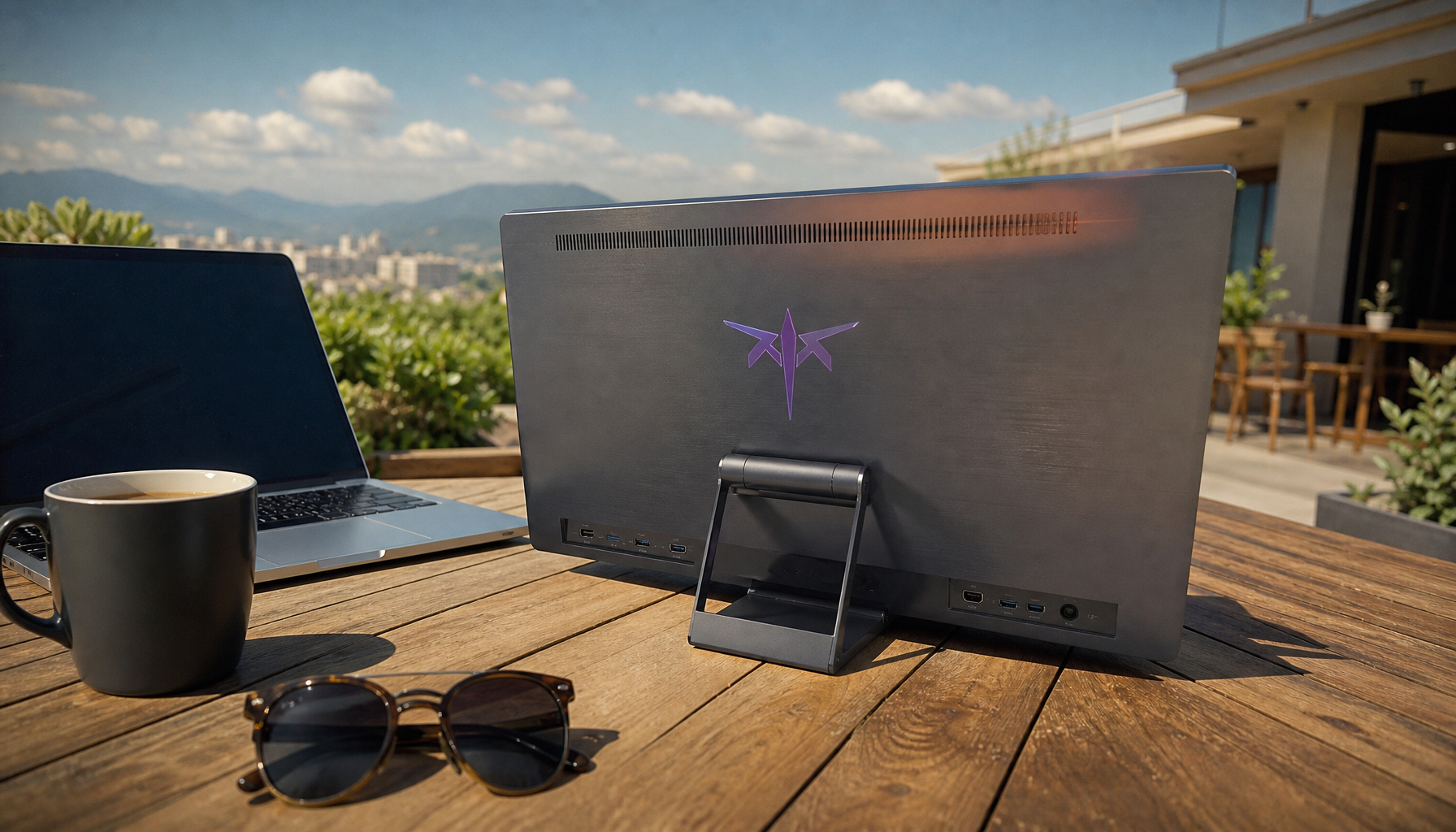
Your HDMI 2.0 cable is probably not broken; HDMI 2.0 usually tops out at 4K 60Hz, so many PCs and monitors drop to 1440p when you ask for 120Hz. For 4K 120Hz, the whole chain usually needs HDMI 2.1-class bandwidth, a capable port on both ends, and the right certified cable.
Is your monitor showing 1440p 120Hz smoothly, but refusing 4K 120Hz no matter how many display settings you open? In real desk setups, switching from HDMI 2.0 to the right HDMI 2.1 or DisplayPort path is often the difference between guessing and actually unlocking the refresh rate your panel was built for. Here is how to identify the bottleneck, choose the right cable path, and stop leaving performance on the table.
The Short Answer: HDMI 2.0 Does Not Have Enough Bandwidth for 4K 120Hz
HDMI 2.0 is a strong standard for productivity displays, streaming boxes, conference screens, and many 4K monitors, but it was designed around a different performance target. Its headline capability is 4K at 60Hz over up to 18 Gbps of bandwidth, while HDMI 2.1 raises the ceiling to much higher formats such as 4K at 120Hz and 8K at 60Hz. Newer HDMI versions are built around higher refresh and resolution targets such as 4K120, which is exactly the class of signal HDMI 2.0 users are usually trying to force.
That is why 1440p 120Hz often appears as the best available high-refresh option. The display and GPU are negotiating a mode that fits inside the available data pipe. At 1440p, there are fewer pixels per frame than 4K, so the same 120 refreshes per second become more realistic for the connection.
Here is the practical comparison:

Connection class |
Common practical target |
Why it matters |
HDMI 1.4 |
4K 24Hz to 30Hz or high-refresh 1080p |
Fine for older displays, not ideal for modern 4K gaming |
HDMI 2.0 |
4K 60Hz or 1440p 120Hz/144Hz depending on device |
Strong for office 4K and general entertainment |
HDMI 2.1 |
4K 120Hz and higher-end gaming features |
Better for consoles, gaming PCs, VRR, and modern high-refresh displays |
Resolution, Refresh Rate, and Bandwidth in Plain English
Resolution is how many pixels the monitor draws. A 4K UHD monitor is typically 3840 x 2160, which is more than 8 million pixels per frame. Refresh rate is how many times per second the monitor updates that image. At 120Hz, the display is trying to refresh 120 times every second.
That means 4K 120Hz is not just twice as smooth as 4K 60Hz. It asks the cable and ports to move roughly twice as many full-resolution frames per second. HDMI 2.0’s 18 Gbps bandwidth is excellent for 4K 60Hz, HDR, and clean desktop use, but it is not the normal path for uncompressed 4K 120Hz.
A 1440p screen has about 3.7 million pixels per frame. A 4K screen has about 8.3 million. Asking for 120Hz at 4K pushes more than double the pixel load of 1440p 120Hz before color depth, HDR, and chroma format even enter the conversation.

Why Your Setup Chooses 1440p 120Hz
Your PC, console, or mini PC does not simply obey the refresh rate you want. It reads what the display reports, checks the port and cable path, then offers modes that should work reliably. A connection operates at the capability of its weakest component, so an HDMI 2.1 monitor connected through an HDMI 2.0 source, dock, adapter, receiver, or cable can still behave like an HDMI 2.0 setup.

The most common scenario is a gaming monitor with both DisplayPort and HDMI. The monitor may advertise 4K 144Hz on DisplayPort, 4K 120Hz on HDMI 2.1, and only 4K 60Hz on HDMI 2.0. If your GPU is connected through the HDMI 2.0 input, the system may expose 1440p 120Hz because that mode fits better within the HDMI 2.0 bandwidth budget. Many shopping pages for 4K monitor HDMI 2.0 products also mix office-focused 60Hz displays with gaming models, so the port details matter more than the headline 4K monitor label.

There is also a marketing trap here. A cable being physically HDMI-shaped tells you almost nothing. HDMI 2.0 and HDMI 2.1 use the same connector. The port version, cable certification, GPU output, monitor input, dock, adapter, and any receiver in the middle all have to support the target mode.
Cable Version vs Cable Certification
Strictly speaking, cables are better understood by certification class than by casual HDMI 2.0 cable wording. For HDMI 2.0-level performance, look for a Premium High Speed HDMI cable. For HDMI 2.1-level performance, look for an Ultra High Speed HDMI cable rated for the higher bandwidth required by 4K 120Hz and related features.

A Premium High Speed HDMI cable is the sensible pick for 4K 60Hz office work, streaming, spreadsheets, video calls, and general desktop clarity. It keeps cost under control and avoids paying for performance your monitor cannot use. An Ultra High Speed HDMI cable is the better choice when you are chasing 4K 120Hz, VRR, ALLM, eARC, or a current-generation console experience. HDMI 2.1’s 48 Gbps ceiling is the reason it belongs in serious high-refresh 4K setups.
Cable length can also decide whether a mode stays stable. For demanding HDMI signals, shorter passive copper runs are easier to trust. If your display is across a room, inside a wall, or routed through a standing desk arm and dock, an active or fiber HDMI cable may be more reliable than a long bargain cable.
The Port May Be the Real Limiter
One of the most frustrating parts of HDMI troubleshooting is that the cable gets blamed first, even when the port is the actual cap. A laptop may have a USB-C port that supports display output but only through a dock limited to 4K 60Hz. A desktop GPU may have HDMI 2.1 on one output, while the monitor’s selected HDMI input may be 2.0. A TV may have only one or two enhanced HDMI ports, with the others limited to lower modes.
HDMI 2.0 remains excellent for many use cases. A 27-inch or 32-inch 4K productivity monitor at 60Hz can look razor sharp for documents, dashboards, timelines, and creative review. For fast esports, however, dropping to 1440p 120Hz can feel smoother than staying at 4K 60Hz. That is a legitimate tradeoff, not a failure. The best choice depends on whether you value pixel density or motion response more in that workflow.
For mixed PC and console setups, HDMI 2.1 has the stronger long-term case because it adds the bandwidth and gaming features that HDMI 2.0 cannot fully deliver. HDMI 2.0 is still practical for everyday 4K use, while HDMI 2.1 is recommended when 4K 120Hz, VRR, and low-latency gaming features are central to the setup.
Check the Full Signal Chain Before Buying Anything
Start with the source device. Confirm whether your GPU, laptop, console, mini PC, or dock actually supports 4K 120Hz over HDMI. Then check the monitor manual or product page for the exact refresh rate supported on each input, because HDMI and DisplayPort often have different limits on the same screen.
Next, check the cable. If it is old, unmarked, unusually long, kinked, or came free in a box years ago, treat it as unknown. Replace it with a certified Ultra High Speed HDMI cable if your goal is 4K 120Hz over HDMI 2.1. For 4K 60Hz, a certified Premium High Speed cable is usually enough. Loose connections, damaged cables, wrong input selection, and mismatched video settings can also cause no signal, flicker, or missing modes, so reseating both ends and testing another port is still worth doing before replacing hardware.
In your operating system’s display settings, confirm the active resolution and refresh rate. If the display is stuck at a fallback resolution or missing expected modes, the system may not be reading the display’s capabilities correctly. EDID, the monitor metadata that tells the GPU which modes are supported, can fail or be misread; when that happens, basic fallback modes may appear even though the hardware can do more. Updating GPU drivers, power-cycling the monitor and PC, and testing a direct cable connection without a dock or receiver can isolate that issue.
Should You Use DisplayPort Instead?
For PC gaming monitors, DisplayPort is often the cleaner route. Many 4K high-refresh monitors support their maximum PC refresh rate over DisplayPort 1.4, sometimes with compression, while HDMI may be reserved for consoles or limited by port generation. If your graphics card and monitor both have DisplayPort, test it before spending time fighting an HDMI 2.0 ceiling.

The advantage is simple: DisplayPort is commonly built around high-refresh PC monitor use. The downside is that TVs and consoles usually depend on HDMI, so DisplayPort is less universal in living-room and console workflows. For a desk with a gaming PC and a productivity monitor, DisplayPort for the PC and HDMI for secondary devices is often the most reliable layout.
FAQ
Can HDMI 2.0 ever do 4K 120Hz?
For normal consumer expectations, HDMI 2.0 should be treated as a 4K 60Hz standard. Some edge cases may use reduced color detail or hardware-specific workarounds, but if you want a dependable 4K 120Hz path, choose HDMI 2.1 or a suitable DisplayPort connection.
Why does 1440p 120Hz work but 4K 120Hz does not?
1440p uses far fewer pixels than 4K, so 120Hz at 1440p needs less bandwidth. Your system is offering the higher refresh rate at a resolution that fits the connection.
Will an HDMI 2.1 cable fix everything?
Only if the cable was the weak link. If your GPU, laptop dock, monitor HDMI input, receiver, or adapter is limited to HDMI 2.0, an HDMI 2.1 cable will still run at the lower capability.
Is 4K 60Hz better than 1440p 120Hz?
For spreadsheets, coding, creative timelines, and sharp text, 4K 60Hz can feel better because of the extra workspace and clarity. For shooters, racing games, and fast camera movement, 1440p 120Hz can feel more responsive. The better choice is the one that matches what your eyes and hands are doing most.
Bottom Line
If your HDMI 2.0 cable caps at 1440p 120Hz instead of 4K, the setup is behaving like a bandwidth-limited system, not necessarily a defective one. For a reliable 4K 120Hz experience, verify the source, display port, cable certification, adapters, and settings as one chain; one HDMI 2.0 link is enough to pull the whole setup back to 4K 60Hz or 1440p high refresh.