



A USB-C plug tells you the connector shape, not what the cable can actually carry. Charging may work because the cable supports power, while video may fail because the cable, port, or monitor lacks DisplayPort Alt Mode, USB4, or enough high-speed lanes.

USB-C Is a Connector, Not a Promise
USB-C feels simple because the plug is reversible and common across laptops, monitors, docks, tablets, and portable screens. Under the hood, visually identical cables can differ in power capacity, data speed, internal wiring, and video support, so the same connector can behave very differently.
That is why a cable can deliver 60 W, 100 W, or even 240 W charging and still be useless for a monitor. Charging uses power lines and negotiation; display output needs high-speed data lanes and the right video protocol.
For a performance display setup, the question is not “Is it USB-C?” The better question is “Does this USB-C cable explicitly support video at my target resolution and refresh rate?”

Why Charging Works but Video Does Not
Many USB-C charging cables are built for power first. They may include only USB 2.0-level data, which is fine for charging and basic sync but not enough for a 4K productivity monitor or a high-refresh gaming display.
Display output over USB-C commonly depends on DisplayPort Alt Mode. A USB-C port does not automatically support video, and DisplayPort Alt Mode must be supported by the laptop, the cable path, and the display or adapter.
A full-featured USB-C cable usually includes the wiring needed for higher-speed data and video. A charge-focused cable may skip those lanes to reduce cost, thickness, or complexity.
USB4 can also carry display signals, but it still requires compatible ports and proper cables, not just a USB-C-shaped plug.

The Specs That Matter for Monitors
For office displays, portable smart screens, and gaming monitors, cable bandwidth directly affects what you can see. A basic 480 Mbps cable is not in the same class as a 10 Gbps USB-C cable, a 40 Gbps USB4 cable, or another certified high-speed cable.
Length matters too. Many USB-C data cables support 10 Gbps, while some longer than about 3.3 ft may drop to 5 Gbps, depending on design and rating for cable compatibility.
For a single-cable desk, also check power delivery. A monitor that provides 65 W may keep many thin laptops running, while a power-hungry workstation may need more headroom or its original charger.
- Video support: look for DisplayPort Alt Mode, USB4, or certified display output.
- Resolution: confirm 4K at 60 Hz, 8K, or high-refresh support as needed.
- Power: match cable wattage to your laptop and monitor.
- Speed: choose 10 Gbps or higher for docks and external drives.
- Length: avoid generic long cables for demanding display setups.
How to Pick the Right Cable the First Time
For a portable smart screen, choose a compact USB-C cable that clearly lists video support and enough wattage for pass-through charging. For an office monitor, prioritize USB-C with Power Delivery and display support so one cable can handle the screen, laptop charging, and peripherals.
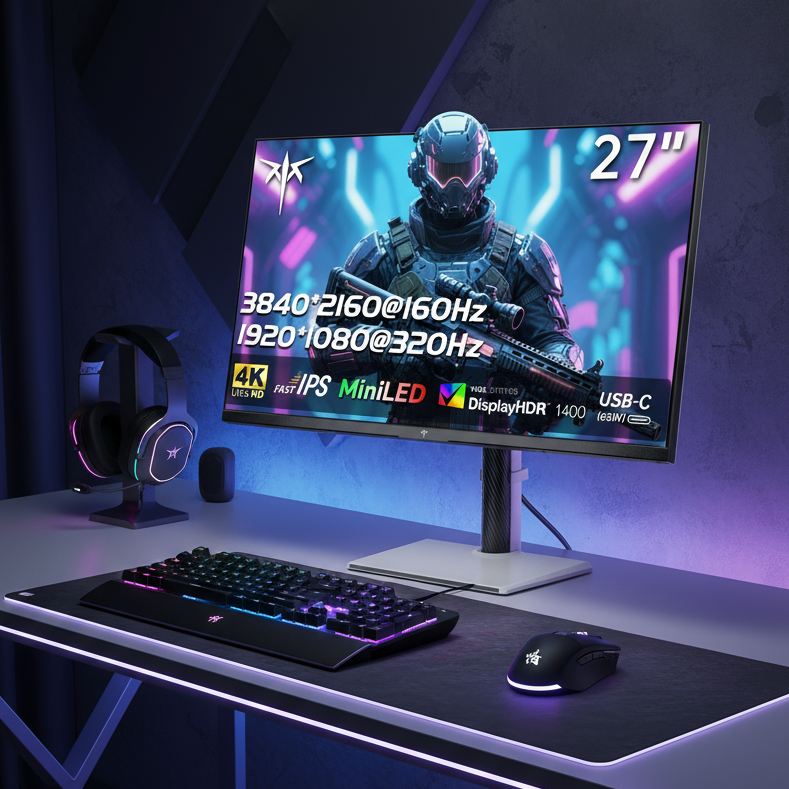
For gaming, be stricter. High refresh rates, low latency, HDR, and higher resolutions need more bandwidth; generic “fast charge” cables are often the wrong tool. Technical sources consistently stress that protocol support matters more than connector shape.
If the display still says “no signal,” test in this order: confirm the laptop port supports video, use the monitor’s USB-C display input, swap in a known video-capable cable, then check display settings. Most failures come down to one weak link, not the monitor itself.