









Your USB-C monitor is likely falling back to a low-power USB mode because the monitor port, laptop port, cable, or power negotiation does not support the 65W USB Power Delivery profile your laptop expects.
Your desk looks clean, the display lights up, but your laptop battery still drains while the monitor claims “USB-C charging.” A focused check of the monitor’s PD rating, the exact USB-C port, and the cable can usually separate a real hardware limit from a setup mistake in minutes.
The Short Answer: USB-C Is Not the Same as 65W Charging
The most common reason is simple: USB-C describes the connector shape, not the charging capability. A port can look like USB-C and still support only basic power, data, video, or a limited charging profile. USB Power Delivery is the protocol that lets compatible devices negotiate higher charging levels, and USB Power Delivery is designed to let devices request and manage more flexible power over USB-C.
That negotiation has to succeed across the full chain. The monitor must offer 65W or more from the correct USB-C upstream port. The laptop must accept USB-C PD charging. The cable must support the required power and video behavior. If any one part falls short, your setup may still show video while charging at a much lower level, such as 15W.

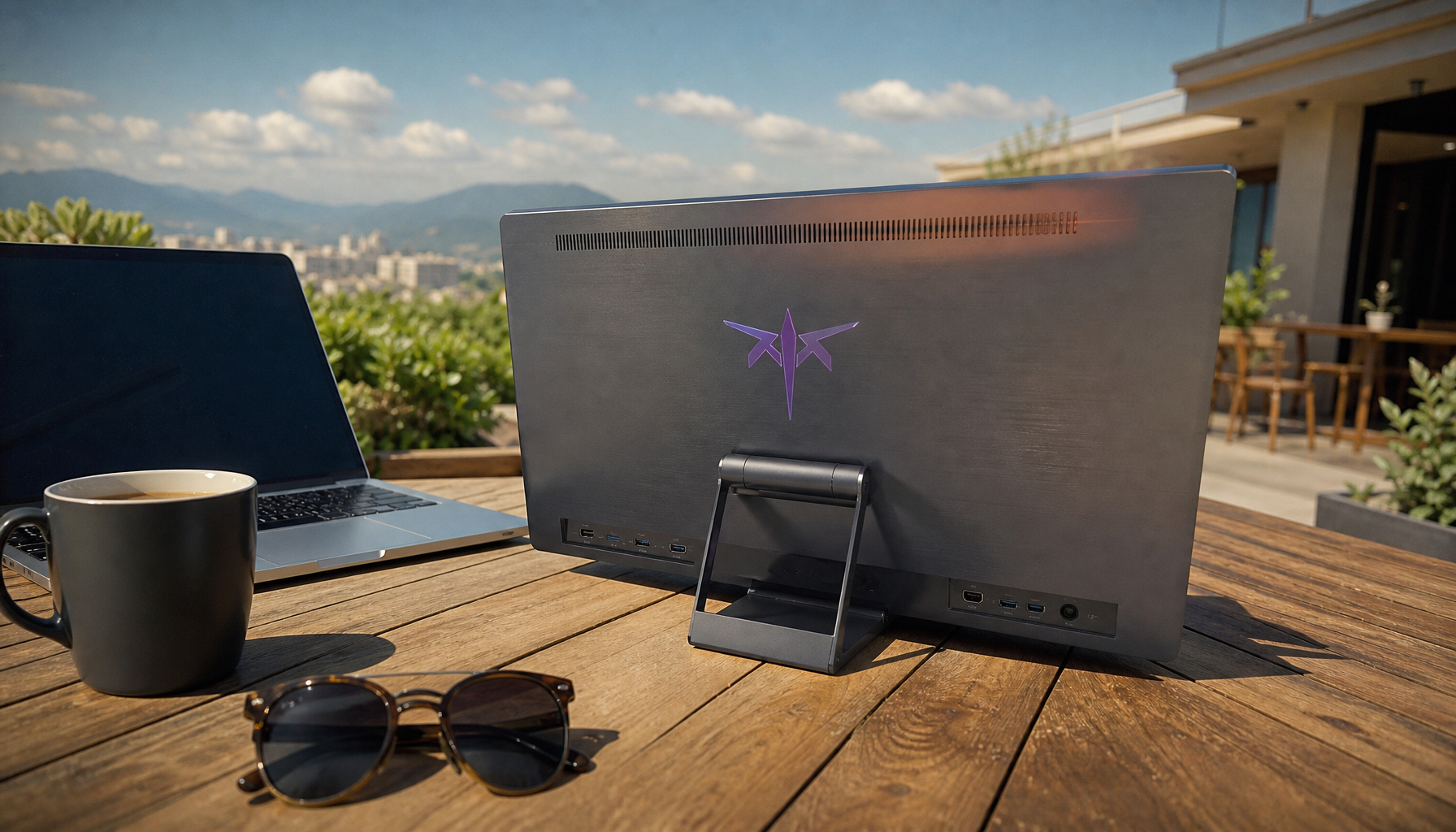
In real desk builds, this is why two setups can look identical from the outside but behave completely differently. One 27-inch productivity monitor may deliver 65W or 90W to a laptop. A high-refresh gaming monitor with USB-C may prioritize display input and offer only 15W or 18W charging, which is enough for a phone or small accessory but not enough for most laptops under load.

Why 15W Happens When You Expected 65W
A 15W result usually means the connection is not negotiating the higher PD mode. It may be using a basic USB-C power level, a low-output monitor port, or a cable that cannot support the full feature set. Some monitor families list USB-C charging across a wide range, with USB-C Power Delivery options 15W up to 90W depending on monitor line and model; gaming models are often much lower than creator or office displays.
The biggest trap is assuming “USB-C monitor” means “laptop charger replacement.” It does not. A monitor with USB-C video may only carry display signal and limited power. A monitor with USB-C PD may still provide less wattage than your laptop needs. Basic USB-C monitors may handle display or data, while power delivery capability varies by model.
A simple example makes the mismatch obvious. If your laptop shipped with a 65W adapter and your monitor’s USB-C port only provides 15W, the monitor is not acting like a charger; it is more like a slow support feed. The laptop may say “plugged in,” but the battery can still fall during gaming, video calls, compiling code, or driving a 4K display.
What You See |
Likely Meaning |
What to Check |
Video works, charging stays near 15W |
USB-C video is working, but high-wattage PD is not |
Monitor PD spec, cable rating, laptop charging support |
Laptop charges while asleep but drains during use |
Monitor wattage is below active power demand |
Laptop adapter wattage and monitor output |
Phone charges, laptop does not |
Port may be low-power only |
Correct USB-C upstream/PD port |
65W works with another charger, not the monitor |
Monitor or cable is the bottleneck |
Monitor manual and supplied cable |
Same cable works on another laptop |
Laptop firmware, port capability, or compatibility may matter |
Try another USB-C port and update firmware |
Check the Monitor’s Real Power Delivery Rating
Start with the monitor specification page, not the product title. Look for language such as “USB-C PD 65W,” “USB-C 90W,” or “up to 100W.” Select USB-C monitors can provide up to 100W of charging power to compatible devices, but “up to” still means the exact model matters.
This is where office productivity displays often beat gaming displays for laptop docking. A gaming panel may deliver outstanding refresh rate and response time but only enough USB-C power for accessories. A creator or business monitor may trade some gaming flair for stronger PD, a USB hub, Ethernet, or KVM behavior. Neither choice is wrong; the mistake is expecting a 15W gaming USB-C port to behave like a 65W docking monitor.
If your monitor has more than one USB-C port, inspect the labels. One port may be the upstream display-and-PD port, while another may be downstream data or accessory charging. A small lightning symbol, “PD,” or “USB-C upstream” label can matter. Because USB-C and USB PD are separate concepts, the connector alone is not proof of charging capacity.
Match the Monitor Wattage to the Laptop, Not the Other Way Around
A 65W monitor is generally a solid match for many ultrabooks and mainstream productivity laptops. It is less ideal for mobile workstations, creator laptops with discrete graphics, or gaming laptops that ship with much larger power adapters. KTC’s home-office monitor advice draws the same line: a 65W USB-C power delivery monitor is generally sufficient for many ultrabooks and MacBooks, while more powerful laptops may need 90W to 100W.
The practical test is to read the wattage printed on your original laptop charger. If it says 65W, a true 65W USB-C PD monitor should usually maintain charge during normal office use. If it says 90W, 100W, 130W, or more, a 65W monitor may charge slowly, hold steady only at idle, or drain under load. This is not a failure of USB-C; it is a power budget problem.
For portable smart screens, the expectation should be even more conservative. Many portable monitors draw power from the laptop instead of charging it, while some cables marketed for portable displays advertise higher capability only when paired with compatible devices. One portable monitor cable listing advertises 100W fast charging, 10Gbps data, and 4K at 60Hz video, but that rating only helps when the monitor and laptop also support the same high-wattage PD behavior.
Use the Right Cable, Especially for Video Plus Power
The cable is not just a wire in a high-performance USB-C monitor setup. It has to carry display data, power negotiation, and sometimes USB hub traffic at the same time. USB-C monitor connections commonly rely on DisplayPort signaling, and a direct USB-C connection can reduce adapter clutter while preserving image quality.
A common failure pattern is using a phone charging cable because it fits. It may charge a cell phone and still fail at 4K video, 65W PD, or both together. Common causes of USB-C charging failures include cable damage, port debris, charger output, and compatibility, while higher-performance setups need cables that support USB-PD fast charging and the necessary data or video mode.
Use the monitor’s original USB-C cable first. If that cable is missing, choose a cable explicitly rated for USB-C PD at the wattage you need and for video output if you are using the same cable for display. For a 4K productivity monitor, that usually means avoiding cheap charge-only cables and looking for clear support for DisplayPort Alt Mode, USB-C video, or Thunderbolt where your devices require it.

Confirm the Laptop Port Supports Charging and Display
Many laptops have multiple USB-C ports, but they are not always equal. One may support charging, video, and high-speed data. Another may support data only. A third may support DisplayPort Alt Mode but not charging input. In a laptop community discussion, users reported monitors showing video but not charging, and troubleshooting focused on direct port connection, cable capability, Thunderbolt behavior, and the fact that USB-C is only a connector type.

This matters most on thin office laptops and modular systems where ports can vary by side, module, or generation. Try every USB-C port on the laptop, and test with the laptop’s original charger through the same port if possible. If one port accepts the charger and another does not, you have found a laptop-side capability difference.
Thunderbolt adds another layer. A Thunderbolt-capable port and cable can carry high-bandwidth display, data, and power in one connection, but a Thunderbolt-looking USB-C port is not automatically the same thing. When compatibility is uncertain, the most reliable path is to match the symbols, read the laptop manual, and use the cable supplied with the monitor or dock.
Settings, Firmware, and Low-Power Modes Can Change Charging Behavior
Monitor menus can affect USB power behavior, especially when the display sleeps or is turned off. Some monitors include settings that keep USB-C charging active in off mode; others stop powering devices when the monitor enters a low-power state. If your laptop charges at 65W while the display is awake but drops or stops when the monitor sleeps, check the monitor’s on-screen menu under USB, power, hub, or charging options.
Firmware and drivers can also matter. USB-C charging involves power negotiation, embedded controllers, graphics output, and sometimes Thunderbolt security policies. If the setup should work on paper but does not, update the monitor firmware if available, then update the laptop BIOS, chipset, USB-C, Thunderbolt, and graphics drivers from the manufacturer.
For a quick isolation test, disconnect every peripheral from the monitor hub and connect only the laptop with the USB-C cable. If charging improves, the monitor may be sharing limited power across hub devices, or the laptop may be renegotiating differently under load. If nothing changes, the issue is more likely the monitor PD rating, cable, or laptop port.
Pros and Cons of Relying on Monitor USB-C Charging
The upside is strong when the hardware is matched. A USB-C PD monitor can replace a separate charger, video cable, and basic dock, creating a faster, cleaner workspace. A compatible USB-C laptop and monitor can create a clean setup quickly, which matches the appeal for hybrid work: plug in once, get the larger display, keyboard, mouse, network, and battery support.
The downside is that USB-C branding hides real differences. A monitor with 15W USB-C charging may be perfectly useful for a phone, tablet, or light accessory, but it is not a laptop power system. A 65W monitor may be excellent for office work and still underpowered for a gaming notebook. A cable can support charging but not video, or video but not the charging level you expected.
The value-oriented move is to buy by power requirement, not by connector. For a daily laptop docking display, 65W is the practical floor for many mainstream systems. For performance laptops, 90W to 100W is the safer target. For high-refresh gaming displays, check the PD rating twice because the USB-C port may be there for convenience rather than full docking.
A Practical Fix Sequence
Start by checking the monitor’s exact USB-C PD output in the manual or product page. Then compare it with the wattage on your laptop’s original power adapter. If the monitor is rated below the laptop’s adapter, the 15W or low-power behavior may be expected rather than defective.

Next, move the cable to the monitor’s dedicated USB-C upstream or PD port. Replace the cable with the original monitor cable or a known high-wattage USB-C PD video cable. Clean the laptop and monitor USB-C ports with compressed air or a soft brush after powering devices down, because debris can cause weak or inconsistent contact.
After that, test another USB-C port on the laptop and restart both devices. If possible, test the monitor and cable with another USB-C PD laptop, then test the laptop with a known 65W or higher USB-C PD charger. This cross-test tells you whether the weak link is the monitor, cable, or laptop.
Finally, update firmware and review the monitor’s USB charging settings. If the monitor is genuinely limited to 15W, there is no setting that will turn it into a 65W charger. The reliable fix is to use the laptop’s power adapter alongside the monitor, add a proper USB-C PD dock, or move to a monitor with confirmed 65W, 90W, or 100W Power Delivery.
FAQ
Can a USB-C monitor show video but not charge my laptop properly?
Yes. Video and charging use different capabilities behind the same connector. A display may support USB-C video while offering low power, no laptop-class PD, or a PD level below your laptop’s requirement.
Is 65W enough for a laptop?
For many ultrabooks and office laptops, yes. For gaming laptops, mobile workstations, and creator laptops with discrete graphics, 65W may be too low during demanding work even if it charges slowly at idle.
Will a 100W cable fix 15W charging?
Only if the cable was the bottleneck. A 100W cable cannot make a 15W monitor port output 65W, and it cannot make a laptop accept USB-C PD if that port does not support charging input.
Why does my monitor charge a MacBook but not another laptop?
The cable and monitor may be fine, while the other laptop’s USB-C port, firmware, charging policy, or wattage requirement differs. Test the same port with the laptop’s original USB-C charger and check the manufacturer’s specifications.
A 15W reading is not random; it is a signal that the USB-C chain has dropped below laptop-class Power Delivery. Match the monitor’s PD rating to your laptop, use a proper video-capable PD cable, and treat USB-C ports as feature-specific interfaces rather than identical holes in the chassis.



%20failure.%20Fix%20it%20by%20checking%20the%20monitor's%20PD%20spec,%20using%20a%20rated%20cable,%20and%20verifying%20your%20laptop%20port.
)