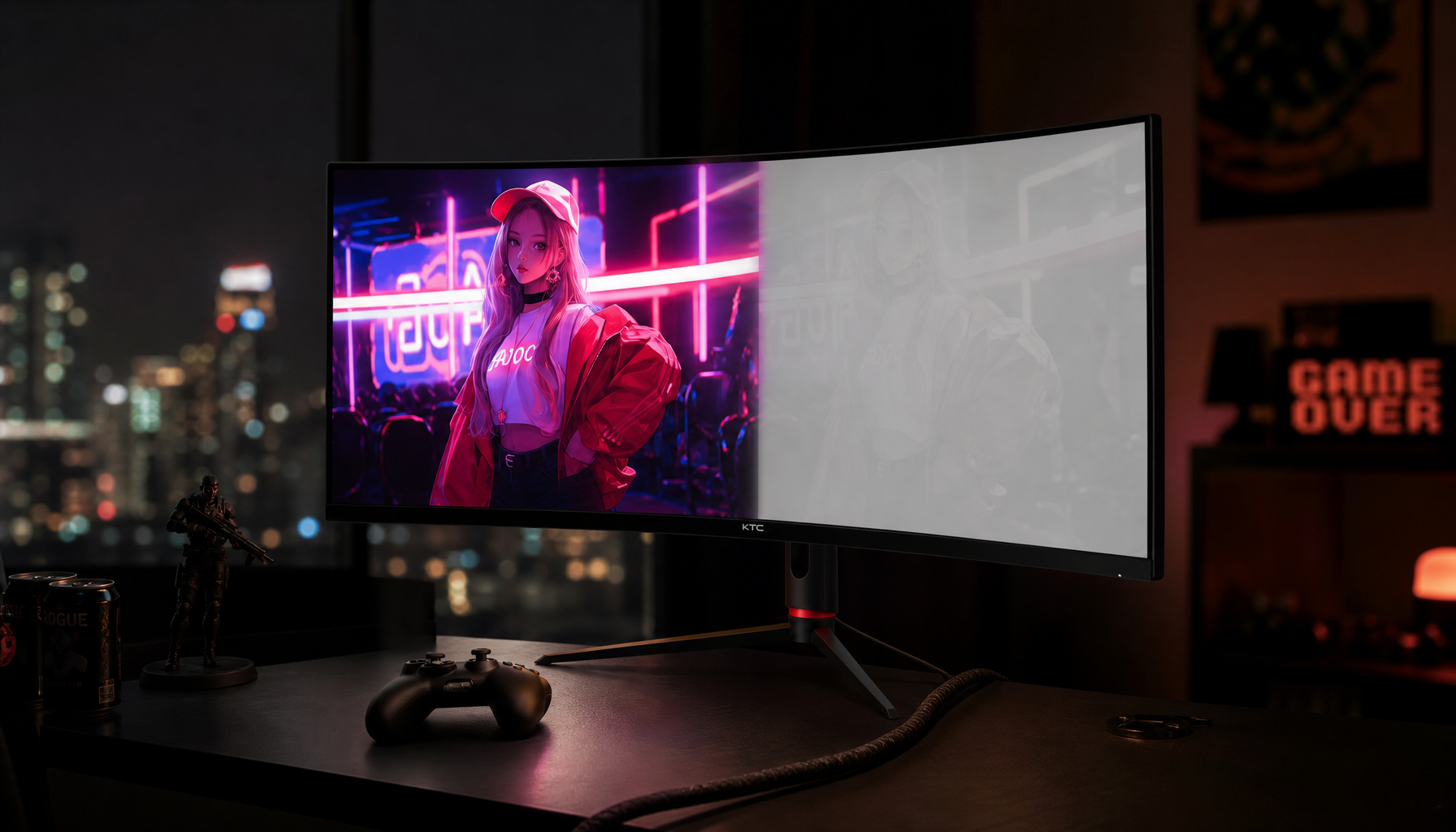
32:9 monitors are built for horizontal work, so social feeds, portrait photos, and vertical video often sit inside a lot of empty side space. The shape is not broken; it is optimized for a different kind of workload.
Ever scroll through a feed on a giant ultrawide and feel like the content is trapped in the middle while the edges sit idle? That frustration usually comes from using a display that is designed to spread outward, not upward. The sections below explain where 32:9 shines, where it wastes space, and how to decide whether it belongs in your setup.
Why the Geometry Fights Vertical Content
A 32:9 display is effectively two 16:9 monitors side by side, and it lands at about a 3.56:1 shape 32:9 aspect ratio. That gives you a very wide canvas, but it does not give portrait photos, 9:16 video, or mobile-style feeds any extra vertical breathing room.

At the same height, 32:9 offers roughly 78% more horizontal space than 16:9 and about 33% more than 21:9 32:9 calculator. That is exactly why the format feels luxurious for wide timelines and side-by-side apps, yet oddly inefficient when the content itself is narrow.
The screen is wide, not tall
Common 32:9 resolutions such as 3840x1080, 5120x1440, and 7680x2160 all follow the same pattern: the extra pixels go into width first ultrawide formats. If you open a portrait photo or a tall social feed, the monitor has plenty of room left and right, but the content still occupies only a slim central slice.
That is why the experience can feel visually underused even when the panel is large and expensive. The monitor is doing what it was designed to do, but the content is asking for a different shape.
Where 32:9 Still Excels
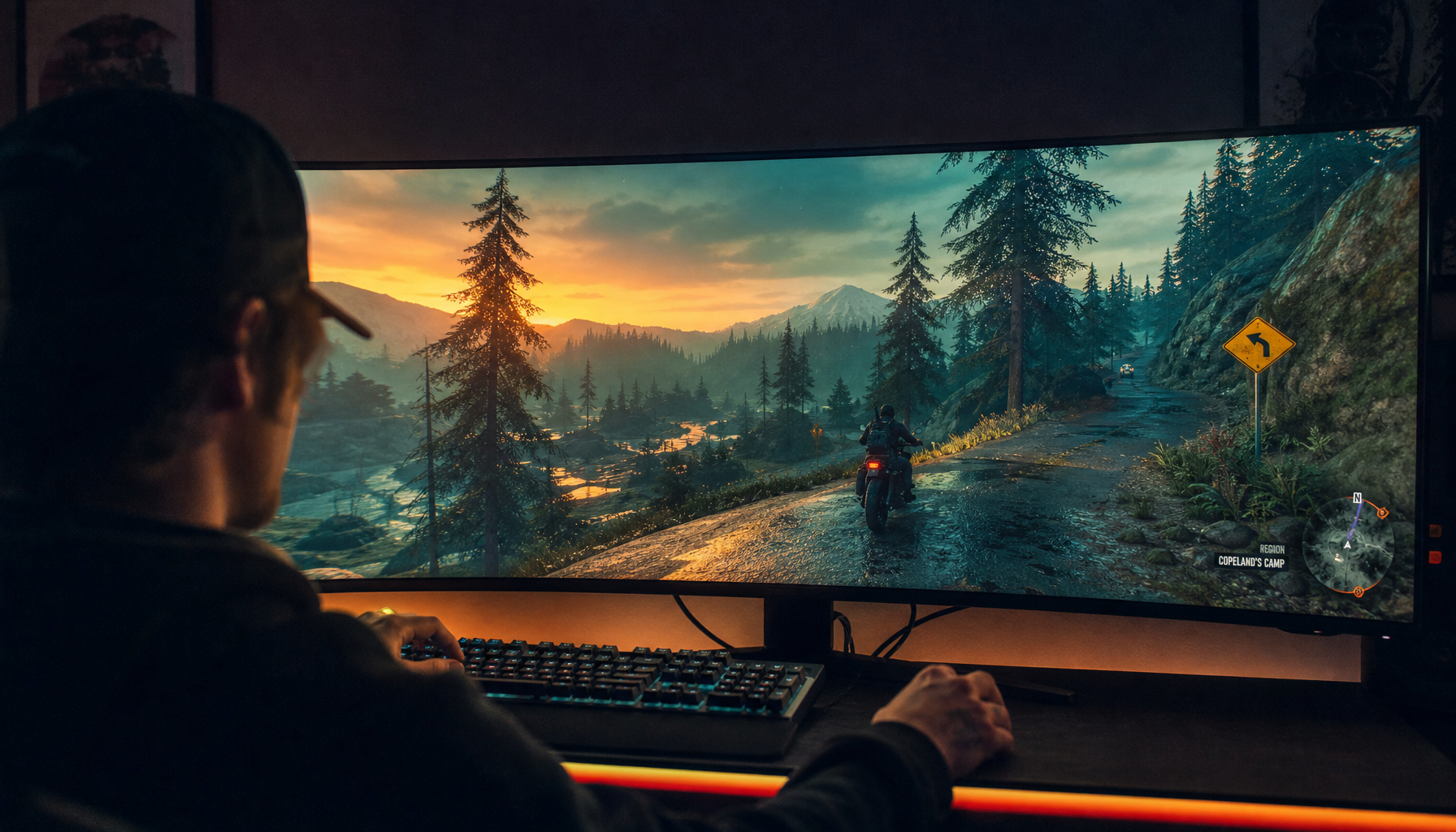
The same width that hurts portrait content is a real asset for spreadsheets, timelines, and simulation games. Super-ultrawide displays were built for extreme horizontal workspace, and 32:9 remains the widest standard consumer monitor format 32:9 aspect ratio.
For gaming and multitasking, that width can feel close to having two panels in one. A 49-inch 5120x1440 screen can hold a full browser and two code windows at once, and picture-by-picture support can even split the panel across two computers ultrawide discussion.
Gaming and timeline work benefit most
This is where curved 32:9 models make the most sense. The curve helps wrap the image into peripheral vision, which is useful in racing games, flight sims, and other panoramic titles. It also gives editing timelines, trading layouts, and dashboard-heavy work more room to breathe without stacking windows vertically.

The tradeoff is that this much screen is expensive to drive. One 32:9 calculator notes that the format can require about 77% more GPU power than 16:9 at the same height, so a high-refresh model raises the hardware bar quickly 32:9 calculator.
Why Social Feeds and Portraits Feel Awkward
Vertical content exposes the mismatch immediately. A portrait photo, a story, or a mobile-first feed occupies a narrow center column, leaving side areas that your eyes register as part of the display even though the content does not use them.
That is why people often like 32:9 for horizontal multitasking but feel less satisfied when the task shifts to reading, retouching, or communication apps. One reviewer who replaced a 49-inch ultrawide with a 32-inch horizontal monitor and a 27-inch vertical display found the rotated panel more useful for command-line tools, chat, email, and coding than the giant ultrawide alone vertical monitor setup.
Portrait layouts and mobile-first feeds
A lot of modern content is designed around narrow or near-portrait frames such as 9:16, 4:5, and 1:1. On a 32:9 monitor, that usually means the subject stays centered while the rest of the panel becomes margin or whitespace. The screen is not too small; it is simply the wrong proportion for the job.
For creators, the practical issue is bigger than viewing comfort. If your output may be repurposed into web previews or social players that expect 16:9 or 9:16, center-safe framing and fallback exports are safer than assuming the platform will preserve every edge of your composition 32:9 calculator.
Which Setup Fits Mixed Use Better?
If your day mixes gaming with social browsing, the decision is less about raw screen size and more about shape. The best setup is the one that matches the content you actually spend time on, not the one that looks most dramatic on a spec sheet.
32:9 vs. 21:9 vs. portrait secondary display

Setup |
Typical shape |
Strengths |
Weakness with vertical content |
Best fit |
32:9 super-ultrawide |
3.56:1 |
Massive horizontal workspace, wide gaming, two apps side by side |
Feels wasteful for feeds, portraits, and tall documents |
Heavy multitasking and panoramic games |
21:9 ultrawide |
2.33:1 |
Still wide, but easier to manage day to day |
Better than 32:9, but still not ideal for portrait work |
Mixed gaming and productivity |
16:9 standard monitor |
1.78:1 |
Balanced for general use, reading, and web content |
Less room for side-by-side windows |
General-purpose desktop use |
9:16 rotated |
Excellent for feeds, chat, code, and documents |
Not suited to broad horizontal workflows |
Vertical content alongside a main display |
For many buyers, 21:9 is the practical compromise. It preserves the ultrawide feel without making vertical apps look as stranded as they do on a 32:9 panel. If vertical content is a daily task, a standard monitor plus a portrait side display often wastes less space overall; for example, the a 27-inch FHD touch display with a fully adjustable stand and 90-degree pivot is a 27-inch FHD touch display with a fully adjustable stand with 90° pivot that can sit beside a 32:9 monitor for feeds or portrait content.

A better rule than “bigger is better”
The question is not whether 32:9 is impressive. It is whether your most common tasks are naturally horizontal. If they are, the format can be excellent. If your day includes a lot of reading, social browsing, portraits, or vertical video review, the extra width may cost you more than it gives back.
Practical Next Steps
If you are considering a 32:9 monitor, make the decision around workflow, not novelty. Use the checklist below before you buy.
- Audit your daily mix of apps and content types, especially whether you spend more time on wide timelines or vertical feeds.
- If vertical content is frequent, compare a 21:9 ultrawide plus portrait side monitor against a single 32:9 display.
- Prefer 5120x1440 or higher if you want a 32:9 panel that feels less cramped vertically.
- Use built-in snap layouts or a window zoning tool to keep windows centered and predictable on a very wide screen desktop setup.
- Put social feeds, chat, and document-heavy apps on a portrait display if they are part of your routine.
- For creators, test how your content looks in 9:16 and 16:9 before publishing so the framing survives cropping.
The simplest buying rule is this: choose 32:9 when your work is mostly horizontal, and choose a different layout when tall content is part of your everyday use. A 32:9 monitor can be excellent, but it is a specialized shape, not a universal one.
FAQ
Q: Is a 32:9 monitor bad for social media browsing?
A: Not bad, just inefficient. Feeds and portrait posts usually occupy a narrow center column, so a lot of the panel is left unused.
Q: Is 32:9 a poor choice for vertical video editing?
A: It can be, unless you pair it with strong window management or a secondary portrait display. The extra width does not help much when your source and preview are tall.
Q: Should I buy 32:9 or 21:9 for mixed gaming and productivity?
A: If gaming and side-by-side desktop work dominate, 32:9 is compelling. If you also read, browse, or edit a lot of portrait-oriented content, 21:9 is usually the safer compromise.
References
- XDA Developers: I finally tried a vertical monitor setup and I’m blown away
- Aspect Ratio Calculator: 32:9 Super Ultrawide
- Wikipedia: Ultrawide formats
- Aspect Ratio Finder: 32:9 calculator
- Hacker News discussion on ultrawide monitors
- XDA Developers: 4 reasons why a 32:9 monitor is perfect for a desktop setup