Yes, backlight strobing can add input lag on some monitors, but it does not always do so. The bigger practical risk is that strobing often trades brightness, adaptive-sync flexibility, and frame-rate tolerance for sharper motion.
Does your aim feel crisp when tracking a strafing target, yet slightly late when you click? On a well-tuned 120 Hz, 144 Hz, 240 Hz, or 360 Hz display, strobing can make motion visibly easier to read, but the best result depends on matching frame rate, refresh rate, and the monitor’s processing mode. Here is how to decide when strobing helps, when it hurts, and how to set it up without sacrificing responsiveness.
What Backlight Strobing Actually Does
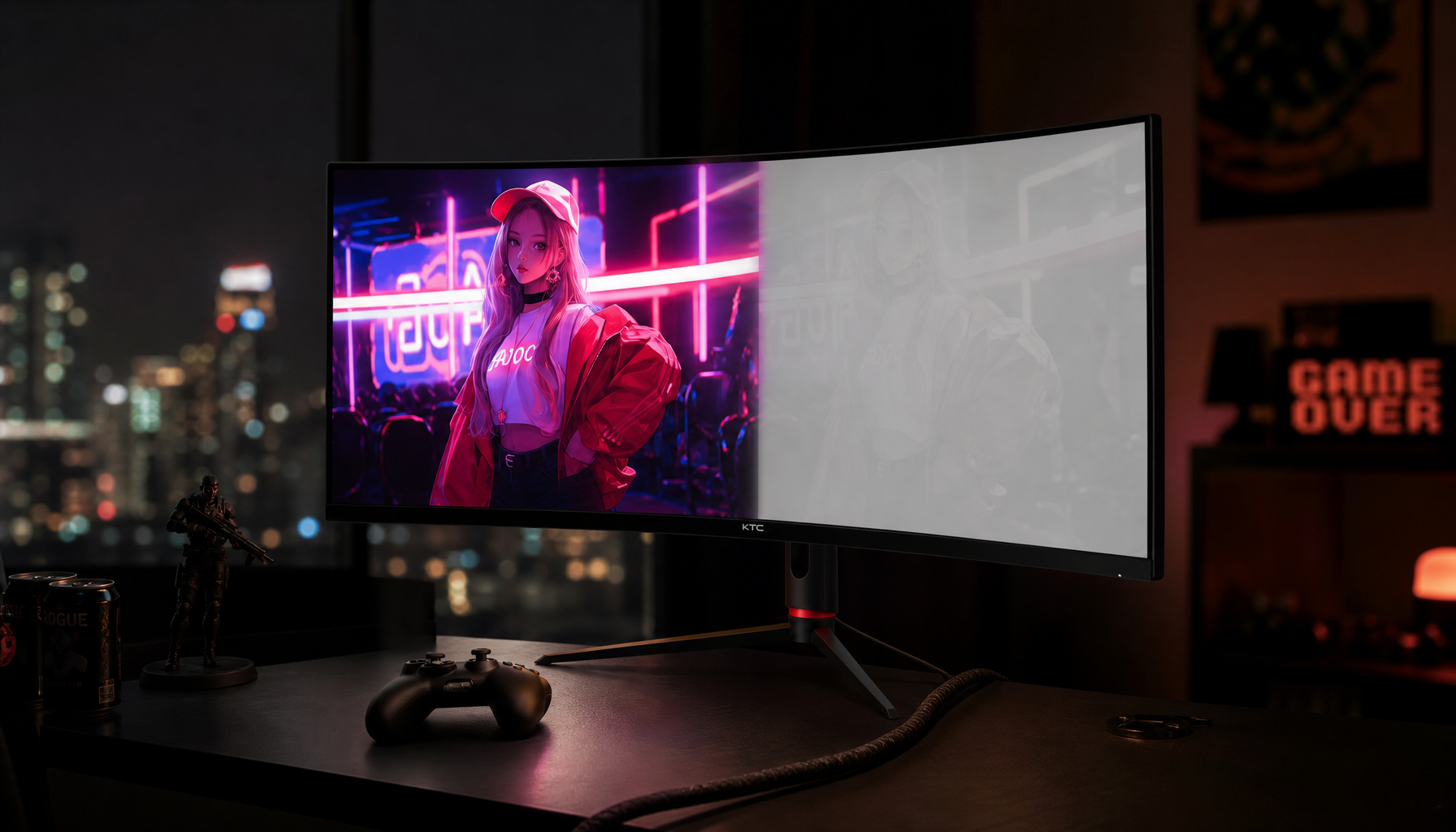
Backlight strobing is a motion-clarity technique used by many gaming monitor blur-reduction modes. Instead of keeping the backlight on continuously, the monitor flashes the image briefly during each refresh and hides part of the pixel transition in darkness. That shorter visible window reduces persistence blur, which is the smear your eyes perceive when tracking motion across a sample-and-hold screen.

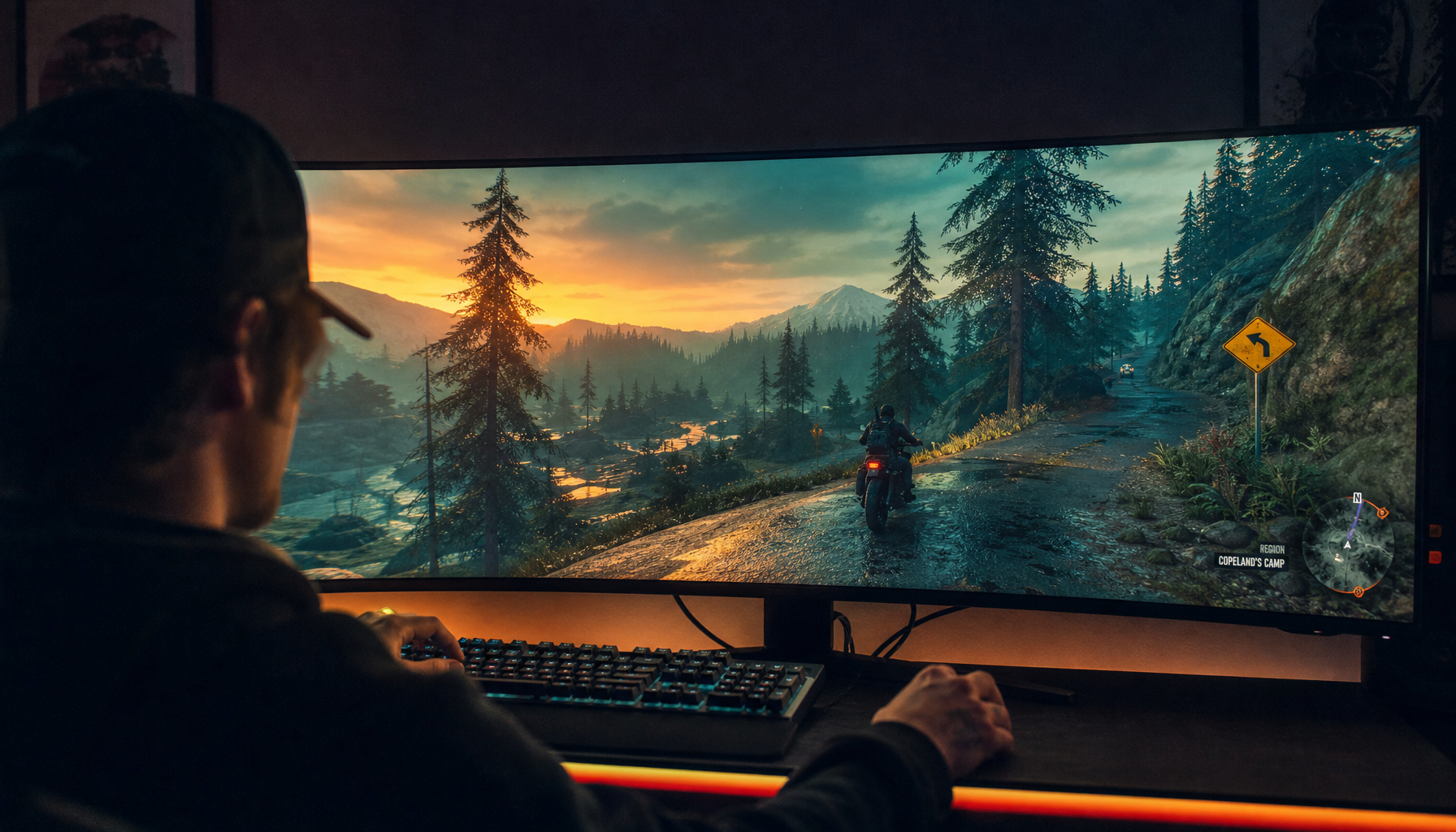
The key distinction is that strobing improves perceived motion persistence, not necessarily raw pixel transition speed. A monitor can advertise a fast gray-to-gray response time and still look blurry in motion because each frame remains visible long enough for your eye movement to smear it. Reduced persistence blur is therefore most useful in fast competitive play, scrolling test patterns, racing games, rhythm games, and any situation where you track moving detail rather than stare at a fixed crosshair.
A simple comparison shows why it matters. A 60 Hz display presents a new frame every 16.7 milliseconds, while a 240 Hz display does so every 4.17 milliseconds. Strobing can reduce the visible portion of each frame even further, which is why a strobed 120 Hz image can sometimes look clearer in motion than an unstrobbed higher-refresh image. The catch is that clarity is not the same as control latency.
Can Strobing Add Input Lag?
Backlight strobing can introduce input lag if the monitor buffers, delays, or retimes frames so the backlight pulse lands after pixel transitions have settled. That delay is implementation-specific. Some gaming monitors handle strobing with little practical penalty, while others feel less immediate because the display is waiting for the clean moment to flash the completed image.
Input lag is the delay between your action and the visible screen update. It is different from response time, which describes how quickly pixels change once the monitor begins showing the frame. The measured responsiveness database is useful because it reinforces the buying principle that measured responsiveness matters more than marketing labels, especially when game or low-lag modes change the signal path.
In hands-on setup work, the pattern is consistent: strobing feels best when the monitor is already in its fastest gaming preset, the frame rate is locked, and extra processing is disabled. It feels worst when combined with scaling, enhancement modes, unstable frame pacing, or a refresh rate the panel cannot strobe cleanly. If you enable a 1 ms MPRT mode and suddenly your mouse feels heavier, the issue may not be the strobe flash itself; it may be the monitor’s processing path around that mode.
Motion Clarity Versus Latency
The core trade is not “strobing equals lag.” It is that strobing needs timing discipline. A clean strobe wants every frame to arrive at a predictable interval, then the backlight fires when the frame is ready. Competitive players often benefit because sharper motion makes enemy tracking and recoil reading easier. But if the mode adds even a few milliseconds or breaks adaptive sync, that advantage can shrink in games where click timing is everything.

The monitor responsiveness factors include both pixel behavior and image presentation over time, which is why two monitors with similar response-time claims can feel and look different in play. A fast 240 Hz sample-and-hold mode may feel more responsive, while a strobed 120 Hz or 144 Hz mode may look clearer during horizontal tracking. For an FPS player, that means the best mode depends on whether the game rewards visual tracking clarity or the lowest possible end-to-end delay.
Mode |
Best For |
Main Advantage |
Main Risk |
Unstrobed high refresh |
Esports, mixed gaming, desktop use |
Lowest-friction responsiveness and better brightness |
More persistence blur |
Strobed fixed refresh |
Aim tracking, retro games, fast scrolling |
Sharper motion and less smear |
Possible lag, flicker, dimming, crosstalk |
Adaptive sync enabled |
Open-world and variable-FPS games |
Smoother pacing with less tearing |
Usually less motion clarity than clean strobing |
Hybrid adaptive sync plus strobe |
Newer premium esports displays |
Better clarity with variable timing |
Quality varies heavily by model |
Why Adaptive Sync and Strobing Often Clash
Variable refresh timing changes the monitor’s cadence to follow your GPU. Strobing prefers a steady rhythm. That is the conflict. If your frame rate jumps from 238 FPS to 211 FPS to 225 FPS during a fight, a traditional strobe system may not know exactly when to flash without creating flicker, image doubling, or crosstalk.

This is why many monitors disable adaptive sync when blur reduction is enabled. Backlight strobing with variable refresh timing can work, but only when the monitor is specifically designed to coordinate variable refresh timing, overdrive, and strobe pulses. Otherwise, adaptive sync is usually the safer default for graphically demanding games, while strobing is a specialized mode for stable high-FPS play.
Newer systems are pushing this boundary. Variable refresh behavior with improved motion clarity matters because older strobe modes often forced players to choose between sharp motion and adaptive smoothness. The buying takeaway is straightforward: do not assume “adaptive sync plus MPRT” on a spec sheet means the mode is clean, bright, and low-lag. Look for real testing of crosstalk, usable refresh range, brightness, and input lag.
The Brightness, Flicker, and Crosstalk Costs
Strobing reduces blur by reducing visible time, but shorter visible time also means less light reaches your eyes. That is why many blur-reduction modes look dimmer. Some monitors let you adjust pulse width: a shorter pulse gives sharper motion and a darker picture, while a longer pulse gives more brightness and more blur. In a bright room, the clearer mode may become less usable simply because the screen loses punch.
Flicker is another comfort variable. Even when you do not consciously see flicker, it can contribute to fatigue for sensitive users. Backlight flicker and brightness control can affect eye strain, so a strobe mode that looks technically sharp may still be a poor daily setting for long office sessions, coding, spreadsheets, or reading. For productivity displays and portable smart screens, treat strobing as a gaming-only toggle, not a universal upgrade.
Crosstalk is the double-image artifact that appears when pixel transitions and the backlight pulse do not align cleanly. It often shows up more near the top or bottom of the screen than in the center. In practical terms, a motion test may look sharp in the middle lane while the upper lane shows a faint duplicate. That does not always ruin gameplay, but it matters for players who scan the whole screen rather than tunnel on the center.
How to Test Whether Strobing Is Hurting Your Setup
Start by comparing the monitor’s fastest normal gaming mode against its strobing mode at the same refresh rate. Use a familiar game, not only a synthetic test. Disable in-game motion blur, use native resolution, turn off sharpening and extra image enhancement, and keep the same mouse sensitivity. If the strobed mode looks clearer but makes flick shots or rhythm timing feel late, treat that as a real result even if the spec sheet says “1 ms.”
Frame pacing is the next checkpoint. Strobing works best when FPS closely matches refresh rate. On a 144 Hz display, a stable 144 FPS is cleaner than a swing between 95 and 144 FPS. If your GPU cannot hold 144 FPS, try 120 Hz strobing with a 120 FPS cap. On a 240 Hz monitor, 144 Hz strobing can sometimes look cleaner than forcing a poor 240 Hz strobe mode, depending on panel tuning.
A long-running real-world strobe quality thread is a useful reminder that strobe quality varies by model, with differences in brightness, tint, artifacts, and perceived gaming sharpness. That lines up with real-world monitor setup: two displays can share the same basic strobing concept yet deliver very different competitive value.
Should Competitive Players Use It?
Use strobing when your game runs at a stable frame rate, your monitor’s implementation is clean, and you value motion tracking more than maximum brightness or adaptive-sync smoothness. Tactical shooters, arena shooters, side-scrollers, and retro titles can benefit because the screen stays more readable during fast panning.
Avoid it when input feel is your top priority and the mode adds delay on your specific monitor. Also avoid it for games with unstable FPS, heavy HDR presentation, large brightness swings, or long sessions where flicker fatigue shows up. For cinematic AAA play, adaptive sync with a high refresh rate is usually the better experience. For office productivity, an IPS or OLED panel choice should be driven more by text clarity, brightness, burn-in risk, and workspace use; IPS and OLED tradeoffs matter more than strobing for daily work.
For portable smart screens, strobing is rarely the priority. Battery life, brightness, USB-C behavior, touch latency, scaling, and eye comfort usually matter more. If a portable display includes a blur-reduction mode, test it as a niche gaming feature rather than a reason to buy the screen.
Buying Advice: What to Check Before You Pay
The strongest strobing monitors are not defined by “1 ms MPRT” alone. Look for independent measurements, pursuit photos, brightness while strobed, supported strobe refresh rates, adaptive-sync compatibility, pulse-width controls, and whether the monitor keeps low-lag game mode active during strobing. A monitor that is bright, low-crosstalk, and adjustable at 120 Hz, 144 Hz, and 240 Hz is more valuable than one that advertises a single blur-reduction number with no context.

For value-oriented buyers, prioritize a monitor with excellent unstrobed performance first. High refresh rate, low measured input lag, strong overdrive tuning, and usable brightness should come before strobe branding. Strobing is a performance multiplier only when the foundation is already strong.
FAQ
Is 1 ms MPRT the same as 1 ms input lag?
No. MPRT describes perceived motion persistence, while input lag describes delay before the result appears. A monitor can have a 1 ms MPRT blur-reduction mode and still have more input lag than its normal game mode.
Is strobing better than 240 Hz or 360 Hz without strobing?
Sometimes for motion clarity, not always for responsiveness. A clean strobed 144 Hz mode may make tracking clearer, while an unstrobed 240 Hz or 360 Hz mode may feel more immediate and brighter. Test both in the game you actually play.
Should I leave backlight strobing on all day?
No. Use it selectively. It can reduce motion blur, but the flicker and reduced brightness make it a poor default for office work, reading, creative apps, and long mixed-use sessions.
Backlight strobing is a precision tool, not a universal speed upgrade. Use it when stable FPS and sharper tracking win the match; switch it off when low latency, adaptive-sync smoothness, brightness, or all-day comfort matter more.