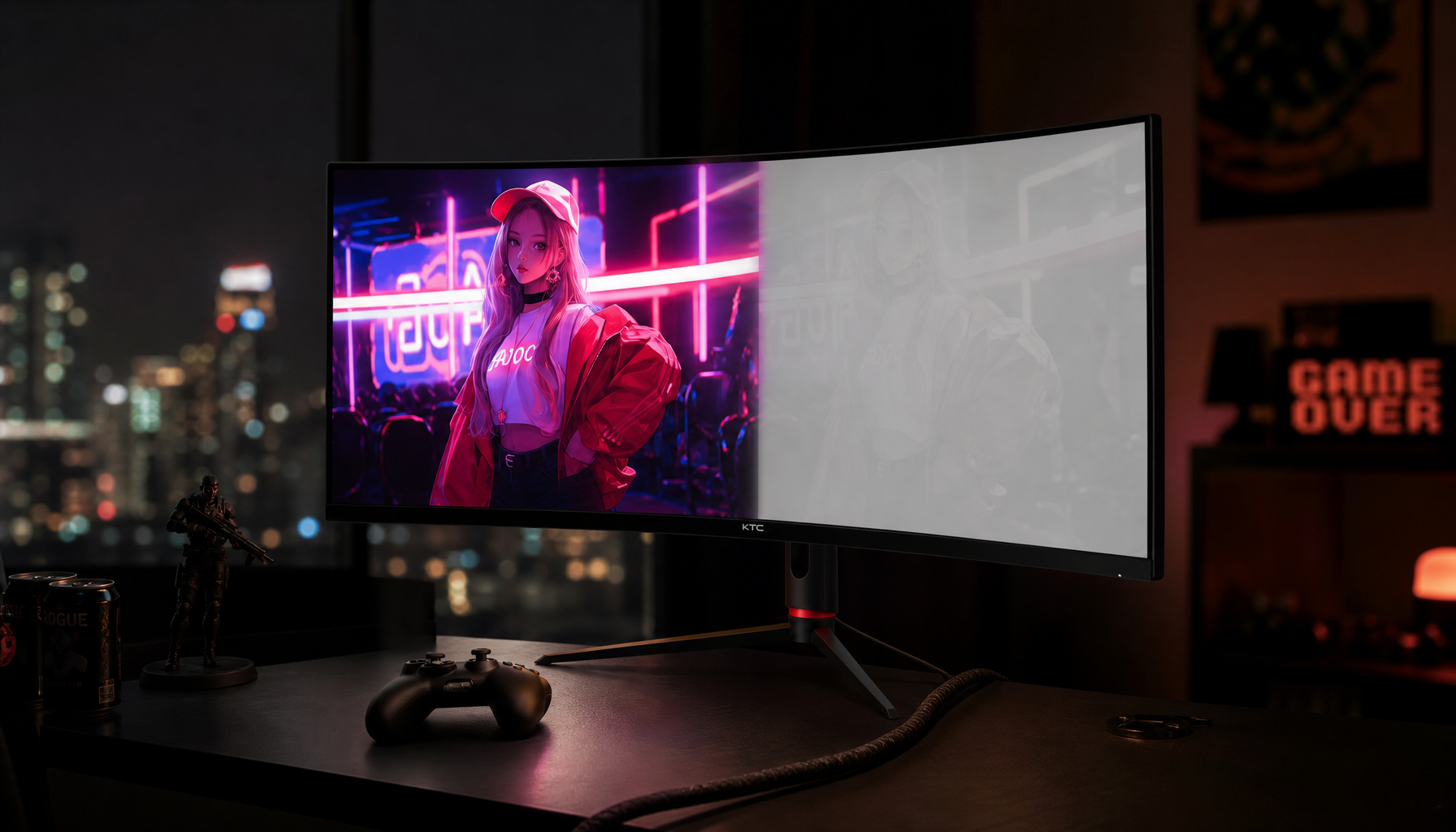
Brightness uniformity determines whether the same shot looks equally exposed across the whole screen. When the center, corners, or edges drift in luminance, a colorist may correct a panel flaw instead of the image.
Why Uniformity Matters in Video Grading
Video grading depends on stable visual judgment: skin tone, shadow lift, highlight roll-off, and scene matching all require a display that behaves consistently. If the left side of your monitor is dimmer, a face near that edge can look underexposed even when the footage is correct.

That matters because grading is not just making a clip look better. It standardizes contrast, brightness, color, and tone so the story translates across devices, a core part of grading media projects.
For SDR Rec.709 work, many colorists still reference around 100 nits in controlled rooms, while brighter rooms may require higher luminance to preserve perceived contrast. The key is not maximum brightness; it is repeatable brightness.
The Accuracy Problem: You May Grade the Monitor, Not the Footage
Poor brightness uniformity creates false corrections. A dim corner can push you to raise shadows too far. A bright center can make highlights feel clipped too early. A warm or cool patch can make neutral grays look tinted.
This becomes especially risky in common grading layouts. Scopes may sit on one side, the viewer in the middle, and reference stills on another. If those areas have different brightness behavior, your eye is comparing panel zones as much as image content.

Dynamic display features can make this worse. Forum users often question settings like Dynamic Contrast because they change the image based on content, undermining stable judgment during accurate color grading.
A monitor can measure well in the center and still be unreliable for grading if the outer image area visibly drifts during real scenes.
How Big a Difference Is Too Big?
Uniformity is usually tested by measuring multiple points across the screen. In projection testing, one common method compares the darkest and brightest readings across a nine-point grid, and the same sample can score very differently depending on the formula used for brightness uniformity.

For video work, think in practical terms. If a white frame measures 120 nits in the center but 102 nits in a corner, that corner is 15% dimmer. On a spreadsheet, that is a number; in grading, it can become a bad exposure decision.
A serious grading display should keep luminance and color shifts subtle enough that they do not influence creative choices. Affordable color-accurate monitors can be useful, but monitor selection should still include uniformity and calibration rather than headline resolution alone.
Quick Checks Before You Trust a Display
You do not need a full lab to spot obvious problems, but measurement tools are better for paid color-critical work.
- View full-screen white, 50% gray, and near-black patterns.
- Check from normal seating distance, centered and square to the panel.
- Disable dynamic contrast, vivid modes, eco dimming, and auto brightness.
- Let the monitor warm up before judging consistency.
- Recheck after calibration, not only out of the box.

Brightness should also match the room. A nit measures screen luminance, and higher output improves visibility in brighter spaces, but the best setup matches brightness to ambient light instead of simply maxing out screen brightness.
What to Prioritize When Buying for Grading
For SDR grading, prioritize uniformity, calibration support, stable gamma, accurate Rec.709 coverage, and controlled room lighting. For HDR grading, add peak brightness, local dimming behavior, black level, and tone-mapping accuracy.
A high-nit display is not automatically a grading display. Brightness helps with HDR impact and glare resistance, but uneven brightness can still make a powerful panel unreliable.
The strongest value choice is the display that gives you confidence: consistent from center to edge, predictable after calibration, and honest enough that your corrections improve the footage rather than compensate for the screen.