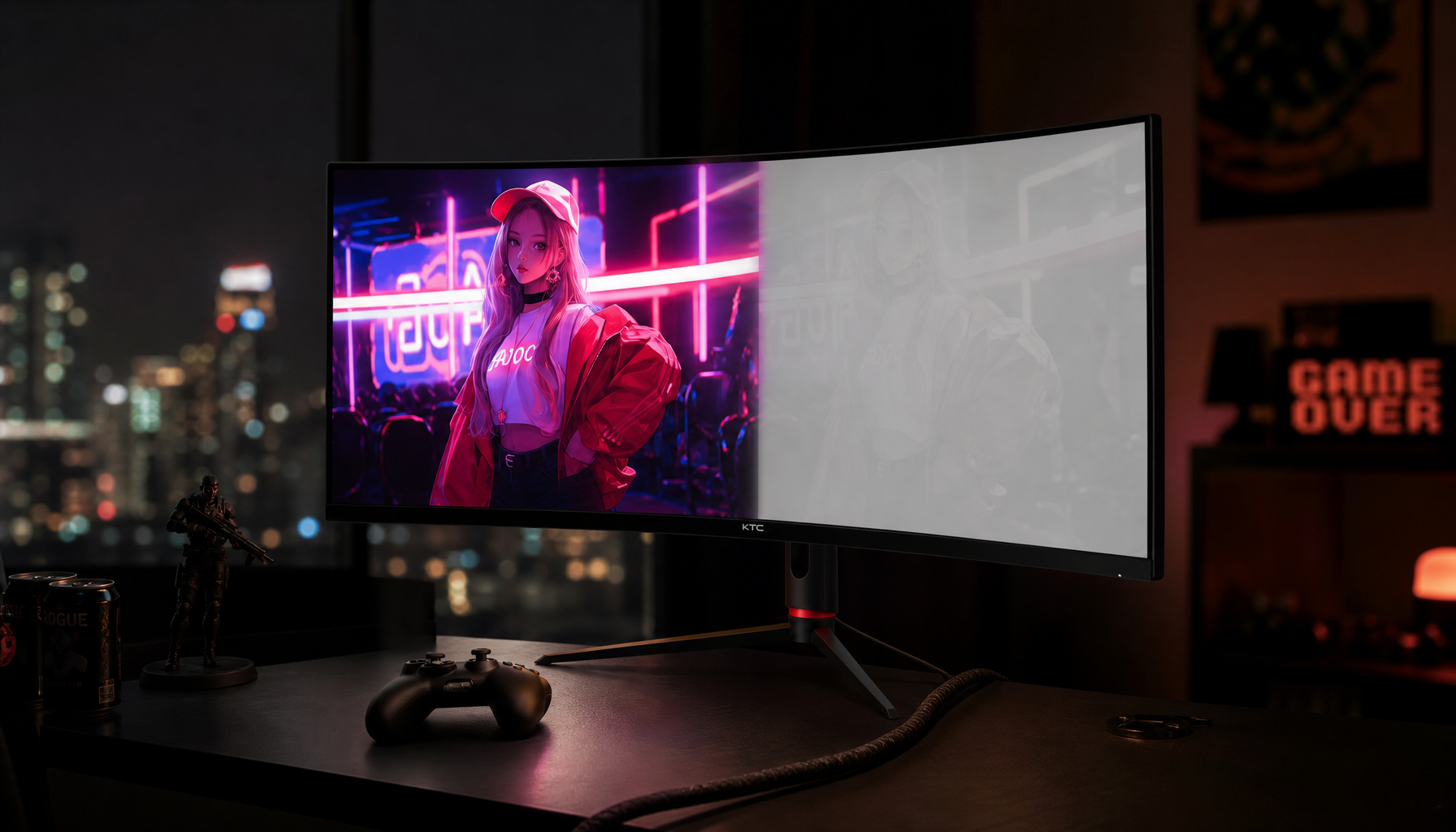
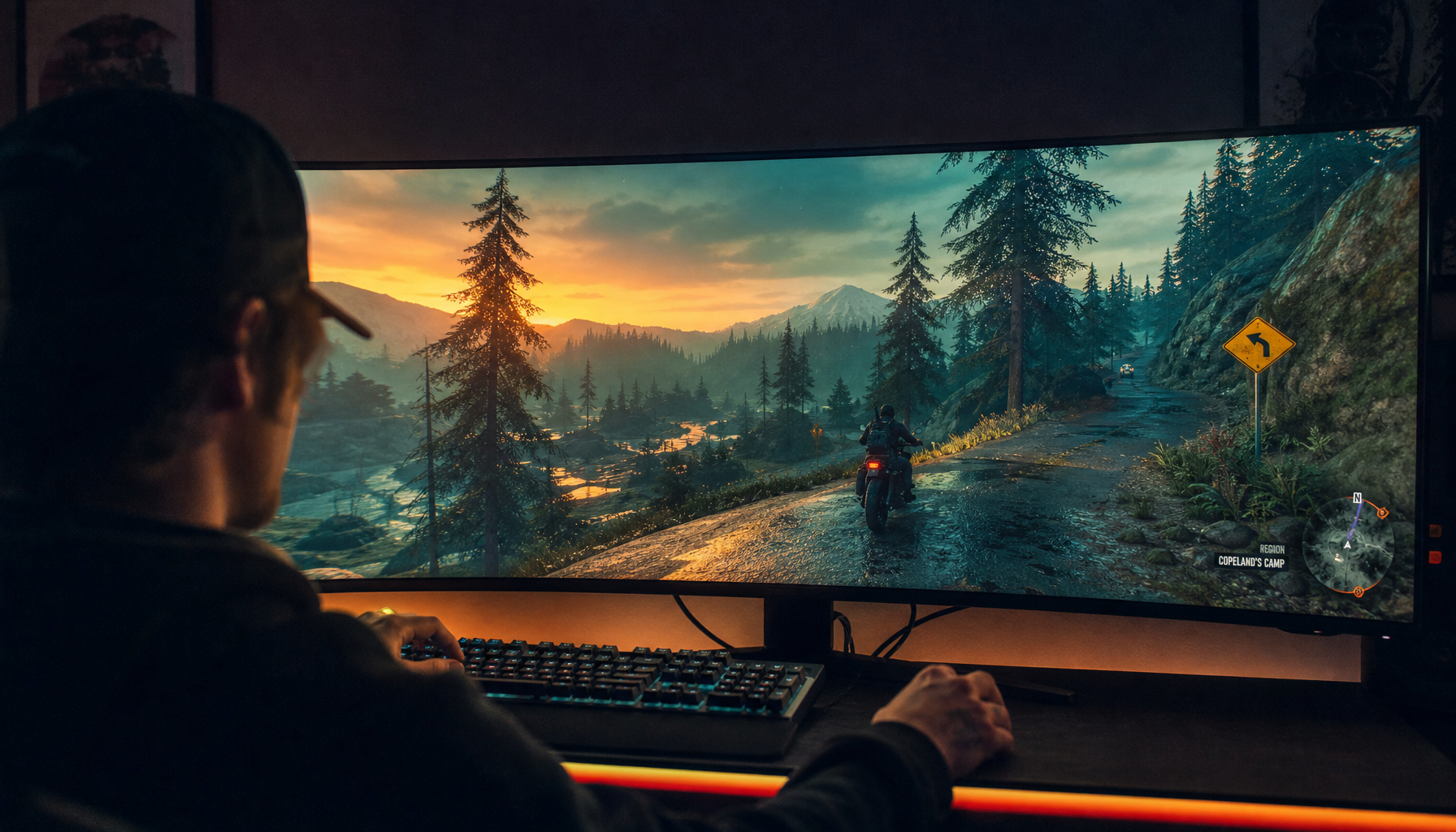
Display pixel substructure shapes how cleanly a screen draws color edges, fine text, icons, and high-contrast UI details. RGB-stripe layouts are usually the safest choice for text-heavy work, while OLED and emerging display designs can deliver stronger immersion but may need higher pixel density, tuning, or a clearer match to your workload.
Do white text on a dark game launcher, spreadsheet gridlines, or tiny code comments look slightly purple, green, or fuzzy on an otherwise premium monitor? In real-world monitor selection, checking subpixel layout, pixel density, chroma support, and text-rendering behavior can prevent an expensive “great for games, tiring for work” mismatch. A practical screen check can help you choose a display for competitive play, office productivity, creative review, or portable use.
Why Pixel Substructure Matters
A display image is built from pixels, but each pixel is usually made from smaller red, green, and blue light elements called subpixels. The way those subpixels are shaped and arranged affects how the display blends color, how software smooths text edges, and how visible colored artifacts become at normal viewing distance.
For years, most desktop software has assumed a simple RGB-stripe pattern, where red, green, and blue subpixels sit in a predictable horizontal row. That assumption is powerful because text rendering can light individual subpixels to make diagonal and curved letter edges look smoother than the full pixel grid would allow. When the physical layout changes, the software’s edge-smoothing model can stop lining up with the screen.
This is why two monitors with the same resolution can feel different. A 27-inch 4K RGB-stripe LCD and a 27-inch OLED with a non-standard layout may both show 3,840 x 2,160 pixels, yet the LCD can look cleaner in small text while the OLED looks more cinematic in games and video. Resolution is the count; substructure is the way that count is physically delivered.
Key Definitions Without the Fog
Pixel Density
Pixel density, usually expressed as pixels per inch, describes how tightly pixels are packed. Higher density makes individual pixels and subpixel artifacts harder to see. For example, a 43-inch 4K display lands near the pixel density of a 27-inch 1440p monitor, while a 49-inch 4K display spreads the same pixel count over a larger surface and can make desktop text look more visibly coarse.
Pixel density also changes scaling decisions. At 100% scaling, a 27-inch 4K screen draws many interface elements physically smaller than a 27-inch 1440p screen. The letters may be sharper at the pixel level, but they can become too small for comfortable all-day work unless operating-system scaling is adjusted.
Subpixel Layout
Subpixel layout is the physical arrangement of the red, green, blue, and sometimes white elements inside each pixel. Standard RGB stripe is the most software-friendly desktop layout. QD-OLED and WOLED panels often use different layouts, which can create color fringing around text because text smoothing expects a structure the panel does not actually have.

Many current OLED and QD-OLED monitors are affected because some WOLED panels use an added white subpixel and some QD-OLED panels use a triangular RGB arrangement. The buyer lesson is direct: OLED is not automatically bad for text, but the panel’s subpixel geometry can make text less crisp than expected.
Color Fringing
Color fringing is the visible tinted edge around letters, icons, or high-contrast shapes. It may appear as purple, green, red, yellow, or shadow-like edging depending on the panel type, font rendering, background color, and viewing distance.

In productivity work, fringing shows up most often in black text on white backgrounds, colored UI icons, chart labels, code editors, document viewers, and spreadsheet grids. In games, it is usually less distracting because motion, texture, and scene variation hide static edge artifacts, though HUD text and bright overlays can still reveal it.
How Substructure Changes Color Rendering
Subpixel design affects color because each pixel is not just a square of color; it is a miniature lighting system. A clean RGB stripe gives software a predictable red-green-blue sequence. A triangular QD-OLED layout, an RWBG WOLED layout, or a panel with a lower emitting aperture changes where color energy comes from inside each pixel.
That matters most at edges. A red line, a white letter, or a green status icon is often only a few pixels wide. If the subpixels do not align with the rendering assumptions, one side of the edge may receive more red or green energy than intended. Your eye reads that as a colored outline, not as a perfectly neutral edge.
A recent perception study found that pixel-aperture ratio can affect perceived glossiness and transparency, while roughness varied more by observer and image. The practical translation is that display structure is not just an engineering footnote; it can change how material surfaces look, especially when reviewing product photos, 3D renders, glossy UI elements, or creative assets where subtle sheen matters.
For office users, this is less about cinematic color and more about trust. A product color swatch, logo, or dashboard status badge should look stable across the screen. For pro gaming, the stakes are different: high contrast, fast response, deep blacks, and immersive HDR may outweigh tiny static-text artifacts, especially if the monitor is not used for eight hours of document work.
How Substructure Changes Text Clarity
Text clarity is where subpixel layout becomes brutally practical. Many desktop and app-level text systems have historically been tuned around RGB-stripe behavior. When they meet WOLED or QD-OLED geometry, anti-aliasing can place color smoothing in the wrong physical position.
The result is not always blur. Sometimes text looks sharp but tinted. Sometimes black letters look like they have a faint shadow. Sometimes spacing feels inconsistent even though the font metrics are correct. The sharper your eyes, the closer your viewing distance, and the lower the pixel density, the more likely you are to notice it.
A 34-inch 3440 x 1440 ultrawide QD-OLED around 109 pixels per inch is a good example. It can feel spectacular in games because contrast, motion, and color volume carry the experience. Yet in a code editor or spreadsheet, the non-standard layout may make fine text edges less neutral than a high-quality IPS LCD at similar density. Move to a 32-inch 4K OLED and the higher density can make the same class of artifact much harder to see.

Text-smoothing tuning can help, but it is not universal. Some applications use their own text rendering, and some rendering paths do not honor the same system-level settings. Turning subpixel smoothing off may reduce colored edges on certain WOLED panels, but it can also make text thinner and less polished. The best result often comes from testing your actual apps rather than judging only a browser home page.
RGB Stripe, QD-OLED, WOLED, and 4:4:4 Compared
Display structure |
Strength |
Tradeoff |
Best fit |
RGB-stripe LCD |
Predictable text rendering and broad software compatibility |
Contrast and black levels depend on panel type and backlight |
Office work, coding, finance dashboards, mixed productivity |
QD-OLED triangular RGB |
Excellent contrast, color, and gaming immersion |
Possible colored text edges, especially at lower pixel density |
Gaming-first setups with moderate productivity |
WOLED with white subpixel |
Strong blacks, HDR appeal, high-end media performance |
Shadow-like or colored text artifacts can appear in some UI colors |
Media, gaming, creative use with careful text testing |
4K TV used as monitor |
Large workspace and strong value when configured correctly |
Must confirm 60 Hz, video-input bandwidth, and full chroma |
Budget large-format productivity and engineering work |
A major hidden requirement for TV-as-monitor use is full chroma. A 4K screen running 4:2:0 or 4:2:2 chroma can make text look smeared or color-shifted because color detail is not preserved for every pixel. For desktop use, 4:4:4 chroma at 60 Hz is the baseline target.
This is also where cables and settings matter. A 4K 60 Hz 4:4:4 signal needs enough bandwidth, and weak cables or limited ports can create sparkles, artifacts, or fallback modes. TV processing features such as sharpening, motion enhancement, and dynamic contrast should usually be disabled for monitor duty because they can exaggerate edges or add delay.
Practical Buying Advice by Use Case
For Competitive Gaming
Prioritize refresh rate, response time, input lag, contrast, and motion handling, but do not ignore HUD clarity. If the monitor will mainly run shooters, racing games, or cinematic titles, QD-OLED and WOLED weaknesses in static text may be acceptable because motion and scene detail hide many artifacts.
The safer premium move is a newer high-density OLED panel. Higher pixel density shrinks the visible size of fringing and makes non-standard layouts less obvious. If you play at a desk and also read chat apps, launchers, maps, and performance overlays, test white and colored HUD text before committing.
For Office Productivity
Choose text clarity first. A standard RGB-stripe IPS or high-quality VA LCD remains the low-risk choice for email, spreadsheets, writing, coding, legal documents, accounting tools, and browser-based operations. IPS generally gives stronger viewing angles and color consistency, while VA often gives deeper blacks and stronger contrast.

For a large 4K productivity screen, think in density rather than diagonal size alone. Around 43 inches at 4K can feel like a large, usable desktop canvas. Pushing 4K to 49 inches lowers density enough that fine text can look closer to a 24-inch 1080p experience, which may feel too coarse for detail work.
For Creative and Color-Sensitive Review
Substructure is only one part of color accuracy. Tone response, calibration, ambient light, panel uniformity, gamut behavior, and viewing angle all matter. Still, subpixel layout becomes important when judging fine colored edges, typography, logo marks, UI mockups, product photography, or glossy material renders.
A display used for final color approval should be tested with the actual content type. Open style guidelines, product pages, skin tones, saturated reds, neutral grays, and small colored text. If a panel makes a clean logo edge look tinted or a transparent material look oddly harsh, its structure may be working against the task even if headline color specs look strong.
For Portable Smart Screens
Portable displays are often judged by size, brightness, touch support, and USB-C convenience, but pixel density and subpixel behavior still matter. A compact 14-inch or 16-inch 1080p portable monitor can look reasonably sharp because the pixels are packed into a smaller area, while a larger low-density portable panel can make text fatigue appear quickly.
For travel productivity, value comes from readable text at comfortable scaling. A portable screen used beside a laptop should not force you to squint, lean forward, or tolerate fuzzy app menus. Match scaling between laptop and portable display where possible, then check whether your most-used apps render text consistently across both screens.
A Simple Screen Check Before You Buy
Use a clean test pattern from your normal workflow. Open a spreadsheet with thin gridlines, a document with small black body text, a code editor with colored syntax, a browser page with gray UI text, and a game or video scene with bright HUD elements. View the screen at your real seating distance, not from a showroom angle.
Look for colored outlines, shimmering edges, inconsistent letter weight, or text that looks good in one app but weak in another. Then adjust scaling, text smoothing, sharpness, color temperature, and monitor mode. If the panel only looks acceptable after aggressive sharpening, it is probably the wrong tool for text-heavy work.
The decision should be workload-led. For a gaming-first desk, a high-density OLED can be a powerful upgrade. For a finance, writing, coding, or operations station, RGB-stripe clarity still pays off every hour. For a large-format value setup, a properly configured 4K TV can work well, but only when it supports 4K 60 Hz with 4:4:4 chroma and has its processing stripped back.
Bottom Line
Display pixel substructure affects color rendering and text clarity because software, subpixels, and your eyes all meet at the edge of every letter and icon. Buy the screen for the work it must do most: RGB-stripe density for relentless text, high-density OLED for immersive performance with fewer visible artifacts, and full 4:4:4 signal support whenever a TV or large smart display becomes your desktop.