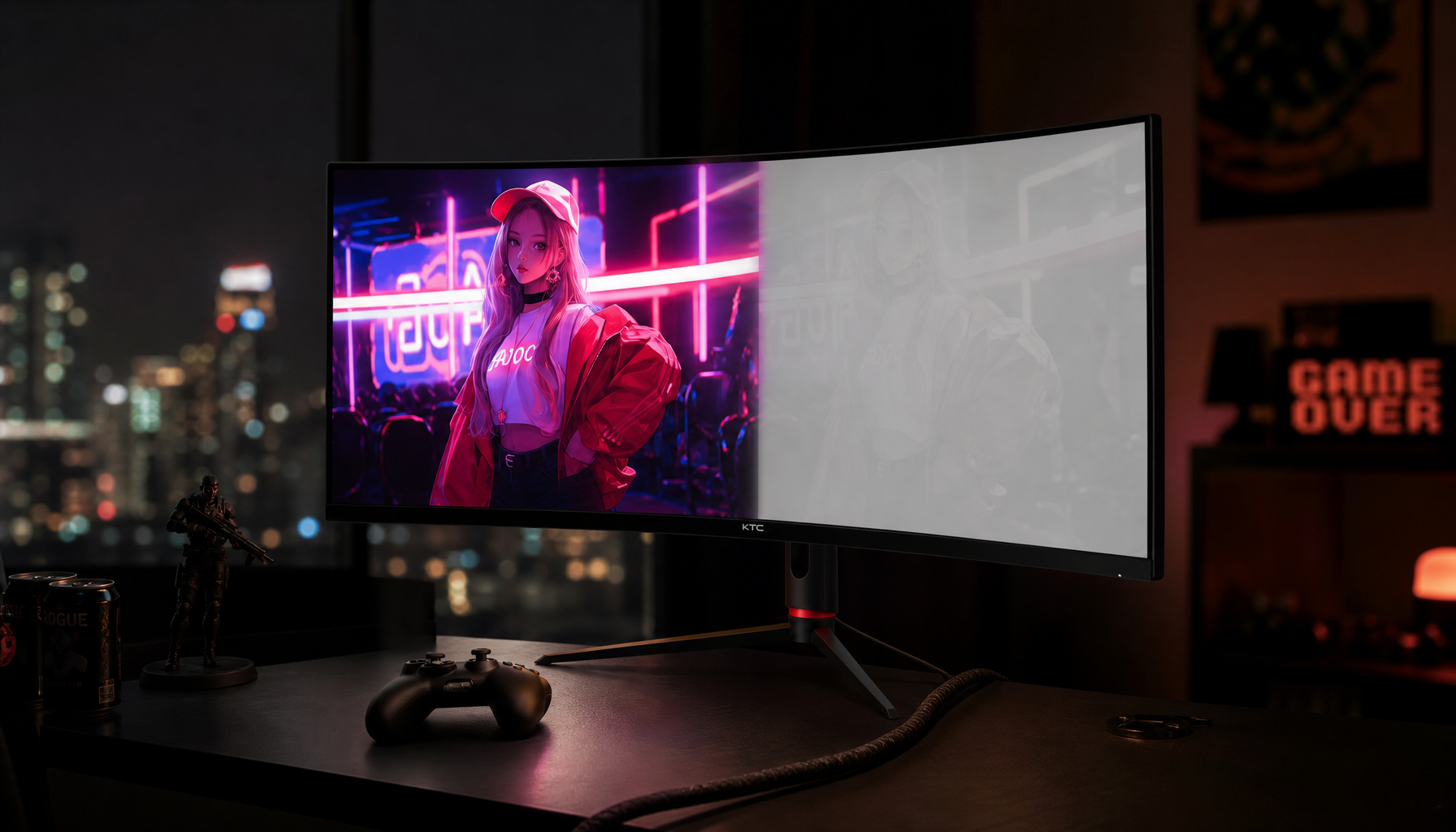
HDR can make grays and white backgrounds look pink, green, blue, flat, or washed out when the operating system, monitor, and content use different brightness, color-space, and tone-mapping assumptions.
Does your white document suddenly look warm on one side, cool on the other, or oddly gray the moment HDR is enabled? A practical calibration pass can usually show whether the problem is HDR mapping, monitor picture mode, or physical panel uniformity before you replace good hardware. Here is how to identify the cause and tune the screen for cleaner grays, steadier whites, and better HDR performance.
Why Neutral Colors Expose HDR Problems First
Neutral gray and white backgrounds are harsh display tests because they leave little visual distraction. A colorful game scene can hide small tone or tint errors, but a spreadsheet, code editor, browser page, or blank document puts the display’s white point, brightness uniformity, gamma behavior, and color management directly in front of you.
HDR, or high dynamic range, is designed to expand brightness range, contrast, and color detail beyond SDR. HDR-capable displays can show a wider range of brightness and color than SDR displays, and the HDR calibration utility exists to improve HDR color accuracy, consistency, and vividness. The catch is that desktop work is often still SDR content being mapped into an HDR mode, so the monitor is not simply showing better color. It is translating one signal environment into another.
That translation is where neutral backgrounds shift. If the SDR white level is mapped too high, the desktop can look glaring and pale. If the monitor switches into a wide-gamut HDR preset, familiar sRGB grays can pick up a tint. If the panel has weak uniformity, HDR brightness changes can make the issue more obvious than it was in SDR.
The Main Causes of HDR Gray and White Color Shifts
SDR Content Is Being Mapped Into HDR Mode
Enabling HDR does not convert every app into native HDR. The desktop, office apps, browsers, and many creative tools still behave like SDR content. Testing-focused advice makes the point directly: enabling HDR tells the operating system to output an HDR signal, but it does not automatically optimize the image for your exact monitor.
That matters because the desktop is full of large neutral areas. If the system guesses the monitor’s peak brightness or SDR paper-white level poorly, the result can be a white background that looks dim, gray, bluish, or overexposed. A 27-inch gaming monitor with HDR enabled may make an email window look less clean than SDR even though an HDR game looks excellent, because the game and the desktop are being processed differently.
Do not judge HDR from the default toggle alone. Open the HDR settings and adjust SDR content brightness while looking at the apps you use daily. For productivity, the target is not maximum punch; it is a white background that feels stable, readable, and similar in brightness to your SDR setup.
The Monitor Changes Color Mode When HDR Turns On
Many displays switch picture behavior when HDR is detected. They may move from an sRGB-like SDR mode into a native wide-gamut, DCI-P3, BT.2020, or HDR mode. That can be correct for HDR video, but it can make neutral desktop elements look different if SDR colors are not being managed cleanly.
The same RGB value can look different when one part of the workflow assumes sRGB and another assumes a wider or linear color space. KTC’s color-management troubleshooting notes explain that color space mismatches commonly occur when a viewport, renderer, export format, media player, and monitor interpret color differently. The same principle applies to HDR desktops: the app, operating system, graphics hardware, cable path, and monitor all have to agree on what the color numbers mean.
For a real-world check, open a neutral gray image or a blank white document in SDR, then enable HDR without changing the monitor’s physical position. If the entire screen shifts color evenly, suspect mode switching or HDR mapping. If only corners or bands shift, suspect panel uniformity.
Gamma and Tone Mapping Are Not the Same as Brightness
A common mistake is treating HDR tint as a simple brightness issue. Brightness changes light output, but gamma and tone mapping shape how midtones move between black and white. Neutral gray sits directly in that zone, so small tone-curve differences become visible quickly.
In SDR desktop use, a gamma target near 2.2 is the common practical baseline for office work, web content, and general PC use. HDR uses a different transfer behavior, so when SDR apps are shown inside HDR mode, the system has to place those midtones somewhere. If that placement is off, 50% gray may look too lifted, too dark, or slightly colored because the display’s RGB channels are not tracking equally at that brightness.

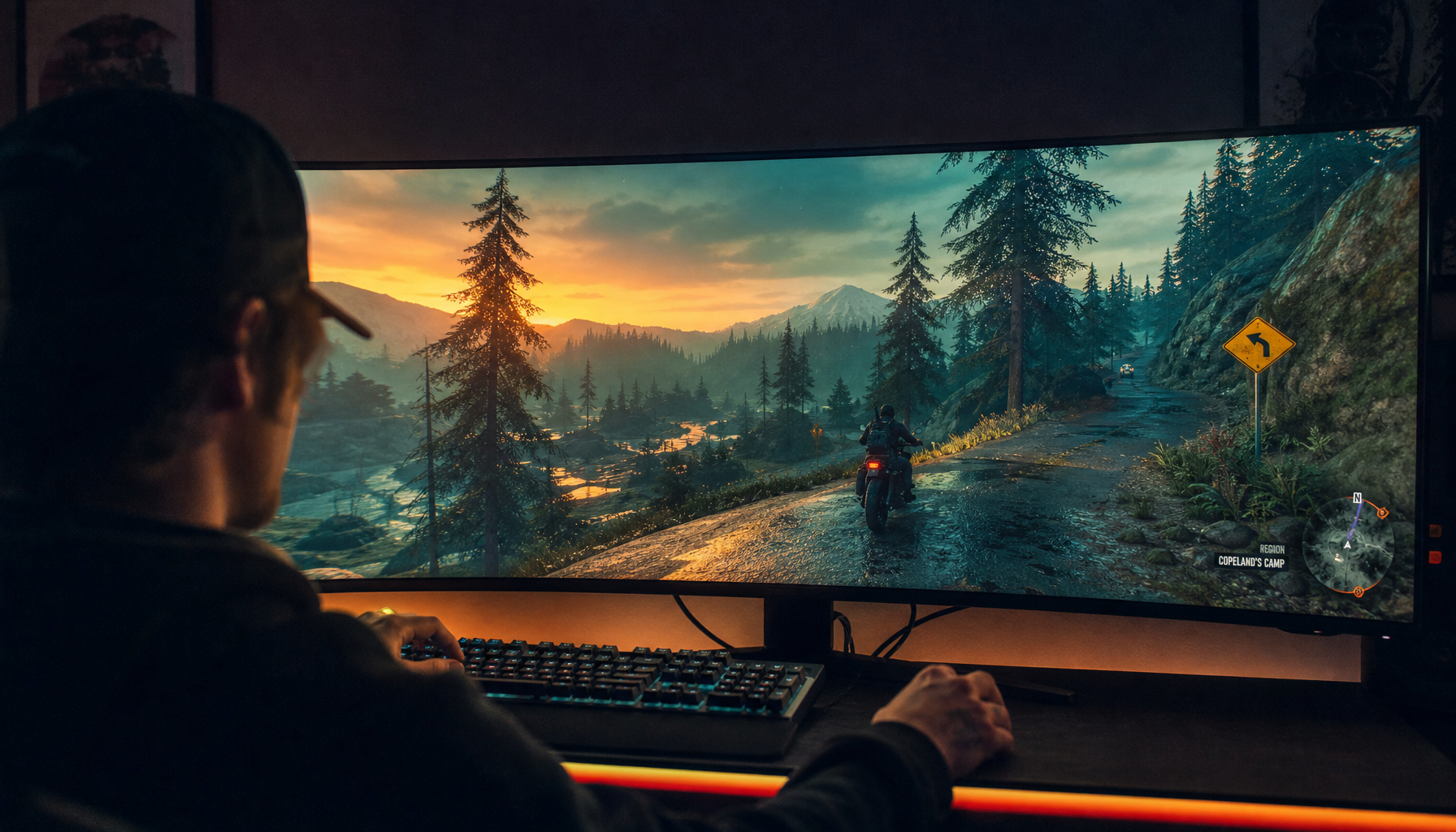
This is why a monitor can look fine in a bright HDR game scene but wrong in a gray productivity app. The game stresses highlights and contrast. The spreadsheet stresses tonal neutrality.
Panel Uniformity and OLED Tint Can Become More Visible
HDR can reveal hardware limits that SDR hides. Large white and gray fields expose uneven backlights, local dimming behavior, OLED subpixel drive differences, and viewing-angle tint. A mild shift at the extreme edge of a large screen may be normal; a strong green or pink patch in the center of a document is a different problem.
OLED panels can be especially sensitive in near-black and low-gray tones because each pixel emits its own light. LCD and mini-LED displays can show different issues, such as blooming, backlight variation, or local dimming transitions. Portable smart screens add another variable: thinner housings and changing room light can make brightness and color consistency harder to maintain.
Calibration can improve white point, saturation, and tone mapping, but it usually cannot erase a physical uniformity problem. If the same corner always looks warmer on white, gray, and black test screens, HDR settings are probably not the root cause.
Pros and Cons of Leaving HDR On for Desktop Use
Choice |
Best For |
Upside |
Trade-Off |
HDR always on |
Mixed gaming, video, and desktop use |
No switching before HDR games or movies |
SDR apps may need careful brightness tuning |
HDR only for HDR content |
Office-heavy setups |
Cleaner SDR whites and grays |
Extra step before games or streaming |
SDR only |
Productivity, writing, spreadsheets, coding |
Most predictable neutral backgrounds |
No HDR highlight impact |
Calibrated HDR profile |
Gaming monitors, OLED, mini-LED |
Better balance across games and desktop |
Takes setup time and may vary by display |
For a gaming-first monitor, calibrated HDR is worth trying. For an office-first display, SDR may still be the more reliable daily mode, especially if your work depends on neutral white backgrounds and consistent gray UI panels.
How to Fix HDR Color Shifts in Grays and Whites
Start with the HDR calibration utility if your operating system provides one. The calibration flow uses test patterns for darkest visible detail, brightest visible detail, and maximum brightness, and it should be run on the actual HDR display under your normal room lighting. That last part matters: a monitor tuned at night in a dark room may feel harsh and tinted at noon in a bright office.

Then tune SDR content brightness inside HDR mode. SDR content on HDR displays can appear too bright or too dim because SDR and HDR signals are handled differently. Use a white document, a browser page, and a gray app window as your reference, not only HDR demo footage.
Next, check the monitor’s own OSD. Avoid vivid, racing, dynamic contrast, and movie presets for neutral desktop work. Use Standard, Custom, User, Creator, or sRGB-like modes where available. If HDR forces a specific mode, reduce aggressive contrast enhancement, color boosting, black equalizer, and dynamic local dimming options if they make large gray fields unstable.
Finally, test the signal path. A direct high-bandwidth monitor connection is often the cleaner choice for PC monitors when high refresh rate, HDR, and high resolution are involved. If colors look wrong only at a specific refresh rate or cable connection, the issue may be bandwidth, driver behavior, or chroma handling rather than the panel.
A Practical Five-Minute Diagnostic
Open a blank white document, a 50% gray full-screen image, and a dark gray window. View them in SDR first, then HDR. Keep your chair centered and your room lighting consistent. If the whole image changes evenly, focus on calibration, SDR brightness, color mode, and graphics settings. If the tint moves when you move your head, viewing angle is involved. If the tint stays fixed in one area of the screen, you are likely seeing panel uniformity.

For creators, add one more test: compare the same neutral image in a browser, image editor, and media player. KTC’s render workflow advice recommends comparing output across multiple viewing apps because software interpretation can change perceived color. If only one app looks wrong, the monitor is probably not the main culprit.
FAQ
Is HDR supposed to make white backgrounds brighter?
Not necessarily. HDR can produce brighter highlights, but a white document is usually SDR content. In HDR mode, its brightness depends on SDR paper-white mapping, system settings, and the monitor’s HDR behavior.
Why does HDR look washed out on my monitor?
The most common reason is poor default mapping. Incorrect brightness and tone response can produce a washed-out desktop. Calibration and SDR brightness adjustment often improve it.
Does HDR 400 guarantee good HDR?
No. Entry-level HDR certification can signal compatibility without delivering the local dimming, peak brightness, or contrast needed for a convincing HDR image. It may still be useful, but expectations should stay realistic.
Should I use HDR for office work?
Use HDR for office work only if whites and grays remain comfortable after calibration. For long writing, spreadsheets, coding, and web work, a stable SDR mode often gives cleaner neutral backgrounds and less eye fatigue.
HDR color shift is usually not one single flaw. It is the collision of SDR desktop content, HDR tone mapping, monitor color modes, and panel behavior. Calibrate first, judge with neutral real-world screens, and keep HDR enabled only when it improves the work or play in front of you.