Ambient room lighting cannot make monitor pixels faster, but it can make motion look cleaner by reducing glare, contrast shock, eye strain, and tracking fatigue.
Does fast camera panning look smeary even though your gaming monitor is set to its highest refresh rate? A simple lighting reset can often make enemy outlines, racing lines, and UI motion easier to follow without changing your GPU settings. You’ll learn how bright the room should be, where lights should go, and when RGB effects help or hurt clarity.
Why Lighting Changes Motion Clarity Without Changing Response Time
Motion clarity is the visible sharpness of moving objects on screen. It is shaped mainly by refresh rate, frame rate, pixel response, overdrive tuning, sample-and-hold blur, strobing behavior, and game motion effects. Ambient room lighting sits outside that chain, so it cannot turn a slow panel into a fast one.
What it can change is your perception. A bright screen in a pitch-black room creates a hard contrast jump between the display and the surroundings. Your eyes keep adapting between the moving image, HUD flashes, dark corners, and the black room behind it. During long sessions, that can make motion feel harsher, more fatiguing, and less stable.
Display research supports the larger principle: perceived video quality depends on both display output and viewing environment, with ambient light levels treated as part of the visual-quality model rather than background trivia. For gaming, that means your monitor settings and room lighting should be tuned together, especially if you play fast FPS, racing, fighting, or competitive action games.
The Sweet Spot: Dim, Indirect, and Stable

The practical target is not a bright room. It is controlled contrast. For most gaming desks, the clearest visual result comes from low-to-moderate ambient intensity, with light aimed away from your eyes and away from the screen surface.
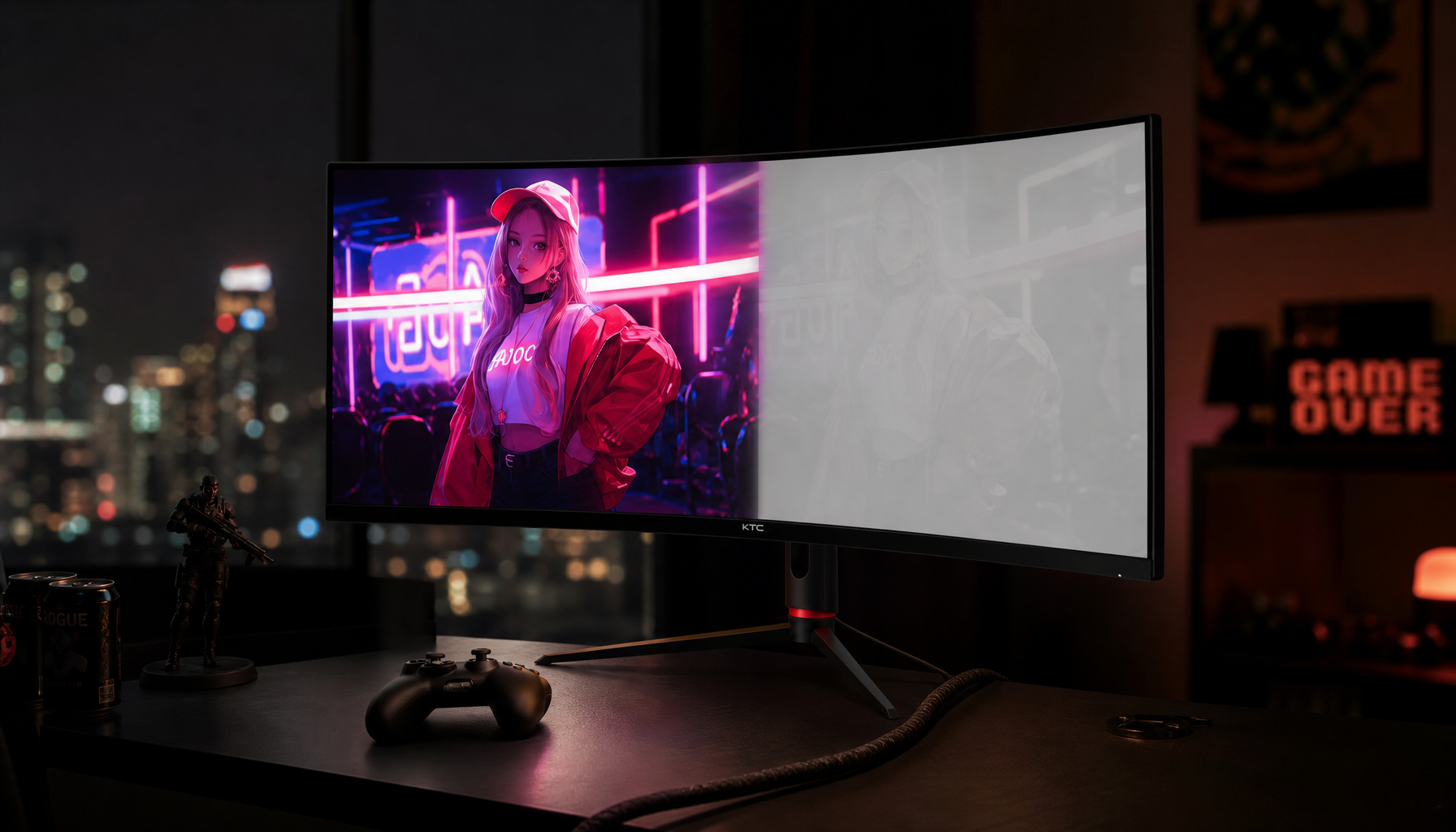
A good starting point is bias lighting behind the monitor at a low level, then a soft room light or desk light only if you need keyboard, controller, notebook, or camera visibility. Gaming lighting advice frames monitor bias lighting as soft light behind a display that reduces the harsh contrast between a bright screen and a dark room. That is exactly the visual condition that helps perceived motion feel less strained.
For a real-world example, a 27-inch or 32-inch monitor on a 5-foot desk does not need the room lit like an office. Start with the monitor at your normal gaming brightness, place an LED strip behind the screen or along the rear desk edge, and set it low enough that you see a soft wall glow but no individual LED points. If the wall behind the monitor becomes the brightest thing in your peripheral vision, it is too high.
Room condition |
Perceived motion effect |
Best use |
Dark room, no bias light |
High contrast, more eye fatigue, flashes feel harsher |
Short cinematic play if comfort is not an issue |
Dim indirect bias light |
Softer contrast, easier tracking, less visual strain |
Competitive and long-session gaming |
Bright overhead light |
More glare risk, lower perceived contrast, flatter image |
General room use, not ideal for serious play |
Dynamic RGB at high intensity |
Can feel immersive but may distract from motion |
Casual play, streaming scenes, party setups |
Too Dark: Why Black-Room Gaming Can Make Blur Feel Worse

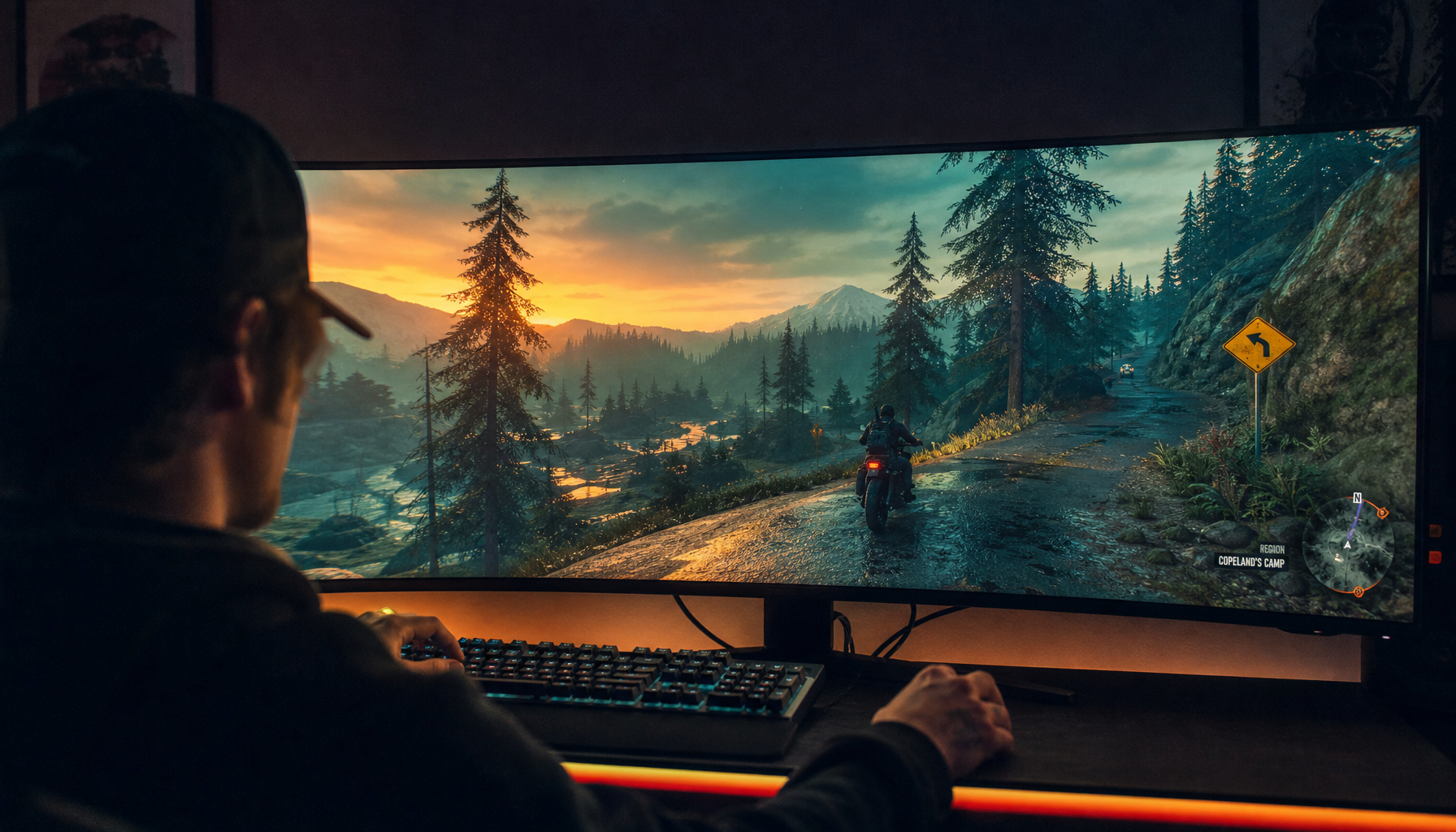
A completely dark room can make OLED blacks or high-contrast VA scenes look dramatic, but it is not always the best environment for motion tracking. When the room is black and the display is bright, the screen becomes the only visual anchor. Fast white HUD elements, muzzle flashes, racing apex markers, and camera cuts can feel more aggressive because the surrounding field gives your eyes no soft reference.
Bias lighting helps because it lifts the background around the monitor without washing the panel. Desk lighting guidance recommends planning around the desk, monitor placement, furniture, and cable flow, with bias lighting used behind a monitor to soften the contrast between screen and room. In practice, this is one of the highest-value changes you can make to a gaming station because it improves comfort without adding screen reflections.
A simple test works well. Load a fast training map, racing replay, or camera-pan benchmark you know. Play for five minutes in total darkness, then repeat with a neutral backlight behind the monitor. If the image feels less scratchy during pans and your eyes relax faster after bright flashes, the lighting is doing its job.
Too Bright: Glare, Washed Contrast, and False Clarity

Brighter room lighting can make a setup feel more productive, but it can reduce gaming clarity when it causes glare or raises reflections on the panel. Glossy screens show this immediately, but matte screens also suffer because reflected light can haze the image and lower perceived contrast.
That loss of contrast matters during motion. A moving target is easiest to track when edges remain distinct from the background. If an overhead light reflects across the upper third of the monitor, dark enemies, shadow detail, and fine texture motion become harder to read. You may interpret that as monitor blur, when the real problem is glare.
Room-planning guidance gives a useful scale for total illumination, suggesting large rooms may need about 4,000 to 6,000 lumens while smaller rooms may need about 2,000 to 3,000 lumens. For motion-focused gaming, treat those as room-capability figures, not a reason to run everything at full output. A small 100 sq ft gaming room may have 2,500 lumens available, but you might use only a fraction of that during competitive play.
RGB Intensity: Immersion Helps Until It Competes
RGB lighting can deepen immersion when it extends the game world into your peripheral vision. It becomes a problem when it competes with the display. Strong pulsing, hard color jumps, and visible LED points can pull attention away from moving objects, especially in shooters and rhythm-heavy action games.
RGB lighting guidance recommends keeping main ambient lighting around 20% to 40% intensity, with floor accents often needing only 10% to 25%. That range is a strong practical baseline because it leaves the monitor visually dominant while still giving the room enough glow to reduce contrast shock.
Static lighting usually wins for competitive clarity. A steady cool white, soft blue, or neutral white bias light keeps the background predictable. Dynamic lighting can be excellent for single-player immersion, but it should be subtle and diffused. In horror or cinematic games, a slow warm or dim red accent can build mood. In esports, rapid color cycling is usually visual noise.
Placement Matters More Than Buying Brighter Lights

Light location changes perceived clarity more than raw brightness. The best gaming lighting is indirect, hidden, and controlled. Put strips behind the monitor, under the rear desk edge, behind shelving, or along a wall where the light bounces softly. Avoid placing light bars, exposed strips, or smart bulbs where they shine into your eyes or reflect in the monitor.
Desk-lighting recommendations highlight modern kits with adjustable output, including light strips with warm and cool white LEDs that help match white-light temperature for filming and scene consistency. For gamers, adjustable white control is just as useful off camera because it lets you keep the room neutral for ranked play and more stylized for relaxed sessions.
A monitor light bar can also help, but aim matters. It should illuminate the desk, not the screen. If you see a bright streak across the panel when the game fades to black, adjust the bar angle or reduce intensity. With portable smart screens, the same principle applies: a small rear bias light or side lamp works better than a bright desk lamp aimed across the glass.
How to Tune Lighting for Your Monitor Type
LCD and OLED displays respond differently to room light. OLED benefits from controlled ambient light because its deep blacks are easy to preserve, but a bright room can make dark-scene detail harder to enjoy. IPS and Mini LED monitors often tolerate moderate ambient light well, but reflections and blooming perception can shift depending on the scene. VA panels may look punchy in darker rooms, yet black smearing in motion will not be fixed by lighting; bias light can only make the viewing experience more comfortable.
Local dimming displays deserve special attention. Display-quality research on LCD video with local dimming under different peak-white and ambient conditions reinforces a key setup truth: screen brightness, backlight behavior, and viewing environment interact. If your Mini LED monitor looks excellent in bright highlights but unstable in dark moving scenes, test local dimming modes under the same room lighting you actually use for gaming.
For a practical pass, choose one lighting preset per use case. Use a neutral dim bias preset for ranked play, a warmer low-intensity preset for story games, and a brighter desk preset for office work. That keeps your monitor calibration and your eyes from constantly fighting the room.
A Practical Setup That Works

Start with the monitor first. Set the correct refresh rate in your operating system, enable VRR if your display and GPU support it, and tune overdrive using a fast-motion test or a game you know well. Lighting cannot compensate for a monitor stuck at 60 Hz or an overdrive mode with heavy inverse ghosting.
Then add a bias light behind the screen at low intensity. Keep it indirect and stable. If the wall is white or light gray, you will need less brightness; if the wall is dark, increase output gradually until the monitor no longer feels like a bright rectangle floating in a black room. Add a desk or monitor light bar only for controls and paperwork, and keep it angled away from the display.
Finally, tame RGB effects. Screen-reactive lighting can be immersive, and community setup notes point to placement, brightness control, segmentation, presets, and hub integration as common success factors for a gaming setup. Smoothing can make lighting transitions gentler, though higher smoothing adds latency to the LEDs. That tradeoff is fine for comfort and cinematic play, but competitive gamers should prioritize stable, low-distraction lighting over highly reactive effects.
Pros and Cons of Higher Ambient Intensity
Higher ambient intensity improves room visibility, makes cameras look cleaner for streaming, helps with note-taking or controller swaps, and can reduce the harshness of a bright display in a dark room. It is useful in shared rooms and office-gaming setups where the display is not the only task.
The downside is that too much light can flatten contrast, create reflections, expose dust and cable clutter, and make dark-game motion harder to parse. It can also push you to raise monitor brightness, which may increase fatigue over a long session. The performance-driven answer is not that brighter is better. It is that the room should be bright enough around the display, but never bright across it.
The Best Intensity Rule for Gamers
For perceived motion clarity, set ambient room lighting low enough that the monitor remains the visual priority, but high enough that the room is not black. Use indirect bias lighting as your foundation, keep main RGB restrained, avoid direct reflections, and save aggressive dynamic effects for games where immersion matters more than precision.
A sharp monitor deserves a room that lets it perform. Control the light around the screen, and fast motion will look calmer, cleaner, and easier to trust.