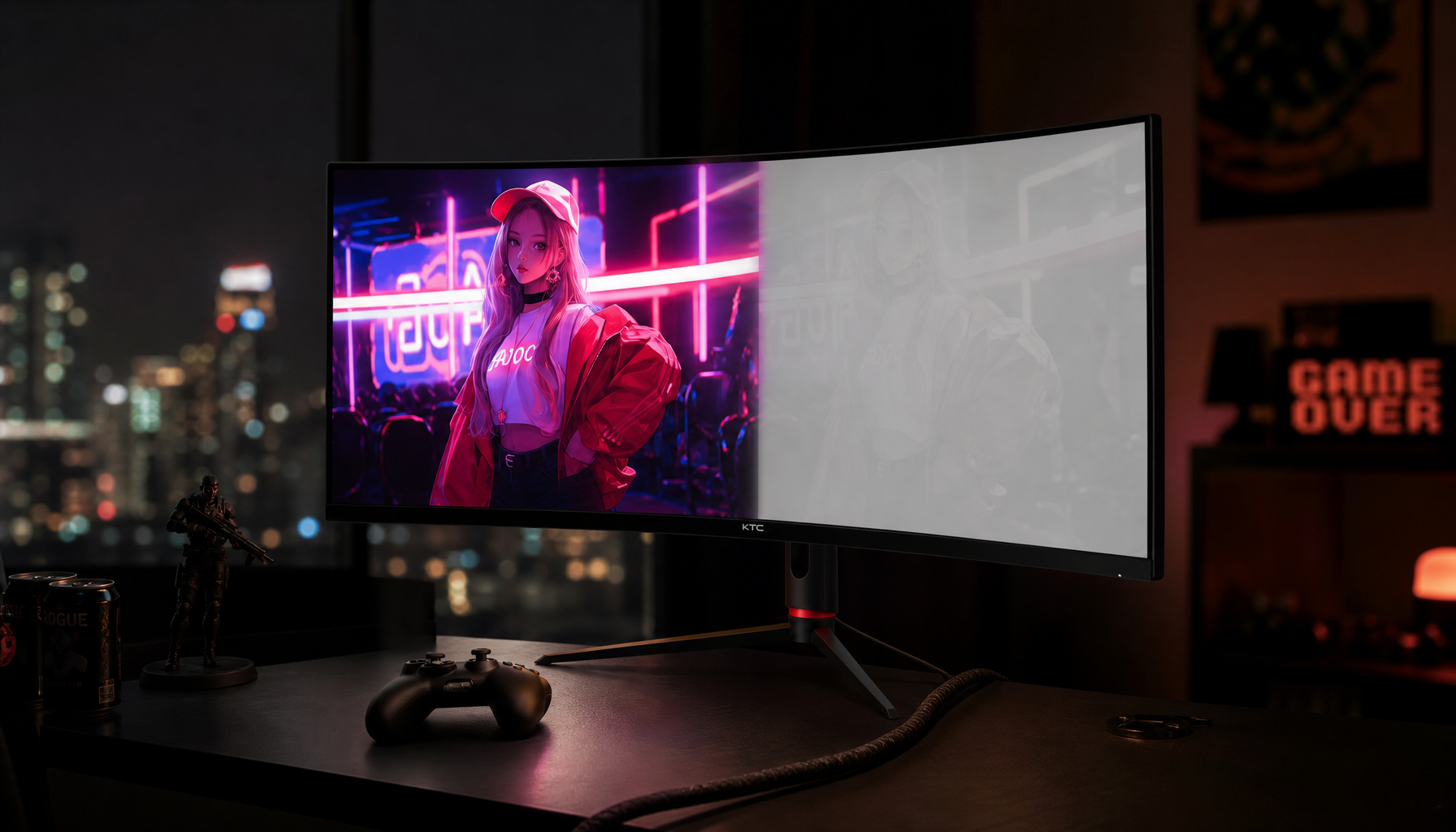
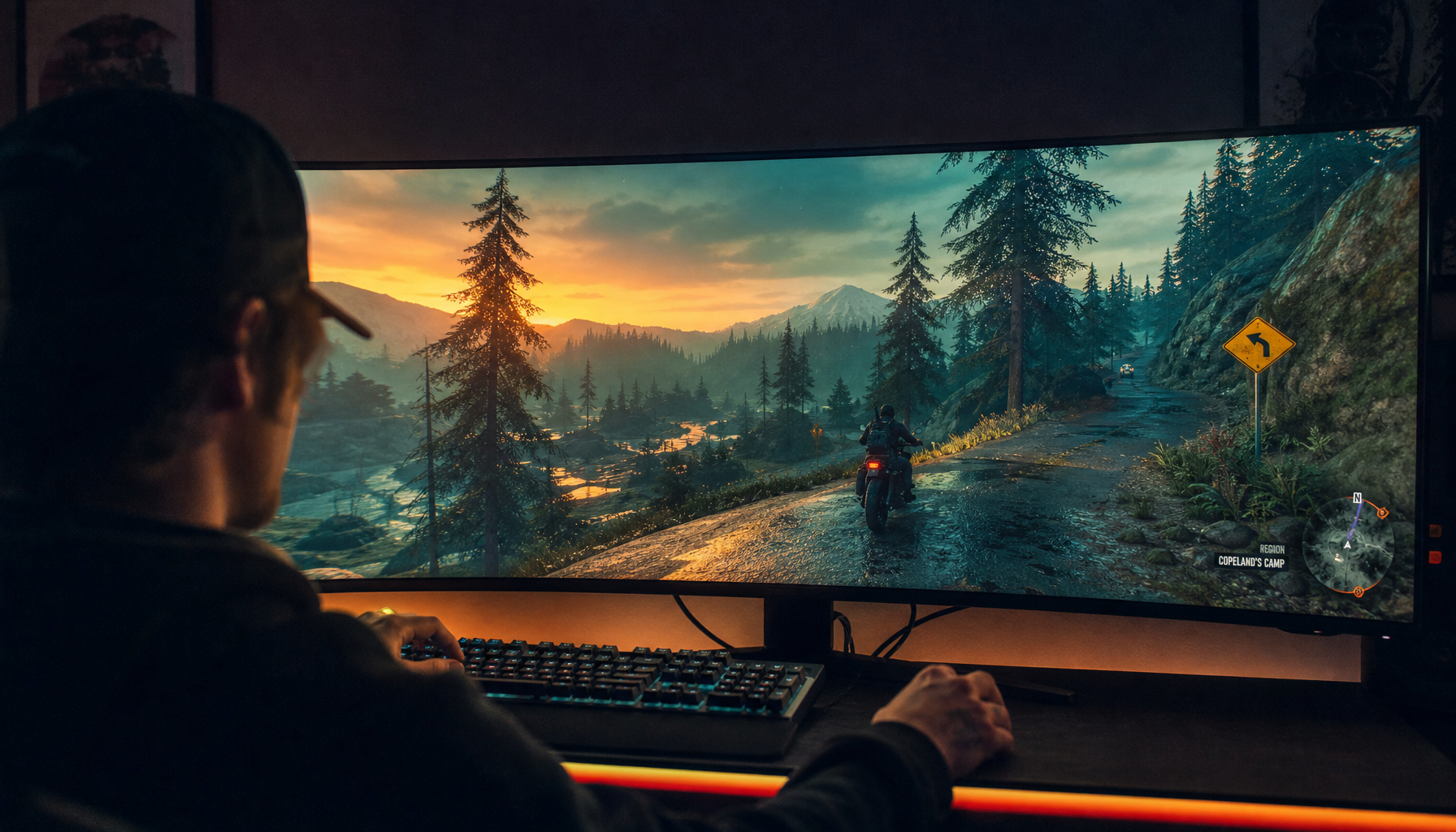
Black level performance can shift as a monitor warms up, especially on LCDs where backlight behavior affects perceived blacks. OLED and QD-OLED keep truer blacks, but heat management can still change brightness and contrast during long sessions.
Ever notice a dark game scene looking richer at launch, then slightly flatter after a long raid, editing session, or all-day spreadsheet grind? In practical setup work, the most reliable improvement is not chasing one magic black-level value, but stabilizing brightness, room lighting, gamma, and display mode so the panel is not fighting heat and glare for hours. Here is what changes, why it happens, and how to tune a gaming, office, or portable display for stronger blacks during extended use.
Why Temperature Matters for Black Levels
Black level describes how dark a display can make black areas appear while still preserving near-black detail. Contrast is the relationship between peak white and darkest black, so even a small rise in perceived black can make a monitor look flatter, especially in night maps, dark-mode apps, film scenes, and HDR games.
During extended use, a display is not static. The backlight, panel layer, power electronics, and internal processing warm up. Higher brightness is one of the strongest user-controlled heat drivers because display modes with more output require more power. Display-mode research notes that each 100-nit brightness increase can raise panel temperature by roughly 3.6°F to 5.4°F, which is a useful reminder that black performance is tied to operating conditions, not just the spec sheet.

The effect is not identical across panel types. IPS LCD, VA LCD, mini-LED LCD, OLED, and QD-OLED all create “black” differently, so heat affects them through different weak points.
LCD Monitors: Backlight Heat Can Make Blacks Look More Elevated
An LCD monitor does not turn pixels fully off in the same way OLED does. IPS, VA, and TN panels use a backlight shining through liquid crystals, color filters, and polarizers. That design gives LCD monitors reliable brightness and broad availability, but it also means the backlight is always part of the black-level equation. A technical comparison of IPS and OLED explains that IPS uses an always-on LED backlight, which is why it cannot deliver true black levels like a self-emissive display.

As the monitor warms during a long session, what you usually notice is not a dramatic failure. It is more often a subtle lift in dark areas, more visible corner glow, stronger perception of backlight bleed, or less satisfying contrast in a dark room. IPS users are especially sensitive to this because IPS glow changes with viewing angle, seating position, and panel uniformity. Black-uniformity testing found that OLED averaged 0.203% black uniformity standard deviation across tested monitors, while VA, IPS, and TN averaged 2.030%, 2.357%, and 2.995%, respectively, showing how panel technology changes the baseline risk of uneven blacks.
For a real-world example, imagine a 27-inch IPS gaming monitor used at high brightness for afternoon work, then kept at the same brightness for a dark horror game at night. The panel has warmed up, the room is dimmer, and your eyes are more sensitive to raised blacks. The monitor may not have technically changed modes, but the perceived black floor looks worse because the display and room are now mismatched.
OLED and QD-OLED: True Blacks, but Heat Management Still Matters
OLED and QD-OLED panels are self-emissive, meaning individual pixels produce their own light and can turn off for black. That is why OLED often delivers the most convincing dark-room contrast. Gaming monitor guidance highlights OLED and QD-OLED for deep blacks, strong contrast, and wide color, especially in HDR-first gaming displays.
Temperature still matters, but the behavior is different. Instead of the black floor rising because a backlight leaks through, OLED monitors may manage heat by limiting brightness, dimming static elements, running panel-care routines, or changing how aggressively they protect against image retention. This is why an OLED can keep black pixels black while still feeling less punchy after extended bright desktop use. The black is intact, but the white and highlight side of the contrast ratio may be managed to control heat and long-term wear.
OLED monitor notes describe thermal modulation and logo-brightness behavior as dependent on settings and picture modes, which matters for PC users because static HUDs, taskbars, and productivity layouts can trigger protection logic differently than full-screen video. The practical takeaway is clear: OLED is the black-level leader for immersion, but it is not a license to run maximum brightness with static UI all day.
Gamma, Black Boost, and the “Fake Better Blacks” Problem
A warm display can tempt you to crank black-level controls until dark scenes “pop” again. That can backfire. Calibration guidance explains that black level controls shadow detail: too high makes blacks gray, while too low crushes dark detail. Gamma changes how brightness is distributed through shadows and midtones, so it can make dark areas easier to see without actually improving the panel’s native black.
For most SDR gaming, office work, and portable-screen use, gamma near 2.2 is the dependable starting point. A KTC gamma explainer notes that gamma affects the tonal curve between black and white, not merely backlight brightness, and that lower effective gamma can reveal dark areas for competitive play. That is useful for esports, but it is a visibility choice, not an accuracy upgrade.
A shadow-boost setting is a good example. It selectively brightens darker screen areas by adjusting gamma-like behavior in shadows, helping players spot opponents in dark corners. The tradeoff is reduced natural contrast. For competitive shooters, that can be a smart performance decision. For cinematic games, film, photo work, or OLED HDR, too much shadow boosting makes the image look washed out.
Extended-Use Settings That Keep Blacks Stable
Start with brightness because it affects both comfort and thermal load. Brightness guidance emphasizes choosing monitor brightness based on the use context and environment, not peak nits alone. In a normal office, a moderate brightness level that matches the room will usually preserve perceived contrast better than blasting the backlight and relying on gamma to recover shadows.
Room lighting is the second control point. Poor lighting, glare, and uneven illumination increase visual strain and make blacks look weaker. Workspace guidance connects lighting quality with focus and visual workload, and ergonomic recommendations commonly point users toward brightness that matches the environment rather than factory defaults. If a black screen looks gray in daylight, the problem may be glare and ambient contrast, not the monitor’s black level.

Preset discipline matters too. A display preset can change brightness, gamma, color temperature, black level, HDR behavior, local dimming, adaptive sync, and refresh behavior. KTC preset guidance notes that keeping signal-level settings consistent reduces disruptive switching, especially across HDR, refresh-rate, and gamut boundaries. For extended use, build stable presets around task and room: one calibrated SDR work mode, one gaming mode, and one media mode. Avoid bouncing between high-brightness vivid mode and low-brightness reading mode every few minutes if the display takes time to settle visually.
Panel-Specific Advice for Gaming, Office, and Portable Screens
For IPS office and productivity monitors, keep brightness moderate, use a neutral color temperature near 6500K if available, and avoid Vivid mode for text-heavy work. IPS is still strong for office use because it sustains brightness well and offers stable color, but dark-room black depth is not its strength. If corner glow bothers you, sit centered, reduce brightness, add soft bias lighting behind the monitor, and check whether the issue changes with viewing angle.
For VA monitors, black depth is often stronger than IPS, but response behavior and dark smearing can matter in fast games. A long session at high brightness may still make dark transitions feel less clean, so avoid using contrast or black equalizer settings to hide motion limitations. Test with a dark scrolling scene or a familiar game map after the monitor has been on for at least an hour.
For OLED and QD-OLED, use the panel’s care features, avoid leaving static HDR-bright desktops on screen, and let automatic refresh routines run when prompted. OLED is the best choice when your priority is cinematic contrast, HDR gaming, and deep blacks in controlled lighting. IPS, higher-contrast IPS, VA, or mini-LED LCD may be the more practical display for long office sessions with static windows, dashboards, and spreadsheets.
For portable smart screens, heat is more noticeable because the chassis is smaller and often powered by USB-C. Use Standard or sRGB-style modes for work, lower brightness indoors, and reserve maximum brightness for short outdoor or presentation use. If the portable display looks washed out after an hour, check brightness, cable power stability, and room glare before assuming the panel has degraded.
Pros and Cons of Adjusting for Temperature Drift
Lowering brightness reduces heat, eye strain, and the chance of washed-out blacks in dim rooms, but it can make the screen harder to read in bright spaces. Raising brightness improves visibility in daylight and helps HDR-capable displays feel more vivid, but it increases power demand and can make LCD blacks look gray.
Gamma and Black Boost can reveal hidden details quickly, which is valuable in competitive play. The cost is image fidelity. Local dimming can improve LCD black levels when implemented well, but it may introduce blooming around bright objects. OLED avoids blooming and delivers true blacks, but long static use requires more care than LCD.
Adjustment |
Best Use |
Black-Level Benefit |
Main Tradeoff |
Lower brightness |
Dark rooms, office work, long sessions |
Reduces lifted-looking blacks and heat load |
Can look too dim in daylight |
Gamma near 2.2 |
SDR games, web, productivity |
Keeps shadows balanced |
May not reveal every dark target |
Black Boost or Dark Boost |
Competitive shooters |
Improves enemy visibility in shadows |
Reduces natural contrast |
Bias lighting |
Night gaming, editing, movies |
Improves perceived contrast |
Requires controlled placement |
OLED/QD-OLED long sessions |
Preserves true-black experience over time |
May dim static or bright content |
FAQ
Should I Warm Up My Monitor Before Judging Black Levels?
Yes, especially for calibration or serious image evaluation. Give the display time to reach normal operating behavior, then set brightness, gamma, and black level. A quick five-minute impression can differ from the way the panel looks after a full work block or gaming session.
Does Higher Refresh Rate Make Black Levels Worse?
Not directly. Refresh rate affects motion clarity and responsiveness more than black floor. However, gaming presets tied to high refresh may also change overdrive, brightness, adaptive sync, HDR, and black equalizer settings, so the image can look different even when refresh rate is not the root cause.
Is OLED Always Better for Black Performance?
For pure black depth, yes. OLED has the structural advantage because pixels can turn off. For long static office use, bright rooms, spreadsheets, and lower total ownership risk, a good IPS, VA, or mini-LED LCD may be the more practical display.
Final Calibration Mindset
Treat black level as a system, not a slider. Panel type sets the ceiling, temperature and brightness shape consistency, and room lighting decides how much contrast your eyes can actually perceive. For the strongest long-session result, start with a stable SDR baseline, match brightness to the room, keep gamma sane, and use shadow-boost tools only when performance matters more than cinematic accuracy.