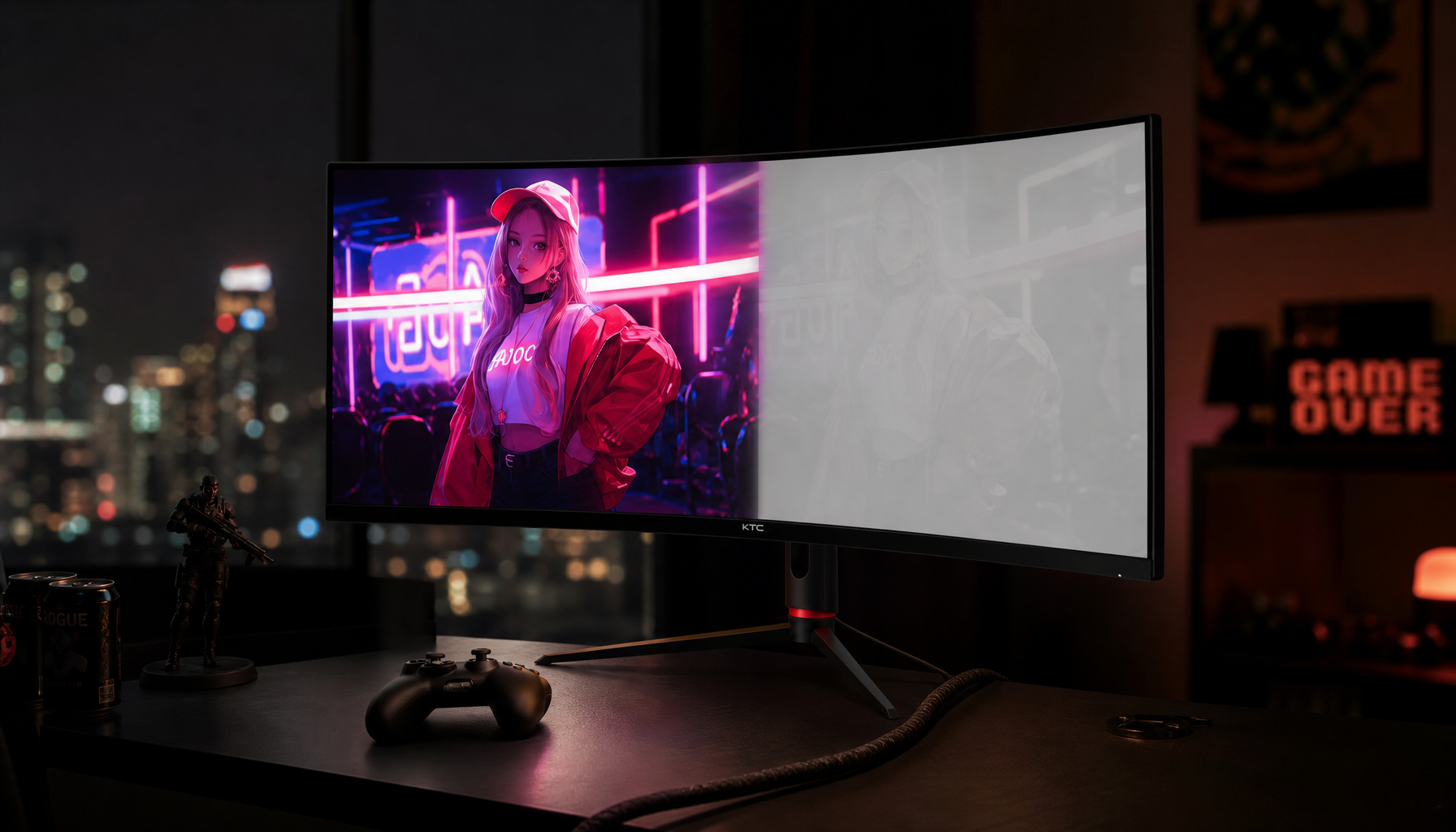
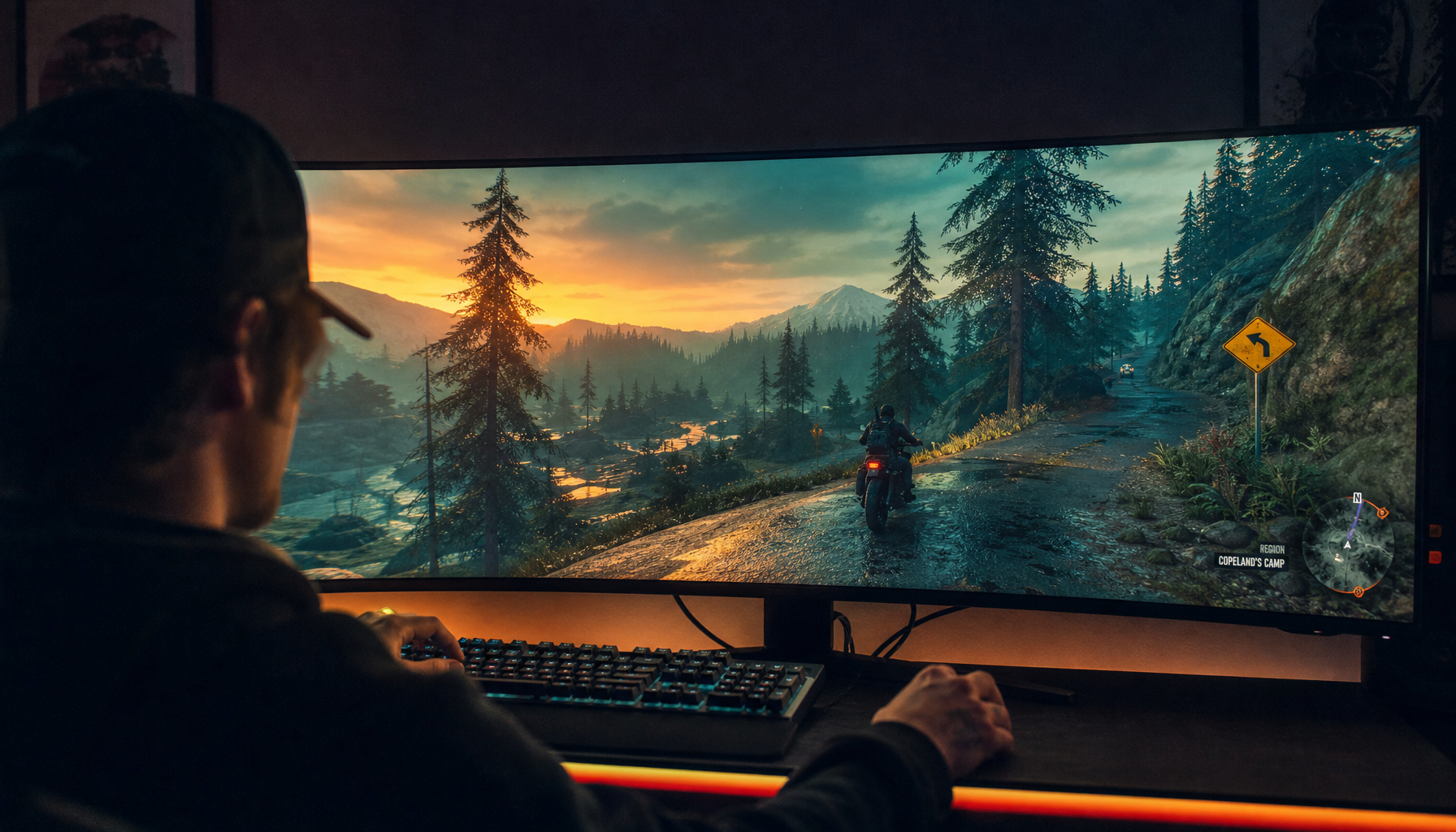
Input lag can increase in daisy-chained monitor setups because multiple displays share one upstream connection, which can strain bandwidth, reduce refresh rate, destabilize frame pacing, or force extra processing before the image appears.
Does your main gaming monitor feel crisp when used alone, then slightly delayed once a second or third screen joins the chain? A quick before-and-after FPS and refresh-rate check can reveal whether the lag comes from the monitor chain, the GPU workload, or operating-system display behavior. You’ll learn how to separate those causes and build a cleaner multi-monitor setup without giving away responsiveness.
What Daisy-Chaining Actually Changes
Daisy-chaining means the PC sends video to the first monitor, then that monitor passes the signal to the next display instead of every monitor using its own direct GPU cable. In practical terms, daisy-chaining monitors reduces cable clutter and saves ports, but it also makes several screens depend on one shared display path.
That shared path is the key. Multi-stream transport, USB-C display modes, and high-bandwidth dock connections can carry multiple display streams, but they do not create unlimited bandwidth. A dual 1080p office setup may feel effortless. A dual 4K setup, a 144 Hz gaming display plus a side monitor, or a mixed HDR and SDR chain can push the link into compromises.
The important distinction is that daisy-chaining does not magically add a fixed delay to every mouse click. The lag usually appears because the chain forces a lower refresh rate, heavier GPU work, worse frame pacing, display processing, or operating-system composition behavior.
The Bandwidth Problem: One Pipe, Multiple Screens
The first reason input lag rises is bandwidth. Each monitor consumes part of the same upstream connection, and higher resolution, higher refresh rate, HDR, and deeper color all demand more of that pipe. A setup that works perfectly at 1080p 60 Hz can become fragile when upgraded to 1440p 165 Hz or 4K 144 Hz.
A helpful way to think about it is simple: two monitors in a chain are not just “two panels.” They are two active video streams competing for the same connection budget. Daisy-chaining is often useful for cable management, but high-refresh or UHD displays can expose the limits, especially on older hardware.
When bandwidth runs short, the system may silently reduce refresh rate, color depth, chroma quality, or resolution. That matters because refresh rate directly affects how soon a completed frame can appear. At 60 Hz, a new refresh window arrives every 16.7 ms. At 144 Hz, it arrives about every 6.9 ms. If your 144 Hz gaming monitor drops to 60 Hz because the daisy chain cannot carry the full signal, the display can feel dramatically slower even if the game’s FPS counter still looks acceptable.
GPU Load and Frame Pacing Can Feel Like Monitor Lag
Input lag is not only a monitor spec. It is the full delay from your mouse, keyboard, or controller action to the visible response on screen. Input lag includes system processing, rendering, sync behavior, and display output, while pixel response time mostly describes how quickly pixels change color.
Adding displays increases the GPU and memory workload. Even if the game runs on only one monitor, the system may still manage extra desktops, browser tabs, video playback, chat apps, streaming dashboards, or animated content on the side screens. Multi-monitor bottlenecks can show up as FPS drops, stutter, input delay, or crashes when the GPU, CPU, RAM, VRAM, ports, and cables are no longer balanced.

A practical example makes this clear. If your game runs at 100 FPS on one monitor, each frame takes about 10 ms. If the same game drops to 95 FPS after adding a second display with a moving web page, each frame takes about 10.5 ms. That small change adds roughly 0.5 ms. But if a triple-monitor workload pushes you from 90 FPS to 55 FPS, frame time jumps from about 11.1 ms to 18.2 ms, and the mouse feel changes immediately.
Latency-focused display analysis makes the same point: a second monitor may affect gaming input lag mainly through frame-time latency when that display or the apps on it consume GPU or CPU resources. Frame-time latency is especially sensitive to animated content, notifications, video playback, and browser activity on the secondary screen.
Daisy-Chain Lag vs. Multi-Monitor Lag
Many users blame the cable chain when the real issue is the overall display workload. A daisy chain can increase the chance of bottlenecks, but a direct multi-monitor setup can still lag if the GPU is overloaded.
Symptom |
Likely Cause |
Practical Fix |
Gaming monitor drops from 144 Hz to 60 Hz |
Shared bandwidth limit or wrong cable mode |
Use a direct GPU connection for the main display |
FPS falls when side monitors are active |
GPU, CPU, or VRAM workload |
Close animated apps and lower heavy settings |
Game feels uneven in borderless mode |
Desktop composition or mixed refresh timing |
|
Side monitor lags, main monitor is fine |
Secondary display refresh or processing path |
Check OS refresh rate and monitor preset |
Chain fails after sleep or dock reconnect |
MST, dock, firmware, or cable instability |
Update drivers and simplify the chain |
The cleanest performance rule is this: use daisy-chaining for productivity-first screens, but connect your primary gaming monitor directly to the GPU when low latency, high refresh rate, VRR, HDR, or 4K performance matters.

Refresh-Rate Mismatch and Desktop Composition
A multi-monitor setup can feel inconsistent even when bandwidth is technically enough. Mixed refresh rates, different pixel clocks, borderless games, and desktop composition can create uneven timing. In borderless windowed mode, desktop composition may sync in ways that create variable delay, especially when displays update at different timings.
This is why a 144 Hz primary display paired with a 60 Hz secondary display can feel fine one day and strange the next, depending on what is moving on the second screen. A music player progress bar, animated ad, chat overlay, or video can be enough to wake up compositor activity.
For competitive play, fullscreen exclusive mode is still worth testing. It can reduce the chances that second-monitor activity affects the main game’s presentation path. For productivity, the tradeoff is less convenient app switching, so the better answer may be matching refresh rates or keeping the side screens quiet during play.
Display Processing Adds Another Layer
Monitor picture modes can also add delay. Game Mode, Instant Mode, or FPS Mode usually reduces processing by bypassing enhancement features. Heavy sharpening, motion smoothing, non-native scaling, some HDR pipelines, and black-frame insertion can change the processing path and make the screen feel less immediate.
The KTC support notes are useful here because they separate inconsistent input lag from permanent monitor defects. Inconsistent input lag often comes from refresh rate, frame pacing, display processing, signal path, or game mode behavior rather than a broken panel.
A real-world test is simple. Set every monitor to native resolution, confirm the actual refresh rate in the operating system and GPU control panel, enable the low-latency picture preset, disable enhancement processing, and retest the same game scene. If the mouse feel improves, the problem was not “daisy-chain delay” alone. It was the chain plus settings.
When Daisy-Chaining Is Worth It
Daisy-chaining is excellent for clean, reliable workstations where the goal is screen space, not peak response. Office productivity, coding, research, spreadsheets, dashboards, writing, support desks, and hybrid work setups benefit from fewer cables and fewer occupied laptop ports. For these users, dual 1080p or dual 1440p displays are often the sweet spot.
You get a cleaner desk, easier laptop docking, fewer GPU ports in use, and simpler expansion when the hardware supports the same standard. The tradeoffs appear when you ask one connection to carry high-refresh gaming, multiple 4K streams, HDR, VRR, and mixed monitor modes at the same time.
For racing sims, shooters, fighting games, and esports titles, the value calculation changes. A direct cable from the GPU to the primary gaming monitor gives that display the best chance of running at its full refresh rate with VRR and minimal signal-path complexity. The secondary monitor can still be daisy-chained, docked, or connected separately for chat, streaming tools, browser pages, or monitoring apps.
How to Diagnose the Source of Lag
Start with the refresh rate, because it is the fastest failure to catch. Check the operating-system display settings, GPU control panel, and in-game display menu. If a monitor advertised at 144 Hz is running at 60 Hz after being placed in a chain, the cause is likely bandwidth, cable rating, MST configuration, dock limits, or a port-mode setting.
Next, compare performance with and without the chain. Run the game with only the primary monitor connected, note the FPS and frame-time behavior, then reconnect the daisy chain and repeat with the same scene. If FPS or frame pacing worsens, the issue is system load. If FPS stays steady but refresh rate drops, the issue is display-link capacity. If both are stable but the game feels uneven in borderless mode, test fullscreen exclusive mode.
Then simplify the signal path. Put the main gaming monitor on a direct display cable. Put lower-priority productivity displays on the chain. Use high-quality cables rated for the standard you are actually using, update GPU drivers, enable MST only where needed, and avoid basic video splitters when you need independent extended desktops because they usually do not provide true monitor daisy-chaining.
Best Setup Choices by User Type
For a productivity desk, daisy-chain matched monitors at the same resolution and refresh rate. A pair of 1440p 60 Hz or 75 Hz displays can deliver a clean, efficient workspace with minimal cable drag.
For a creator or analyst with large files, keep an eye on VRAM and system RAM. More screens mean more windows, textures, frame buffers, and background apps. If the desktop starts stuttering during video calls, editing, or data dashboards, the fix may be a stronger GPU, more memory, or fewer active display workloads rather than a different monitor cable.
For a competitive gaming station, prioritize the main display. Use a direct GPU connection, native resolution, the highest stable refresh rate, VRR when supported, Game Mode, and a steady FPS cap just below the refresh ceiling if frame pacing improves. Daisy-chain the non-critical displays only when the primary panel still runs at its intended mode.
FAQ
Does every daisy-chained monitor add input lag?
No. The chain itself does not always add noticeable delay. The lag usually appears when shared bandwidth, refresh-rate drops, GPU load, frame pacing, or display processing changes the timing of the image.
Is MST better than a dock?
For display-focused setups, MST can be clean and efficient. A dock may be better when you also need USB devices, Ethernet, charging, and frequent laptop connection, but docks have their own bandwidth and firmware limits.
Should I daisy-chain 4K gaming monitors?
Usually not for latency-sensitive gaming. A hardware forum discussion framed the main issue as GPU workload, with the recommendation to use a direct display connection and upgrade GPU power when trying to drive multiple 4K screens. Triple 4K monitor setups are demanding enough that direct GPU connections and careful performance tuning are the smarter baseline.
Daisy-chaining is a strong productivity tool, not a free performance upgrade. Keep the chain for clean, efficient screen expansion, but give your fastest gaming or color-critical monitor a direct, full-bandwidth path when responsiveness matters.