Local dimming can make a small Picture-in-Picture window look too dark, too bright, or uneven because the monitor adjusts backlight zones for the whole screen, not just the floating video window.
Does your movie look crushed and dim in a tiny floating window while the webpage behind it glows white? The practical fix is testable: change the PiP background, switch local dimming behavior by content type, and use monitor-level brightness controls before blaming the video source. You’ll learn why the mismatch happens and how to tune it for gaming, streaming, and work.
The Core Problem: PiP Is Small, but Local Dimming Thinks in Zones
Picture-in-Picture feels simple: a video floats above your desktop while you browse, work, or watch a walkthrough during a game. The display problem is that your monitor does not treat that PiP window as a separate screen. It sees one combined image and drives its backlight according to zones, contrast targets, HDR behavior, and the brightness of nearby content.
A browser community request captured the real-world symptom well: dark streaming content in a small PiP window became harder to see when placed over bright browsing pages, leading to a request for a dedicated Picture-in-Picture brightness control. That is exactly the kind of mismatch local dimming can amplify. The browser window may be mostly white, so the monitor raises or stabilizes brightness across nearby zones, while the PiP video contains dark cinematic material that the dimming algorithm tries to preserve as black.

Local dimming is designed to improve contrast, not guarantee window-by-window uniformity. In monitor terms, local dimming adjusts brightness in specific backlight zones so dark areas can look deeper while bright areas remain punchy. That works well for a full-screen HDR game scene with a torch in a cave. It becomes less predictable when a small 16:9 video is floating over a spreadsheet, browser, chat app, or white product page.
What Local Dimming Is Actually Doing
On an LCD or Mini-LED monitor, the pixels do not create their own light. A backlight shines through the LCD layer, and local dimming divides that backlight into controllable zones. A Mini-LED gaming monitor may have hundreds or thousands of zones, while simpler edge-lit designs may have far fewer and less precise controls.
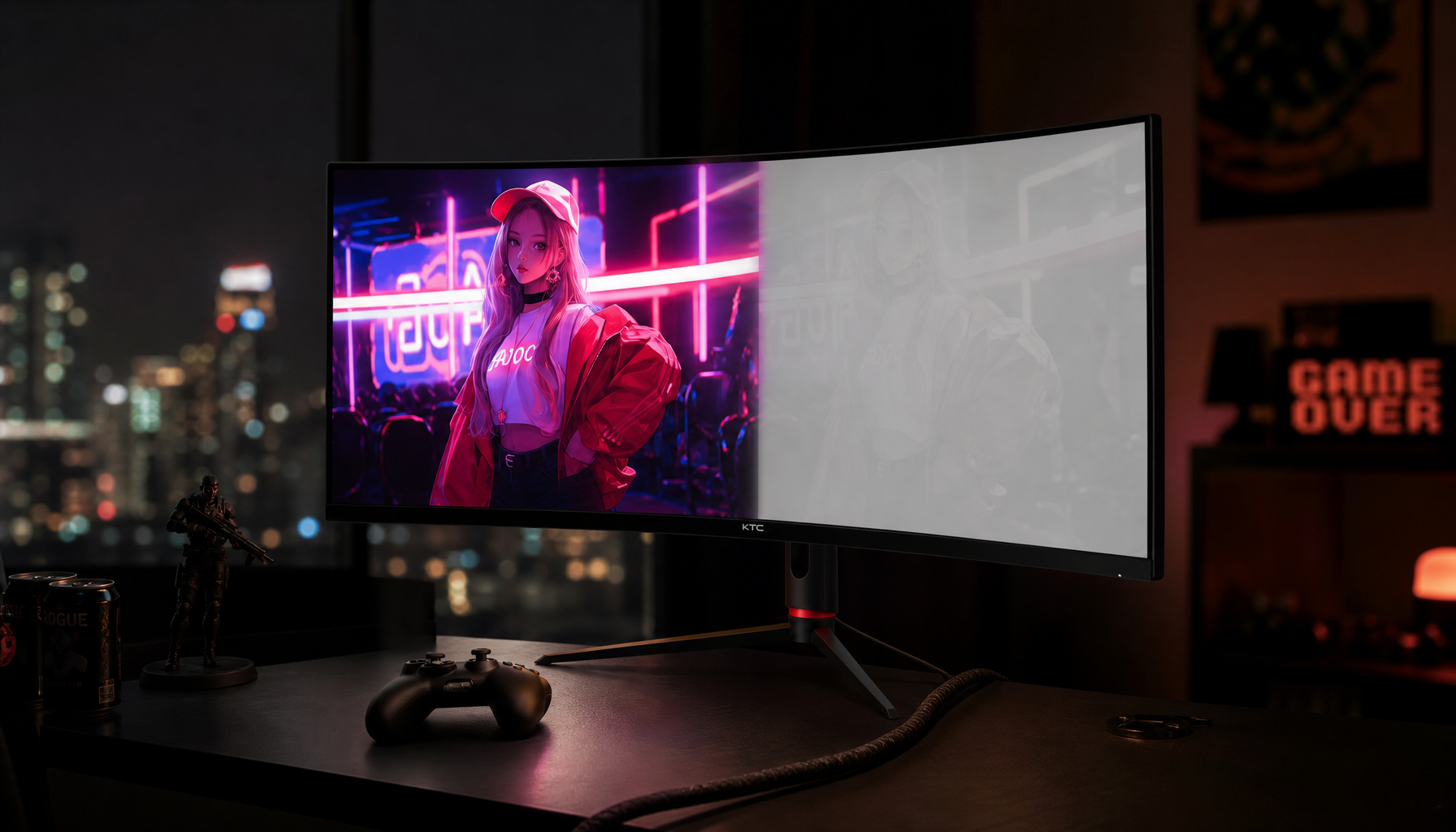
The key limitation is size. Each zone covers many pixels. If your PiP window is small, one zone may include part of the video, part of the bright webpage behind it, and part of the desktop UI. The monitor has to choose one backlight behavior for that zone. It cannot perfectly brighten the video’s shadow detail while also dimming the surrounding area unless the zone layout, algorithm, content, and window position all cooperate.
That is why a dark PiP movie can look worse than the same movie in full screen. Full screen gives the dimming algorithm a cleaner scene to analyze. A small PiP window creates mixed signals: black bars, subtitles, white webpage text, browser chrome, and video highlights may all sit inside the same local-dimming neighborhoods.
Why Brightness Mismatch Happens in PiP
The Window Is Smaller Than the Dimming Zone
If a bright object is smaller than a backlight zone, the zone may light up more than the dark pixels around it need. That creates blooming or a lifted black level. If a mostly dark PiP window occupies only part of a zone next to bright desktop content, the reverse can happen too: the monitor may dim aggressively to preserve blacks, causing faces, clothing, and shadow texture in the video to disappear.
This is why zone count matters, but it is not the whole answer. More dimming zones generally improve precision because each zone covers a smaller area, but processing quality, panel contrast, brightness capability, and content layout still affect the result. A 32-inch Mini-LED monitor with more zones will usually handle small highlights better than an older edge-lit display, yet a tiny PiP video over a bright document can still look mismatched.
The Desktop Background Changes the Algorithm’s Priorities
Local dimming is not reading “video window” versus “webpage” the way you are. It is reacting to the final frame sent to the monitor. A white webpage, a light-mode document editor, or a bright e-commerce page can dominate the monitor’s brightness decisions even though your attention is on the small video.
A simple example makes this clear. Put a dark crime drama in PiP over a blank white page, then drag it over a dark gray desktop wallpaper or a dim browser tab. On many local-dimming displays, shadow detail and perceived contrast in the PiP window will change even though the video file did not. The monitor is responding to the total luminance pattern.

HDR and SDR May Be Fighting Each Other
HDR content expects high contrast: deep blacks, bright highlights, and preserved detail across both ends. SDR office work expects stable, even brightness for text and UI elements. Picture-in-Picture often mixes those worlds. You may be watching HDR or tone-mapped streaming content while browsing SDR pages.
Mini-LED monitor guidance points directly at this split: for SDR office, web, and desktop use, it recommends turning local dimming off because consistent brightness is more comfortable, while HDR content benefits from local dimming being on. That recommendation explains why PiP is awkward. PiP is entertainment behavior inside a productivity desktop.
Brightness, Contrast, and Nits: The Practical Definitions
Brightness is the amount of light the screen emits. It is commonly measured in nits, and one nit equals one candela per square meter. For everyday indoor monitor use, very high brightness is not automatically better. A display that looks impressive in a showroom can feel harsh in a dim office.
Contrast is the difference between the brightest white and darkest black the display can produce. Local dimming tries to improve perceived contrast by lowering backlight output in dark areas and raising or preserving it in bright areas. The benefit is stronger depth and more dramatic HDR. The cost is that brightness can become less uniform across windows, especially when desktop content and video content have very different luminance levels.
For eye comfort, matching display brightness to the room matters more than chasing a fixed number. Eye-comfort guidance recommends brighter settings for well-lit indoor spaces and lower settings for dark rooms, with screen brightness adjusted so the screen is readable without feeling too bright or too dim. In practical monitor use, that means a PiP window over a white page in a dark room is one of the worst cases: the room is dim, the page is bright, and the video is fighting for visibility.
Pros and Cons of Local Dimming for PiP
Local dimming on |
Local dimming off |
Better HDR impact in games and movies |
More consistent desktop and PiP brightness |
Deeper-looking blacks in full-screen video |
Less blooming around subtitles and small UI elements |
Stronger highlight punch |
Flatter blacks, especially in dark scenes |
Can make small PiP windows unstable or dim |
Often better for spreadsheets, browsing, writing, and coding |
The performance-driven answer is not “always on” or “always off.” It is content-specific. Use local dimming when the display is acting like a cinema or gaming screen. Consider disabling it when the display is acting like a work surface with multiple windows.
How to Reduce PiP Brightness Mismatch
Start with the easiest test: move the PiP window over a darker background. If the video immediately becomes easier to read, your problem is not the stream alone. It is the interaction between the PiP window, background content, and dimming zones.

Next, try local dimming off for SDR desktop multitasking. This is usually the most reliable fix for office productivity displays and Mini-LED monitors used for browsing, email, documents, and floating video. You give up some dramatic black depth, but you gain stable brightness. If your monitor has separate HDR and SDR profiles, keep local dimming enabled for HDR gaming or full-screen movies and disabled for desktop work.
Then adjust brightness at the monitor level rather than only inside the browser. Display-adjustment guidance notes that many monitors support DDC/CI, a command interface that lets software adjust hardware settings from the operating system instead of forcing you into physical-button menus, and that software can expose monitor brightness controls through tray sliders or shortcuts. This is valuable because PiP mismatch often needs fast context switching: lower brightness for night browsing, raise it for daytime work, and use a dedicated HDR preset for games.
If your monitor includes controls such as halo dimming, brightness uniformity, HDR modes, or local dimming levels, test them with the actual PiP workflow you use. A setting that looks great in a full-screen HDR demo may be too aggressive for a small video over a bright page. For dark shows, reducing the strongest local-dimming level can sometimes restore shadow texture, while enabling brightness uniformity can make the whole desktop calmer.
Buying Advice for Gamers, Creators, and Productivity Users
If PiP multitasking is part of your daily setup, do not buy only by peak brightness or zone count. Look for reviews that discuss desktop brightness stability, blooming around subtitles, local dimming behavior in SDR, and firmware maturity. More zones usually help, but a smart algorithm with sane desktop modes can matter more than a headline spec.
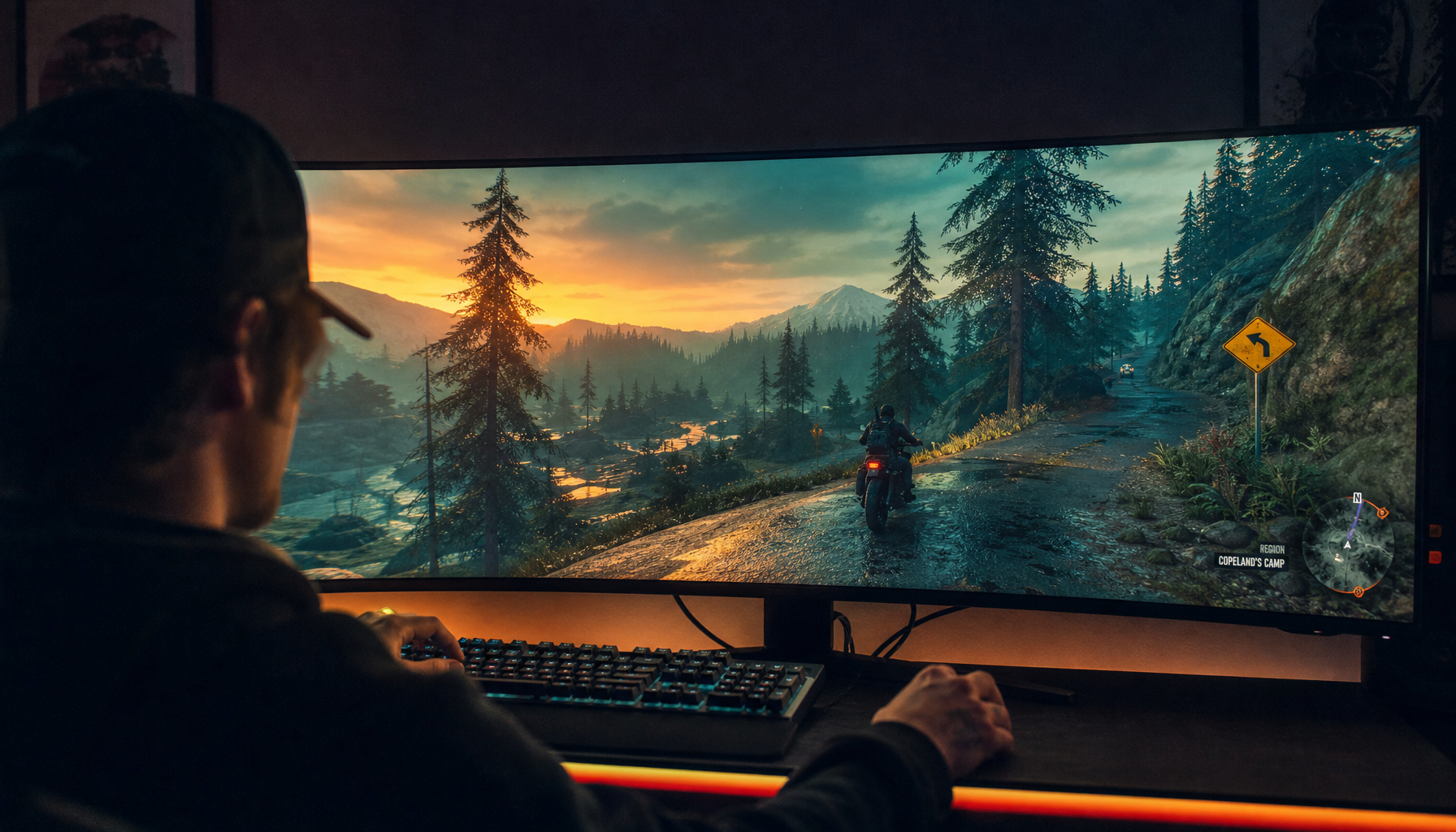
For competitive gaming, prioritize response time, refresh rate, input lag, and whether local dimming behaves cleanly in Game Mode. For immersive single-player HDR gaming, Mini-LED local dimming can be a major upgrade because torches, neon signs, explosions, and night skies gain impact. For office work, writing, spreadsheets, and long browsing sessions, uniform brightness is usually more valuable than maximum contrast.
Portable smart screens deserve extra caution. Smaller displays have less physical room for advanced backlight systems, and users often place them in changing light: coffee shops, airplanes, hotel desks, or beside a laptop. In those cases, automatic brightness or quick manual controls may deliver more real value than aggressive local dimming.
When the Problem Is Not Local Dimming
Sometimes the PiP window is dark because the video itself is graded dark, the streaming service is applying compression, the browser is tone-mapping HDR poorly, or the page behind the video is simply too bright. If the same scene is still too dark in full screen with local dimming off, the source or playback path is more likely to blame.
Browser-level brightness controls would help because they could brighten only the floating video instead of the entire monitor. The browser community request is practical for that reason: a PiP-specific slider would solve a usability problem that monitor controls cannot target precisely. Until browsers offer that consistently, display presets and local dimming modes are the tools you can control.
FAQ
Should I leave local dimming on all the time?
Not if you use your monitor heavily for desktop multitasking. Local dimming is excellent for HDR games and movies, but it can create unstable brightness in SDR office work, web browsing, and PiP layouts. A two-profile approach is better: local dimming on for entertainment, off or reduced for productivity.
Why do subtitles make PiP blooming worse?
Subtitles are small bright objects, often placed over dark video. A local dimming zone has to brighten enough for the subtitle, and that light can spill into nearby dark pixels. In a small PiP window, the subtitle may occupy a large share of the relevant zones, making the glow more noticeable.

Is OLED better for PiP brightness consistency?
OLED avoids backlight-zone mismatch because each pixel controls its own light. That can make small-window contrast cleaner. The tradeoff is that OLED buyers still need to consider brightness limits, static desktop content, and long-term image retention risk depending on usage.
Final Word
Local dimming creates PiP brightness mismatch because it optimizes contrast by zone, while you experience the screen by window. Treat PiP as a mixed-use case: stabilize the desktop first, reserve aggressive dimming for full-screen HDR, and use quick brightness controls so the screen works for the task instead of fighting it.