Mini LED does not behave the same on every monitor size. If the zone count stays fixed, a larger screen spreads those zones thinner, which usually makes blooming easier to notice and reduces how tightly the backlight can shape HDR highlights.
Ever looked at a monitor spec sheet and wondered why one 27-inch Mini LED display looks crisp in HDR while a bigger ultrawide with a similar zone count can look softer around subtitles, cursors, and bright UI elements? That mismatch is real, and it shows up fast in desktop use and gaming. The practical difference comes down to how many pixels each dimming zone has to manage, and this article breaks down what that means when you are buying a gaming monitor, ultrawide, or portable display.
Why Screen Size Changes the Math
Mini LED local dimming is about dividing the backlight into independently controlled zones, but those zones do not get smaller just because the panel gets larger. a display standards explanation shows the basic pattern: edge-lit systems may use only 8 to 16 vertical zones, while full-array local dimming on current HDR displays often reaches 384 to 1,152 zones.
That matters because a 1,152-zone 27-inch 4K monitor and a 1,152-zone larger ultrawide do not offer the same zone density. The bigger display spreads the same number of zones across more surface area, so each zone controls a larger patch of pixels. In real use, that makes it harder to keep a bright HUD element isolated from the dark background around it.

Zone count is only half the story
Zone count sounds like the headline spec, but it is only one part of HDR performance. Local dimming tuning, panel contrast, peak brightness, tone mapping, and calibration all change the result. One 576-zone VA or HVA panel can show less haloing than a higher-zone IPS model if its native contrast and firmware are better tuned, which is why two monitors with the same zone count can still look different in practice.
Why the same zones look better on a smaller screen
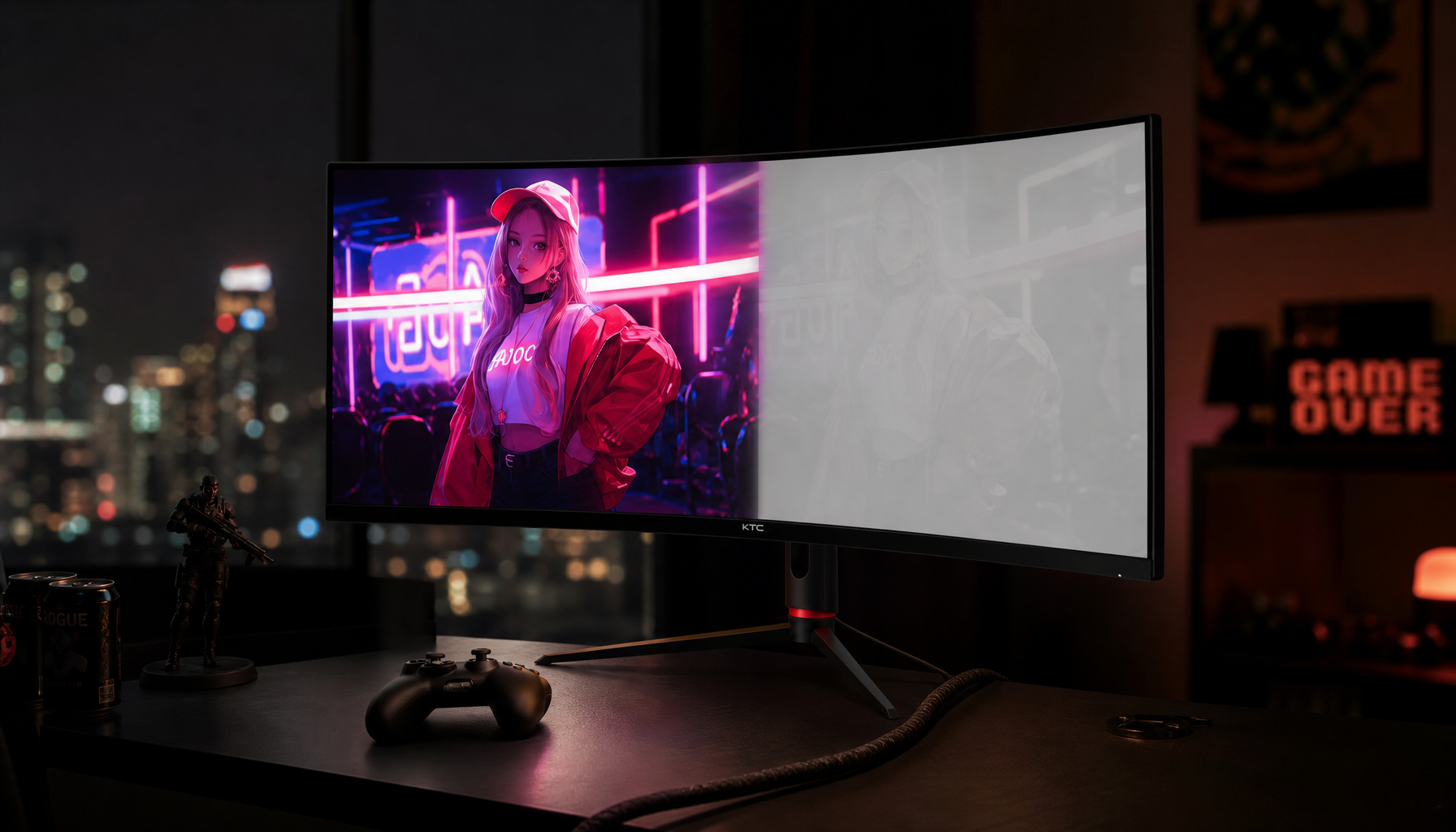
When the screen is smaller, each zone covers fewer pixels, so bright objects can be isolated more tightly. That gives the backlight a better chance of darkening the surrounding area without dragging the whole region up with it. On a larger monitor, the same zone has to cover a wider visual area, so bright objects tend to bleed farther into nearby dark areas.
What Zone Density Means for HDR Quality
Higher zone density usually improves HDR because the monitor can react more precisely to content changes. a standards guide notes that full-array local dimming can reach contrast ranges around 20,000:1 to 500,000:1 in the best cases, far beyond the roughly 1,000:1 level typical of basic global dimming. That is the core advantage of Mini LED over plain edge-lit LCDs.
But even a strong zone count does not remove the fundamental limit: each zone is still much larger than a pixel. a monitor maker’s HDR explanation points out that blooming appears because light from a zone can spill around small bright objects on dark backgrounds. That is why stars, subtitles, crosshairs, and desktop cursors can still glow more than you want, even on a high-zone display.
Blooming gets more obvious as zones get larger
A monitor with lower zone density usually shows more visible halos around white text on a black background. That is most obvious in dark-room desktop use, where the eye is sensitive to small bright edges. If you read subtitles on dark scenes or work with code editors and terminals, the halo effect is easier to notice than it is in a bright game scene.

Native contrast still matters
A Mini LED monitor with stronger panel contrast often looks cleaner than a technically denser but weaker panel. A good VA-based Mini LED can sometimes hold dark areas better than an IPS model with more zones, because the panel itself starts from a better black level. That is one reason zone count alone is not a reliable buying shortcut.
How Screen Size Changes the Buyer Experience
Screen size changes what the same zone count feels like in daily use. The difference between 27 inches, 32 inches, and an ultrawide is not just about immersion; it also changes how obvious blooming is, how well HDR pops, and how much of the screen a single local dimming decision affects.
The practical benchmark from the sources is straightforward: edge-lit systems may have only 8 to 16 zones, while full-array systems often land in the 384 to 1,152 range. That scale helps explain why a smaller monitor with the same zone count usually looks more controlled than a larger one, especially when both are used for gaming and desktop work.
Screen size |
Same zone count effect |
Typical HDR result |
Best fit |
24 to 27 inches |
Higher zone density |
Cleaner highlights, less blooming |
Competitive gaming, mixed use |
32 inches |
Moderate zone density |
Good HDR, halos more visible than 27-inch models |
Single-screen gaming and productivity |
Ultrawide 34 to 49 inches |
Lower zone density if count is unchanged |
More haloing around HUDs and subtitles |
Immersive games, wide productivity layouts |
Zone density is usually limited by size and power |
HDR is often modest unless the panel is well tuned |
Travel, light gaming, second-screen use |
27-inch and 32-inch monitors
A 27-inch Mini LED monitor is often the sweet spot because zone density stays relatively high even when the zone count is not extreme. On a 32-inch model, the same zone count has to stretch farther, so black bars, dark game menus, and subtitle-heavy video tend to expose blooming more easily.
For example, a 27-inch 180Hz 2K Mini LED gaming monitor lists 1,152 Mini LED zones on a 27-inch, 2560×1440 panel, which makes the zone count easier to weigh against screen size than the raw number alone.

Ultrawide monitors
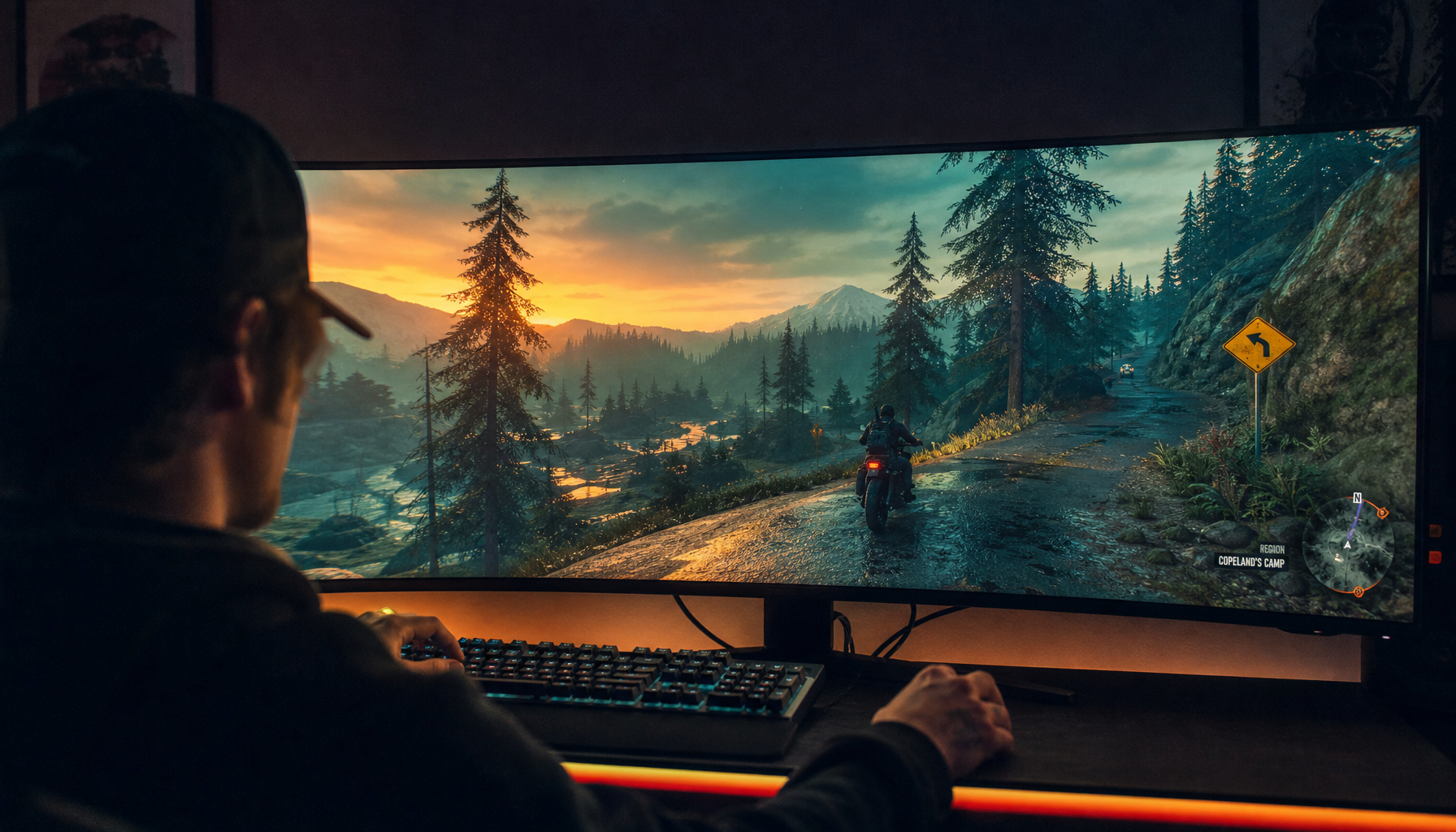
Ultrawides are where zone density becomes easy to underestimate. A display that looks excellent in spec-sheet numbers can still struggle with bright interface elements spread across a very wide canvas. If you keep windows snapped side by side, the backlight has to decide between lighting a broad region and preserving dark areas, which is where HDR behavior can feel less precise.

Portable monitors
Portable monitors are a different case because power, heat, and cost usually limit the backlight system. They can still benefit from Mini LED, but buyers should keep expectations modest. In a travel setup, the priority is often usable brightness and decent contrast rather than top-tier HDR control.
Which Use Case Needs More Zone Density
Different buyers care about different failure modes. A competitive gamer may care more about input lag and crosshair visibility, while a movie viewer may care more about black bars and subtitle blooming. The right zone density depends on what you notice first.
Gaming monitors
For gaming, especially HDR gaming, a denser zone map usually pays off most when the game has small bright objects on dark backgrounds. Think muzzle flashes, star fields, or bright UI over night scenes. The monitor maker’s article also notes that practical evaluation should include blooming, bright outdoor scenes, and dark scenes with subtitles, which maps directly to real gaming and streaming use.
High-refresh-rate displays
High-refresh-rate Mini LED monitors add another layer of pressure because the dimming algorithm has to keep up with fast scene changes. If tuning is weak, you may see pumping, raised blacks, or distracting shifts when moving from a dark scene to a bright one. Zone density helps, but the firmware matters just as much because the monitor has less time to make a smooth decision.
Productivity and mixed use
For office work, the biggest issue is often not HDR at all but desktop visibility. White windows on a dark wallpaper, text editors, browser tabs, and UI toolbars can all reveal blooming if the zone count is too low for the panel size. If you use your monitor for both work and games, a smaller screen with better density usually feels cleaner day to day.
How to Judge a Mini LED Monitor Before Buying
The safest way to judge Mini LED is to test the display the way you will actually use it. a display standards explanation shows that active dimming is about how the backlight responds to real content, not just a spec label, so you should look for behavior rather than marketing language.
A 1000-nit monitor without strong local dimming can still disappoint in HDR if the contrast control is weak. That concern came up in a user report on a 1000-nit display versus a lower-brightness FALD TV, where the impression was that more peak brightness alone did not automatically produce better HDR. The lesson is simple: brightness helps, but without enough zone control, it does not fully solve contrast.
What to check in reviews
Look for tests of subtitles on dark scenes, cursor halos, bright windows on a dark desktop, sustained brightness, color accuracy, and input lag. Also pay attention to how the monitor behaves with VRR, because some Mini LED models can flicker or shift tones when refresh rates change.
What specs are worth more than marketing terms
The most useful numbers are zone count, panel type, peak brightness, and whether the monitor is full-array local dimming or edge-lit. A 1,152-zone monitor is not automatically better than a lower-zone model if the larger panel makes the zones too coarse or the firmware overreacts. At the same time, a very bright display without enough local dimming will still look flat in HDR.
Key Takeaways
Mini LED zone density drops when screen size rises and zone count stays the same. That usually means more blooming, less precise HDR highlights, and more visible haloing around text and UI on larger monitors.
For buyers, the practical rule is to match the panel size to the zone count and the use case. A 27-inch Mini LED monitor usually gives you better zone density than a larger ultrawide with the same backlight spec, while stronger native contrast and better tuning can still outweigh a raw zone-count advantage.
FAQ
Q: Is a larger Mini LED monitor worse if it has the same number of zones?
A: Usually yes, for zone density. The same number of zones spread across a larger screen gives each zone more pixels to manage, which can make blooming easier to see.
Q: How many local dimming zones are enough for gaming?
A: For casual HDR gaming, several hundred well-tuned zones can be useful. For cleaner highlights and less haloing, 1,000-plus zones on a smaller screen tends to work better than the same count on a much larger panel.
Q: Does Mini LED zone density matter more on ultrawide monitors?
A: Yes. Ultrawides spread the same zones over more width, so subtitles, HUDs, and side-by-side desktop windows can expose haloing more easily.