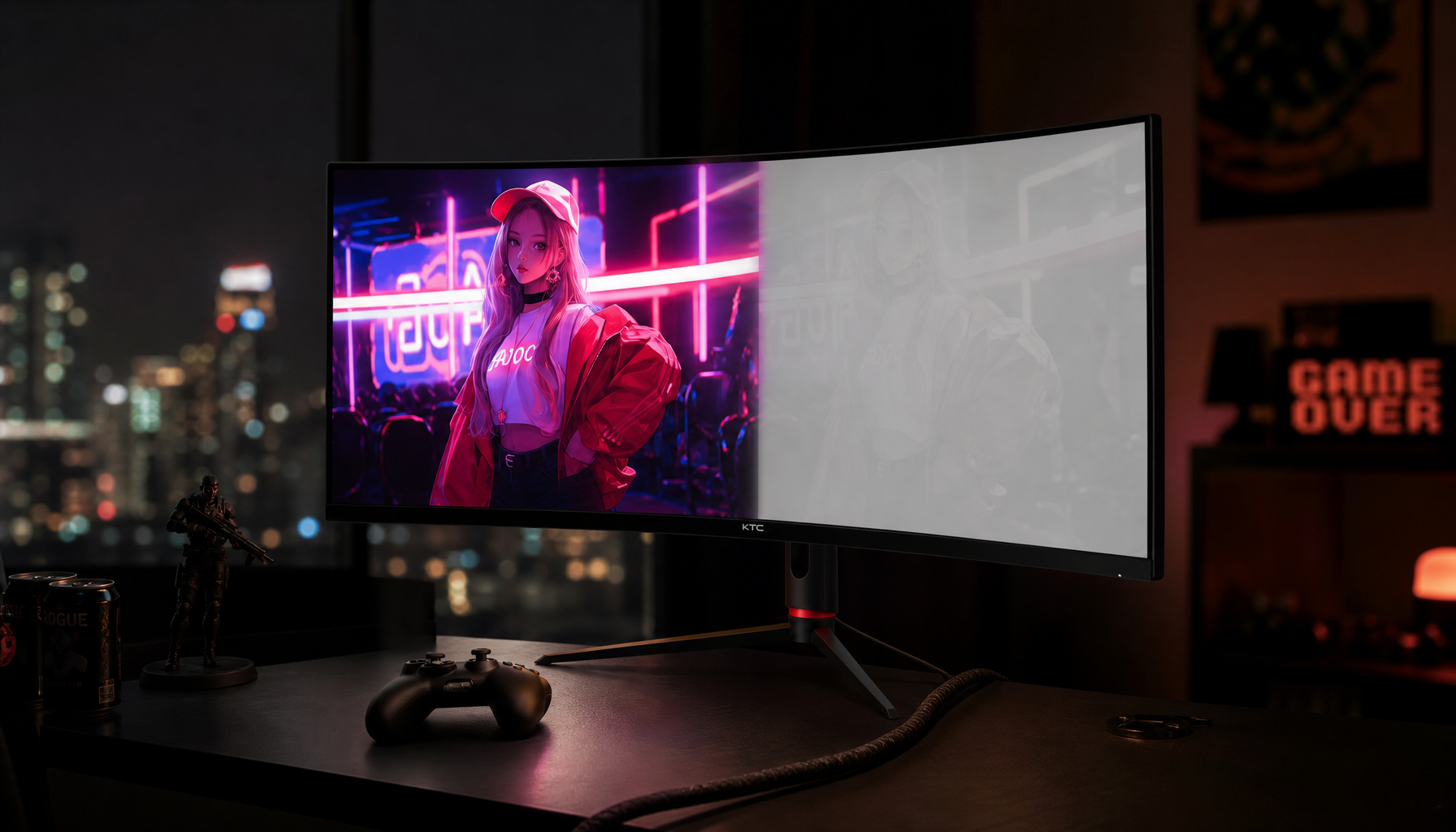
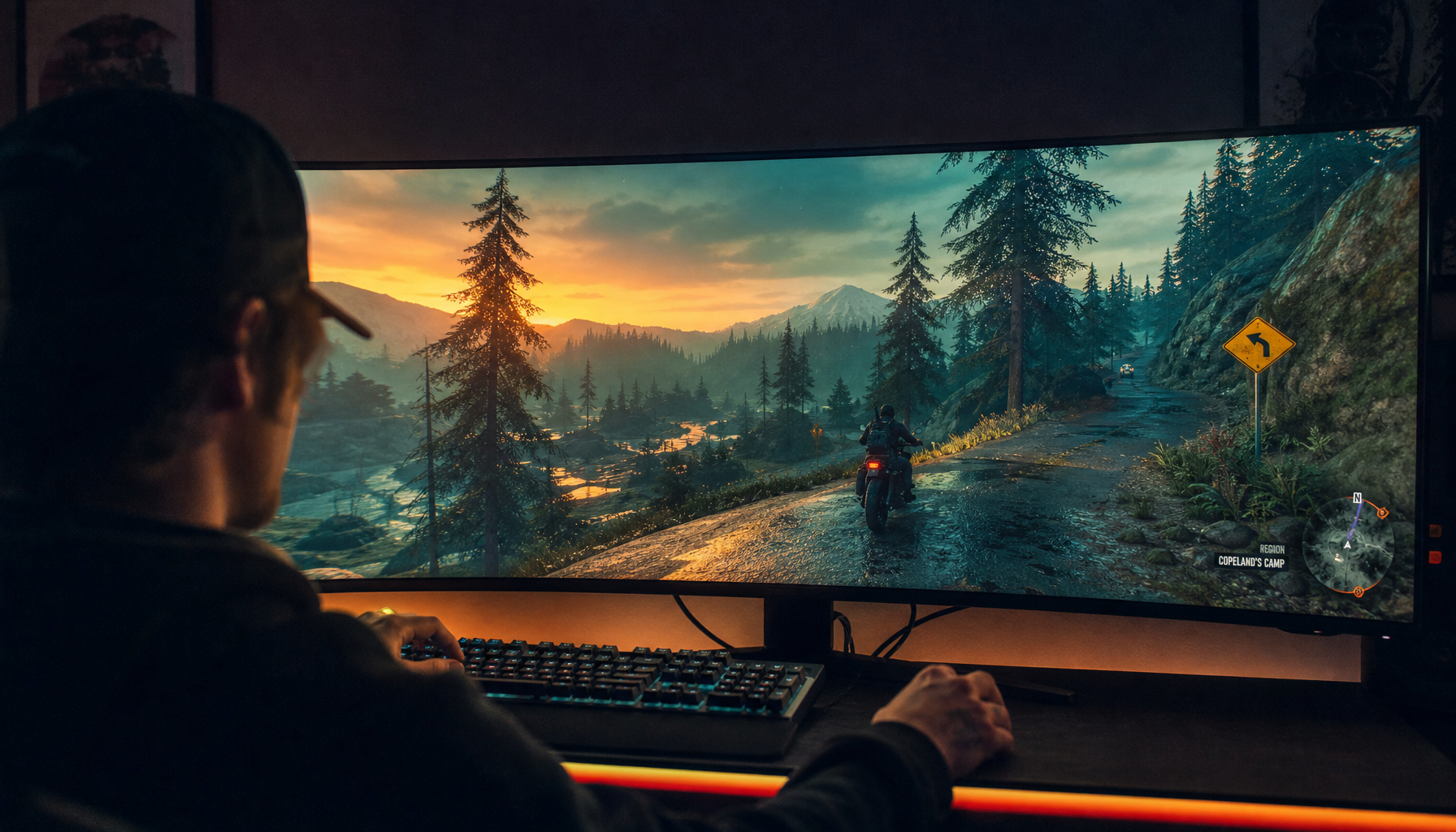
The best balance usually does not come from one magic picture mode. On most gaming monitors, a neutral custom mode with carefully tuned brightness, contrast, gamma, and dark-scene controls beats an aggressive FPS preset for long sessions.
If your screen looks great for the first match but leaves your eyes dry, tense, or tired by the third, the problem is usually not just the panel. Real-world reports range from gamers feeling irritation within 15 to 30 minutes on new high-refresh monitors to others improving comfort by dialing back brightness, color temperature, and shadow-heavy presets. You can get a setup that keeps enemies visible without turning your monitor into a bright, washed-out spotlight.
Why a Single “Best” Picture Mode Usually Falls Short
Competitive presets often trade comfort for short-term visibility
Many gaming monitors ship with FPS, RTS, or similar presets that lift dark areas, push brightness, and sharpen edges so targets stand out faster. That can help in dark corners, and factory monitor presets can reduce in-game visibility, especially before tuning, but the same changes can also make the image harsher over a two- or three-hour session.
Eye fatigue is commonly tied to brightness, color temperature, and flicker, while symptoms can include dryness, irritation, blurriness, headaches, and light sensitivity on long monitor sessions, as a company’s eye-strain guidance notes. In practice, that means a preset built to make shadows pop in a fast shooter may feel too bright or too cool for an ultrawide monitor used at night, a portable monitor on a desk in a hotel room, or a 240 Hz esports display used for both gaming and web browsing.

Comfort depends on the room, the monitor, and the task
A bright room can support a stronger backlight and a slightly cooler image without feeling harsh. A dark room usually cannot. One forum example described an older 24-inch 1080p monitor that stayed comfortable for about 10 years, while several newer 240 Hz replacements caused eye irritation within about 15 to 30 minutes despite tests across IPS and TN panels, cables, refresh rates, and software settings, as shown in this forum case.
That does not prove high refresh is the problem. In fact, smoother motion is often easier on the eyes than lower refresh. The lesson is narrower: comfort is highly individual, and preset modes do not account for your room lighting, screen size, viewing distance, or whether you are tracking enemies in a shooter, reading small HUD text on an ultrawide, or using a portable monitor at close range.
Which Settings Matter More Than the Preset
Brightness and contrast decide whether the screen feels harsh
For most gaming monitors, brightness is the first control to fix because it sets the overall light output. A company’s monitor-setting advice suggests matching brightness to ambient room light and keeping contrast around 60% to 70%, while competitive-tuning guidance often starts brightness higher, around 60% to 80%, with contrast nearer 80% to 90% when visibility is the goal.
That gap explains why one preset rarely works for everyone. If you play in a bright daytime room, a higher-brightness competitive setup may feel fine. If you play at 10:00 PM with the lights low, the same preset can feel exhausting. A practical starting point for a high-refresh gaming monitor is to lower brightness until white menus stop glowing, then raise contrast only until whites stay distinct and blacks do not collapse into one dark mass.
Gamma and black controls shape enemy visibility without maxing the backlight
Gamma changes how bright the midtones and shadows look. In gaming terms, lower gamma brightens darker parts of the image, while higher gamma can hide shadow detail, as explained in a publication’s definition of gamma. That makes gamma one of the cleanest tools for balancing competitive visibility and comfort because it can open up dark scenes without forcing the whole screen to full blast.
Forum-based calibration advice often lands around a gamma target of 2.2, with monitor brightness and contrast starting near 50% and then adjusted by eye or test pattern, as described in this forum monitor and gamma discussion and this calibration walkthrough. If your monitor has a dedicated dark-scene control, treat it as a small correction, not a permanent maxed-out setting. A modest increase can reveal detail in dark corners; too much makes the image flat and fatiguing.
Color temperature matters more for comfort than many gamers expect
Warmth is often the difference between a monitor that feels usable at night and one that feels sharp and tiring. A company’s guidance on eye strain recommends lower-blue color temperatures for longer sessions, and monitor-side low blue light modes typically work by reducing the blue channel rather than adding a secret comfort feature, as explained in the forum discussion.
For a monitor used mainly at night, a warm or normal color temperature is usually a better balance than a cold preset. The tradeoff is that some low blue light or reading modes reduce contrast too much for games, so the sweet spot is often a normal or warm custom mode instead of the monitor’s strongest “eye care” preset.
Best Starting Setups for Common Gaming Monitor Scenarios
Bright room, desk setup, competitive gaming
A bright office or bedroom with overhead lighting can support a more assertive gaming setup. Visibility-focused monitor tuning commonly starts with brightness around 60% to 80%, contrast around 80% to 90%, default sharpness, overdrive on Fast rather than Fastest, and a small bump in saturation. That approach makes sense for fast shooters on a 24- to 27-inch esports monitor when glare and room light would otherwise wash out darker scenes.
If you use this kind of setup, keep the picture mode on User or Custom if possible and add only the visibility changes you actually need. That preserves more control than a locked FPS preset and makes it easier to back off the two settings that most often cause fatigue: brightness and overly cool white balance.
Dark room, ultrawide monitor, long sessions
Dark-room gaming changes the equation. A larger ultrawide fills more of your field of view, so overly bright whites and exaggerated shadow lifting become more tiring. A company’s eye-comfort recommendations highlight curved viewing angles, high resolution, fast refresh, and adjustable settings as useful features, and those matter even more on 34-inch and 39-inch ultrawide displays where small errors feel bigger.
A dark-room user on a forum preferred a VA gaming monitor for stronger black levels but also found motion blur and black-frame-insertion tradeoffs frustrating, as shown in this dark-room monitor thread. That is a good reminder that comfort is not just about darkness. In a dim room, aim for lower brightness, gamma near the standard target, minimal shadow boosting, and a warm or normal color temperature before you decide the panel itself is the problem.
Portable monitors and mixed-use displays
Portable monitors and secondary displays are often used closer to the eyes than a desktop panel, which raises the comfort stakes. A company’s ergonomic advice recommends placing the screen about 20 to 30 inches away with your eyes level with the top of the display, and that matters even more when a portable monitor sits low on a table or too close beside a laptop.

On these smaller displays, text size and operating-system controls can matter as much as picture mode. An operating system lets you change brightness on supported displays, enable a night-light feature, and manage color profiles, while most external monitors still require their own buttons for core image settings, as explained in a support page for display settings. For mixed work-and-play use, a neutral custom mode plus a scheduled night-light feature is often more sustainable than leaving a harsh gaming preset active all day.
A Practical Tuning Workflow That Actually Works
Start from a neutral mode, not the flashiest one
Many monitors look impressive in a vivid mode or a brand-specific gaming preset, but those modes often stack several changes at once. A cleaner method is to reset the display, choose User, Custom, or Game mode, and then tune one variable at a time. A real-world example from a forum user showed a gaming monitor set to User mode with a dark-scene control at 10 out of 20, Brightness at 80 out of 100, Contrast at 70 out of 100, Normal color temperature, and image enhancement off in a bright room, documented in this forum post.
That kind of baseline is useful because it is not extreme. It gives enough visibility to play while leaving room to adjust downward if the screen feels harsh or upward if dark scenes are still too murky.
Use test patterns and game scenes, not guesswork alone
Brightness and contrast are easier to set accurately than many people assume. The monitor calibration guide recommends using black-level and grayscale test patterns so you can confirm that near-black and near-white detail is still visible instead of clipped.
After that, load one game scene with a dark hallway, one with bright skies, and one menu or web page with lots of white. If the dark hallway is readable but the white menu still feels comfortable after 15 minutes, you are close. If enemies are visible only when the whole picture looks gray, your gamma or black boost is too aggressive.

Recommended Starting Points by Goal
Goal |
Picture mode |
Brightness |
Contrast |
Gamma |
Dark-scene control |
Color temperature |
Best fit |
Maximum competitive visibility in a bright room |
User/Custom |
60% to 80% |
75% to 90% |
Near 2.2, slightly lower only if needed |
Low to moderate boost |
Normal |
24- to 27-inch high-refresh gaming monitors |
Balanced gaming and comfort |
User/Custom |
Match room light; start near 50% |
60% to 75% |
2.2 target |
Minimal boost |
Normal or warm |
Most gaming and ultrawide monitors |
Night gaming with lower eye fatigue |
User/Custom or reader-adjacent custom setup |
Lower than daytime; often 30% to 50% |
60% to 70% |
2.2 target |
Minimal |
Warm |
Ultrawide, VA, and mixed-use setups |
Portable monitor or close viewing |
User/Custom |
Lower to moderate |
60% to 70% |
2.2 target |
Off or very low |
Warm or night-light-assisted |
Portable monitors and travel setups |
FAQ
Q: Is an FPS picture mode bad for your eyes?
A: Not automatically, but it can be more fatiguing if it pushes brightness, cool color temperature, sharpening, and shadow lifting too far. A custom mode with small visibility tweaks is usually easier to live with on a gaming monitor you use for hours.
Q: Does higher refresh rate help with comfort?
A: Often yes. A company’s monitor guidance recommends at least 120 Hz for long-term use because smoother motion can reduce perceived flicker and visual strain, but refresh rate alone will not fix a screen that is too bright or poorly tuned.
Q: Should I use a low blue light mode while gaming?
A: It can help at night, especially for winding down, but some monitor presets reduce contrast too much for competitive play. The most practical option is often a mild warm setting on the monitor or an operating system night-light feature on a schedule rather than the strongest built-in eye-care mode.
Practical Next Steps
A balanced monitor picture mode is usually a tuned custom mode, not a preset. For most gaming monitors, the winning formula is standard gamma, room-matched brightness, moderate contrast, a warm or neutral white point, and only a small amount of shadow lifting.
Action checklist: 1. Reset the monitor and switch to User, Custom, or Game mode. 2. Set the highest refresh rate in the operating system and on the monitor. 3. Lower brightness until white screens stop feeling glaring, then fine-tune contrast. 4. Keep gamma close to 2.2 and raise shadow controls only a little. 5. Use Normal or Warm color temperature for long evening sessions. 6. Test the setup in one dark game scene, one bright scene, and one white menu. 7. Follow the 20-20-20 rule during long sessions.